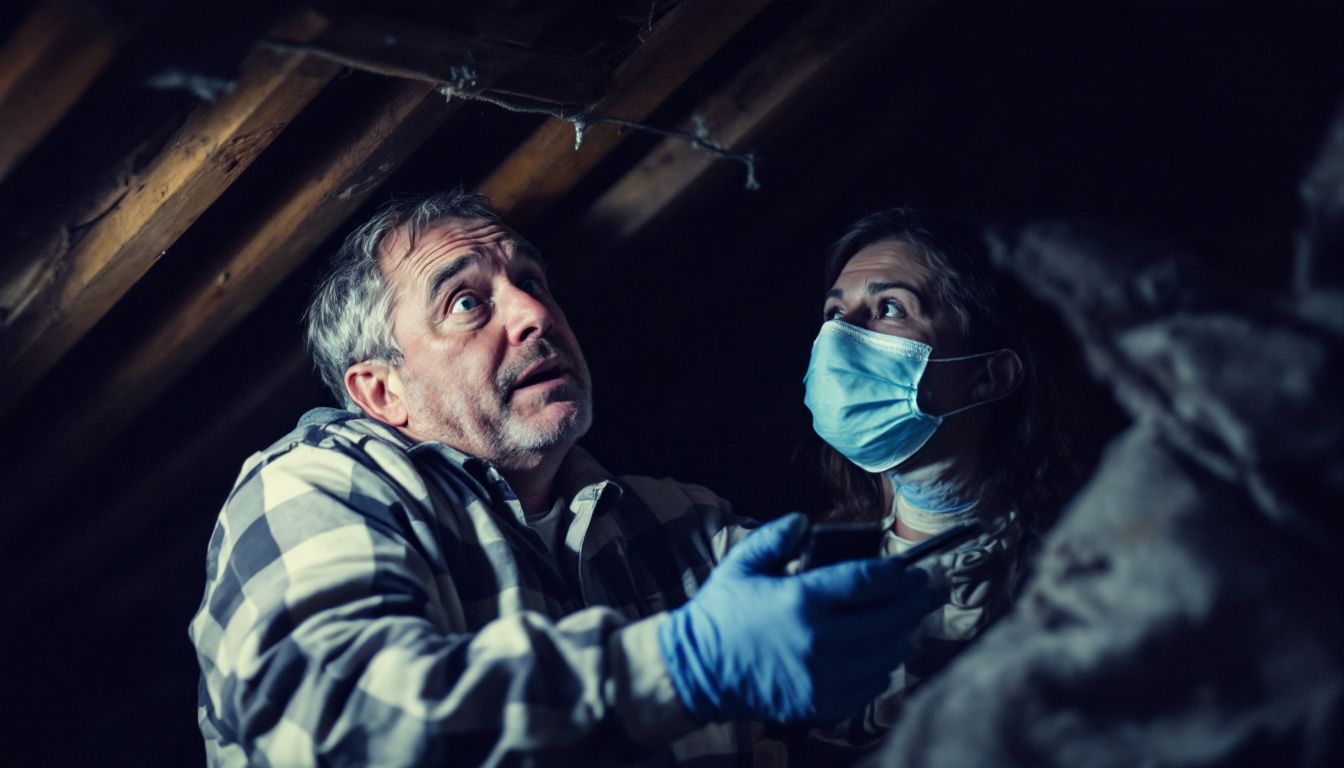
Is There Asbestos in Your Building? Here’s How to Find Out
If your property was built or refurbished before 2000, there is a real possibility it contains asbestos. Asbestos testing — and knowing how to determine if you’re at risk — is not just a precaution. For many building owners, landlords, and facilities managers, it’s a legal obligation.
The UK banned the use of asbestos in 1999, but that ban did nothing to remove the material already installed in millions of buildings across the country. Asbestos doesn’t announce itself. You can’t see it, smell it, or feel it — and without testing, you simply don’t know whether the materials in your building could release dangerous fibres.
That uncertainty carries real consequences: for your health, your legal compliance, and the safety of everyone who uses your property.
What Is Asbestos Testing?
Asbestos testing is the process of identifying whether asbestos-containing materials (ACMs) are present in a building, what type of asbestos they contain, and what condition those materials are in. It involves collecting physical samples from suspect materials and having them analysed in an accredited laboratory.
There are three main types of asbestos — chrysotile (white), amosite (brown), and crocidolite (blue). All three are hazardous when fibres become airborne. Laboratory analysis using polarised light microscopy (PLM) can identify which type is present and confirm whether a material contains asbestos at all.
Testing is not the same as a full asbestos survey, though the two often go hand in hand. A survey involves a qualified surveyor inspecting the building, identifying suspect materials, and collecting samples — all in accordance with HSG264 guidance. Testing refers specifically to the laboratory analysis of those samples. Together, they give you a definitive picture of what’s in your building.
If you want a cost-effective initial check, a testing kit allows you to collect samples yourself and send them to an accredited lab for analysis. This is a practical first step for homeowners or landlords dealing with a single suspect material.
Asbestos Testing: How to Determine If You’re at Risk
Asbestos testing tells you whether the material is present. But understanding whether you’re genuinely at risk involves a broader assessment. Here are the key factors to consider.
Age and Construction of the Building
Any building constructed or significantly refurbished before 2000 should be treated as potentially containing asbestos until proven otherwise. Asbestos was used extensively throughout the mid-twentieth century — in insulation, ceiling tiles, floor tiles, pipe lagging, roofing materials, artex coatings, and more.
Buildings from the 1950s through to the 1980s are particularly likely to contain asbestos, as this was the peak period of its use in the UK. Even buildings that appear modern on the surface may have older structural elements that were never replaced.
Condition of Building Materials
Asbestos that is in good condition and left undisturbed poses a relatively low risk. The danger arises when materials are damaged, deteriorating, or disturbed — for example, during drilling, cutting, sanding, or demolition work.
Carry out a visual inspection of insulation, ceiling and floor tiles, pipe lagging, roofing sheets, and any textured wall or ceiling coatings. Look for signs of damage or deterioration.
Do not touch or disturb suspect materials. If something looks damaged and you’re unsure what it contains, treat it as potentially hazardous until tested.
Planned Renovation or Refurbishment Work
If you’re planning any work that will disturb the fabric of a pre-2000 building — even something as routine as drilling into a wall or removing a ceiling tile — you need to know what’s in those materials before work begins. Disturbing asbestos without knowing it’s there is one of the most common routes to accidental exposure.
For this type of work, a refurbishment survey is the appropriate route. This is a more intrusive survey designed to identify all ACMs in the areas to be worked on, including those that are normally inaccessible.
Existing Records and Asbestos Registers
For non-domestic premises, the duty holder is legally required to maintain an asbestos register — a record of where ACMs are located, their condition, and the risk they present. If you’ve taken on responsibility for a commercial building, ask for this register before you do anything else.
If no register exists, or if the last survey was carried out some years ago, you should commission a new survey. Conditions change, materials deteriorate, and previous surveys may not have covered all areas of the building.
Your Role and Legal Obligations
Your level of risk also depends on your role. Owners and managers of non-domestic premises have a legal duty to manage asbestos under the Control of Asbestos Regulations. This duty — set out in Regulation 4 — requires you to identify ACMs, assess the risk, and maintain an up-to-date management plan.
Failure to comply is not just a regulatory issue. It can result in significant fines and, more critically, serious harm to workers, tenants, or visitors. If you’re unsure whether your current documentation meets your legal obligations, asbestos testing and a professional survey will give you the evidence you need.
Types of Asbestos Survey Explained
Understanding which type of survey you need is essential. The wrong survey type won’t satisfy your legal obligations — and could leave dangerous materials undetected.
Management Survey
A management survey is the standard survey for occupied buildings. It is designed to locate ACMs that could be disturbed during normal use and maintenance. The surveyor carries out a visual inspection and collects samples from suspect materials, producing an asbestos register and risk assessment as part of the report.
This is the survey most duty holders need to meet their obligations under the Control of Asbestos Regulations. It’s also the starting point for any ongoing asbestos management plan.
Refurbishment and Demolition Survey
Before any intrusive work or demolition, a more thorough survey is required. A demolition survey goes beyond the management survey — it involves accessing all areas that will be disturbed, including voids, ceiling spaces, and structural elements. It is a more thorough and potentially destructive process, but it’s essential for the safety of anyone carrying out the work.
Re-Inspection Survey
Once an asbestos register has been established, the materials recorded in it must be monitored over time. A re-inspection survey checks the condition of known ACMs and updates the register accordingly. This should be carried out at least annually, or more frequently if conditions change.
What Happens During an Asbestos Survey?
Knowing what to expect makes the process straightforward. Here’s how a professional survey with Supernova Asbestos Surveys works:
- Booking: Contact us by phone or online. We confirm availability and send a booking confirmation — often with same-week availability.
- Site Visit: A BOHS P402-qualified surveyor attends at the agreed time and carries out a thorough visual inspection of the property.
- Sampling: Representative samples are collected from suspect materials using correct containment procedures to prevent fibre release.
- Lab Analysis: Samples are analysed under polarised light microscopy (PLM) at our UKAS-accredited laboratory.
- Report Delivery: You receive a detailed asbestos register and risk-rated management plan in digital format, typically within 3–5 working days.
The report is fully compliant with HSG264 guidance and satisfies all legal requirements under the Control of Asbestos Regulations.
Steps to Take After Asbestos Is Detected
Finding asbestos in your building is not a crisis — but it does require a clear, structured response.
- Don’t disturb the material. If asbestos is identified, leave it in place unless a professional has assessed whether it needs to be removed or encapsulated.
- Establish or update your asbestos management plan. This should include the location of all ACMs, their condition, who is responsible for monitoring them, and what action is required.
- Inform relevant personnel. Anyone who works in or carries out maintenance on the building must be made aware of where ACMs are located and how to avoid disturbing them.
- Review the plan regularly. Your asbestos management plan should be reviewed at least annually and updated whenever conditions change or new work is planned.
- Commission removal if necessary. If ACMs are in poor condition or will be disturbed by planned work, asbestos removal by a licensed contractor is the appropriate course of action. Do not attempt to remove asbestos yourself.
Survey Costs and Pricing
Supernova Asbestos Surveys offers transparent, fixed-price surveys across the UK. Here’s a guide to our standard pricing:
- Management Survey: From £195 for a standard residential or small commercial property
- Refurbishment & Demolition Survey: From £295, covering all areas to be disturbed prior to works
- Bulk Sample Testing Kit: From £30 per sample, posted to you for collection
- Re-Inspection Survey: From £150, plus £20 per ACM re-inspected
- Fire Risk Assessment: From £195 for a standard commercial premises
A fire risk assessment is a separate legal requirement for most non-domestic buildings — it’s worth addressing alongside your asbestos obligations if you haven’t already done so.
All prices are subject to property size and location. Get a free quote tailored to your specific requirements.
The Regulations You Need to Know
Asbestos management in the UK is governed by a clear legal framework. Understanding your obligations is not optional — it’s the foundation of keeping your building safe and your organisation compliant.
Control of Asbestos Regulations
This is the primary legislation controlling work with asbestos in Great Britain. It sets out licensing requirements, notification duties, and the obligation to protect workers and others from asbestos exposure. The duty to manage asbestos (Regulation 4) applies to all non-domestic premises.
HSG264 — Asbestos: The Survey Guide
This is the HSE’s definitive guidance on conducting management and refurbishment/demolition surveys. All Supernova surveys are carried out in full accordance with HSG264 standards, ensuring your documentation is legally defensible and fit for purpose.
Why Choose Supernova Asbestos Surveys?
With over 50,000 surveys completed and more than 900 five-star reviews, Supernova Asbestos Surveys is one of the UK’s most trusted asbestos consultancies. Here’s what sets us apart:
- BOHS P402/P403/P404 Qualified Surveyors: All our surveyors hold British Occupational Hygiene Society qualifications — the gold standard in asbestos surveying
- UKAS-Accredited Laboratory: All samples are analysed in our accredited lab, ensuring accurate and legally defensible results
- UK-Wide Coverage: We operate across England, Scotland, and Wales
- Same-Week Availability: We understand surveys are often time-critical and prioritise fast scheduling
- Transparent Pricing: No hidden fees — you receive a fixed-price quote before we begin
For a straightforward overview of what professional asbestos testing involves and what to expect from the process, our dedicated testing page has everything you need.
Ready to find out what’s in your building? Call us on 020 4586 0680 or visit asbestos-surveys.org.uk to book your survey or request a free quote today.
Frequently Asked Questions
What is asbestos testing and when is it needed?
Asbestos testing is the formal process of collecting samples from suspect building materials and having them analysed in an accredited laboratory to confirm whether asbestos is present. It is needed whenever you have reason to believe a building material may contain asbestos — particularly in properties built or refurbished before 2000 — or when you are planning renovation, maintenance, or demolition work that could disturb existing materials.
Can I test for asbestos myself?
You can collect samples yourself using a postal testing kit, which allows you to send suspect material to an accredited laboratory for analysis. However, if you are a duty holder for a non-domestic premises, a professionally conducted survey carried out by a BOHS-qualified surveyor is required to meet your legal obligations under the Control of Asbestos Regulations. Self-sampling is best suited to homeowners or landlords dealing with a single suspect material rather than a whole-building assessment.
What types of asbestos survey are there?
There are three main survey types. A management survey is used for occupied buildings to identify ACMs that could be disturbed during normal use. A refurbishment or demolition survey is required before any intrusive or demolition work and covers all areas that will be disturbed. A re-inspection survey monitors the condition of known ACMs over time and updates the asbestos register. The right survey type depends on the nature of your building and what work, if any, is planned.
What happens if asbestos is found in my building?
Finding asbestos does not automatically mean it needs to be removed. If the material is in good condition and unlikely to be disturbed, it can often be managed safely in place. You will need to establish or update an asbestos management plan, inform relevant personnel, and arrange regular re-inspections to monitor the condition of the material. Removal is only necessary if the material is in poor condition or will be disturbed by planned work — and must always be carried out by a licensed contractor.
How long does an asbestos survey take?
The duration of a survey depends on the size and complexity of the property. A standard management survey for a small commercial property or residential building typically takes between one and three hours on site. Larger or more complex buildings will take longer. Following the site visit, you can expect to receive your full written report, including the asbestos register and risk assessment, within 3–5 working days.