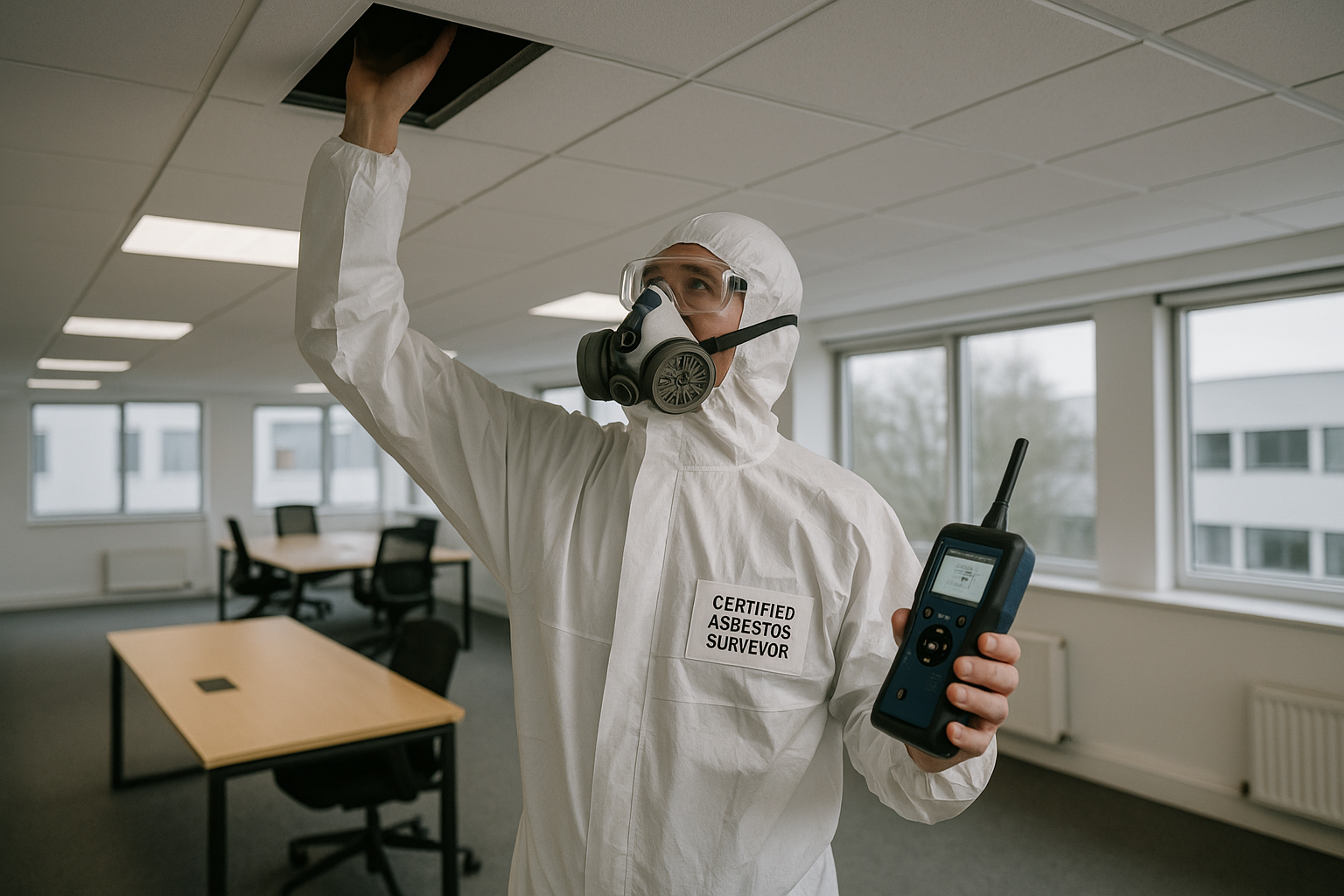
Misidentifying suspect materials is one of the fastest ways to turn ordinary maintenance into an avoidable asbestos incident. When you are dealing with the types of asbestos that still exist in UK properties, the safest rule is simple: if a material could contain asbestos, do not disturb it until it has been properly surveyed and, where needed, sampled.
That applies whether you manage a single rented house, a school estate, a retail unit, a warehouse or a multi-site commercial portfolio. You cannot confirm asbestos by eye, colour alone is not reliable, and the real risk depends on the material, its condition and the likelihood of disturbance as much as the mineral itself.
What are the types of asbestos?
Asbestos is the name used for a group of six naturally occurring silicate minerals that split into tiny fibres. Those fibres were widely used in building materials because they resist heat, chemicals and wear, and because they could be mixed into cement, insulation, coatings and manufactured products.
When people talk about the types of asbestos, they usually mean these six minerals:
- Chrysotile – often called white asbestos
- Amosite – often called brown asbestos
- Crocidolite – often called blue asbestos
- Tremolite
- Anthophyllite
- Actinolite
These six minerals fall into two families:
- Serpentine – chrysotile only, with curly fibres
- Amphibole – amosite, crocidolite, tremolite, anthophyllite and actinolite, with straighter, needle-like fibres
The fibre structure affects how asbestos behaves in products and how fibres may be released if a material is damaged. From a practical and legal point of view, the key message is straightforward: all types of asbestos are hazardous and asbestos-containing materials must be identified, assessed and managed properly under the Control of Asbestos Regulations, supported by HSE guidance and survey standards such as HSG264.
Why the types of asbestos still matter in UK buildings
Asbestos was used so widely because it solved several construction problems at once. It provided fire resistance, insulation, durability and strength at relatively low cost, which is why it still appears in homes, offices, schools, hospitals, factories and public buildings across the UK.
The types of asbestos still matter because different minerals were used in different products, and some asbestos-containing materials are far more likely to release fibres if they are disturbed. That affects survey planning, contractor controls, maintenance procedures and decisions on whether a material can be managed in place or needs removal.
Why asbestos was used so extensively
- It resists heat and flame
- It provides thermal insulation
- It can improve acoustic performance
- It adds strength to cement and coatings
- It withstands chemical exposure
- It can be woven or mixed into other products
Common asbestos-containing materials in the UK
Different types of asbestos were used in different products, but common asbestos-containing materials include:
- Asbestos cement roof sheets, wall panels, gutters and flues
- Asbestos insulating board, often called AIB
- Pipe lagging and boiler insulation
- Sprayed coatings used for fire protection
- Ceiling tiles and partition panels
- Floor tiles and bitumen adhesives
- Textured coatings
- Gaskets, ropes and seals
- Vinyl products and some older electrical components
In practice, the material type and its condition often matter more than the mineral name on its own. An intact asbestos cement sheet may present a lower immediate risk than damaged AIB or deteriorating lagging because friable materials can release fibres more easily.
How to identify the types of asbestos safely
If you suspect asbestos in a property, the correct approach is to presume, assess and verify through a suitable survey and, where appropriate, laboratory testing. The wrong approach is scraping, drilling or breaking off a piece yourself.
Visual clues can help you decide whether a material is suspicious, but they cannot confirm the types of asbestos present or even prove that asbestos is there at all. Proper identification relies on a competent inspection, safe sampling where suitable, and analysis by a UKAS-accredited laboratory.
What you can check without disturbing the material
- The age of the building and any major refurbishments
- Whether the product matches known asbestos-containing materials
- The location, such as risers, plant rooms, ceiling voids, garages or service ducts
- The condition of the material, including cracks, breaks, abrasion, dust or water damage
- Whether maintenance staff or contractors could disturb it during routine work
What not to do
- Do not drill, sand, scrape or break suspect materials
- Do not remove screws, panels or access hatches if asbestos may be present
- Do not rely on internet photos for identification
- Do not assume colour confirms the asbestos type
- Do not ask untrained staff to take samples
How asbestos is properly identified
- Choose the right survey for the work being planned
- Inspect suspect materials in line with HSG264
- Take samples safely where access and condition allow
- Send samples to a UKAS-accredited laboratory
- Record findings in the survey report and asbestos register
- Use the results to support your asbestos management plan
For routine occupation and normal maintenance, a professional management survey is usually the right starting point. If a building is due to be stripped out or taken down, a demolition survey is required before intrusive work begins.
If you manage property in the capital, booking an asbestos survey London inspection helps turn suspicion into evidence before contractors start work. The same applies to regional portfolios, whether you need an asbestos survey Manchester service for northern sites or an asbestos survey Birmingham visit for buildings in the Midlands.
Colours of asbestos types: useful shorthand, not proof
One of the most common misunderstandings about the types of asbestos is the idea that colour gives a reliable answer. It does not. The familiar labels are still used, but they are only rough shorthand.
- Chrysotile is often called white asbestos
- Amosite is often called brown asbestos
- Crocidolite is often called blue asbestos
That sounds simple, but real materials are not. Paint, binders, age, dust, weathering and contamination can all alter appearance. Some products may also contain mixed fibres, and many asbestos-containing materials do not show a clear colour that matches the informal name.
Use colour as a clue, not a decision-making tool. If work planning, contractor safety or legal compliance depends on the answer, you need survey evidence and laboratory analysis.
Chrysotile asbestos
Chrysotile is the most commonly encountered of all the types of asbestos in UK buildings. It belongs to the serpentine family and has curly, flexible fibres rather than the straighter amphibole form.
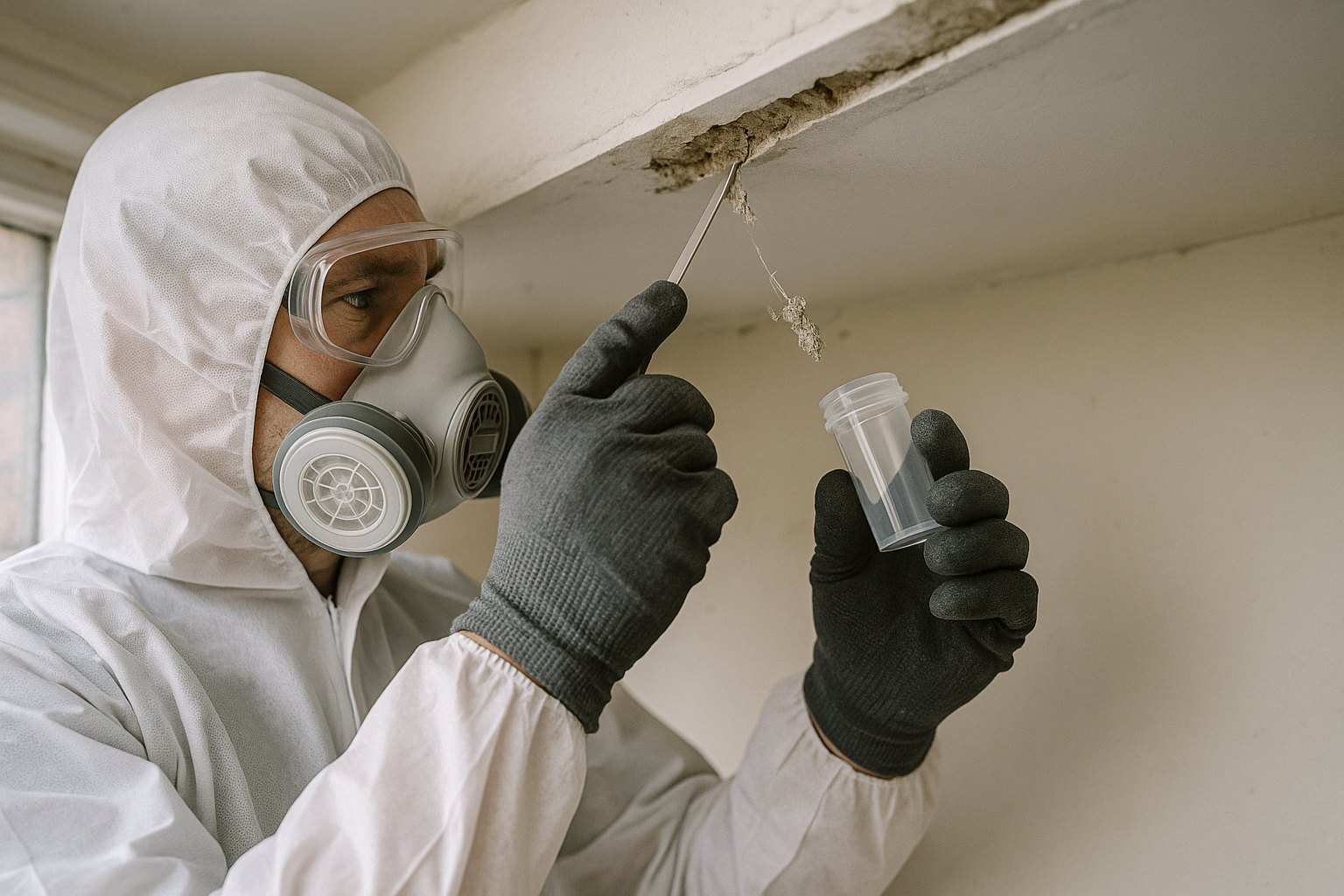
Because chrysotile could be spun, woven and mixed into products so easily, it appeared in a huge range of domestic and commercial materials. Many properties still contain it today.
Where chrysotile is often found
- Asbestos cement roofing and wall sheets
- Garage and outbuilding roofs
- Floor tiles and adhesives
- Textured coatings
- Gaskets and seals
- Some insulation products and linings
- Older consumer and industrial products
Why chrysotile still needs careful management
There is a persistent myth that chrysotile is safe, or safe enough to ignore. It is not. Like all types of asbestos, chrysotile can cause serious asbestos-related disease if fibres are released and inhaled.
For a property manager, the practical issue is not the nickname white asbestos. It is whether the material is present, what condition it is in, how friable it is, and whether planned work could disturb it.
Amosite asbestos
Amosite is one of the most significant types of asbestos found during UK surveys, particularly in non-domestic premises. It belongs to the amphibole family and is commonly associated with asbestos insulating board.
This matters in practice because AIB is often hidden in places contractors need to access, such as risers, ceiling voids, fire protection linings and service cupboards. It is regularly mistaken for ordinary board by untrained staff.
Where amosite is often found
- Asbestos insulating board in partitions and ceiling voids
- Fire protection panels and service risers
- Soffits and ceiling tiles
- Thermal insulation products
- Some floor tiles and composite materials
Why amosite creates so many site problems
Amosite-containing products are often more friable than asbestos cement. If they are cut, drilled, broken or allowed to deteriorate, they can release fibres more readily.
That is why unplanned maintenance is such a common trigger for asbestos incidents. Electrical work, fire stopping, plumbing alterations and data cabling can all disturb hidden AIB if the survey information is poor or ignored.
What to do if amosite is suspected
- Stop intrusive work immediately
- Prevent access if the material is damaged
- Check the asbestos register and previous survey records
- Arrange targeted inspection or sampling if information is unclear
- Update the management plan before work restarts
Crocidolite asbestos
Crocidolite, often called blue asbestos, is another of the recognised types of asbestos. It is an amphibole asbestos known for very fine fibres and is associated with some of the higher-risk asbestos-containing materials found in older buildings and plant.
Although it is not as commonly found as chrysotile in general building products, crocidolite remains highly significant where it does occur.
Where crocidolite may be found
- Some sprayed coatings
- Pipe and thermal insulation products
- Certain cement materials
- Older insulation boards and specialist products
- Some gaskets and industrial applications
Practical risk points for crocidolite
The issue with crocidolite is not just the mineral itself, but the kinds of materials it was used in. Sprayed coatings and insulation products can be highly friable, which means even minor disturbance may release fibres.
If crocidolite is suspected in plant rooms, ducts, service areas or older industrial premises, work should pause until a competent surveyor has assessed the area and suitable controls are in place.
Tremolite asbestos
Tremolite is one of the less commonly discussed types of asbestos, but it still matters because it can appear as a contaminant in other materials. It is an amphibole asbestos with straight fibres and may not be obvious from appearance alone.
Where tremolite may be encountered
- As a contaminant in vermiculite insulation
- Within some talc-based products
- In certain sealants, fillers or coatings
- In mixed mineral deposits used for manufactured products
Why vermiculite needs caution
Loose-fill vermiculite insulation in lofts and cavities should always be treated carefully. Not all vermiculite contains asbestos, but some sources have been associated with tremolite contamination.
If you find lightweight granular insulation that looks like flaky mica, do not move it or bag it up. Isolate the area and arrange professional assessment and sampling.
Anthophyllite asbestos
Anthophyllite is among the rarer types of asbestos encountered in UK buildings. It is another amphibole asbestos and may appear in limited insulation products or as a contaminant in mineral-based materials.
Where anthophyllite may appear
- As a contaminant in talc products
- In some insulation materials
- In limited cement or composite products
- In mineral-based products affected by natural contamination
You are unlikely to identify anthophyllite by sight, and there is no practical reason to try. The right approach is to rely on survey findings, material assessment and laboratory analysis rather than guesswork.
Actinolite asbestos
Actinolite is another of the less common types of asbestos, but it is still part of the recognised asbestos group and should be treated with the same level of caution. Like tremolite and anthophyllite, it may appear as a contaminant rather than as the main mineral deliberately added to a product.
Where actinolite may be found
- In some mineral-based insulation materials
- As a contaminant in certain sealants and coatings
- In limited composite building products
- In naturally contaminated mineral deposits used in manufacture
The practical advice is the same as for all types of asbestos: do not make assumptions from appearance, and do not disturb suspect materials without proper assessment.
Which types of asbestos are most likely to be found in UK properties?
In day-to-day surveying across the UK, chrysotile, amosite and crocidolite are the asbestos types most people are likely to hear about. The remaining three minerals are less commonly identified in mainstream building materials, often appearing as contaminants rather than the primary fibre used in manufacture.
That said, risk management should never depend on whether a mineral is common or rare. If a material contains asbestos, the duty to assess and manage it remains the same.
What surveyors focus on in practice
When surveyors inspect a building, they do not simply ask which of the types of asbestos might be present. They also assess:
- The product type
- The surface treatment or sealing
- The condition of the material
- The extent of damage or deterioration
- The likelihood of disturbance during normal occupation
- The likelihood of disturbance during maintenance, refurbishment or demolition
This is why a damaged insulating board panel is usually a more urgent issue than an intact cement roof sheet. The material and the exposure potential drive the immediate risk.
How the types of asbestos affect survey and management decisions
Knowing the types of asbestos helps, but it is only one part of the decision-making process. Survey and management plans are based on the material assessment, the priority assessment and the planned use of the building.
Under the Control of Asbestos Regulations, those responsible for non-domestic premises must identify asbestos-containing materials, assess their condition and put arrangements in place to manage the risk. HSE guidance supports a practical approach: know what is present, know where it is, assess the risk, and stop people disturbing it.
When management in place may be suitable
- The material is in good condition
- It is sealed or enclosed
- It is unlikely to be disturbed
- Its location is recorded clearly in the asbestos register
- Staff and contractors are given the right information
- The material is inspected periodically
When removal may need to be considered
- The material is damaged or deteriorating
- It is friable and exposed
- Planned works will disturb it
- It cannot be reliably protected in place
- Repeated maintenance access creates ongoing risk
Removal is not automatically the best option for every asbestos-containing material. In many cases, proper management is safer and more proportionate. The correct route depends on the survey findings, the building use and the work planned.
Practical steps if you suspect asbestos in your building
If you are responsible for a property and come across a suspicious material, speed matters, but guessing is where problems start. A few practical steps can prevent a minor concern becoming a reportable incident, a contractor exposure or a costly project delay.
- Stop work if the material might be disturbed.
- Keep people away from the immediate area if the material is damaged.
- Do not sample it yourself unless you are properly trained, equipped and authorised.
- Check existing records, including the asbestos register and previous surveys.
- Arrange the right survey for the building and the planned activity.
- Brief contractors properly before they start work.
- Update your records once new information is available.
This matters just as much in a small office as it does in a hospital or industrial site. Most asbestos incidents are not caused by unusual materials. They happen because ordinary work starts without reliable asbestos information.
Common mistakes people make with the types of asbestos
Many asbestos problems start with assumptions. The most common errors are simple, avoidable and expensive.
- Assuming a material is safe because it looks solid
- Assuming colour proves the asbestos type
- Believing only old industrial buildings contain asbestos
- Thinking chrysotile is harmless
- Relying on outdated survey information after refurbishment
- Allowing contractors to open up hidden areas without the right survey
- Failing to share the asbestos register before maintenance starts
If you manage buildings, the practical fix is straightforward: keep records current, use competent surveyors, and make asbestos information part of every work planning process.
Frequently Asked Questions
What are the 3 main types of asbestos found in buildings?
The three asbestos types most commonly associated with UK buildings are chrysotile, amosite and crocidolite. However, all six recognised types of asbestos are hazardous and should be managed in line with the Control of Asbestos Regulations and HSE guidance.
Can you identify the types of asbestos by colour?
No. Terms such as white, brown and blue asbestos are informal labels, not a reliable identification method. Paint, age, dust, weathering and product composition can all change appearance, so confirmation requires proper survey work and laboratory analysis.
Which type of asbestos is most common in UK properties?
Chrysotile is the asbestos type most commonly encountered in UK properties. It was used in a wide range of products, including cement sheets, floor tiles, textured coatings and seals. Even so, the risk depends heavily on the product and its condition.
Are all types of asbestos dangerous?
Yes. All types of asbestos are hazardous if fibres are released and inhaled. The level of immediate risk depends on the material, its friability, its condition and whether it is likely to be disturbed, but none of the asbestos types should be treated as safe.
What should I do if I think a material contains asbestos?
Stop work, prevent further disturbance, check existing asbestos records and arrange a suitable professional survey. Do not drill, scrape or break the material to investigate it yourself.
If you need clear answers on suspect materials, Supernova Asbestos Surveys can help with surveying, sampling and practical advice for occupied buildings, refurbishment projects and demolition planning. Call 020 4586 0680 or visit asbestos-surveys.org.uk to arrange a survey anywhere in the UK.