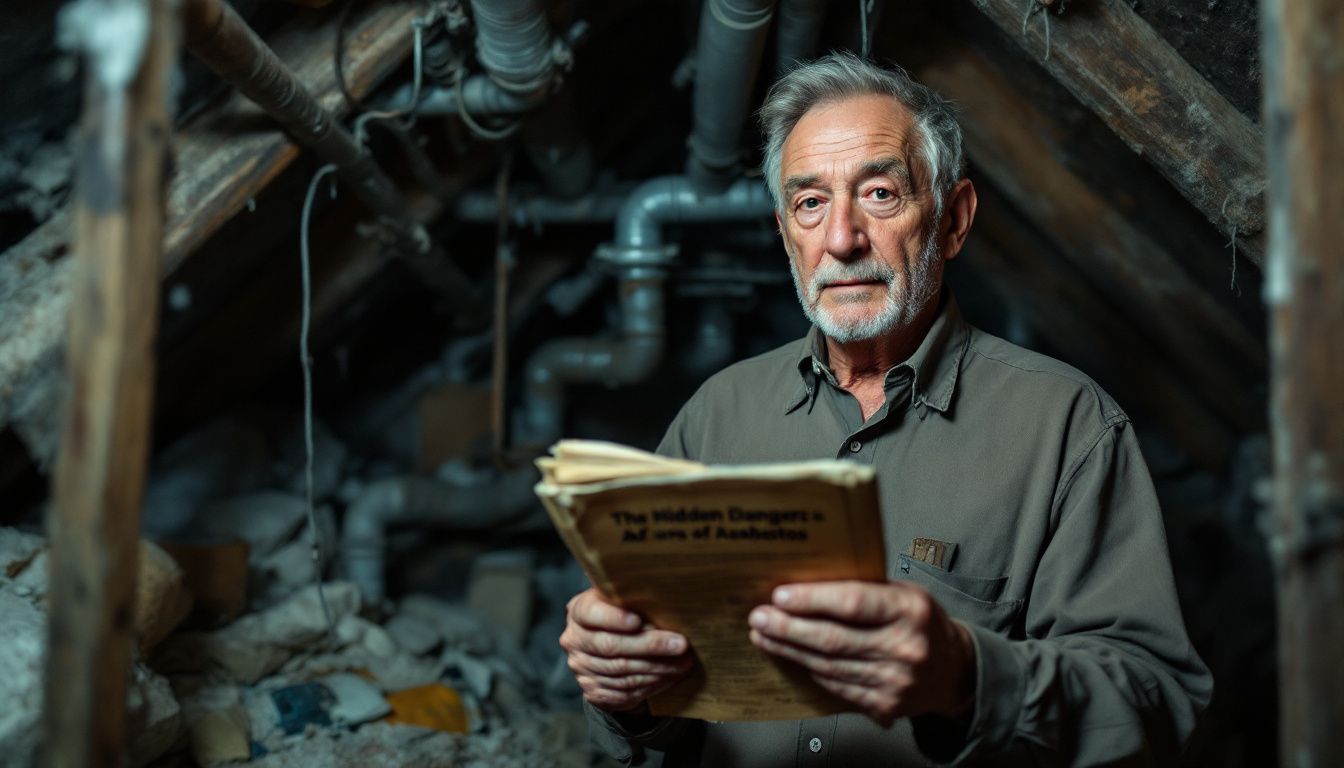
From Ancient Wonder to Modern Hazard: The History of Asbestos Use and Its Deadly Consequences
Few materials have travelled as far in human esteem as asbestos — from revered wonder of the ancient world to one of the most tightly regulated substances on the planet. The history of asbestos use and its deadly consequences spans thousands of years, multiple continents, and an industrial boom that left a legacy of disease still claiming lives today.
Understanding how we got here matters — not just for historical curiosity, but because millions of UK buildings still contain asbestos-containing materials (ACMs) installed during the peak decades of use. If you manage, own, or work in a property built before 2000, this history is directly relevant to your legal duties right now.
The Ancient Origins of Asbestos: A Mineral Wrapped in Myth
Long before asbestos became an industrial commodity, ancient civilisations were already putting it to work. Artisans in what is now Finland mixed asbestos fibres with clay to produce flame-resistant pottery as far back as 2500 BC. In Egypt, the material appeared in embalming practices, and it was used in lamp and candle wicks thousands of years before the modern era.
The Greek historian Herodotus documented asbestos shrouds, noting how they kept cremated ashes separate from wood embers. Chrysotile asbestos from Cyprus and tremolite asbestos from Italy were both in use across the ancient Mediterranean world. The Romans reportedly wove it into napkins that could be cleaned simply by throwing them into fire.
The myths surrounding asbestos were as durable as the fibre itself. Some ancient writers claimed it came from the fur of a salamander that lived in flame. Others believed it was the hair of a creature that thrived in volcanoes. These stories speak to just how extraordinary the material seemed — a substance that would not burn, would not rot, and could be spun like wool.
Even military applications emerged early. During the First Crusade in 1095, knights reportedly used asbestos bags in flaming trebuchet projectiles, combining the material’s fire resistance with devastating effect on enemy fortifications. The ancient world’s relationship with asbestos was one of wonder — but the consequences of that relationship would not become clear for centuries.
The Industrial Revolution: When Asbestos Became Big Business
The ancient world’s fascination with asbestos was nothing compared to what the Industrial Revolution unleashed. As factories multiplied, steam engines roared, and cities expanded at pace, the demand for fireproofing and insulation became urgent. Asbestos answered that call perfectly.
The first commercial asbestos mines opened in the 1870s in Quebec, Canada. Industrial-scale mining quickly followed in Scotland, Germany, and England, and Australia joined the extraction boom in the 1880s. By the early 1900s, global asbestos production exceeded 30,000 tonnes annually — and by 1910, world production had reached 109,000 metric tonnes, more than triple the figure from just a decade earlier.
The trajectory only steepened from there. US asbestos consumption alone peaked at over 800,000 tonnes in the early 1970s, a figure that reflects just how thoroughly the material had embedded itself into construction, manufacturing, and shipbuilding worldwide.
Where Was Asbestos Used?
During the peak decades of use, asbestos turned up in an extraordinary range of applications across virtually every sector of the built environment:
- Pipe and boiler insulation in factories, power stations, and ships
- Sprayed coatings on structural steelwork for fire protection
- Ceiling and floor tiles in schools, offices, and hospitals
- Roof sheeting and guttering on commercial and domestic buildings
- Insulating board used as partition walls and around heating systems
- Textured decorative coatings such as Artex on ceilings
- Gaskets, brake linings, and clutch pads in vehicles and machinery
- Fire blankets, protective clothing, and theatre curtains
In the UK, asbestos use in construction was at its height from the 1950s through to the mid-1980s. Any building constructed or significantly refurbished during this period is likely to contain ACMs somewhere. That is why a management survey remains the essential first step for any dutyholder responsible for a non-domestic property built before 2000.
The First Warnings: When Evidence of Harm Began to Emerge
The history of asbestos use and its deadly consequences is also a history of warnings ignored. The first documented death from asbestos-related pulmonary failure was recorded by Dr Montague Murray in London in 1906. The victim was a young man who had spent years working in an asbestos textile factory, and his lungs — examined post-mortem — were found to contain asbestos fibres.
The British Medical Journal published warnings about the hazards of asbestos dust in the 1920s. Factory inspectors in the UK were raising alarms through the same decade, and by 1931, the UK had introduced the Asbestos Industry Regulations — some of the earliest occupational health legislation in the world specifically addressing asbestos dust.
Yet production continued to climb. The economic incentives were enormous, the material was genuinely useful, and the latency period of asbestos-related diseases — often 20 to 50 years between exposure and diagnosis — meant that the full scale of the harm was slow to become visible in public health data.
The gap between what was known in medical and regulatory circles and what was acted upon industrially remains one of the most troubling aspects of this story. Manufacturers and employers had access to evidence of harm long before meaningful action was taken to protect workers.
The Diseases Asbestos Causes
Asbestos fibres, when disturbed, release microscopic particles that can be inhaled deep into the lungs. Once lodged there, the body cannot expel them. Over years and decades, they cause serious and often fatal disease.
Mesothelioma
Mesothelioma is a cancer of the lining of the lungs, abdomen, or heart, almost exclusively caused by asbestos exposure. It is aggressive, incurable, and typically diagnosed late — often decades after the original exposure. There is no meaningful treatment that offers a cure, only management of symptoms and life extension in some cases.
Asbestos-Related Lung Cancer
Similar in presentation to lung cancer from other causes, asbestos-related lung cancer is directly linked to fibre inhalation. It carries a particularly elevated risk in those who also smoked — the combination of asbestos exposure and smoking dramatically multiplies the risk compared to either factor alone.
Asbestosis
Asbestosis is a chronic scarring of lung tissue that causes progressive breathlessness and, in severe cases, respiratory failure. It develops after prolonged, heavy exposure and has no cure. Those affected face a slow deterioration in lung function that significantly affects quality of life.
Pleural Disease
Pleural plaques and pleural thickening are changes to the lining of the lungs that can restrict breathing and serve as markers of past exposure. While pleural plaques themselves are not cancerous, their presence indicates that asbestos fibres have reached the pleura — and that the risk of more serious disease remains elevated.
There is no safe level of asbestos exposure. Even relatively brief contact with high concentrations of fibres carries risk, and the diseases it causes are irreversible. This is why the regulatory response, when it finally came, was so sweeping — and why the duty to manage asbestos in existing buildings remains so serious today.
The Global Regulatory Response: Banning a Killer
By the latter half of the twentieth century, the scientific evidence linking asbestos to fatal disease was overwhelming and irrefutable. Governments around the world began to act, though the pace varied considerably by country and by type of asbestos.
The UK banned blue asbestos (crocidolite) and brown asbestos (amosite) in 1985. White asbestos (chrysotile) — long argued by industry to be less dangerous — was not banned in the UK until 1999. That ban brought the UK in line with a growing international consensus.
The European Union prohibited asbestos entirely in 2005, and many other countries followed with full or partial bans through the 1990s and 2000s. In the United States, the process was considerably slower — a comprehensive federal ban on chrysotile asbestos was not finalised until 2024, a significant development for a country that had long resisted full prohibition.
The bans, however significant, did not make the problem disappear. Decades of intensive use mean that asbestos is still present in an enormous number of buildings across the UK and around the world. The regulatory focus shifted from preventing new use to managing what remained in place.
The UK Legal Framework Today
In Great Britain, the management of asbestos is governed by the Control of Asbestos Regulations, which place a legal duty on the owners and managers of non-domestic premises to identify ACMs, assess their condition, and manage the risk they pose. This is known as the duty to manage, and it applies to a wide range of property types — from offices and schools to warehouses and communal areas of residential blocks.
The HSE’s guidance document HSG264 sets out exactly how surveys must be conducted and what they must cover. Dutyholders who fail to comply face significant financial penalties and, more seriously, risk exposing workers, tenants, and visitors to a known carcinogen.
Refurbishment and Demolition Work
If you are planning renovation or demolition work, a refurbishment survey is legally required before work begins. This is a more intrusive survey that locates ACMs in the specific areas where work will take place, ensuring contractors are not unknowingly disturbing asbestos-containing materials.
Ongoing Monitoring Duties
For properties where an asbestos register already exists, a re-inspection survey must be carried out periodically to check whether the condition of known ACMs has changed. Asbestos in good condition and left undisturbed poses minimal risk — but that condition can change over time, and regular monitoring is a legal requirement under the Control of Asbestos Regulations.
The Continuing Legacy: Asbestos in UK Buildings Today
The ban on asbestos in the UK did not make the problem disappear overnight. Schools, hospitals, offices, warehouses, and residential properties all potentially contain ACMs — particularly those built or refurbished between the 1950s and 1980s. The HSE consistently identifies asbestos-related disease as the leading single work-related cause of death in the UK, and the long latency of mesothelioma means that exposure from decades past is still producing diagnoses today.
Tradespeople are particularly at risk. Electricians, plumbers, joiners, and other construction workers who regularly work in older buildings may encounter asbestos without knowing it. Raising awareness of where ACMs are likely to be found — and ensuring that proper surveys are carried out before any intrusive work begins — is essential to preventing new cases of asbestos-related disease in the coming decades.
The history of asbestos use and its deadly consequences is not simply a matter of the past. It is an active, ongoing public health issue that requires vigilance from every property owner, manager, and tradesperson working in the UK’s existing building stock.
What to Do If You Suspect Asbestos in Your Property
If you suspect a material in your property may contain asbestos, the first rule is straightforward: do not disturb it. Asbestos in good condition and left undisturbed is generally low risk. The danger arises when fibres are released into the air through cutting, drilling, sanding, or breaking.
Your practical options are:
- Commission a professional survey — the most reliable way to identify and assess ACMs in your property, carried out by a qualified surveyor who will produce a written register and management plan.
- Do not attempt DIY sampling — taking samples without proper training and equipment can release fibres and is not recommended. A professional will collect samples safely and send them to an accredited laboratory for analysis.
- Keep records — once a survey has been completed, maintain the asbestos register and ensure anyone carrying out work on the premises is made aware of its contents before they begin.
- Review regularly — ACMs can deteriorate over time. A periodic re-inspection keeps your register accurate and your legal duties met.
- Act before any refurbishment — never commission building work in an older property without first establishing whether ACMs are present in the affected areas.
Supernova Asbestos Surveys operates nationally, with specialist teams covering major urban areas. Whether you need an asbestos survey in London, an asbestos survey in Manchester, or an asbestos survey in Birmingham, our accredited surveyors can help you meet your legal obligations and protect the people who use your building.
Speak to Supernova Asbestos Surveys
With over 50,000 surveys completed across the UK, Supernova Asbestos Surveys has the experience, accreditation, and national reach to support property owners and managers at every stage — from initial identification through to ongoing monitoring and compliance.
Call us on 020 4586 0680 or visit asbestos-surveys.org.uk to book a survey or speak to one of our qualified surveyors about your property’s specific requirements.
Frequently Asked Questions
When was asbestos banned in the UK?
The UK banned blue asbestos (crocidolite) and brown asbestos (amosite) in 1985. White asbestos (chrysotile) was banned in 1999, completing a full prohibition on the import, supply, and use of all forms of asbestos in Great Britain.
Why is asbestos still a problem if it has been banned?
The ban prevented new asbestos from being installed, but it did not remove what was already in place. Decades of intensive use mean that ACMs remain present in a very large number of UK buildings, particularly those constructed or refurbished between the 1950s and 1980s. Managing that legacy material safely is an ongoing legal and public health responsibility.
What diseases does asbestos exposure cause?
Asbestos exposure is linked to several serious conditions, including mesothelioma (a cancer of the lung lining), asbestos-related lung cancer, asbestosis (chronic scarring of lung tissue), and pleural disease. All of these conditions have long latency periods, meaning symptoms may not appear until 20 to 50 years after exposure.
Do I legally need an asbestos survey?
If you are the owner or manager of a non-domestic property built before 2000, the Control of Asbestos Regulations place a legal duty on you to identify and manage ACMs. A management survey is the standard way to fulfil this duty. A refurbishment survey is additionally required before any renovation or demolition work takes place.
Is asbestos dangerous if left undisturbed?
Asbestos in good condition and left undisturbed poses a low risk, as fibres are only hazardous when they become airborne. However, ACMs can deteriorate over time, and their condition must be monitored regularly. The risk increases significantly when materials are damaged, disturbed, or subject to building work — which is why professional surveys and periodic re-inspections are so important.