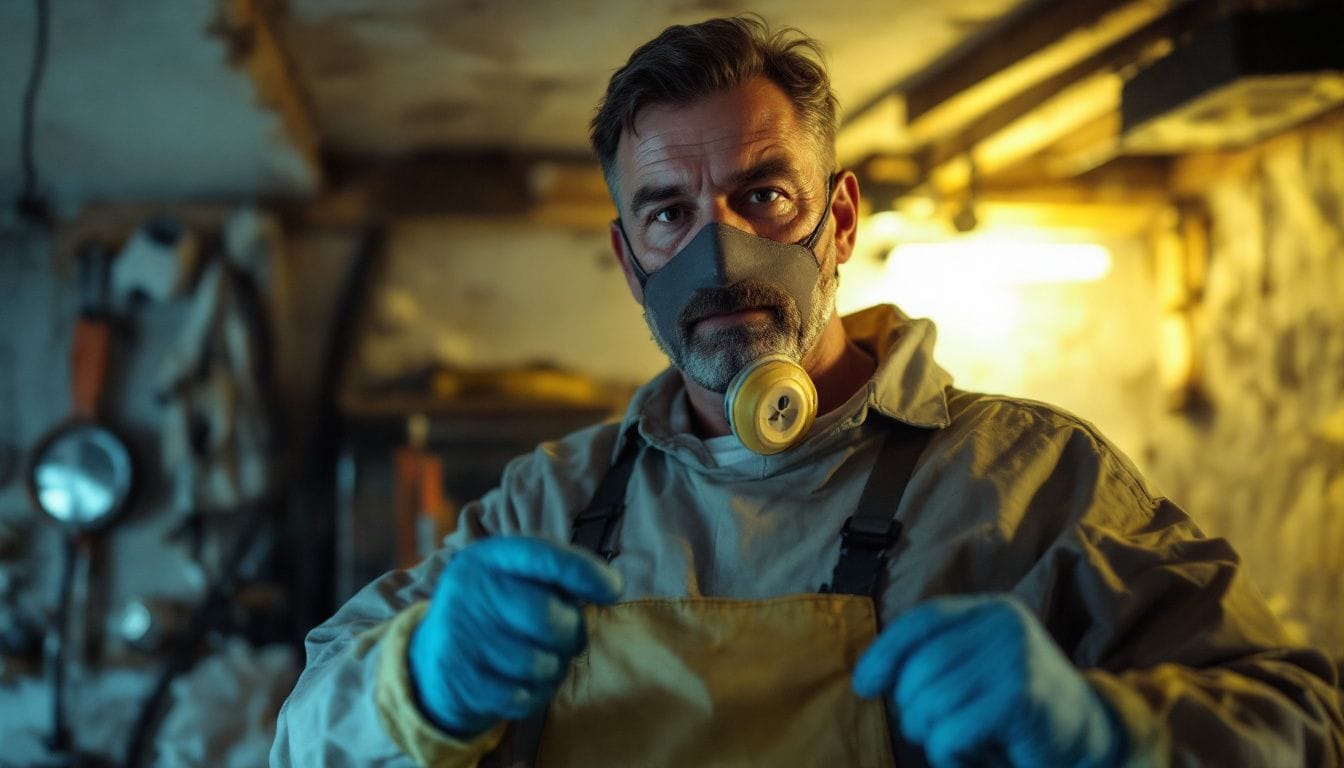
Testing Asbestos Yourself: The Risks and Realities You Need to Understand
Every year, people across the UK pick up a screwdriver, head into the loft, or pull up old floor tiles — and unknowingly disturb materials that could kill them decades later. Testing asbestos yourself carries risks that go far beyond a DIY project gone wrong, and the realities of what happens when untrained hands disturb asbestos-containing materials (ACMs) are sobering.
Whether you’ve found a suspicious material in your home or you’re managing a commercial property, here’s what you genuinely need to know before you touch anything.
Why Asbestos Is Still a Serious Threat in UK Buildings
Asbestos was widely used in UK construction until its full ban in 1999. Any building constructed or refurbished before that date could contain ACMs — and there are millions of such buildings still in use today.
Materials that commonly contain asbestos include:
- Textured coatings such as Artex on ceilings and walls
- Floor tiles and the adhesive beneath them
- Pipe lagging and boiler insulation
- Roof sheeting and soffit boards
- Ceiling tiles and partition boards
- Sprayed coatings on structural steelwork
The problem is that asbestos fibres are invisible to the naked eye. You cannot tell whether a material contains asbestos simply by looking at it, feeling it, or smelling it. That’s precisely where the danger of testing asbestos yourself begins.
The Health Consequences of Asbestos Exposure
Asbestos fibres, once airborne, can be inhaled deep into the lungs. The body cannot break them down or expel them, and over time — often 20 to 50 years after exposure — they can cause life-threatening diseases.
These diseases include:
- Mesothelioma — an aggressive cancer of the lining of the lungs or abdomen, almost exclusively caused by asbestos exposure and currently incurable
- Asbestos-related lung cancer — carrying the same risk factors as smoking-related lung cancer
- Asbestosis — a chronic scarring of the lung tissue that causes progressive breathlessness
- Pleural thickening — a condition where the lining of the lungs thickens, restricting breathing capacity
There is no known safe level of asbestos exposure. Even a single significant exposure event can be enough to trigger disease in later life. This is not a risk that can be mitigated by wearing a dust mask purchased from a hardware shop.
Testing Asbestos Yourself: What the Risks Actually Look Like
The idea of testing asbestos yourself seems straightforward — take a small sample, send it off, get a result. But the act of collecting that sample is precisely where the danger lies.
Disturbing the Material
When you cut, drill, scrape, or break into a material that contains asbestos, you release fibres into the air. Even a small disturbance — chipping a corner off a ceiling tile or scraping a section of floor adhesive — can generate a significant fibre release in an enclosed space.
Without the correct respiratory protective equipment (RPE), a sealed work area, and proper decontamination procedures, those fibres don’t simply disappear. They settle on surfaces, on clothing, and in the air you breathe — and they can be carried to other areas of the building on your shoes and clothes.
The Limits of Consumer Sampling Kits
There are testing kit options available to the public that allow you to collect a sample and send it to a laboratory for analysis. These can be appropriate in very limited circumstances — for example, where a material is already damaged and a small sample can be taken without causing additional disturbance.
However, they come with significant limitations:
- They do not identify all ACMs in a property — only the specific material you’ve sampled
- They don’t produce a legally compliant asbestos register or management plan
- They cannot assess the condition or risk rating of materials
- Improper sample collection can still release fibres and expose you to harm
- A negative result from one sample does not mean the rest of the material is asbestos-free
In short, a DIY testing kit is not a substitute for a professional survey. It can provide a single data point, but it cannot give you the full picture of what’s in your building or what you need to do about it.
Cross-Contamination Risks
One of the most underestimated dangers of testing asbestos yourself is cross-contamination. Fibres disturbed during amateur sampling can spread through a building via air currents, HVAC systems, and foot traffic.
What starts as a localised problem in one room can quickly become a building-wide contamination issue — one that is significantly more expensive and disruptive to remediate than the original problem would have been.
The Legal Position on DIY Asbestos Work
The Control of Asbestos Regulations sets out a clear legal framework for asbestos work in the UK. Certain types of asbestos work require a licence from the Health and Safety Executive (HSE), and even unlicensed work must follow strict notification and procedural requirements.
For homeowners carrying out work on their own domestic property, the regulations are somewhat different — but the health risks are identical. There is no legal exemption from the consequences of asbestos exposure simply because you own the building.
For anyone carrying out work on commercial premises, or anyone employing others to do so, the legal obligations are stringent. Failure to comply can result in:
- Unlimited fines in the Crown Court
- Custodial sentences of up to 12 months in the Magistrates’ Court
- Prohibition notices and enforcement action from the HSE
- Civil liability claims from anyone who suffers harm as a result
The financial risk of getting this wrong far exceeds the cost of doing it properly from the outset. Legal costs, remediation expenses, and reputational damage compound quickly when asbestos obligations are ignored.
What a Professional Asbestos Survey Actually Does
A professional asbestos survey does far more than confirm whether a single material contains asbestos. Depending on the type of survey required, it provides a complete picture of all ACMs in a property, their condition, their risk rating, and what action — if any — needs to be taken.
Management Survey
A management survey is the standard survey for occupied buildings. It identifies the location and condition of all ACMs that could be disturbed during normal occupation, maintenance, or minor works, and produces an asbestos register and management plan that satisfies the duty to manage under the Control of Asbestos Regulations.
Refurbishment Survey
A refurbishment survey is required before any significant renovation or refurbishment work. It is more intrusive than a management survey, accessing areas that will be disturbed during the works. It must be completed before work begins — not during or after.
Demolition Survey
Before any structure is demolished, a demolition survey is legally required. This is the most thorough type of survey, involving full access to all areas of the building to ensure no ACMs are missed before the structure comes down. Skipping this step is not only dangerous — it is a serious breach of the Control of Asbestos Regulations.
Re-Inspection Survey
If you already have an asbestos register in place, a re-inspection survey allows you to monitor the condition of known ACMs over time. This is a legal requirement for duty holders managing asbestos in non-domestic premises and ensures that any deterioration is identified and acted upon promptly.
How Professional Surveyors Safely Collect Samples
When a qualified surveyor collects a sample, it is not simply a case of chipping off a piece of material. The process involves a series of carefully controlled steps:
- Wetting the material before sampling to suppress fibre release
- Using a sealed container to capture the sample immediately
- Sealing and labelling the sample correctly for laboratory analysis
- Resealing the sampled area with appropriate filler or tape
- Decontaminating all equipment and the immediate area
- Sending samples to a UKAS-accredited laboratory for polarised light microscopy (PLM) analysis
Each of these steps exists for a reason. Skip any one of them and you increase the risk of fibre release, contamination, and inaccurate results. This is the standard set out in HSG264 — the HSE’s definitive guidance on asbestos surveys — and it is the standard that every Supernova surveyor follows on every visit.
What Happens When Asbestos Needs to Be Removed
Not all ACMs need to be removed. In many cases, materials that are in good condition and are not at risk of disturbance are best left in place and managed. Removal itself carries risks — it’s the act of disturbing the material that releases fibres.
Where removal is necessary, it must be carried out by qualified professionals following strict HSE-approved procedures. This includes setting up a sealed work area, using appropriate RPE and protective clothing, conducting air monitoring during and after the work, and disposing of waste at a licensed facility.
Supernova’s asbestos removal service is carried out by trained, licensed operatives who follow every stage of this process. Attempting to replicate this at home is not simply inadvisable — in many cases, it is illegal.
Fire Risk and Asbestos: An Overlooked Connection
There is an often-overlooked connection between asbestos management and fire safety. Asbestos-containing materials were frequently used as fire-resistant insulation in older buildings. When those materials are disturbed — either during DIY work or in the event of a fire — they can release fibres that compound the health hazards already present in an emergency situation.
If you manage a commercial or residential property, a fire risk assessment alongside your asbestos management plan provides a more complete picture of the hazards in your building. These two assessments complement each other and are both legal requirements for many premises.
Supernova’s Survey Process: What to Expect
When you book a survey with Supernova Asbestos Surveys, you can expect a straightforward, professional process from start to finish.
- Booking: Contact us by phone or online. We confirm availability and typically offer same-week appointments.
- Site visit: A BOHS P402-qualified surveyor attends at the agreed time and carries out a thorough visual inspection of the property.
- Sampling: Representative samples are collected from suspect materials using correct containment and suppression procedures.
- Lab analysis: Samples are analysed at our UKAS-accredited laboratory using polarised light microscopy.
- Report delivery: You receive a detailed asbestos register and risk-rated management plan in digital format within 3–5 working days, fully compliant with HSG264 and the Control of Asbestos Regulations.
All pricing is transparent and fixed — no hidden fees. Surveys start from £195 for a standard residential or small commercial property.
Asbestos Surveys Nationwide
Supernova operates across the UK, with local teams available in every major city and region. If you need an asbestos survey London, our team covers the entire Greater London area with same-week availability. For those in the north, our asbestos survey Manchester service covers Manchester and the surrounding region with the same speed and professionalism.
Wherever you are in England, Scotland, or Wales, we can get a qualified surveyor to you quickly. With over 50,000 surveys completed nationwide, we have the experience and reach to help any property owner or manager fulfil their asbestos obligations safely and legally.
Ready to Get a Professional Survey?
Don’t leave asbestos to chance. If you suspect ACMs in your property — or you simply want peace of mind — the safest and most legally sound step you can take is to book a survey with Supernova Asbestos Surveys today.
Call us on 020 4586 0680 or visit asbestos-surveys.org.uk to get a fixed-price quote. Our team is ready to help you manage asbestos safely, legally, and without the risks that come with going it alone.
Frequently Asked Questions
Can I legally test for asbestos myself in my own home?
There is no law that explicitly prohibits a homeowner from collecting a sample from their own domestic property. However, the act of disturbing an asbestos-containing material — even to take a small sample — carries genuine health risks. Consumer testing kits can provide a result for a single sample, but they cannot replace a professional survey, and improper sampling can release harmful fibres. The safest approach is always to have a qualified surveyor assess the material before anything is disturbed.
What is the difference between a DIY testing kit and a professional asbestos survey?
A DIY testing kit tells you whether one specific sample contains asbestos. A professional survey assesses the entire property, identifies all asbestos-containing materials, evaluates their condition and risk rating, and produces a legally compliant asbestos register and management plan. Only a professional survey satisfies the duty to manage requirements under the Control of Asbestos Regulations for non-domestic premises.
Is it dangerous to be in a room where asbestos has been disturbed?
Yes, potentially. Once asbestos fibres become airborne, they can remain suspended for hours and can be inhaled by anyone in the vicinity. The level of risk depends on the type of asbestos, the extent of the disturbance, and the duration of exposure. If you believe asbestos has been disturbed in your property, you should vacate the area, avoid spreading contamination by removing footwear before leaving the space, and contact a professional for advice before re-entering.
Do I need an asbestos survey before renovation work?
Yes. Before any refurbishment or renovation work on a building constructed or refurbished before 1999, a refurbishment survey is legally required. This applies to both commercial and domestic properties where contractors are engaged. Starting work without a survey not only puts workers at risk — it can expose the property owner to significant legal liability under the Control of Asbestos Regulations.
How long does an asbestos survey take?
The duration depends on the size and complexity of the property. A standard residential survey typically takes one to three hours on site. Larger commercial or industrial premises may require a full day or more. Supernova surveyors work efficiently to minimise disruption, and you’ll receive your full written report, including the asbestos register and management plan, within 3–5 working days of the site visit.