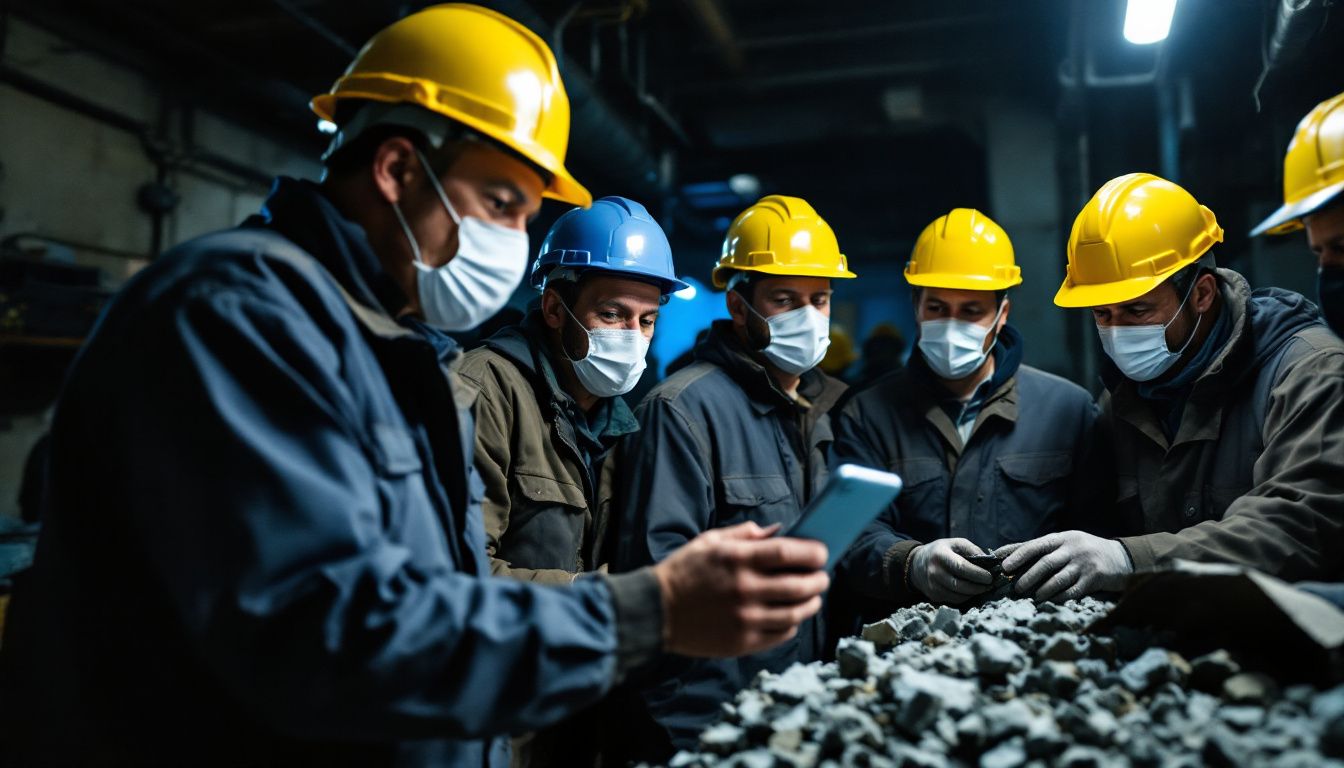
How Asbestos Destroyed Workers’ Health — And How Industry Tried to Hide It
The effects of asbestos on workers’ health from discovery to denial is one of the most damning stories in occupational medicine. Thousands of people went to work, breathed in fibres they couldn’t see, and decades later paid with their lives — while the companies that employed them often knew exactly what was happening.
This is not ancient history. Asbestos-related diseases still kill around 5,000 people in the UK every year, and the legacy of industrial exposure continues to ripple through communities across Britain. Understanding how we got here matters — for workers, property owners, and anyone responsible for managing buildings today.
The Rise of Asbestos: A Material the World Couldn’t Get Enough Of
Asbestos wasn’t adopted by accident. It was actively sought out. The mineral’s resistance to heat, fire, and chemical damage made it extraordinarily useful in a rapidly industrialising world, and from the early 20th century onwards, it was woven into the fabric of British industry.
Shipbuilding, construction, insulation, textiles, brake linings, pipe lagging — the list of applications was vast. Global consumption climbed steadily, reaching approximately 4.7 million tonnes by 1980. In the UK, it was used extensively in schools, hospitals, factories, and homes built throughout the post-war decades.
What makes this story so troubling is that the warnings came early. Medical observations flagging lung damage in asbestos workers appeared in the 1930s, and Britain responded — at least on paper — with the Asbestos Industry Regulations, introduced in 1931. These were among the first formal controls anywhere in the world.
But regulation and enforcement are different things. Despite those early controls, industrial use continued to expand for decades. Workers in shipyards, power stations, and construction sites were routinely exposed to dangerous fibre levels with little meaningful protection.
The Health Effects of Asbestos Exposure on Workers
When asbestos fibres are disturbed, they become airborne. Once inhaled, they lodge deep in the lung tissue and stay there. The body cannot break them down or expel them. Over years and decades, they cause progressive, irreversible damage.
Mesothelioma
Mesothelioma is a cancer of the lining of the lungs or abdomen, and it is almost exclusively caused by asbestos exposure. Approximately 90% of mesothelioma cases occur in people who were exposed to asbestos at work. It has a latency period of 20 to 50 years, meaning workers who were exposed in the 1960s and 1970s were still dying from it well into the 21st century.
There is no cure. Median survival after diagnosis is typically less than 18 months. In the UK, mesothelioma rates remain among the highest in the world — a direct consequence of the country’s heavy industrial use of asbestos.
Lung Cancer
Asbestos is a proven cause of lung cancer, and the risk is dramatically elevated in workers with significant exposure. Research has shown that the ratio of lung cancer deaths to mesothelioma deaths in exposed populations ranges from 11:1 to as high as 71:1, depending on the type of asbestos and the duration of exposure.
Smoking compounds the risk significantly. An asbestos-exposed worker who smokes faces a multiplicative — not merely additive — increase in lung cancer risk compared to a non-smoking, unexposed person.
Asbestosis
Asbestosis is a chronic, progressive scarring of the lung tissue caused by prolonged asbestos inhalation. It reduces the lungs’ ability to expand and transfer oxygen into the bloodstream, leading to breathlessness, fatigue, and a steadily declining quality of life. There is no reversal. Britain formally recognised asbestosis as an occupational disease in the 1930s, yet workers continued to develop it for generations afterwards.
Other Respiratory Conditions
Beyond the headline diagnoses, asbestos exposure is associated with pleural plaques (scarring of the lung lining), pleural effusions (fluid build-up around the lungs), and diffuse pleural thickening. These conditions may not always be fatal, but they cause significant, lasting impairment to breathing and quality of life.
Workers who lived through heavy exposure often describe years of worsening breathlessness, persistent coughing, and the psychological burden of waiting — knowing what they had been exposed to and what it might eventually mean.
Corporate Denial: How Industry Concealed the Evidence
The effects of asbestos on workers’ health from discovery to denial cannot be understood without examining how corporations responded to the evidence — and in many cases, actively worked to suppress it.
The pattern was consistent across multiple companies and multiple countries. Internal documents showed awareness of the risks. External communications minimised or denied them.
Early Suppression of Research
The Braun-Truan report of 1958 is a stark example. Commissioned by industry, it deliberately downplayed the association between asbestos and cancer. Industry-funded research was shaped not to find the truth, but to create doubt — a tactic that would later become familiar in other public health controversies.
Major manufacturers including Johns Manville and Union Carbide were aware of the health risks their workers faced, yet delayed regulatory action and suppressed findings that might have led to earlier controls. Internal memos from these companies, later disclosed in litigation, showed knowledge of the dangers going back decades before they acknowledged them publicly.
Manipulating the Regulatory Process
When regulators began to act, industry lobbied aggressively to water down protections. In the United States, industry representatives successfully pushed for asbestos warning labels that omitted the words “cancer” and “danger” — a deliberate effort to prevent workers from understanding the true risk they faced.
In 1968, testing at a Pittsburgh Corning facility found asbestos fibre levels running at approximately 80 times above the threshold limit value considered safe at the time. This was not an anomaly discovered and quickly corrected — it was part of a broader pattern of exposure that continued for years while companies pursued liability avoidance strategies rather than worker protection.
The “State of the Art” Defence
When litigation finally came, corporations frequently deployed what became known as the “State of the Art” defence — arguing that at the time of exposure, the risks were not sufficiently understood to hold them liable. Given the volume of internal evidence that has since emerged, this defence was, in many cases, deeply misleading.
Researchers with undisclosed industry funding, including David Bernstein, produced work that influenced regulatory decisions in ways that favoured manufacturers over workers. The concealment of funding sources made it difficult for regulators and courts to properly evaluate the independence of the research.
The UK Regulatory Response: Progress, But Too Slow
Britain’s regulatory journey with asbestos is a mixed record. The 1931 regulations were genuinely early by international standards. But the gap between regulation and effective enforcement remained wide for decades.
Sweden banned asbestos use in the mid-1970s. The UK took considerably longer. A full ban on all forms of asbestos in Britain did not come into force until 1999. In the intervening decades, workers in construction, maintenance, and demolition continued to be exposed — often without adequate information or protection.
Today, the Control of Asbestos Regulations set out clear legal duties for anyone who manages or works in buildings that may contain asbestos. The duty to manage asbestos applies to non-domestic premises, requiring dutyholder to identify asbestos-containing materials, assess the risk, and put a management plan in place. HSE guidance, including HSG264, provides detailed direction on how surveys should be conducted and records maintained.
If you manage a commercial property in the capital, an asbestos survey London is not just good practice — it is a legal requirement if asbestos-containing materials may be present. The same applies across the country.
The Legacy: Why This History Still Matters Today
Asbestos is still present in a vast number of UK buildings. Any structure built or refurbished before 2000 may contain it. That includes offices, schools, hospitals, warehouses, flats, and public buildings. The fibres do not degrade or disappear — they remain hazardous for as long as the materials containing them are present.
Maintenance workers, electricians, plumbers, and builders are among those at highest ongoing risk. These tradespeople may disturb asbestos-containing materials without knowing it — precisely the situation that the duty to manage is designed to prevent.
The historical lesson is clear: ignorance, whether genuine or manufactured, costs lives. Property managers and employers who fail to take asbestos seriously today are repeating the same pattern of inadequate action that caused so much harm in the 20th century.
If you’re responsible for a commercial property in the north-west, an asbestos survey Manchester will give you a clear picture of what’s present and what action, if any, is needed. Knowing is always better than not knowing.
What Proper Asbestos Management Looks Like Now
The Control of Asbestos Regulations require dutyholders to take a structured approach. That means:
- Commissioning a management survey to identify asbestos-containing materials in premises
- Assessing the condition and risk of those materials
- Producing and maintaining an asbestos register
- Sharing that register with anyone who may disturb the materials — contractors, maintenance staff, emergency services
- Reviewing the management plan regularly and updating it when the condition of materials changes
Where refurbishment or demolition work is planned, a more intrusive refurbishment and demolition survey is required before work begins. This ensures that any asbestos-containing materials are identified and properly managed or removed before contractors are put at risk.
HSG264 sets out the HSE’s guidance on conducting surveys — covering survey types, sampling methodology, and reporting requirements. A competent surveyor will follow this guidance and produce a report that gives dutyholders everything they need to meet their legal obligations.
For property managers in the Midlands, an asbestos survey Birmingham from a UKAS-accredited provider ensures the work is carried out to the standard the regulations require.
The Human Cost Behind the Statistics
It is easy to read about ratios and threshold limit values and lose sight of what these numbers represent. Behind every statistic is a worker who spent decades building ships, insulating pipes, or fitting out buildings — often proud of their trade — who then spent their final years fighting for breath.
The effects of asbestos on workers’ health from discovery to denial is ultimately a story about what happens when profit is prioritised over people, when evidence is suppressed rather than acted upon, and when regulatory systems are too slow or too weak to protect those most at risk.
That history carries a direct obligation for those managing buildings today. The information is no longer hidden. The risks are well understood. The regulations are clear. There is no defensible reason for failing to act.
Frequently Asked Questions
What diseases are caused by asbestos exposure in workers?
The main diseases caused by occupational asbestos exposure are mesothelioma, lung cancer, and asbestosis. Workers may also develop pleural plaques, pleural effusions, and diffuse pleural thickening. All of these conditions result from inhaling asbestos fibres, and most have long latency periods — symptoms may not appear until 20 to 50 years after exposure.
How did companies hide the dangers of asbestos from workers?
Multiple major manufacturers suppressed internal research, funded studies designed to create doubt rather than establish truth, and lobbied regulators to weaken warning requirements. Internal documents disclosed during litigation showed that companies including Johns Manville and Union Carbide had knowledge of the health risks long before they acknowledged them publicly. Industry representatives also successfully pushed for product labels that omitted words like “cancer” and “danger.”
When was asbestos banned in the UK?
A full ban on all forms of asbestos in the UK came into force in 1999. However, asbestos remains present in a large number of buildings constructed or refurbished before that date. The Control of Asbestos Regulations place a duty on those who manage non-domestic premises to identify, assess, and manage any asbestos-containing materials that are present.
Do I need an asbestos survey for my building?
If you manage or own a non-domestic building that was built or refurbished before 2000, you are likely to have a legal duty to manage asbestos under the Control of Asbestos Regulations. This begins with commissioning a management survey to identify any asbestos-containing materials. If you are planning refurbishment or demolition work, a more intrusive refurbishment and demolition survey is required before work begins. A competent, accredited surveyor can advise on which type of survey is appropriate for your situation.
How many people still die from asbestos-related diseases in the UK?
Asbestos-related diseases continue to cause around 5,000 deaths in the UK every year, making Britain one of the countries with the highest rates of mesothelioma in the world. This reflects the scale of industrial asbestos use during the 20th century and the long latency period of asbestos-related cancers. Deaths are expected to continue at significant levels for years to come as a result of historical exposures.
Supernova Asbestos Surveys has completed over 50,000 surveys across the UK, helping property managers, employers, and building owners meet their legal obligations and protect the people in their care. Whether you need a management survey, a refurbishment survey, or advice on your asbestos register, our experienced team is ready to help.
Call us on 020 4586 0680 or visit asbestos-surveys.org.uk to book your survey or speak to one of our specialists.