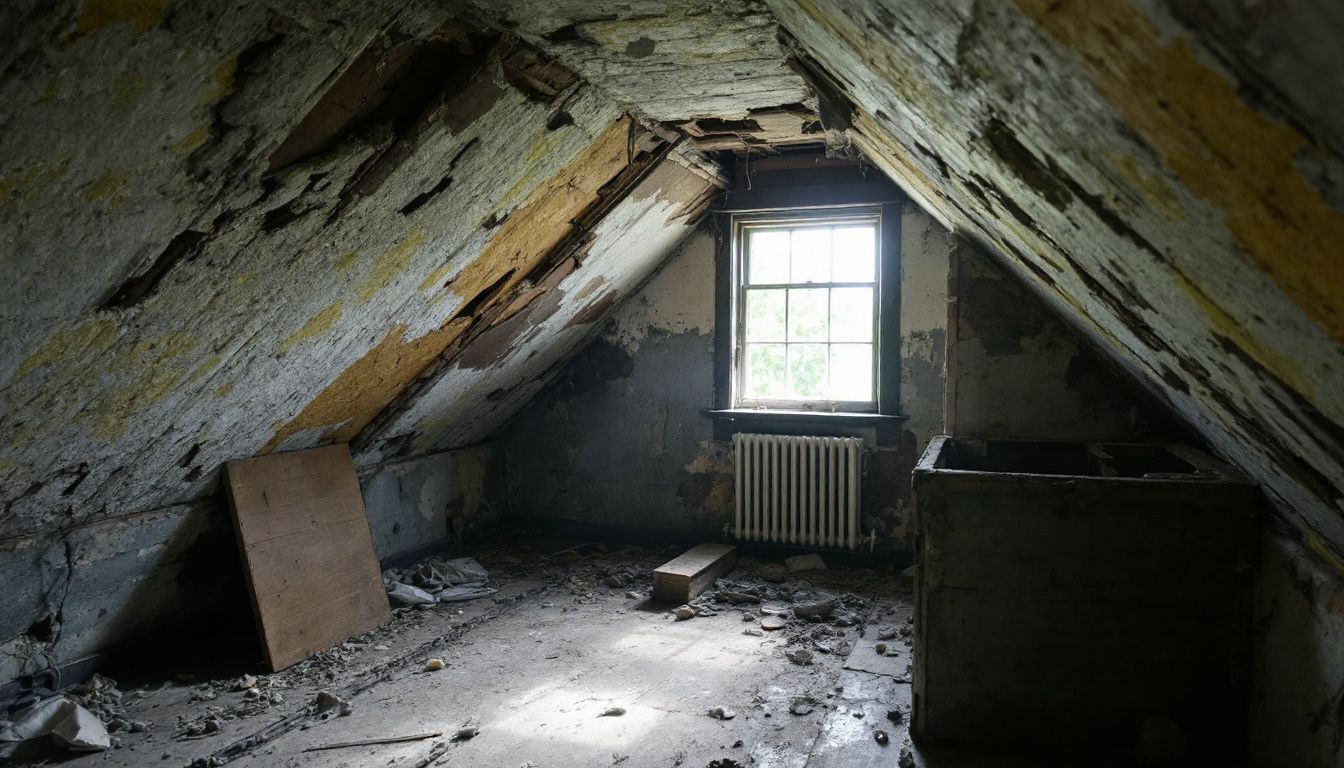
Asbestos Fireproofing: What It Was, Where It Hid, and What You Need to Do Now
Asbestos fireproofing was once considered a triumph of modern construction. Buildings went up faster, stayed warmer, and — on paper — seemed safer from fire. The reality turned out to be far more complicated, and the consequences are still being felt today.
If you own, manage, or are planning work on a building constructed before 2000, understanding how asbestos was used for fireproofing and insulation is not just useful background knowledge — it is a legal and practical necessity.
Why Asbestos Became the Go-To Fireproofing Material
Asbestos is a naturally occurring silicate mineral with an exceptionally high melting point — somewhere in the region of 1,600°C depending on the fibre type. That single property made it extraordinarily attractive to engineers and builders throughout the mid-twentieth century.
It could be spun into textiles, mixed into cement, sprayed onto steel beams, and pressed into boards. It was cheap, widely available, and appeared to solve multiple problems at once: fire resistance, thermal insulation, and structural reinforcement — all in one material.
From roughly the 1940s through to the late 1970s, asbestos was incorporated into an enormous range of building products. Its use only began to decline as the health evidence became impossible to ignore. The UK prohibited all forms of asbestos in 1999, and the European Union followed with a ban on use, import, and export in 2005.
The Two Main Types Used in UK Construction
Not all asbestos is the same. Two broad categories saw widespread use in UK construction, and understanding the difference matters when assessing risk.
Chrysotile (White Asbestos)
Also known as serpentine asbestos, chrysotile was by far the most commonly used type. It featured in insulating boards, ceiling tiles, floor tiles, and textured coatings such as Artex. It was the workhorse of the industry — versatile, plentiful, and inexpensive.
Amphibole Asbestos
This group includes amosite (brown asbestos) and crocidolite (blue asbestos). Amphiboles are generally considered more hazardous due to the shape and durability of their fibres. They appeared less frequently but were favoured in high-temperature applications where even greater heat resistance was required — making them particularly prevalent in asbestos fireproofing contexts.
Both types are now banned in the UK. Any building constructed or refurbished before the ban came into force should be treated as potentially containing either or both.
Where Asbestos Fireproofing Was Actually Applied
The term asbestos fireproofing covers a wide range of applications. Understanding where it was used helps you anticipate where it might still be present in older buildings today.
Spray-Applied Fireproofing on Structural Steelwork
One of the most significant uses was spray-applied asbestos coating on structural steelwork. Steel loses its load-bearing strength rapidly when exposed to high temperatures, so fire protection for steel frames was — and remains — a critical part of building safety.
From the late 1950s through the 1960s and into the 1970s, a slurry of asbestos fibres mixed with a binder was sprayed directly onto steel beams, columns, and decking. The result was a thick, fluffy coating that insulated the steel from heat. It was effective. It was also one of the most hazardous forms of asbestos-containing material (ACM) because the fibres were loosely bound and could be released into the air with minimal disturbance.
Spray-applied asbestos fireproofing has been found in commercial buildings, hospitals, schools, and industrial premises across the UK. If you are managing a large commercial or public building constructed between the 1950s and 1980s, this is one of the first things a qualified surveyor will look for.
Asbestos Insulating Boards and Ceiling Tiles
Asbestos insulating board (AIB) was produced with asbestos content of up to 40%. It was used extensively as partitioning, ceiling panels, soffit boards, and fire doors. Ceiling tiles with asbestos content were also widely installed.
These materials served a dual purpose: thermal insulation and passive fire protection. They were designed to slow the spread of fire through a building by acting as a barrier — buying time for evacuation.
AIB is considered a higher-risk material because, while it is not as friable as spray coatings, it can release fibres when drilled, cut, or broken. It is frequently encountered during refurbishment work when contractors disturb what they assume to be ordinary plasterboard.
Pipe and Boiler Insulation
High-temperature pipework, boilers, and heating systems were routinely lagged with asbestos-based insulation. In industrial settings, this extended to turbines, furnaces, and other plant equipment. The insulation here was doing double duty: keeping heat in where it was needed, and preventing fire spread where it was not.
Pipe lagging containing asbestos is still found in the service areas, plant rooms, and ceiling voids of older buildings — often in poor condition after decades of maintenance disturbance.
Roofing and Cement Products
Asbestos cement was used in corrugated roofing sheets, guttering, downpipes, and flat roof coverings. While asbestos cement is considered lower risk than AIB or spray coatings — because the fibres are more tightly bound within the cement matrix — it still poses a risk when weathered, broken, or mechanically worked.
Many agricultural buildings, factories, and garages across the UK still have asbestos cement roofing in place. Owners sometimes underestimate the risk because the material looks solid and intact, but condition can deteriorate quickly.
Textiles and Protective Materials
Asbestos was woven into fire-resistant textiles used to protect firefighters and industrial workers. Gaskets, rope seals, and woven blankets all used asbestos fibres. While less relevant to the building fabric itself, these materials may still be found in plant rooms and industrial premises — and they can catch maintenance teams off guard.
The Health Consequences of Asbestos Fireproofing
The same properties that made asbestos so useful — its fibrous structure and resistance to breakdown — make it extremely dangerous when inhaled. Asbestos fibres are microscopic, can remain suspended in air for hours, and once inhaled, lodge permanently in lung tissue.
The diseases associated with asbestos exposure include:
- Mesothelioma — A cancer of the lining of the lungs or abdomen. Almost exclusively caused by asbestos exposure. There is no cure.
- Asbestosis — Scarring of the lung tissue that progressively reduces breathing capacity.
- Lung cancer — The risk is significantly elevated by asbestos exposure, particularly in combination with smoking.
- Pulmonary fibrosis — Thickening and scarring of lung tissue, reducing the ability to breathe.
These diseases typically have a long latency period — symptoms may not appear until 20 to 40 years after exposure. This is why workers exposed during the construction boom of the 1950s to 1970s are still being diagnosed today.
The risks are not just historical. Tradespeople working in older buildings — electricians, plumbers, joiners, decorators — continue to be exposed when they unknowingly disturb ACMs. The Health and Safety Executive consistently identifies tradespeople as one of the highest-risk groups for asbestos-related disease.
The Legal Framework: What UK Regulations Require
The management of asbestos in UK buildings is governed primarily by the Control of Asbestos Regulations, supported by the HSE guidance document HSG264. These regulations place clear legal duties on those who own or manage non-domestic premises.
The Duty to Manage
Under the Control of Asbestos Regulations, the duty holder — typically the building owner or manager — must take reasonable steps to find out whether asbestos-containing materials are present, assess the condition of any ACMs found, and put in place a written plan to manage the risk.
This is not optional. Failure to comply can result in enforcement action by the HSE, significant fines, and — more importantly — serious harm to anyone who works in or visits the building.
Licensed Work
Work with certain high-risk ACMs — including spray-applied asbestos fireproofing and most asbestos insulating board — must be carried out by a contractor holding an HSE licence. This is not work that can be handed to a general builder or maintenance team, regardless of their experience.
Notifiable Non-Licensed Work
Some asbestos work falls into a category that does not require a licence but must be notified to the relevant enforcing authority before work begins. Understanding which category applies to your situation requires professional advice — getting this wrong exposes both workers and duty holders to serious legal and health consequences.
How to Identify and Manage Asbestos Fireproofing in Your Building
If your building was constructed before 2000, you should assume asbestos may be present until a survey proves otherwise. This is not alarmism — it reflects the scale of asbestos use in UK construction over several decades.
Start with a Management Survey
For occupied buildings, the starting point is an management survey. This involves a qualified surveyor inspecting accessible areas of the building, taking samples from suspect materials, and producing a written asbestos register with a risk assessment for each ACM found.
The register tells you what is present, where it is, what condition it is in, and what risk it poses. This document forms the foundation of your duty-to-manage compliance and should be made available to anyone carrying out work on the premises.
Before Any Refurbishment or Demolition Work
If you are planning renovation, refurbishment, or demolition work, a management survey alone is not sufficient. You will need a refurbishment survey before any work begins. This is a more intrusive investigation that examines areas which will be disturbed during the works, including voids, cavities, and structural elements.
This survey must be completed before contractors start work — not during, and certainly not after. Discovering spray-applied asbestos fireproofing on a steel frame once the building has been opened up is an expensive and dangerous situation to be in.
Keep Your Asbestos Register Up to Date
An asbestos register is not a one-time document. The condition of ACMs can change over time — materials deteriorate, buildings are altered, and maintenance work can disturb previously stable materials.
A re-inspection survey should be carried out periodically to reassess the condition of known ACMs and update the register accordingly. The frequency of re-inspection depends on the risk rating of the materials present. Higher-risk materials in poor condition may need annual review; lower-risk materials in good condition may be reviewed less frequently.
Consider the Interaction with Fire Safety
There is an important intersection between asbestos management and fire safety that is often overlooked. Where asbestos fireproofing has been removed — or where its condition has deteriorated — the passive fire protection of the building may have been compromised.
A fire risk assessment should be carried out alongside asbestos management to ensure that fire protection measures remain adequate. Removing spray-applied asbestos from steel beams without replacing the fire protection with a compliant modern alternative is a serious building safety failure.
Testing Suspect Materials
If you have identified a material you suspect may contain asbestos but are not yet ready to commission a full survey, a testing kit allows you to collect a sample and have it analysed at a UKAS-accredited laboratory. This can be a useful first step — but it does not replace a professional survey and should only be used where sampling can be done safely without disturbing the material excessively.
Practical Steps for Property Managers and Building Owners
Managing asbestos fireproofing risk does not have to be overwhelming. A structured approach, taken step by step, keeps you compliant and protects everyone who uses your building.
- Establish whether a survey has already been carried out. Check your property records. If a survey exists, confirm it is current and covers the areas relevant to any planned work.
- Commission a management survey if none exists. This is your legal baseline for any non-domestic building that may contain asbestos.
- Share the asbestos register with contractors before they start work. This is a legal requirement and a practical safety measure.
- Ensure any licensed work is carried out by an HSE-licensed contractor. Do not cut corners on spray-applied coatings or AIB removal.
- Plan refurbishment work properly. A refurbishment survey must be completed before work begins — not commissioned at the last minute.
- Review your fire protection arrangements whenever ACMs are disturbed or removed. The two disciplines are closely linked and must be considered together.
- Schedule periodic re-inspections. Set a reminder in your property management calendar. Do not leave your register to gather dust.
Asbestos Surveys Across the UK
Supernova Asbestos Surveys operates nationwide, with specialist teams covering every region. Whether you need an asbestos survey in London, an asbestos survey in Manchester, or an asbestos survey in Birmingham, our BOHS-qualified surveyors carry out management surveys, refurbishment surveys, and re-inspections to HSG264 standards.
With over 50,000 surveys completed across the UK, we have the experience to identify asbestos fireproofing and other ACMs in even the most complex buildings — and to give you a clear, actionable plan for managing what we find.
Frequently Asked Questions
What is asbestos fireproofing and where is it most commonly found?
Asbestos fireproofing refers to the use of asbestos-containing materials to protect buildings and their structural elements from fire. The most common application was spray-applied asbestos coating on structural steelwork — particularly steel beams, columns, and decking in commercial, industrial, and public buildings constructed between the 1950s and 1980s. Asbestos insulating board used in fire doors, ceiling panels, and partitions also served a fireproofing function. Both types are still found in older UK buildings today.
Is asbestos fireproofing dangerous if it is left in place?
It depends on the condition of the material and whether it is likely to be disturbed. Asbestos-containing materials that are in good condition and unlikely to be disturbed can often be managed safely in place rather than removed. Spray-applied asbestos is considered particularly hazardous because it is friable — the fibres are loosely bound and can be released into the air with very little disturbance. A professional survey and risk assessment will tell you whether the material in your building needs to be managed, encapsulated, or removed.
Do I need a licensed contractor to remove asbestos fireproofing?
Yes, in almost all cases. Spray-applied asbestos fireproofing and most forms of asbestos insulating board fall into the category of licensed work under the Control of Asbestos Regulations. This means the work must be carried out by a contractor holding a current HSE licence. Using an unlicensed contractor for this type of work is illegal and puts workers and building occupants at serious risk.
What happens if I remove asbestos fireproofing without replacing the fire protection?
This is a significant building safety issue. Asbestos fireproofing on structural steelwork was there for a reason — steel loses its structural integrity rapidly when exposed to fire. If the asbestos coating is removed without replacing it with a compliant modern fire protection system, the building’s passive fire protection is compromised. This could have serious consequences in the event of a fire and may also expose the duty holder to legal liability. A fire risk assessment should always be carried out when asbestos fireproofing is removed or has deteriorated significantly.
How do I find out if my building contains asbestos fireproofing?
The only reliable way to determine whether asbestos-containing materials are present — and what type and condition they are in — is to commission a professional asbestos survey carried out by a qualified surveyor in accordance with HSG264. For occupied buildings, a management survey is the appropriate starting point. If you are planning refurbishment or demolition work, a refurbishment survey is required before work begins. You can also use a testing kit to have a specific suspect material sampled and analysed, though this does not replace a full survey.
Get Expert Help Today
If you need professional advice on asbestos in your property, our team of qualified surveyors is ready to help. With over 50,000 surveys completed across the UK, Supernova Asbestos Surveys delivers clear, actionable reports you can rely on.
Call us on 020 4586 0680 or visit asbestos-surveys.org.uk for a free, no-obligation quote.