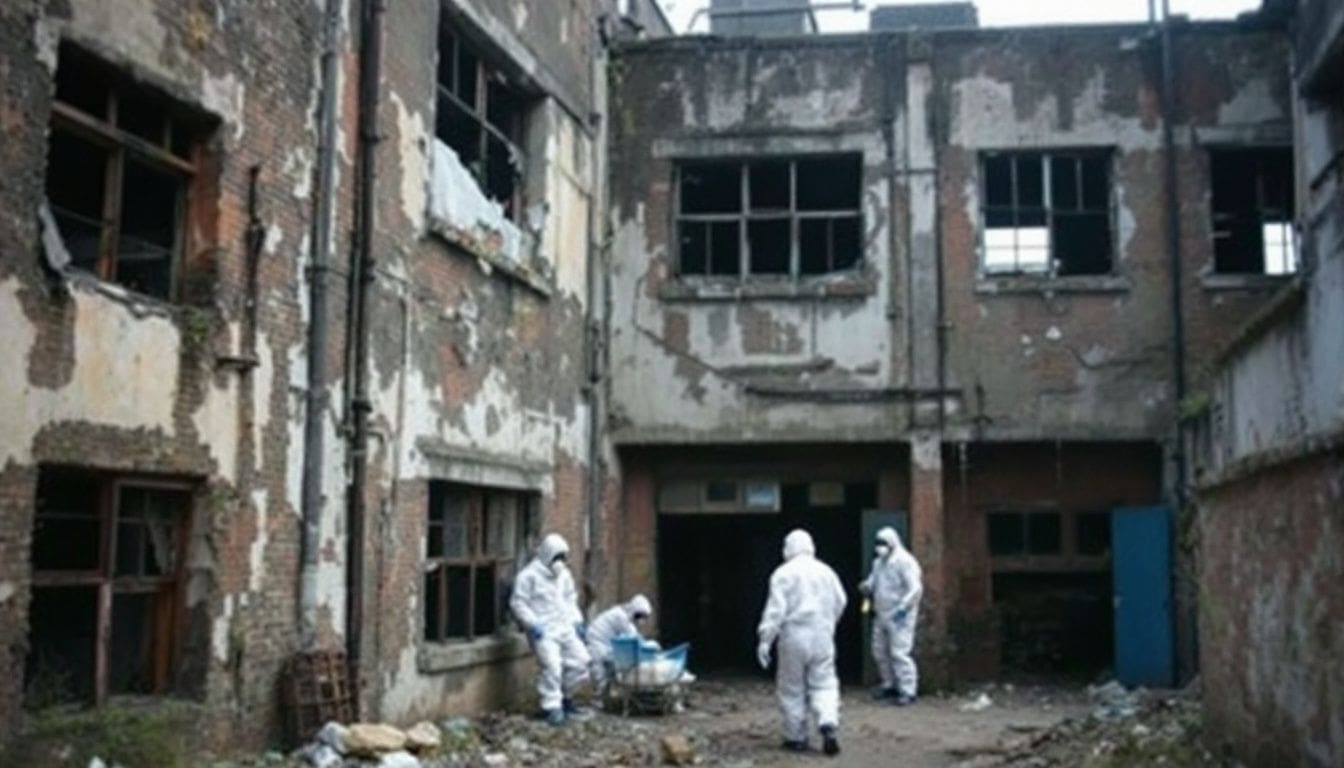
How Asbestos Shaped — and Scarred — Britain
Few industrial materials have left a deeper mark on Britain than asbestos. For the better part of 150 years, it was woven into the fabric of British construction, manufacturing, and everyday life — celebrated for its fire resistance and insulating properties, yet quietly devastating the health of those who worked with it.
The history of asbestos in the UK is not merely an academic exercise. Millions of buildings constructed before the turn of the millennium still contain asbestos-containing materials (ACMs), and the decisions made by property owners and managers today are shaped directly by that industrial past.
The History of Asbestos in the UK: From Victorian Industry to Modern Legacy
Asbestos was imported into Britain on a significant scale from the mid-nineteenth century onwards, with Canada among the primary sources. Its properties — heat resistance, tensile strength, and affordability — made it enormously attractive to a rapidly industrialising nation. By the early twentieth century, it had become a staple material in shipbuilding, construction, and manufacturing.
What makes the history of asbestos in the UK particularly troubling is how early the warning signs appeared — and how long they were ignored. Factory inspectors flagged health concerns as far back as 1898. A documented case of asbestos-related disease appeared in 1906. By 1929, Barking’s medical officer of health was warning publicly about the dangers of lung disease among asbestos workers.
In 1945, officials were already describing asbestos as a deadly and dangerous commodity. Yet commercial use continued largely unabated for decades. A landmark 1965 report drew a direct link between mesothelioma cases and the Cape asbestos factory — one of the most significant moments in the long and damaging story of asbestos in British industry. Despite this, it would take another three decades for a full ban to arrive.
The Decades of Widespread Industrial Use
From the 1930s through to the 1980s, asbestos was used extensively across British construction and manufacturing. It appeared in ceiling tiles, pipe lagging, roof sheeting, floor tiles, boiler insulation, and spray coatings in schools, hospitals, offices, and homes.
Europe, including the UK, accounted for a substantial share of the global asbestos trade throughout much of the twentieth century. The three main types — blue (crocidolite), brown (amosite), and white (chrysotile) — were all used commercially, though their relative hazard levels differ:
- Blue asbestos (crocidolite) — considered the most dangerous type due to the fineness of its fibres
- Brown asbestos (amosite) — also highly hazardous and widely used in thermal insulation
- White asbestos (chrysotile) — the most commonly used type; still poses a serious health risk when fibres are released into the air, despite being sometimes described as less dangerous
All three types were present in the post-war construction boom that produced much of Britain’s current housing stock and commercial building estate. The sheer scale of their use is why asbestos remains a live issue for property managers today.
The Road to a Ban
Regulatory action came gradually and, many would argue, far too slowly. Brown asbestos was banned in 1985. Blue and white asbestos were finally prohibited in 1999, completing a full ban on the importation and use of all asbestos types in the UK.
By that point, the damage to public health had already been done on an enormous scale. The 1999 ban brought the UK into line with broader European efforts to eliminate asbestos use, but it could not undo the legacy of material already embedded in the built environment. That legacy is still being managed — and still claiming lives — today.
The Health Consequences: Diseases Caused by Asbestos Exposure
Asbestos fibres, when disturbed, become airborne and can be inhaled deep into the lungs. Once lodged, they can remain there for decades — in some cases up to 50 years — before triggering disease. This long latency period means that many people diagnosed today were exposed during the peak years of asbestos use in the 1960s and 1970s.
The diseases caused by asbestos exposure include:
- Mesothelioma — a cancer of the lining of the lungs, abdomen, or heart, almost exclusively caused by asbestos exposure
- Lung cancer — significantly elevated risk for those with occupational asbestos exposure, particularly in combination with smoking
- Asbestosis — a chronic scarring of the lung tissue caused by prolonged asbestos inhalation
- Laryngeal cancer — linked to asbestos exposure in occupational settings
- Ovarian cancer — recognised as causally linked to asbestos exposure
Approximately 4,000 people in the UK die each year from asbestos-related diseases. The HSE has projected that deaths will remain at elevated levels for some years yet, given the long latency period of these conditions.
Personal Stories Behind the Statistics
Statistics alone cannot convey the human cost. The real impact is found in individual stories — families torn apart by diseases that were entirely preventable.
Dennis Gaffney, aged 84, developed mesothelioma after visiting Hart’s Lane estate during the 1970s. George Dickerson died at 76 following childhood exposure at Northbury School — a reminder that asbestos risk was not confined to industrial workers.
Jacqueline Merritt died of mesothelioma after laundering asbestos-covered overalls belonging to her husband, a pattern of secondary exposure that affected many wives and family members of asbestos workers. Graham Taylor developed asbestosis after beginning work at Cape at just 15 years old.
Gordon Sanders and his brother Philip, aged 57 and 35 respectively, both died of asbestos-related lung disease. Helen Bone received a mesothelioma diagnosis in 2021 — a case that highlights the continuing and growing incidence of the disease among women.
These are not isolated incidents. They represent a pattern of harm that stretched across generations and communities throughout the UK.
Regulation, Legal Battles, and the Fight for Accountability
The regulatory response to the history of asbestos in the UK has been shaped by a combination of scientific evidence, campaigning by affected families, and — at times — frustratingly slow institutional action. Today, asbestos management in non-domestic premises is governed by the Control of Asbestos Regulations, which place a legal duty on the owners and managers of non-domestic buildings to identify, assess, and manage any asbestos present.
The HSE’s guidance document HSG264 sets out the standards for asbestos surveying and is the benchmark against which all professional surveys are assessed.
Legal Battles and Compensation
The courts have played a significant role in shaping how asbestos liability is understood in the UK. A House of Lords ruling denied compensation to sufferers of pleural plaques — thickening of the lung lining caused by asbestos exposure — despite the fact that those affected carry a substantially elevated risk of developing asbestos-related cancer. The decision was widely criticised by campaigners and medical professionals alike.
Rita Ashdown died of mesothelioma, and her family received £40,000 in compensation — a figure that many regarded as inadequate given the circumstances. Cape Plc established a compensation fund for asbestos claimants, acknowledging the scale of harm caused by its operations.
A parliamentary inquiry called for a 40-year programme to remove asbestos from all public and commercial buildings in the UK — a recognition that the existing approach of managing asbestos in situ is not a permanent solution. Countries including Belgium and Poland have developed more proactive national removal plans, and campaigners argue the UK must follow suit.
Asbestos in Buildings Today: What Property Owners and Managers Need to Know
The ban on asbestos came into force in 1999, but that does not mean asbestos has gone away. Any building constructed or refurbished before the year 2000 may contain ACMs. This includes schools, hospitals, offices, industrial premises, and residential properties — particularly those built during the post-war construction boom of the 1950s, 60s, and 70s.
Asbestos does not always pose an immediate risk. When ACMs are in good condition and undisturbed, fibres are not released and the risk is low. The danger arises when materials are damaged, deteriorating, or disturbed during maintenance and renovation works — which is why professional surveying is so critical.
Types of Survey and When You Need Them
Understanding which type of survey applies to your situation is the first step in managing asbestos responsibly.
A management survey is the standard survey required for the ongoing management of asbestos in occupied premises. It identifies ACMs that could be disturbed during normal occupation and maintenance, and forms the basis of your asbestos register and management plan.
If you are planning renovation, refurbishment, or demolition work, you will need a refurbishment survey before any work begins. This is a more intrusive inspection of the specific areas to be disturbed, and it is a legal requirement under the Control of Asbestos Regulations before such work commences.
Once you have an asbestos register in place, it must be kept up to date. A re-inspection survey allows you to monitor the condition of known ACMs over time and update your management plan accordingly — a legal obligation for duty holders in non-domestic premises.
Where ACMs are damaged, deteriorating, or in areas that cannot be safely managed in situ, asbestos removal by a licensed contractor may be the appropriate course of action. Removal must always be carried out by a licensed contractor where notifiable work is involved.
It is also worth noting that asbestos surveys often sit alongside other property safety obligations. A fire risk assessment is another legal requirement for most non-domestic premises, and many property managers choose to address both at the same time.
DIY Testing: What Is and Is Not Appropriate
If you suspect a material in a domestic property may contain asbestos, a testing kit can allow you to collect a sample for laboratory analysis. This is only appropriate in certain circumstances and must be done with care.
For any commercial or non-domestic premises, a professional survey is required — DIY sampling is not a substitute for a formal management survey.
Your Legal Obligations Under the Control of Asbestos Regulations
The Control of Asbestos Regulations place clear legal duties on those responsible for non-domestic premises. These duties include:
- Taking reasonable steps to identify whether asbestos is present and its condition
- Assessing the risk from any asbestos found
- Preparing and implementing a written plan to manage that risk
- Providing information about the location and condition of ACMs to anyone who may disturb them
- Reviewing and monitoring the plan and the condition of ACMs regularly
Failure to comply can result in significant financial penalties and, far more importantly, serious harm to building occupants and workers. The HSE’s guidance document HSG264 remains the definitive standard for how asbestos surveys should be conducted, and all Supernova Asbestos Surveys reports are prepared in full compliance with its requirements.
Why the History of Asbestos in the UK Still Matters for Buildings Today
Understanding how asbestos came to be so widespread in British buildings helps explain why the regulatory framework exists and why compliance is not optional. The industries and institutions that used asbestos most heavily — shipbuilding, construction, education, healthcare — are exactly the sectors where ACMs are most likely to be found today.
The post-war housing and public building programmes of the 1950s, 60s, and 70s created an enormous stock of properties that now require careful management. Schools built in that era frequently incorporated asbestos ceiling tiles, lagging, and insulation boards. Hospitals installed asbestos pipe lagging as standard. Office blocks were sprayed with asbestos coatings for fire protection.
The history of asbestos in the UK is embedded in bricks and mortar across the country — and that is precisely why the duty to manage it remains so pressing for anyone responsible for a pre-2000 building.
Asbestos Surveys Across the UK: Where We Work
Supernova Asbestos Surveys operates nationwide, providing HSG264-compliant surveys to property owners and managers across England, Scotland, and Wales. Whether you need an asbestos survey in London, an asbestos survey in Manchester, or an asbestos survey in Birmingham, our experienced surveyors are ready to help.
With over 50,000 surveys completed, we have the experience and accreditation to support duty holders at every stage — from initial identification through to ongoing management and, where necessary, licensed removal.
Frequently Asked Questions
When was asbestos banned in the UK?
The use and importation of all forms of asbestos were banned in the UK in 1999. Brown asbestos (amosite) was banned earlier, in 1985. Blue asbestos (crocidolite) was also banned in 1985, with white asbestos (chrysotile) following in 1999 to complete the full prohibition.
How long has asbestos been used in the UK?
Asbestos was imported into Britain on a significant scale from the mid-nineteenth century, with widespread industrial use accelerating through the early twentieth century. Its use peaked during the post-war construction boom of the 1950s, 60s, and 70s before declining following regulatory restrictions in the 1980s and the full ban in 1999.
Is asbestos still a risk in UK buildings today?
Yes. Any building constructed or refurbished before the year 2000 may contain asbestos-containing materials. When ACMs are in good condition and undisturbed they pose a low risk, but disturbance during maintenance, renovation, or demolition can release dangerous fibres. Duty holders in non-domestic premises are legally required to identify, assess, and manage any asbestos present under the Control of Asbestos Regulations.
How many people die from asbestos-related diseases in the UK each year?
Approximately 4,000 people in the UK die each year from asbestos-related diseases, including mesothelioma, lung cancer, and asbestosis. The HSE projects that deaths will remain at elevated levels for some years to come, due to the long latency period between exposure and the onset of disease — which can be up to 50 years.
What should I do if I think my building contains asbestos?
Do not disturb any material you suspect may contain asbestos. For non-domestic premises, you are legally required to commission a professional management survey to identify and assess any ACMs. For domestic properties where you wish to test a specific material, a laboratory testing kit can be used to collect a sample safely. In all cases, seek professional advice before undertaking any work that might disturb suspected ACMs.
Speak to Supernova Asbestos Surveys
The history of asbestos in the UK is long, damaging, and still unfolding. If you manage or own a pre-2000 building, your legal obligations under the Control of Asbestos Regulations are clear — and the consequences of getting it wrong are serious.
Supernova Asbestos Surveys has completed over 50,000 surveys nationwide. Our accredited surveyors deliver HSG264-compliant reports, clear management plans, and practical guidance at every stage. Call us on 020 4586 0680 or visit asbestos-surveys.org.uk to book your survey or find out more about how we can help.