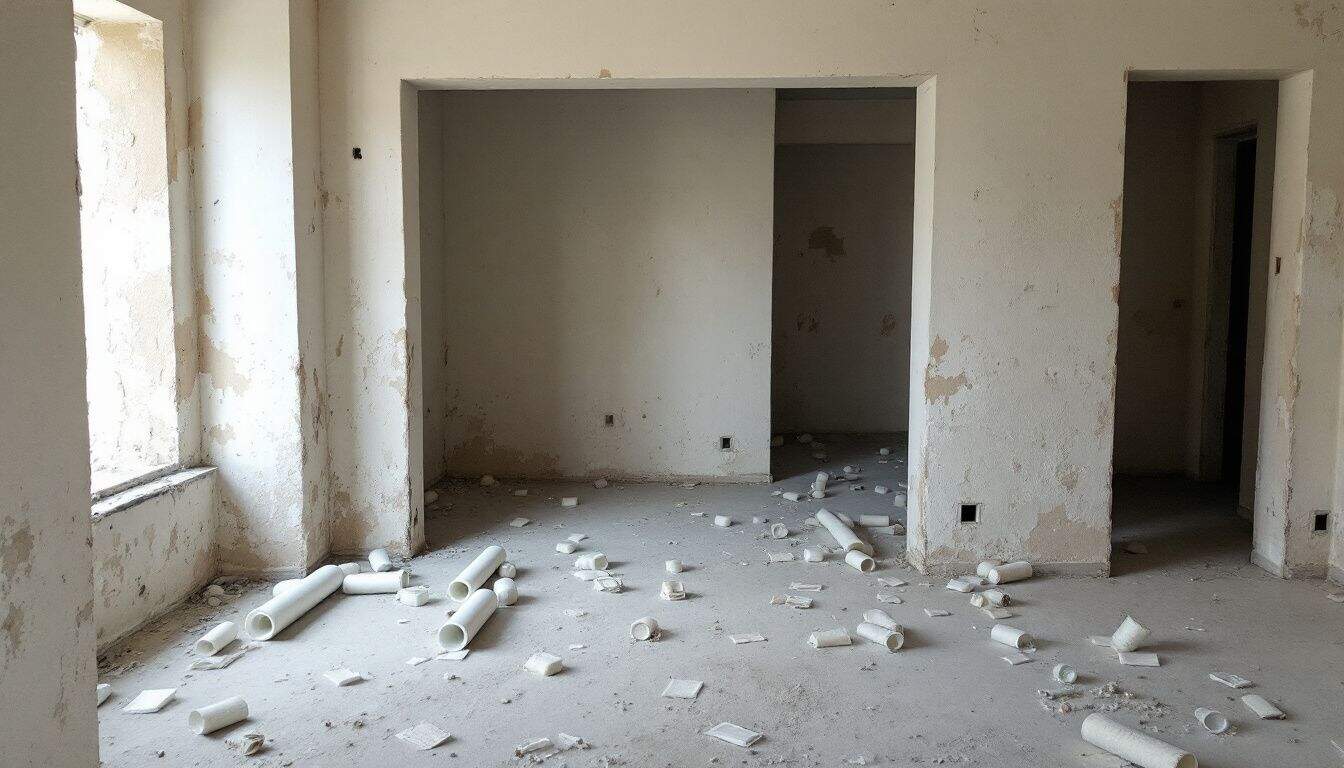
Why Asbestos Construction Health Risk Management Matters More Than Ever
Every year, construction workers across the UK are diagnosed with diseases caused by asbestos fibres inhaled years — sometimes decades — earlier. Asbestos construction health risk management isn’t a bureaucratic checkbox; it’s the difference between a workforce that stays healthy and one that doesn’t.
If your site involves any building constructed before 2000, this affects you directly. The UK has some of the world’s most stringent asbestos regulations, yet exposure incidents continue. Understanding where the risks come from, how to identify them, and what your legal obligations are is the foundation of keeping your workers safe.
The Health Risks of Asbestos Exposure on Construction Sites
Asbestos fibres are microscopic. You cannot see them, smell them, or taste them — but once inhaled, they embed permanently in lung tissue. The body cannot break them down or expel them.
The diseases that follow are serious, often fatal, and have no cure:
- Mesothelioma — a cancer of the lining of the lungs or abdomen, almost exclusively caused by asbestos exposure. Prognosis is poor and survival rates remain low.
- Asbestos-related lung cancer — risk is significantly multiplied in workers who also smoke.
- Asbestosis — progressive scarring of lung tissue that reduces breathing capacity over time.
- Diffuse pleural thickening — thickening of the lung lining that restricts expansion and causes breathlessness.
What makes these diseases particularly dangerous from a management perspective is the latency period. Symptoms can take anywhere from 15 to 60 years to appear. A worker exposed on a demolition job today may not develop symptoms until well into retirement — by then, the damage is irreversible.
Who Is Most at Risk on Construction Sites?
Certain trades face higher exposure risk simply due to the nature of their work. Anyone who disturbs materials in older buildings is potentially at risk, but the following occupations carry the highest exposure rates:
- Bricklayers — working with old mortar and masonry that may contain asbestos compounds
- Carpenters and joiners — disturbing wall cavities, floorboards, and ceiling voids where asbestos materials were commonly used
- Roofers — handling asbestos cement roof sheets, which were standard in industrial and commercial buildings for decades
- Pipefitters and plumbers — working around pipe lagging and insulation, historically one of the most common uses of asbestos
- Plasterers — sanding or scraping old plaster that may contain asbestos fibres
- Demolition workers — breaking down structures with asbestos-containing materials, generating high concentrations of airborne dust
- Insulation workers — removing or replacing old insulation, particularly in plant rooms, boiler houses, and industrial facilities
- Tile setters — working with vinyl floor tiles and adhesives that frequently contained asbestos in older buildings
Construction industry cancer deaths are disproportionately linked to asbestos exposure. This is not a historical problem — it is an ongoing public health crisis affecting trades workers right now.
Where Asbestos Hides in Construction Buildings
Asbestos was used in construction because it was genuinely excellent at its job. It resists heat, fire, and corrosion, insulates effectively, and was durable and cheap. These properties made it ubiquitous in building materials from the 1950s through to the mid-1980s, with some products continuing in use until the full ban in 1999.
Common asbestos-containing materials (ACMs) found on construction sites include:
- Sprayed coatings on structural steelwork and ceilings
- Pipe lagging and boiler insulation
- Ceiling tiles and textured coatings (such as Artex)
- Asbestos cement roof sheets, gutters, and downpipes
- Floor tiles and their adhesives
- Partition walls and asbestos insulating board (AIB)
- Rope seals and gaskets in heating systems
- Joint compounds and fire-stopping materials
- Roofing felt and bitumen products
Asbestos insulating board (AIB) and sprayed coatings are among the most hazardous because they release fibres easily when disturbed. Asbestos cement, while still dangerous, is considered lower risk when in good condition — but cutting, drilling, or breaking it generates significant dust.
The key principle: if a building was constructed before 2000 and you don’t have a current asbestos survey with a clear register, assume asbestos may be present until you can prove otherwise.
The Legal Framework for Asbestos Construction Health Risk Management
UK law is unambiguous on asbestos. The Control of Asbestos Regulations set out the duties of employers, building owners, and those responsible for premises. The Health and Safety Executive (HSE) enforces these regulations and publishes detailed technical guidance — most notably HSG264, which covers asbestos surveys.
The Duty to Manage
For non-domestic properties, there is a legal duty to manage asbestos. The dutyholder — typically the building owner or employer — must:
- Identify whether asbestos is present, or could be present, in the premises
- Assess the condition of any asbestos-containing materials
- Prepare and maintain a written asbestos management plan
- Ensure the plan is implemented and reviewed regularly
- Provide information about the location and condition of ACMs to anyone who may disturb them
This is not optional. Failing to maintain an asbestos register or provide information to contractors working on the building is a prosecutable offence.
Notifiable Non-Licensed Work and Licensed Work
Not all asbestos work requires a licence, but the regulations define clear categories:
- Licensed work — required for high-risk ACMs such as asbestos insulating board, sprayed coatings, and lagging. Only HSE-licensed contractors can undertake this work.
- Notifiable non-licensed work (NNLW) — lower-risk work that still requires notification to the relevant enforcing authority, health surveillance for workers, and record-keeping.
- Non-licensed work — the lowest risk category, but still requires appropriate controls and training.
Getting this categorisation wrong — using unlicensed workers for licensed work, for example — carries serious legal consequences and, more importantly, puts lives at risk.
Employer Responsibilities
Beyond the duty to manage, employers on construction sites have specific obligations under the Control of Asbestos Regulations and the broader Health and Safety at Work Act framework:
- Provide adequate asbestos awareness training to all workers who may encounter ACMs
- Ensure appropriate personal protective equipment (PPE) is available and used correctly
- Commission the correct type of asbestos survey before any refurbishment or demolition work begins
- Arrange health surveillance for workers undertaking notifiable non-licensed or licensed work
- Maintain records of all asbestos-related work and health surveillance
Identifying Asbestos: Surveys, Testing, and Registers
You cannot manage what you haven’t identified. Before any construction, refurbishment, or demolition work begins on a pre-2000 building, an asbestos survey is essential — and in most cases, legally required.
Types of Asbestos Survey
HSG264 defines two main survey types:
- A management survey is the standard survey for buildings in normal occupation. It identifies ACMs that could be disturbed during routine maintenance and assesses their condition.
- A demolition survey is required before any refurbishment or demolition work. More intrusive than a management survey, it identifies all ACMs in the areas to be worked on, including those hidden within the structure.
Choosing the wrong survey type is a common and costly mistake. A management survey is not sufficient before you start knocking down walls or replacing roof structures. Always ensure the survey scope matches the planned work.
Asbestos Testing
Where materials are suspected but not confirmed, asbestos testing provides laboratory analysis of bulk samples taken from the material in question. This is the only reliable way to confirm whether a material contains asbestos — visual identification alone is not sufficient.
Samples should only be taken by trained surveyors using appropriate controls to prevent fibre release. Never attempt to collect samples yourself without proper training and equipment.
If you need rapid confirmation before work begins, professional asbestos testing services can provide results quickly, allowing your project timeline to proceed with confidence.
The Asbestos Register
Once a survey is complete, the findings are compiled into an asbestos register — a document recording the location, type, condition, and risk assessment of every ACM found. This register must be:
- Kept on the premises and readily accessible
- Made available to all contractors and workers before they begin any work
- Updated whenever new information becomes available — for example, after further surveys or following removal work
- Re-inspected periodically to monitor the condition of ACMs left in place
An out-of-date or incomplete asbestos register is nearly as dangerous as having no register at all. Contractors relying on inaccurate information may unknowingly disturb ACMs they weren’t warned about.
Protective Measures and Safe Working Practices
Even with thorough surveys and registers in place, the physical management of asbestos on construction sites requires rigorous controls. Asbestos construction health risk management is only effective when the practical controls match the level of risk.
Personal Protective Equipment
PPE is the last line of defence — not the first. It should always be used alongside engineering controls and safe working methods, never instead of them. For asbestos work, appropriate PPE includes:
- Disposable coveralls (Type 5 category minimum) that are bagged and disposed of as asbestos waste after use
- Respiratory protective equipment (RPE) — the type required depends on the risk level. For licensed work, powered air-purifying respirators (PAPRs) or full-face masks with P3 filters are typically required
- Disposable gloves and boot covers
RPE must be face-fit tested for each individual worker. A mask that doesn’t seal properly provides no meaningful protection — this is a legal requirement, not a recommendation.
Engineering Controls and Containment
For higher-risk work, physical controls are required to prevent fibre spread:
- Enclosures — sealed work areas constructed around the ACM, maintained under negative pressure to prevent fibres escaping
- Wet methods — dampening materials before and during removal to suppress dust
- Shadow vacuuming — using H-class vacuum equipment simultaneously with removal tools
- Air monitoring — measuring airborne fibre concentrations during and after work to confirm controls are effective
- Decontamination units — providing a controlled route for workers to remove contaminated PPE without spreading fibres to clean areas
Asbestos Removal
Where ACMs are in poor condition or will be disturbed by planned work, removal is often the safest long-term option. Professional asbestos removal by licensed contractors ensures the work is done safely, waste is disposed of correctly, and the site is cleared to a standard that can be independently verified through air testing.
Removal is not always necessary — ACMs in good condition and unlikely to be disturbed can often be managed in place. But this decision should be made by a qualified professional, not assumed by a site manager under schedule pressure.
Health Surveillance and Worker Support
Health surveillance is a legal requirement for workers undertaking notifiable non-licensed or licensed asbestos work. It serves two purposes: identifying early signs of asbestos-related disease, and providing a documented record that can support compensation claims if disease develops later.
Surveillance typically involves:
- An initial medical examination before commencing asbestos work
- Regular follow-up examinations at intervals specified by an occupational health physician
- Lung function testing and a review of exposure history
- Records retained for a minimum of 40 years
Workers also have a right to be informed about the risks they face and the controls in place. Asbestos awareness training — covering where asbestos is found, the risks it poses, and what to do if materials are suspected — is a basic requirement for anyone working in or around older buildings.
Asbestos Risk Management Across Different Construction Contexts
The approach to asbestos construction health risk management isn’t one-size-fits-all. The type of work, the building’s age and use, and the condition of any ACMs all affect what’s required.
Refurbishment Projects
Refurbishment work is one of the highest-risk scenarios for asbestos exposure. Walls are opened, ceilings stripped, floors lifted — all activities that can disturb ACMs that have been safely in place for decades. A refurbishment-and-demolition survey must be completed before work begins in any area that will be disturbed.
This applies even if a management survey already exists for the building. A management survey does not provide the level of intrusion needed to clear a refurbishment area for safe working.
Demolition Projects
Full demolition projects carry the highest potential for widespread asbestos release. Every ACM in the structure must be identified and removed by a licensed contractor before demolition machinery moves in. Attempting to demolish a building with ACMs still in situ is illegal and extremely dangerous.
Routine Maintenance
Even routine maintenance tasks — replacing a light fitting, drilling through a partition wall, cutting into a ceiling — can disturb ACMs if the building hasn’t been properly surveyed. Maintenance workers are among the most frequently exposed groups precisely because their work is unplanned and often carried out without reference to an asbestos register.
Every organisation responsible for a pre-2000 building should ensure maintenance teams are trained in asbestos awareness and have access to an up-to-date asbestos register before starting any task.
Regional Coverage: Asbestos Surveys Across the UK
Asbestos risk doesn’t vary by postcode, but access to qualified surveyors does matter. Supernova Asbestos Surveys operates nationwide, with dedicated teams covering major urban centres where construction and refurbishment activity is highest.
If you’re managing a construction or refurbishment project in the capital, our asbestos survey London service provides fast, accredited surveying across all London boroughs. For projects in the North West, our asbestos survey Manchester team covers the full Greater Manchester area and surrounding regions. In the Midlands, our asbestos survey Birmingham service supports construction teams across the city and beyond.
Wherever your project is based, local knowledge combined with national accreditation means surveys are completed efficiently and reports meet the standard required by HSG264.
Building an Effective Asbestos Management Plan
A written asbestos management plan is a legal requirement for dutyholders, but it’s also a practical tool for keeping construction projects on track. A good plan sets out:
- The location and condition of all known ACMs
- The risk priority assigned to each ACM
- The management approach — whether ACMs will be monitored in place, encapsulated, or removed
- Who is responsible for each action and by when
- How contractors and workers will be informed about ACM locations
- The schedule for re-inspection and plan review
The plan should be a live document, not a file that sits in a drawer. When work is completed, when new surveys are carried out, or when ACM conditions change, the plan must be updated to reflect the current situation.
Reviewing the plan annually — or whenever significant work is planned — ensures it remains accurate and fit for purpose. An asbestos management plan that hasn’t been reviewed in three years is not a management plan; it’s a liability.
Frequently Asked Questions
Do I need an asbestos survey before starting any construction work?
If the building was constructed before 2000, yes — in most cases. For refurbishment or demolition work, a refurbishment-and-demolition survey is legally required before work begins in any area that will be disturbed. For routine maintenance, a management survey and up-to-date asbestos register should be in place before any task that could disturb building materials. If neither exists, commission a survey before work starts.
What is the difference between a management survey and a demolition survey?
A management survey is designed for buildings in normal use. It identifies ACMs that could be disturbed during routine maintenance and assesses their condition, but it does not involve intrusive investigation of the building fabric. A demolition survey is far more thorough — it requires access to all areas, including those that would need to be destructively sampled, and must confirm the location of every ACM before demolition or major refurbishment work begins.
Can I remove asbestos myself on a construction site?
It depends on the type of asbestos material and the amount involved. Some minor, low-risk work may be classed as non-licensed and can be carried out by trained workers with appropriate controls. However, work involving asbestos insulating board, sprayed coatings, or lagging must only be carried out by an HSE-licensed contractor. Attempting to remove these materials without a licence is illegal and puts workers and others at serious risk.
How long does asbestos remain dangerous once disturbed?
Asbestos fibres, once released into the air, can remain airborne for hours and settle on surfaces where they can be disturbed again later. There is no safe level of asbestos exposure — any inhalation of fibres carries risk. This is why containment, air monitoring, and thorough decontamination are essential during any asbestos-related work, not just while the material is being actively disturbed.
What should I do if workers discover a suspected asbestos-containing material during construction?
Stop work in the affected area immediately. Prevent access to the area and do not disturb the material further. Arrange for a qualified surveyor to inspect and sample the material. If the material is confirmed to contain asbestos, a licensed contractor should assess the condition and advise on the appropriate management or removal approach before work resumes. Acting quickly and correctly in these situations protects your workers and keeps your project legally compliant.
Work With Supernova Asbestos Surveys
Supernova Asbestos Surveys has completed over 50,000 surveys across the UK, supporting construction teams, property managers, and building owners in meeting their legal obligations and protecting their workers. Our accredited surveyors work to HSG264 standards and provide clear, actionable reports that give you the information you need to manage asbestos construction health risk effectively.
Whether you need a management survey, a demolition survey, asbestos testing, or advice on a complex refurbishment project, our team is ready to help. Call us on 020 4586 0680 or visit asbestos-surveys.org.uk to book a survey or discuss your requirements.