What Every UK Homeowner Needs to Know About Asbestos in Domestic Properties
Millions of homes across the UK still contain asbestos. If your property was built before 2000, there is a real possibility that asbestos-containing materials (ACMs) are present somewhere — in the walls, under the floors, above the ceilings, or wrapped around the pipework. The asbestos domestic risk is not a historical footnote; it is an ongoing concern that affects homeowners, landlords, and anyone planning renovation work today.
This is not a reason to panic. Asbestos that is in good condition and left undisturbed is generally not an immediate danger. But understanding where it hides, what it looks like, and what to do when you find it could protect your family’s health for decades to come.
Why Asbestos Is Still Found in UK Homes
Asbestos was used extensively in British construction from the 1950s right through to the late 1990s. It was cheap, fire-resistant, and an excellent insulator — which made it enormously popular with builders. The UK only banned all forms of asbestos use in 1999, meaning properties built or refurbished before that date could contain it.
That covers an enormous proportion of the UK’s housing stock. Terraced Victorian houses, 1960s council flats, 1980s new-builds — none are automatically exempt. The material was woven into the fabric of British homes so thoroughly that the Health and Safety Executive (HSE) estimates around half a million non-domestic buildings still contain it. Residential properties add considerably to that figure.
The key risk arises when ACMs are disturbed, damaged, or deteriorating. When asbestos fibres become airborne, they can be inhaled — and once lodged in the lungs, those fibres can remain there for life, potentially causing serious conditions including mesothelioma, asbestosis, and lung cancer. These diseases often take decades to develop, which is why the danger is so frequently underestimated.
Where Asbestos Hides in Domestic Properties
Asbestos was used in so many building products that it can turn up almost anywhere in an older home. Knowing the most common locations helps you approach renovation or maintenance work with appropriate caution.
Insulation and Pipe Lagging
Older boilers, hot water cylinders, and heating pipes were frequently wrapped in asbestos-based insulation. This lagging can look like a white or grey coating, sometimes wrapped in hessian or tape. It is among the most hazardous forms because it can crumble easily when touched.
Artex and Textured Coatings
Artex was widely applied to ceilings and walls from the 1960s through to the 1980s. Many formulations contained chrysotile (white asbestos). If your ceilings have a swirled or stippled texture, there is a reasonable chance asbestos is present — particularly in homes built or decorated before 1985.
Floor Tiles and Adhesives
Vinyl and thermoplastic floor tiles from the 1950s to 1980s frequently contained asbestos, as did the black mastic adhesive used to fix them down. The tiles themselves may be relatively stable, but the adhesive beneath can be more friable.
Roof Sheets, Soffits, and Guttering
Asbestos cement was used widely for garage roofs, outbuildings, porch canopies, soffits, and rainwater goods. It tends to be more stable than other forms, but weathering and algae growth can cause deterioration over time.
Ceiling Tiles and Partition Boards
Suspended ceiling tiles, partition walls, and fire-resistant boards around fireplaces and hearths were all common uses. Asbestos insulating board (AIB) was used extensively and is considered one of the higher-risk materials because it releases fibres relatively easily.
Other Common Locations
- Behind fuse boxes and around electrical panels
- Around bath panels and in airing cupboards
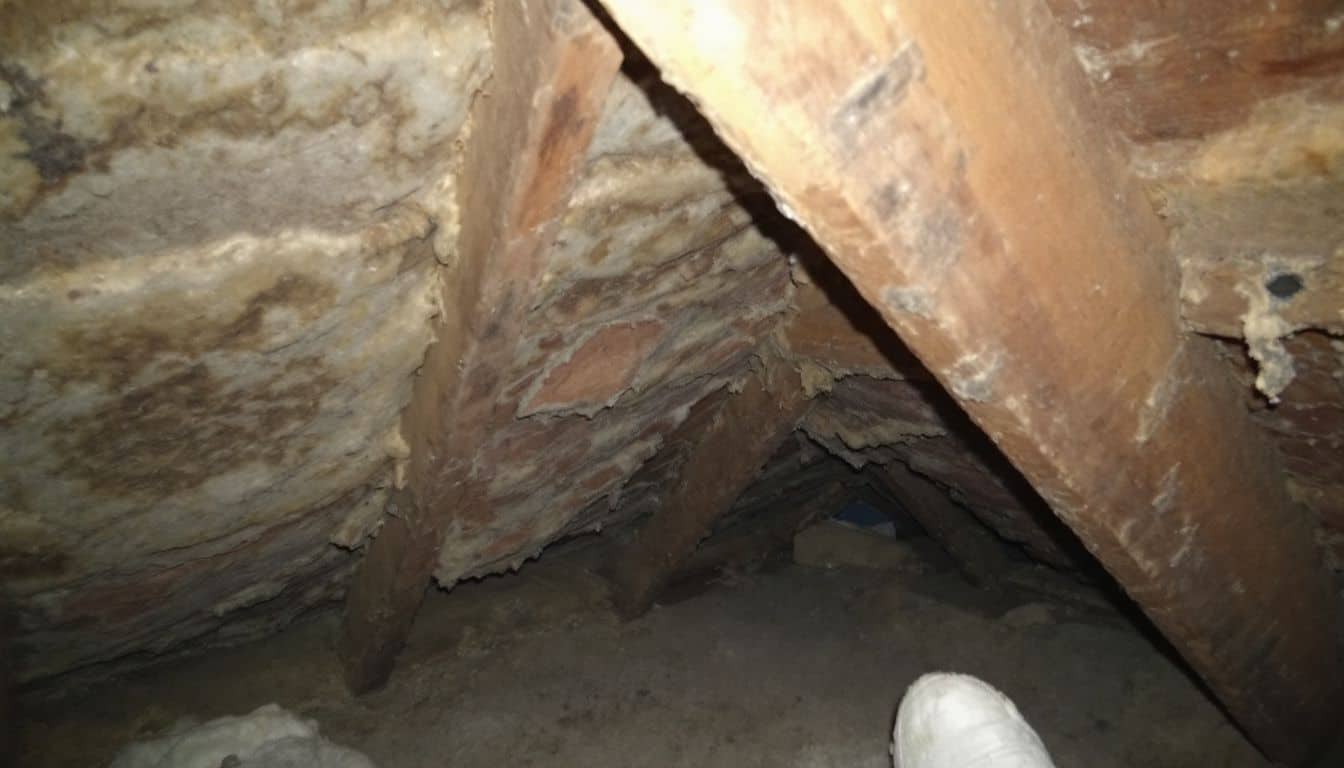
- In loft insulation — loose-fill asbestos was used in some properties
- Around window frames and door surrounds in certain construction types
- Underneath roofing felt in older properties
Can You Identify Asbestos by Looking at It?
The honest answer is no — not reliably. Asbestos cannot be identified by sight alone. Many ACMs look identical to non-asbestos materials, and even experienced surveyors do not make definitive judgements based on visual inspection alone.
What a visual survey can do is flag materials that are suspect — those that, based on their age, appearance, and location, are consistent with known ACMs. Any material that is suspect should be treated as if it contains asbestos until laboratory analysis proves otherwise.
If you are planning any work that might disturb these materials, professional asbestos testing is the only way to get a definitive answer. Samples are analysed under polarised light microscopy (PLM) or transmission electron microscopy (TEM), with TEM offering greater sensitivity for lower concentrations of fibres.
Never attempt to take samples yourself from materials you suspect may be high-risk, such as pipe lagging or ceiling boards. Disturbing these materials without the correct protective equipment and containment procedures can release fibres into the air. Always use a qualified professional.
Health Risks: What Asbestos Exposure Actually Does
Understanding the health risks helps homeowners take the issue seriously without becoming unnecessarily alarmed about undisturbed materials in good condition.
Short-Term Exposure
A brief, one-off exposure — such as accidentally drilling into an Artex ceiling before knowing it contained asbestos — carries a much lower risk than prolonged or repeated exposure. That said, there is no established safe threshold for asbestos fibre inhalation. Even limited exposure can cause irritation to the airways, coughing, and chest discomfort in the short term.
Long-Term and Repeated Exposure
The serious diseases associated with asbestos — mesothelioma, asbestosis, pleural thickening, and lung cancer — are overwhelmingly linked to sustained, repeated exposure over months or years. Workers in the construction, shipbuilding, and insulation trades historically bore the greatest burden of these diseases.
For homeowners, the concern is typically around renovation work: sanding, drilling, cutting, or stripping materials without knowing they contain asbestos. Repeated DIY exposure over the course of a refurbishment project can represent a meaningful cumulative dose.
These conditions have latency periods of 20 to 50 years, meaning someone exposed during a home renovation in the 1990s might not develop symptoms until well into the 2030s or 2040s. This long delay between exposure and illness is one of the reasons asbestos continues to claim lives in the UK today.
What to Do If You Suspect Asbestos in Your Home
If you come across a material that you think might contain asbestos, the first rule is simple: do not disturb it. Stop any work in the area immediately and keep others away.
Immediate Steps
- Stop work immediately — Halt any drilling, cutting, sanding, or demolition near the suspect material.
- Do not touch or probe the material — Even pressing on certain ACMs can release fibres.
- Ventilate the area carefully — Open windows to dilute any fibres that may already be airborne, but avoid creating draughts that spread dust further through the property.
- Note the location and condition — Take photographs if you can do so without disturbing the material. Record whether it appears damaged, crumbling, or intact.
- Contact a qualified surveyor — A professional will assess the material, take samples safely, and advise on next steps.
When to Call a Professional Without Delay
You should contact a qualified asbestos professional immediately if:
- You have already disturbed a material you suspect contains asbestos
- You can see visible damage to suspect materials such as crumbling, flaking, or exposed fibres
- You are planning any renovation, extension, or refurbishment work
- You are buying or selling a property built before 2000
- You are a landlord with responsibilities for the condition of a rented property
Asbestos Surveys for Domestic Properties
There are several types of asbestos survey relevant to domestic properties, each serving a different purpose. Choosing the right one depends on what you need to know and what you plan to do with the property.
Management Survey
A management survey is designed to locate and assess ACMs that could be disturbed during normal occupation or routine maintenance. It is non-intrusive and involves a visual inspection with sampling of accessible suspect materials.
The result is a written report detailing the location, condition, and risk rating of any ACMs found, along with recommendations for management. This type of survey is particularly useful if you have recently moved into an older property and want to understand what you are dealing with before undertaking any work.
Refurbishment Survey
If you are planning building work — even something as apparently minor as knocking down a partition wall or replacing a boiler — you need a refurbishment survey before work begins. This is a more intrusive inspection that involves accessing areas that will be disturbed by the planned works.
It is designed to locate all ACMs in the affected areas so they can be removed safely before contractors begin. Under the Control of Asbestos Regulations, anyone carrying out work that is liable to disturb asbestos must take appropriate precautions. For domestic refurbishment, this means commissioning a survey before work starts — not after.
Demolition Survey
If you are planning to demolish all or part of a domestic property, a demolition survey is required. This is the most intrusive type of survey, designed to locate every ACM in the structure before demolition work begins. All identified materials must be removed and disposed of safely before any demolition takes place.
Reinspection Survey
If ACMs have been identified in your property and a decision has been made to manage them in situ rather than remove them, they must be monitored over time. A reinspection survey assesses whether the condition of known ACMs has changed, ensuring that materials which were previously stable have not deteriorated to the point where they pose a risk.
Asbestos Testing: Getting a Definitive Answer
When a suspect material is identified — whether during a survey or in the course of routine maintenance — asbestos testing provides the definitive answer. A qualified professional will collect a small sample from the material using appropriate containment procedures and send it to an accredited laboratory for analysis.
Results typically confirm whether asbestos is present, which type it is, and at what concentration. This information directly informs the risk assessment and management plan. Testing should always be carried out by a qualified professional — never attempt to collect samples yourself from materials that may be friable or damaged.
Removal vs. Containment: Which Is Right for Your Home?
Not all asbestos needs to be removed. This is a common misconception that leads some homeowners to undertake unnecessary — and potentially dangerous — removal work, and others to assume that because removal is not needed immediately, there is nothing to worry about.
The right approach depends on the type of material, its condition, and what you plan to do with the property.
When Containment Is Appropriate
If an ACM is in good condition, is not being disturbed, and is not in an area subject to regular maintenance or renovation, it can often be managed safely in place. This might involve encapsulating the material with a specialist sealant, or simply monitoring it and keeping it out of harm’s way. A management plan should be put in place and updated following each reinspection.
When Removal Is Necessary
Removal becomes necessary when:
- The material is damaged, deteriorating, or at risk of further damage
- The area is being refurbished or demolished
- The material is in a location where it will inevitably be disturbed by routine maintenance
- The property is being sold and a buyer or mortgage lender requires it
Professional asbestos removal in domestic properties must be carried out by a licensed contractor for higher-risk materials such as asbestos insulating board and pipe lagging. Some lower-risk materials, such as asbestos cement roofing in good condition, can be removed by a competent non-licensed contractor following HSE guidance — but this still requires proper planning, protective equipment, and safe disposal.
Legal Responsibilities for Homeowners and Landlords
The legal picture for asbestos in domestic properties is worth understanding clearly, because the obligations differ depending on whether you are an owner-occupier or a landlord.
Owner-Occupiers
If you own and live in your home, you are not subject to the duty to manage asbestos under the Control of Asbestos Regulations in the same way that employers and building owners are. However, you still have a responsibility not to put others at risk. If you hire contractors to work in your home, you have a duty to inform them of any known or suspected ACMs so they can take appropriate precautions.
Failing to do so could expose contractors to risk and potentially expose you to liability. The practical advice is straightforward: commission a survey before any work begins, share the results with your contractors, and keep records.
Landlords
Landlords occupy a different legal position. Under the Control of Asbestos Regulations, those with responsibility for the maintenance and repair of non-domestic premises — including the common areas of residential properties such as communal hallways, stairwells, and plant rooms — have a duty to manage asbestos. This means identifying ACMs, assessing the risk they pose, and putting a management plan in place.
For landlords of houses in multiple occupation (HMOs) and those with shared or communal areas, the duty to manage is explicit. Even for standard residential lets, landlords are expected to be aware of the condition of their properties and to take steps to protect tenants and contractors from asbestos exposure.
HSE guidance makes clear that anyone who manages or has control of premises with a maintenance or repair obligation should treat asbestos management as a serious ongoing responsibility — not a one-off exercise.
Buying or Selling a Property: What You Need to Know
Asbestos is increasingly a factor in property transactions. Buyers of older homes are becoming more aware of the issue, and mortgage lenders and surveyors are paying greater attention to ACMs in pre-2000 properties.
If you are buying a property built before 2000, commissioning an asbestos management survey before exchange of contracts is a sensible step. It gives you a clear picture of what is present, what condition it is in, and what — if anything — needs to be done. This information can also inform price negotiations if significant remediation work is required.
If you are selling, having a current asbestos survey report to hand demonstrates transparency and can smooth the conveyancing process. Buyers and their solicitors will increasingly ask about asbestos, and being able to provide a professional report is far preferable to leaving the question unanswered.
Asbestos Surveys Across the UK
Supernova Asbestos Surveys operates nationwide, with specialist teams available across the country. Whether you need an asbestos survey in London, an asbestos survey in Manchester, or an asbestos survey in Birmingham, our qualified surveyors are available to carry out all types of domestic and commercial asbestos surveys to the standards set out in HSG264.
With over 50,000 surveys completed, we have the experience and accreditation to handle asbestos domestic assessments of every kind — from a straightforward management survey for a terraced house to a full demolition survey for a large residential development.
Practical Steps Every Homeowner Should Take Now
You do not need to wait until you are planning a renovation to take asbestos seriously. Here are the practical steps any owner of a pre-2000 property should consider:
- Find out when your property was built or last significantly refurbished. If it was before 2000, assume ACMs may be present until a survey confirms otherwise.
- Commission a management survey if you have not already done so. This gives you a baseline understanding of what is in your property.
- Tell your contractors. Before any tradesperson carries out work in your home, share any existing survey information. If no survey exists, commission one first.
- Do not disturb suspect materials. If you spot something that looks like it could be an ACM — old textured ceilings, pipe lagging, old floor tiles — leave it alone until it has been assessed.
- Keep records. Store survey reports, reinspection records, and any removal certificates in a safe place. These documents are valuable when selling the property or hiring contractors in future.
- Schedule reinspections. If ACMs are being managed in place, arrange regular reinspections to monitor their condition.
Frequently Asked Questions
Does my home definitely contain asbestos if it was built before 2000?
Not necessarily, but the risk is real enough to take seriously. Many properties built before 2000 do contain asbestos-containing materials in some form. The only way to know for certain is to commission a professional asbestos survey. Do not assume your home is clear without professional confirmation.
Is asbestos in my home dangerous if I leave it alone?
Asbestos that is in good condition and is not being disturbed poses a low risk. The danger arises when fibres become airborne — through damage, deterioration, or disturbance during maintenance or renovation. If ACMs are identified in your property, a professional can advise on whether management in place or removal is the appropriate course of action.
Do I need a licence to remove asbestos from my own home?
It depends on the material. Higher-risk materials such as asbestos insulating board (AIB) and pipe lagging must be removed by a licensed contractor under the Control of Asbestos Regulations. Lower-risk materials such as asbestos cement may be removable by a competent non-licensed contractor, but this still requires proper planning, PPE, and compliant disposal. Never attempt to remove any suspected ACM without professional guidance.
What is the difference between a management survey and a refurbishment survey?
A management survey is a non-intrusive inspection designed to locate accessible ACMs and assess their condition during normal occupation. A refurbishment survey is more intrusive and is required before any building work that will disturb the fabric of the property. If you are planning renovation work, a refurbishment survey — not a management survey — is what you need.
How long does an asbestos survey take in a domestic property?
For most domestic properties, a management survey can typically be completed within a few hours. Larger properties or more intrusive refurbishment and demolition surveys will take longer. Your surveyor will be able to give you a time estimate based on the size and complexity of the property before the visit.
Get Professional Advice from Supernova Asbestos Surveys
If you own, manage, or are buying a property built before 2000, taking the asbestos domestic risk seriously is one of the most important steps you can take to protect your family, your tenants, and your contractors.
Supernova Asbestos Surveys has completed over 50,000 surveys across the UK. Our qualified, accredited surveyors carry out management surveys, refurbishment surveys, demolition surveys, reinspection surveys, and asbestos testing for domestic and commercial properties nationwide.
Call us on 020 4586 0680 or visit asbestos-surveys.org.uk to book a survey or get expert advice about your property.