What Is Dangerous About Asbestos? The Real Risks Every UK Property Owner Must Understand
Asbestos was once celebrated as a miracle building material — fireproof, durable, cheap to use at scale. Decades later, it remains the single largest cause of work-related deaths in the UK, killing more people each year than road accidents. If you own, manage, or work in a building constructed before 2000, understanding what is dangerous about asbestos is not optional. It is a legal and moral necessity.
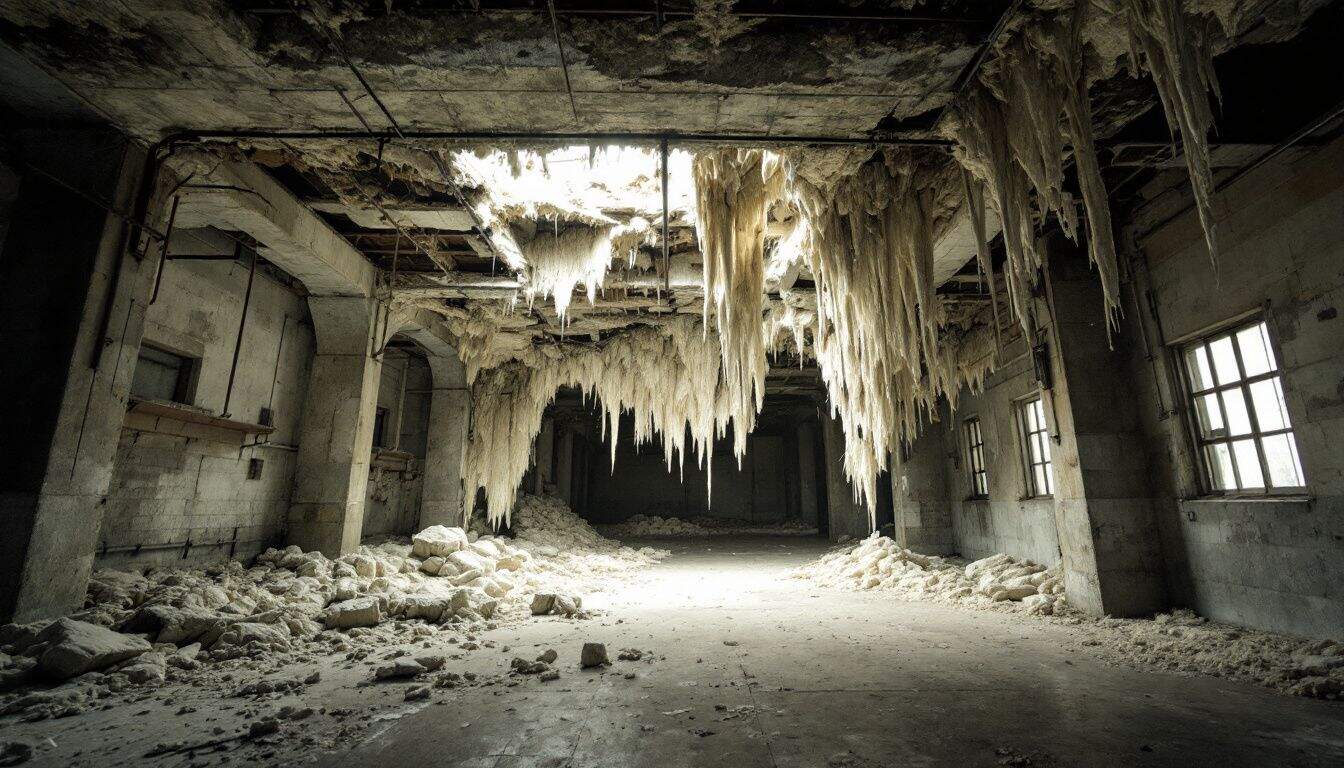
The danger is not simply that asbestos exists in a building. Intact, undisturbed asbestos-containing materials (ACMs) can pose a low risk. The real threat emerges the moment those materials are disturbed, damaged, or begin to deteriorate — releasing microscopic fibres that are invisible to the naked eye and impossible to detect without specialist testing.
Why Asbestos Fibres Are So Harmful to the Human Body
What makes asbestos uniquely dangerous is the physical nature of its fibres. When ACMs are disturbed, they release needle-thin fibres that can remain suspended in the air for hours. These fibres are small enough to bypass the body’s natural defences and travel deep into the lungs.
Once lodged in lung tissue, asbestos fibres cannot be expelled or broken down by the body. They remain permanently, causing ongoing inflammation and cellular damage over years and decades. This is why asbestos-related diseases have such an extraordinarily long latency period — the damage is cumulative and silent.
There are three main types of asbestos fibre: crocidolite (blue), amosite (brown), and chrysotile (white). All three are dangerous, though blue and brown asbestos are considered the most hazardous due to their sharper, more penetrating fibre structure. The UK banned blue and brown asbestos in 1985 and white asbestos in 1999, but all three remain present in millions of buildings constructed before those dates.
The Four Diseases Caused by Asbestos Exposure
Asbestos exposure is directly linked to four serious diseases. Each one is caused by inhaling asbestos fibres, and each carries significant consequences for the people affected.
Mesothelioma
Mesothelioma is a cancer that develops in the lining of the lungs, abdomen, or heart. It is almost exclusively caused by asbestos exposure and is always fatal. There is no cure, and most patients survive less than 18 months following diagnosis.
What makes mesothelioma particularly devastating is its latency period — symptoms typically do not appear until 20 to 60 years after the initial exposure. A worker who handled asbestos insulation in the 1970s may not receive a diagnosis until well into their retirement. By then, the disease is usually at an advanced stage.
Even a relatively brief or low-level exposure to asbestos fibres can be enough to trigger mesothelioma. There is no known safe threshold of exposure.
Asbestos-Related Lung Cancer
Asbestos is a recognised cause of lung cancer, independent of smoking. However, the combination of asbestos exposure and cigarette smoking dramatically multiplies the risk — far beyond what either factor would cause alone.
Asbestos-related lung cancer is clinically indistinguishable from lung cancer caused by other factors, which makes it difficult to identify in isolation. Workers in high-exposure industries — construction, shipbuilding, insulation — carry a significantly elevated lifetime risk.
Asbestosis
Asbestosis is a chronic, progressive lung disease caused by prolonged inhalation of high concentrations of asbestos fibres. The fibres cause scarring of the lung tissue (pulmonary fibrosis), which progressively reduces lung capacity and makes breathing increasingly difficult.
Unlike mesothelioma, asbestosis is typically associated with sustained heavy exposure over many years, rather than brief contact. It is not a cancer, but it is a serious and debilitating condition that can lead to respiratory failure and heart complications. There is no treatment that reverses the scarring.
Pleural Thickening
Pleural thickening occurs when the membrane surrounding the lungs (the pleura) becomes scarred and thickened as a result of asbestos fibre irritation. As the thickening progresses, it restricts the lungs’ ability to expand fully, causing breathlessness and chest discomfort.
Diffuse pleural thickening can develop from relatively low-level asbestos exposure, making it one of the more commonly diagnosed asbestos-related conditions. While not always life-threatening on its own, it significantly reduces quality of life and can indicate a higher risk of more serious disease.
Who Is Most at Risk from Asbestos Exposure?
Understanding what is dangerous about asbestos also means understanding who faces the greatest risk. Exposure does not affect everyone equally — occupation, building age, and the nature of contact all influence the level of risk.
High-Risk Occupations
Certain trades and professions carry a historically elevated risk due to regular contact with ACMs. These include:
- Construction workers — particularly those involved in renovation, refurbishment, or demolition of pre-2000 buildings
- Electricians and plumbers — who frequently work around pipe lagging, ceiling tiles, and insulation boards
- Carpenters and joiners — who may cut or drill into asbestos-containing materials unknowingly
- Boilermakers and heating engineers — who worked with asbestos insulation on boilers and pipework
- Demolition workers — who disturb large quantities of ACMs during structural work
- Shipbuilders and dockworkers — historically among the most heavily exposed groups in the UK
- Property surveyors and inspectors — who must identify and assess ACMs in older buildings
Maintenance workers in commercial and public buildings also face ongoing risk, particularly when carrying out work without first checking whether asbestos is present. A management survey is the appropriate first step for any occupied building where maintenance or minor works are planned.
Secondary and Domestic Exposure
Asbestos exposure is not confined to the workplace. Secondary exposure — also known as para-occupational exposure — occurs when workers carry asbestos fibres home on their clothing, hair, or skin, putting family members at risk without any direct contact with ACMs.
Domestic exposure is also a genuine concern for homeowners undertaking DIY renovations in properties built before 2000. Drilling into an artex ceiling, sanding floor tiles, or cutting into an airing cupboard panel can all release fibres if ACMs are present. Children are considered particularly vulnerable because of their longer life expectancy — a longer period over which asbestos-related diseases can develop.
The Latency Problem: Why Asbestos Keeps Killing Decades Later
One of the most dangerous aspects of asbestos exposure is that the consequences are not immediate. There is no cough, no rash, no warning sign at the point of exposure. The fibres simply settle in the lung tissue and begin their slow, silent work.
The latency period for mesothelioma is typically between 20 and 60 years. Asbestosis and pleural thickening may appear somewhat sooner, but still commonly take 10 to 20 years to manifest. This means that people being diagnosed with asbestos-related diseases today were often exposed during the 1970s, 1980s, or even earlier.
This latency also creates a challenge for legal claims. In the UK, individuals generally have three years from the date they first became aware of their diagnosis — and its likely cause — to bring a compensation claim. Keeping records of workplace exposure, even decades after the fact, can be critical in supporting such a claim.
If you manage a building where ACMs have been identified, a re-inspection survey conducted at regular intervals is essential to ensure those materials have not deteriorated and are not putting occupants at risk.
Where Asbestos Hides in UK Buildings
Asbestos was used extensively in UK construction from the 1950s through to the late 1990s. It was incorporated into a vast range of building products, many of which remain in place today. Common locations include:
- Artex and textured coatings on ceilings and walls
- Insulation boards around boilers, pipework, and heating systems
- Asbestos cement roofing sheets and guttering
- Vinyl floor tiles and the adhesive beneath them
- Roof felt and soffit boards
- Fire doors and fire-resistant panels
- Sprayed coatings on structural steelwork
- Gaskets and rope seals in industrial plant
The key point is that asbestos-containing materials are not always obvious. They do not carry labels. They can look identical to non-asbestos materials. The only reliable way to confirm whether a material contains asbestos is through laboratory analysis of a sample — something a qualified surveyor can arrange, or that you can initiate yourself using a testing kit for bulk sampling where appropriate.
The Legal Framework: Your Obligations Under UK Law
The Control of Asbestos Regulations place clear legal duties on those who own, manage, or have responsibility for non-domestic premises. The duty to manage asbestos requires that a suitable and sufficient assessment is carried out to determine whether asbestos is present, and that a written management plan is put in place to control the risk.
Failure to comply is a criminal offence. The Health and Safety Executive (HSE) actively enforces these regulations, and enforcement action — including prohibition notices, improvement notices, and prosecution — is a real consequence of non-compliance.
HSG264, the HSE’s guidance document on asbestos surveys, sets out the standards that surveys must meet. All surveys carried out by Supernova Asbestos Surveys are conducted in accordance with HSG264 and fully satisfy the requirements of the Control of Asbestos Regulations.
It is also worth noting that asbestos management intersects with fire safety obligations. Disturbing or removing ACMs during fire safety works requires careful coordination — a fire risk assessment should always be considered alongside asbestos management planning in commercial and public buildings.
What Safe Asbestos Management Looks Like in Practice
The safest approach to asbestos is always to assume it is present in any building built before 2000 until a survey confirms otherwise. From there, the appropriate response depends on the condition of the materials and the nature of the work being planned.
If ACMs are in good condition and are not going to be disturbed, the correct approach is usually to manage them in place — monitoring their condition regularly and ensuring anyone who might work near them is informed. If materials are damaged, deteriorating, or in an area where work is planned, professional removal may be necessary.
Asbestos removal must be carried out by a licensed contractor for the most hazardous materials, including sprayed coatings, asbestos insulation, and asbestos insulating board. Attempting to remove these materials without the correct licensing, training, and equipment is illegal and extremely dangerous.
For lower-risk materials, unlicensed but notifiable work may be permissible under the regulations — but the correct procedures must still be followed, including adequate respiratory protection, controlled working methods, and proper disposal of waste.
Asbestos Surveys Across the UK
Supernova Asbestos Surveys operates nationwide, with specialist teams covering every region of the UK. Whether you need an asbestos survey in London, an asbestos survey in Manchester, or an asbestos survey in Birmingham, our BOHS P402-qualified surveyors can typically attend within the same week.
Every survey we carry out is fully compliant with HSG264 and delivers a clear, actionable asbestos register and risk-rated management plan. We work with residential landlords, commercial property managers, local authorities, schools, and industrial operators — anyone with a legal or practical need to understand the asbestos risk in their building.
Frequently Asked Questions
What is dangerous about asbestos if it’s not visibly damaged?
Even materials that appear intact can release fibres if they are disturbed during maintenance, drilling, cutting, or accidental impact. The danger is not always visible — which is why a professional survey is the only reliable way to assess risk. Undisturbed ACMs in good condition may be managed in place, but they must be monitored regularly.
Can a single exposure to asbestos cause disease?
Yes. There is no confirmed safe threshold for asbestos exposure. Mesothelioma has been diagnosed in individuals with only brief or incidental contact with asbestos fibres. That said, the risk increases significantly with the duration and intensity of exposure. Prolonged occupational exposure carries the highest risk.
How do I know if my building contains asbestos?
You cannot tell by looking. Asbestos-containing materials are visually indistinguishable from non-asbestos alternatives. The only way to confirm whether asbestos is present is through laboratory analysis of a sample taken from the suspect material. A management survey carried out by a qualified surveyor is the standard approach for occupied buildings.
Is asbestos still present in UK homes?
Yes. Any property built or refurbished before 2000 may contain asbestos-containing materials. This includes artex ceilings, floor tiles, insulation boards, roof felt, and many other common building products. Homeowners planning renovation work in older properties should have a survey carried out before any work begins.
What should I do if I think I’ve disturbed asbestos?
Stop work immediately. Leave the area and prevent others from entering. Do not attempt to clean up dust or debris yourself. Contact a licensed asbestos surveyor or contractor to assess the situation and arrange any necessary air monitoring or remediation. Do not re-enter the area until it has been confirmed safe by a qualified professional.
Speak to Supernova Asbestos Surveys
If you have concerns about asbestos in a property you own or manage, do not wait. The risks are real, the legal obligations are clear, and the consequences of getting it wrong — for your health and for the people in your building — are severe.
Supernova Asbestos Surveys has completed over 50,000 surveys across the UK. Our qualified surveyors are available nationwide, with fast turnaround times and reports fully compliant with HSG264 and the Control of Asbestos Regulations.
Call us on 020 4586 0680 or visit asbestos-surveys.org.uk to book a survey or request a no-obligation quote. We’re here to help you understand and manage the risks — clearly, professionally, and without delay.