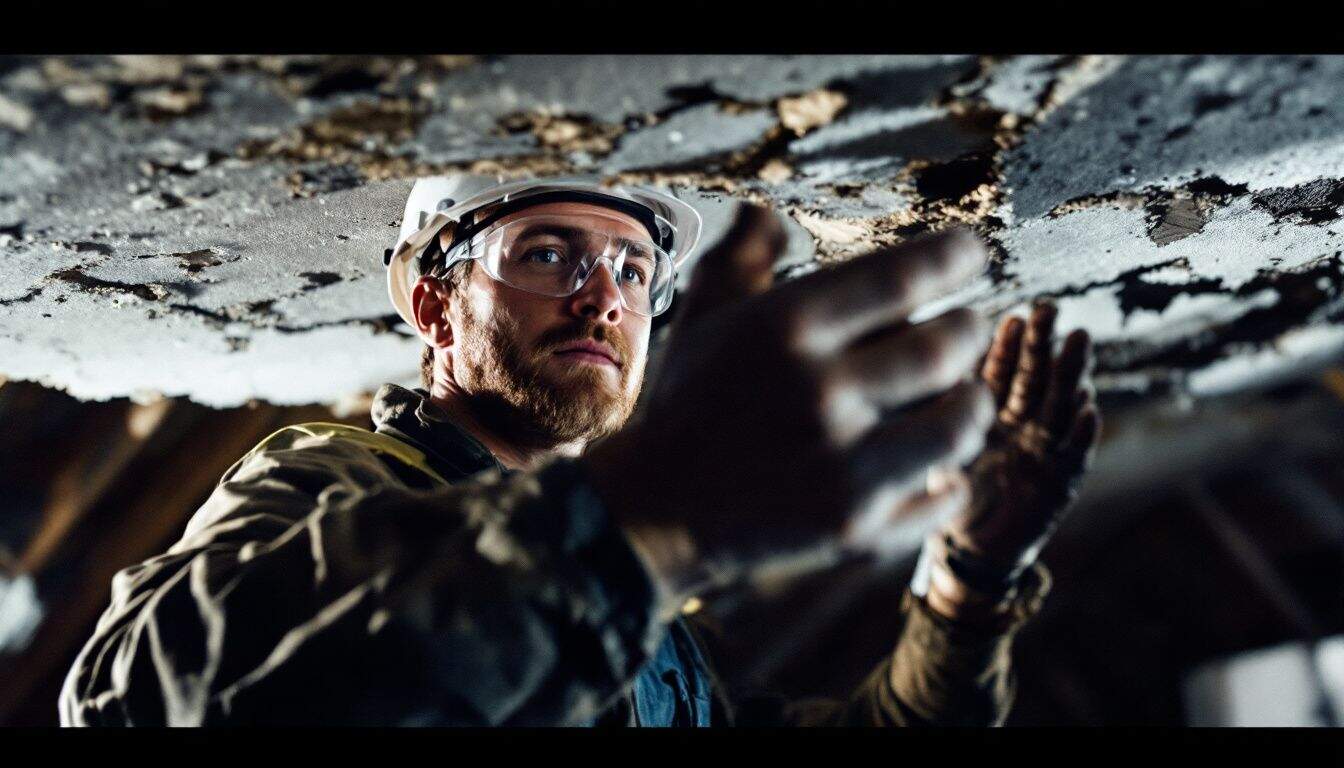
Asbestos in the UK: What Every Property Owner and Worker Needs to Know
Asbestos remains the single biggest cause of work-related deaths in Great Britain. Despite being banned from new construction since 1999, it still lurks inside millions of buildings across the country — offices, schools, hospitals, and homes alike. If you own, manage, or work in a property built before 2000, understanding asbestos is not optional. It is a legal and moral obligation.
This post covers why asbestos is so dangerous, where it hides, who is most at risk, what the law requires, and the practical steps you should take right now to protect yourself and others.
Why Is Asbestos So Dangerous?
Asbestos is a naturally occurring fibrous mineral that was widely used in construction throughout the twentieth century. It was prized for its heat resistance, durability, and insulating properties. The problem is that when asbestos-containing materials are disturbed, they release microscopic fibres into the air.
Those fibres are invisible to the naked eye. You cannot smell them. You cannot feel them entering your lungs. But once inhaled, they become permanently lodged in lung tissue and can trigger devastating diseases — sometimes decades after the initial exposure.
The diseases linked to asbestos exposure include:
- Mesothelioma — a cancer of the lining of the lungs or abdomen, almost exclusively caused by asbestos. It is incurable.
- Asbestosis — severe scarring of lung tissue that causes progressive breathlessness.
- Asbestos-related lung cancer — the risk is significantly multiplied in people who also smoke.
- Pleural thickening — thickening of the membrane around the lungs, restricting breathing capacity.
There is no safe level of asbestos exposure. The latency period — the gap between exposure and diagnosis — can be anywhere from 15 to 60 years. By the time symptoms appear, the disease is often at an advanced stage.
Where Is Asbestos Found in Buildings?
Asbestos was incorporated into hundreds of different building products before its use was phased out. If your property was built or significantly refurbished before 2000, there is a realistic chance that asbestos-containing materials (ACMs) are present somewhere.
Common locations and materials include:
- Pipe lagging — asbestos was used extensively to insulate hot water and heating pipes
- Sprayed coatings — applied to structural steelwork and ceilings as fireproofing
- Asbestos insulating board (AIB) — used in ceiling tiles, partition walls, fire doors, and service duct panels
- Textured decorative coatings — products like Artex applied to ceilings and walls frequently contained asbestos fibres
- Asbestos cement — found in roofing sheets, guttering, downpipes, and cladding panels
- Floor tiles — vinyl floor tiles and their adhesive backing often contained asbestos fibres
- Roofing felt — used as an underlayer beneath roof tiles
- Rope seals and gaskets — used in boilers, furnaces, and industrial plant
- Soffit boards — particularly in domestic properties built in the 1960s and 1970s
Asbestos is not always obvious. It can be concealed behind plasterboard, beneath floor coverings, or inside service ducts. You cannot identify it by sight alone — only laboratory analysis of a sample can confirm its presence. That is why professional asbestos testing is so important before any work begins on an older building.
Who Is Most at Risk of Asbestos Exposure?
Anyone who works in or around older buildings carries some degree of risk, but certain trades and occupations are disproportionately exposed. The HSE consistently identifies the following groups as being at elevated risk:
- Electricians and electrical engineers
- Plumbers and heating engineers
- Joiners and carpenters
- Plasterers, painters, and decorators
- Roofers
- Demolition workers
- Gas fitters
- Telecoms and data cable installers
- Shop fitters
- Alarm and security system installers
- Architects and building surveyors
- Maintenance workers in commercial and public sector buildings
Self-employed tradespeople are just as much at risk as employed workers — and carry the same legal responsibilities. Working without knowledge of where asbestos is located in a building is not an acceptable approach. It is a regulatory breach and, more importantly, a genuine threat to life.
Members of the public can also be exposed. Homeowners carrying out DIY renovations — drilling into walls, sanding floors, removing ceiling tiles — disturb ACMs without realising it. The domestic setting is one of the most overlooked risk environments.
Understanding Your Legal Responsibilities Around Asbestos
Asbestos management in the UK is governed primarily by the Control of Asbestos Regulations, supported by HSE guidance document HSG264. Together, these set out a clear legal framework that applies to dutyholders — anyone responsible for the maintenance or repair of non-domestic premises.
The Duty to Manage
The duty to manage asbestos requires that dutyholders take reasonable steps to find out whether asbestos is present in their premises, assess the condition of any ACMs found, and put in place a written management plan to ensure those materials are properly managed.
This duty applies to commercial premises, communal areas of residential buildings, and any non-domestic property. The starting point for fulfilling this duty is commissioning a management survey — a qualified surveyor inspects all accessible areas, takes samples from suspect materials, and produces a detailed asbestos register and risk assessment.
Licensing Requirements
Not all asbestos work requires a licence, but the highest-risk activities do. Work with asbestos insulating board, sprayed coatings, and pipe lagging must be carried out by a contractor licensed by the HSE. Attempting to remove these materials without the appropriate licence is a criminal offence.
For lower-risk materials such as asbestos cement, the work may be non-licensed but must still be notifiable to the relevant enforcing authority and carried out following strict control measures.
Training Obligations
Under the Control of Asbestos Regulations, employers must ensure that any worker who is liable to disturb asbestos during their work has received adequate information, instruction, and training. Regulation 10 specifically covers asbestos awareness training.
This training does not qualify workers to handle ACMs — it equips them to recognise the risks and respond correctly if they encounter suspect materials.
Record Keeping
Dutyholders must maintain an up-to-date asbestos register and make it available to anyone who may disturb ACMs — including contractors, maintenance staff, and emergency services. Failing to share this information before work begins is a serious compliance failure that can result in enforcement action.
How to Identify Asbestos in Your Property
The only reliable way to confirm whether a material contains asbestos is through laboratory analysis. Visual inspection alone is not sufficient. Even experienced surveyors cannot identify asbestos by looking at it — they can only assess which materials are likely to contain it based on age, type, and condition.
Here is the correct process to follow:
- Check the building’s age and history. If it was built or refurbished before 2000, treat suspect materials as potentially containing asbestos until proven otherwise.
- Do not disturb suspect materials. If you see damaged or deteriorating materials that could be ACMs, do not drill, sand, scrape, or cut them. Stop work immediately and seek professional advice.
- Commission a survey. A qualified surveyor will inspect the property, identify suspect materials, and collect samples using correct containment procedures.
- Consider a testing kit for low-risk domestic situations. If you need to collect samples yourself in a domestic setting, this option is available — though professional sampling is always preferable.
- Send samples to a UKAS-accredited laboratory. Analysis is carried out using polarised light microscopy (PLM) to confirm the presence and type of asbestos fibres.
- Act on the results. If asbestos is confirmed, follow the recommendations in your survey report. Management in situ may be appropriate for materials in good condition; removal will be necessary if materials are damaged or at high risk of disturbance.
For those in major cities, Supernova offers rapid local response — whether you need an asbestos survey London, an asbestos survey Manchester, or an asbestos survey Birmingham — with appointments often available within the same week.
Safe Working Practices Around Asbestos
If you work in a trade that brings you into contact with older buildings, these practices should be second nature. Cutting corners is not a risk worth taking when the consequences can take decades to manifest.
- Always check the asbestos register before starting any work on a commercial or public building. Ask the dutyholder if one exists. If they cannot produce one, treat the building as potentially containing asbestos.
- Use dust suppression methods. Where work must proceed near potentially affected materials, wet methods and low-speed tools reduce fibre release.
- Never dry sweep dust from areas where asbestos may be present. Use a Type H vacuum cleaner — a standard vacuum will simply redistribute fibres into the air.
- Wear appropriate PPE. A minimum of an FFP3 disposable respirator, disposable overalls, and gloves. Ensure the respirator fits correctly — a poor seal renders it useless.
- Double-bag all waste in labelled asbestos waste bags and dispose of it through a licensed waste carrier.
- Decontaminate properly. Remove overalls carefully, turning them inside out. Wash hands and face thoroughly before eating, drinking, or smoking.
- Stop work immediately if you suspect you have disturbed asbestos. Seal the area, prevent others from entering, and contact a licensed asbestos contractor.
Managing Asbestos Long-Term: Surveys and Re-Inspections
Identifying asbestos is only the first step. Once ACMs are recorded in an asbestos register, the duty to manage requires that their condition is monitored on an ongoing basis. Materials that are in good condition and unlikely to be disturbed can often be safely managed in place — but their condition must be checked periodically.
This is where a re-inspection survey becomes essential. A qualified surveyor revisits the property, assesses the condition of known ACMs, updates the risk ratings, and revises the management plan accordingly. The frequency of re-inspections depends on the risk rating assigned to each material — higher-risk materials require more frequent checks.
When refurbishment or demolition work is planned, a standard management survey is not sufficient. A refurbishment and demolition (R&D) survey is required. This is a more intrusive inspection that accesses all areas to be disturbed, including voids, cavities, and structural elements. It must be completed before any work begins.
Where ACMs need to be removed — whether due to damage, planned works, or a decision to eliminate the risk entirely — asbestos removal must be carried out by a licensed contractor for the highest-risk materials. The work must be notified to the HSE in advance, and clearance air testing must be conducted before the area is reoccupied.
Asbestos and the Broader Building Safety Picture
Asbestos management does not exist in isolation. Many of the same buildings that contain asbestos also have other legacy safety issues, and a thorough approach to property compliance should address all of them together.
A fire risk assessment is a legal requirement for all non-domestic premises and should be conducted alongside asbestos management as part of a joined-up approach to building safety. Fire-resistant materials in older buildings frequently contain asbestos — including fire door panels, ceiling tiles, and service duct linings. Understanding the asbestos status of these materials is directly relevant to fire safety planning and any refurbishment works.
A surveyor who understands both disciplines can help you avoid costly duplication of effort and ensure that your compliance obligations are met in a coordinated, efficient way. Treating asbestos and fire safety as separate silos is a common mistake that leads to gaps in both programmes.
Property managers and building owners should also be aware that asbestos records need to be disclosed during property transactions. A missing or incomplete asbestos register can delay sales, complicate lease renewals, and create liability exposure. Keeping your register current is not just a regulatory requirement — it is sound property management practice.
What to Do If You Suspect Asbestos Has Been Disturbed
If you believe asbestos has been disturbed — whether during planned works or accidentally — the immediate priority is to stop the spread of contamination and protect everyone in the vicinity.
Follow these steps without delay:
- Stop all work immediately and evacuate the affected area.
- Seal the area to prevent fibres spreading to other parts of the building. Close doors and windows where possible.
- Do not attempt to clean up the debris yourself. Sweeping or vacuuming with a standard machine will make matters worse.
- Contact a licensed asbestos contractor to assess the situation and carry out any necessary decontamination.
- Notify the relevant enforcing authority if the disturbance occurred during licensable work.
- Arrange for asbestos testing of the air and any suspect debris to establish the extent of contamination.
- Do not reoccupy the area until clearance air testing has been completed and a four-stage clearance has been passed.
Speed matters in these situations, but so does doing things correctly. A rushed clean-up that spreads fibres further can create a much larger and more expensive problem than the original disturbance.
Frequently Asked Questions
Does asbestos need to be removed if it is found in a building?
Not necessarily. Asbestos that is in good condition and is unlikely to be disturbed can often be safely managed in place. The legal requirement is to manage the risk, not automatically remove the material. Removal becomes necessary when materials are damaged, deteriorating, or located in an area scheduled for refurbishment or demolition work. A qualified surveyor will advise on the most appropriate course of action based on the condition and location of each material.
How do I know if my building contains asbestos?
If your building was constructed or significantly refurbished before 2000, there is a realistic possibility that asbestos-containing materials are present somewhere. The only way to confirm this is through a professional survey and laboratory analysis of samples taken from suspect materials. Visual inspection alone cannot identify asbestos — it requires polarised light microscopy carried out by a UKAS-accredited laboratory.
Who is legally responsible for managing asbestos in a commercial building?
Under the Control of Asbestos Regulations, the duty to manage asbestos falls on the dutyholder — typically the owner of the building or the person or organisation responsible for its maintenance and repair. In leased properties, this responsibility may be shared between landlord and tenant depending on the terms of the lease. Both parties should understand their respective obligations clearly.
Can I remove asbestos myself?
For the highest-risk materials — including asbestos insulating board, sprayed coatings, and pipe lagging — removal must be carried out by an HSE-licensed contractor. Attempting to remove these materials without a licence is a criminal offence. Some lower-risk materials, such as small quantities of asbestos cement, may be removable without a licence, but strict control measures still apply and the work must be notifiable. Always seek professional advice before attempting any asbestos removal work.
How often should an asbestos register be reviewed?
The Control of Asbestos Regulations require that the condition of known asbestos-containing materials is monitored on an ongoing basis. In practice, this means commissioning periodic re-inspection surveys — the frequency of which depends on the risk rating of the materials involved. Higher-risk materials may require annual checks, while lower-risk materials in stable condition may be reviewed less frequently. The asbestos register should also be updated whenever new materials are identified or the condition of existing ones changes.
Get Expert Asbestos Support from Supernova
Supernova Asbestos Surveys has completed over 50,000 surveys across the UK. Our UKAS-accredited team works with property managers, landlords, local authorities, and contractors to deliver fast, reliable asbestos management — from initial surveys through to removal and ongoing re-inspection programmes.
Whether you need a management survey for a commercial property, a refurbishment survey before planned works, or simply need to understand what is in your building, we can help. We cover the whole of the UK with rapid response times and clear, actionable reports.
Call us on 020 4586 0680 or visit asbestos-surveys.org.uk to book a survey or speak to one of our specialists today.