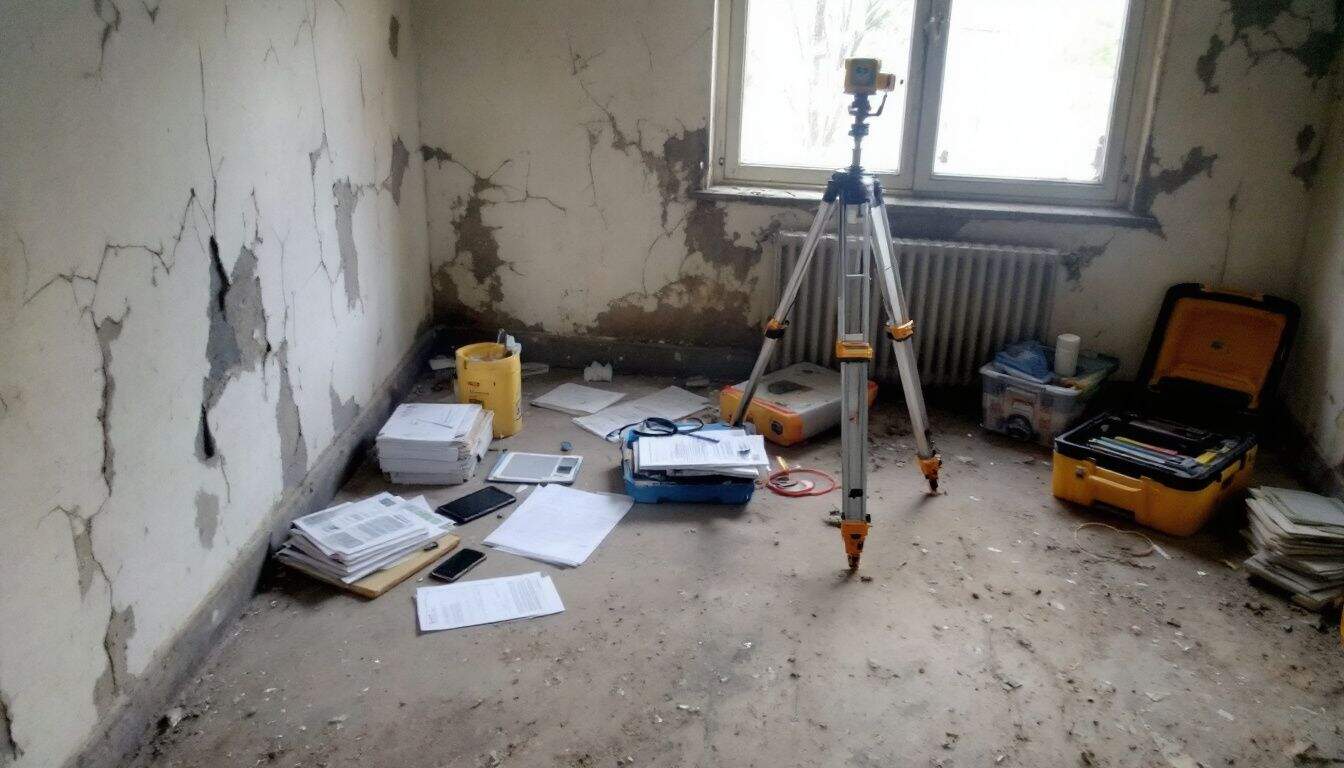
Why Teams Surveying Buildings for Asbestos Need to Work Smarter Together
Asbestos remains hidden in over a million UK buildings, and the professionals responsible for finding it rarely work in isolation. The reality is that teams surveying for asbestos — and the architects, construction managers, and maintenance staff they work alongside — can either slow a project down or keep it moving safely, depending on how well they collaborate.
Getting that collaboration right has never been more important. The following sections explore how those working relationships are changing, what’s driving the shift, and what better teamwork actually looks like on the ground.
How Teams Surveying Asbestos Currently Work With Other Building Professionals
The relationship between asbestos surveyors and other building professionals has traditionally been reactive. A surveyor is brought in, produces a report, and hands it over. That model is increasingly being replaced by something more integrated — and for good reason.
Working Alongside Architects During Refurbishments
When a building is being refurbished, surveyors and architects need to be in constant dialogue. An asbestos refurbishment survey is not a box-ticking exercise — it directly shapes what an architect can and cannot do with a space.
If a surveyor identifies asbestos-containing materials (ACMs) in a partition wall or ceiling void, that finding changes the design brief. Architects who receive survey results early in the planning process can adapt their proposals accordingly, avoiding costly delays once work begins on site.
The best outcomes happen when surveyors are involved from the feasibility stage, not called in at the last minute. Shared meetings, shared documentation, and clear lines of communication between disciplines make a measurable difference to how smoothly refurbishment projects run.
Supporting Construction Managers in Project Planning
Construction managers are responsible for sequencing work on site, managing contractors, and keeping projects on schedule. When asbestos is in the picture, that responsibility becomes significantly more complex.
Teams surveying for asbestos provide the risk data that construction managers need to plan safe working sequences. Where ACMs are present, certain areas may need to be treated, encapsulated, or cleared before other trades can enter. Without accurate survey data shared in advance, construction managers are essentially planning blind.
A well-coordinated approach — where the surveyor’s findings feed directly into the project programme — reduces the risk of unplanned exposure, programme overruns, and regulatory breaches. The Health and Safety at Work Act and the Control of Asbestos Regulations both place clear duties on those managing construction work, and meeting those duties depends on good information flow between disciplines.
Communicating With Maintenance Teams for Ongoing Management
For buildings that contain asbestos but are not currently being refurbished, the relationship between surveyors and maintenance teams is equally critical. An asbestos management survey produces a register of ACMs, their condition, and the risk they pose — but that register is only useful if the people working in the building actually understand it.
Maintenance staff are often the first to disturb asbestos unintentionally. A plumber drilling into a ceiling, an electrician chasing a wall — these everyday tasks can become dangerous if the people carrying them out haven’t been briefed on what the survey found and where the risks are.
Regular re-inspection surveys, combined with clear briefings to maintenance teams, form the backbone of effective asbestos management in occupied buildings. Surveyors who communicate findings in plain language — not just technical reports — make a real difference to safety on the ground.
What’s Driving the Evolution of Collaborative Surveying
The shift towards more integrated working between teams surveying for asbestos and other building professionals isn’t happening by accident. Several converging pressures are pushing the industry in this direction.
Tightening Regulatory Requirements
The Control of Asbestos Regulations set out clear duties for dutyholders, employers, and those managing or working in non-domestic buildings. These regulations require not just the identification of ACMs but their ongoing management — and that management involves multiple parties.
HSE guidance, particularly HSG264, sets out how surveys should be planned and conducted. Compliance with these standards requires coordination between surveyors, building managers, and contractors. The regulatory framework effectively mandates collaboration, even if the industry hasn’t always delivered it in practice.
Increased HSE enforcement activity has focused attention on whether dutyholders can demonstrate that their asbestos management arrangements are genuinely effective — not just documented. That pressure is encouraging more joined-up working across disciplines.
The Complexity of Modern Building Projects
Modern construction and refurbishment projects are more complex than ever. Buildings are being repurposed, extended, and retrofitted at pace, and many of the structures involved were built during the decades when asbestos use was at its peak.
Managing asbestos risk in a multi-phase refurbishment, with multiple contractors working across different areas, demands a level of coordination that a standalone survey report simply cannot provide. Teams surveying for asbestos need to be embedded in the project team, not operating at arm’s length.
Digital tools — discussed in more detail below — are making this kind of integration more practical. But the cultural shift, where surveyors are treated as project partners rather than external consultants, is just as important as any technology.
The Push Towards Sustainable Construction
Sustainability targets are reshaping how the construction industry approaches existing buildings. Rather than demolishing and rebuilding, there is growing pressure to retain and retrofit — and that means working with the materials already present, including asbestos.
Where asbestos is in good condition and not at risk of disturbance, the sustainable approach is often to manage it in place rather than remove it. That requires ongoing monitoring, clear documentation, and close coordination between surveyors, building managers, and the contractors carrying out other works.
This shift from removal to management places even greater emphasis on the quality of collaboration between teams surveying and the wider building professional community.
Technology Connecting Teams Surveying and Building Professionals
Digital technology is transforming how asbestos survey data is captured, stored, and shared — and with it, how different professional disciplines work together.
Digital Asbestos Management Registers
Paper-based asbestos registers are rapidly being replaced by digital platforms that allow multiple users to access and update records in real time. A maintenance manager, a contractor, and a surveyor can all be looking at the same register simultaneously — seeing the same location data, condition assessments, and risk ratings.
This kind of shared access removes the information silos that have historically caused problems. When a contractor arrives on site and needs to know whether a particular area is safe to work in, a live digital register provides a definitive answer rather than relying on a paper document that may be out of date.
Asbestos testing results can be integrated directly into these platforms, giving all parties a complete and current picture of the risk profile of a building.
Building Information Modelling (BIM)
Building Information Modelling is changing the way construction projects are planned and managed, and asbestos data is increasingly being incorporated into BIM models. When survey findings are mapped into a 3D model of a building, every member of the project team can see exactly where ACMs are located, in context.
An architect planning a new opening in a wall can check the BIM model and immediately see whether that wall contains asbestos. A construction manager sequencing trades can identify which areas need to be cleared before other work begins.
This kind of visual, integrated data sharing represents a significant step forward from the traditional approach of attaching a survey report to a project file. Surveyors who can contribute data in BIM-compatible formats are becoming significantly more valuable to project teams — and the expectation that they will do so is growing.
Remote Monitoring and Real-Time Reporting
Real-time fibre monitoring technology allows teams to detect airborne asbestos fibres during works and report findings immediately to all relevant parties. Rather than waiting for post-work clearance certificates, project teams can receive live data on air quality in areas where disturbance of ACMs is a risk.
Remote monitoring systems also reduce the need for surveyors to be physically present at all times, making it more practical to maintain oversight across large or complex sites. Automated alerts can notify building managers, contractors, and surveyors simultaneously if fibre levels exceed safe thresholds.
This kind of real-time data sharing is exactly the collaborative infrastructure that modern building projects require.
Cross-Disciplinary Training: Building a Shared Language
Technology alone won’t improve collaboration if the professionals involved don’t understand each other’s disciplines. Cross-disciplinary training is one of the most effective tools for breaking down the barriers between teams surveying and other building professionals.
Joint Training Programmes for Surveyors and Tradespeople
Programmes that bring asbestos surveyors and tradespeople together — rather than training them in separate silos — build mutual understanding and practical competence. A surveyor who understands how a plasterer or electrician works is better placed to communicate risks in terms that are actually useful.
A tradesperson who has sat in a room with a surveyor and asked questions is far more likely to take survey findings seriously on site. Joint training also creates opportunities to develop shared protocols — agreed ways of working that reduce ambiguity and the risk of dangerous assumptions being made.
Asbestos Awareness for All Building Professionals
The Control of Asbestos Regulations place specific requirements on employers to ensure that workers who may disturb asbestos have received appropriate training. But awareness training should extend beyond those directly at risk.
Architects, project managers, facilities managers, and building surveyors all benefit from understanding the basics of asbestos risk, survey types, and management obligations. When every member of a project team has a baseline understanding of asbestos, communication between disciplines becomes more effective.
Surveyors spend less time explaining fundamentals and more time sharing the specific findings that matter for the project at hand.
Certification and Shared Standards
Shared standards — across surveying, construction management, facilities management, and related disciplines — create a common framework for collaboration. Regulation 10 of the Control of Asbestos Regulations requires information, instruction, and training for those liable to disturb asbestos, and mandates that this training is kept up to date.
Professional development frameworks that align across disciplines help ensure that everyone working on a building project is operating to the same standards and expectations. Accreditation bodies and industry organisations play an important role in developing and maintaining these shared frameworks.
The Role of Location and Scale in Collaborative Surveying
The practical demands of collaboration vary significantly depending on the size and location of a project. A single-building asbestos survey London clients commission will involve a very different set of professional relationships than a large multi-site estate managed from a regional office.
In major urban centres, the density of projects and the concentration of building professionals creates both opportunities and pressures. Surveyors working in cities are more likely to be part of established professional networks, and digital tools are more widely adopted. But the pace of development also means that the risks of poor coordination are greater.
For clients commissioning an asbestos survey Manchester or an asbestos survey Birmingham, the same principles apply — but the local context, the mix of building stock, and the professional relationships involved will differ. What works in a dense city centre may need to be adapted for a dispersed industrial estate or a rural portfolio.
Scale also matters. Larger organisations with multiple sites benefit most from standardised digital registers and shared protocols. Smaller building owners may need a more tailored approach — but the need for clear communication between surveyors and other professionals is no less important.
What Good Collaboration Actually Looks Like in Practice
It’s easy to talk about collaboration in the abstract. What does it actually look like when teams surveying for asbestos and other building professionals are working together effectively?
Here are the practical markers of a well-functioning collaborative approach:
- Surveyors are involved early. Not called in after design decisions have already been made, but consulted during feasibility and planning stages so their findings can genuinely shape the project.
- Survey findings are shared in accessible formats. Not just a PDF attached to an email, but data that can be interrogated, updated, and integrated into project management tools.
- Maintenance teams are briefed directly. The people who will be working in and around ACMs on a day-to-day basis understand what the survey found and what it means for their work.
- There is a named point of contact. On both sides — a surveyor who is reachable when questions arise, and a building professional who takes responsibility for ensuring survey findings are acted upon.
- Re-inspections are built into the project programme. Not treated as an afterthought, but scheduled as a regular part of ongoing building management.
- Digital tools are used consistently. Registers are kept up to date, access is granted to all relevant parties, and data from asbestos testing is integrated rather than stored separately.
- Communication is proactive, not reactive. Surveyors flag potential issues before they become problems, and building professionals raise concerns rather than making assumptions.
None of these things require significant additional resource. They require a shift in how surveying is positioned within the broader project team — from a discrete service to an ongoing professional relationship.
The Future of Teams Surveying in a Changing Built Environment
The built environment is changing rapidly. Net zero targets, the retrofit agenda, changes to permitted development rights, and evolving health and safety expectations are all reshaping how buildings are managed and modified.
For teams surveying asbestos, this creates both challenges and opportunities. The challenge is keeping pace with the complexity of modern projects and the expectations of the other professionals involved. The opportunity is to move from a peripheral role — called in when required and then forgotten — to a central one.
Surveyors who invest in digital capability, who develop cross-disciplinary relationships, and who communicate findings in ways that are genuinely useful to architects, contractors, and facilities managers will be better placed to meet that opportunity. Those who continue to operate in isolation will find themselves increasingly marginalised as the rest of the industry moves towards more integrated ways of working.
The management survey has always been about more than producing a report. It’s about giving everyone responsible for a building the information they need to keep it — and the people in it — safe. That purpose is best served when surveyors work as genuine partners with the other professionals involved.
The direction of travel is clear. The question is how quickly the industry moves in that direction — and who leads the way.
Frequently Asked Questions
Why do teams surveying for asbestos need to work with other building professionals?
Asbestos management doesn’t happen in isolation. Surveyors produce findings that directly affect what architects can design, how construction managers sequence work, and what maintenance staff can safely do in a building. When survey data isn’t shared effectively across disciplines, the risk of accidental disturbance increases — as does the likelihood of project delays and regulatory breaches. Integrated working between teams surveying and other building professionals is both a practical necessity and, in many cases, a regulatory requirement under the Control of Asbestos Regulations.
What is the difference between a management survey and a refurbishment survey?
A management survey is carried out in buildings that are in normal use. It identifies the location, condition, and risk of ACMs so that they can be managed safely without disturbing them. A refurbishment survey is required before any work that could disturb the fabric of a building — it is more intrusive and is designed to locate all ACMs in the areas to be worked on. The two survey types serve different purposes and involve different levels of access and investigation.
How often should asbestos re-inspections be carried out?
HSE guidance recommends that asbestos-containing materials in a building are re-inspected at least annually, though the frequency may need to increase if the condition of materials deteriorates or if the building is subject to significant activity. A re-inspection survey checks whether the condition of known ACMs has changed and whether the risk assessment remains accurate. Regular re-inspections are a legal obligation for dutyholders under the Control of Asbestos Regulations.
How can digital tools improve collaboration between asbestos surveyors and other professionals?
Digital asbestos registers allow surveyors, building managers, and contractors to access and update the same information in real time, removing the information gaps that have historically led to unsafe working. Building Information Modelling (BIM) allows asbestos data to be mapped into 3D building models, making it immediately visible to architects and project managers. Real-time air monitoring tools can alert all relevant parties simultaneously if fibre levels rise during works. Together, these technologies make it significantly easier for teams surveying to share findings in formats that other building professionals can actually use.
What training should building professionals have regarding asbestos?
The Control of Asbestos Regulations require that anyone liable to disturb asbestos receives appropriate awareness training, and that this training is kept up to date. Beyond that legal minimum, all building professionals — including architects, project managers, and facilities managers — benefit from a baseline understanding of asbestos risk, the different types of survey, and the management obligations that apply to their buildings. Cross-disciplinary training programmes that bring surveyors and tradespeople together are particularly effective at building the shared understanding that good collaboration requires.
Get Expert Help Today
If you need professional advice on asbestos in your property, our team of qualified surveyors is ready to help. With over 50,000 surveys completed across the UK, Supernova Asbestos Surveys delivers clear, actionable reports you can rely on.
Call us on 020 4586 0680 or visit asbestos-surveys.org.uk for a free, no-obligation quote.