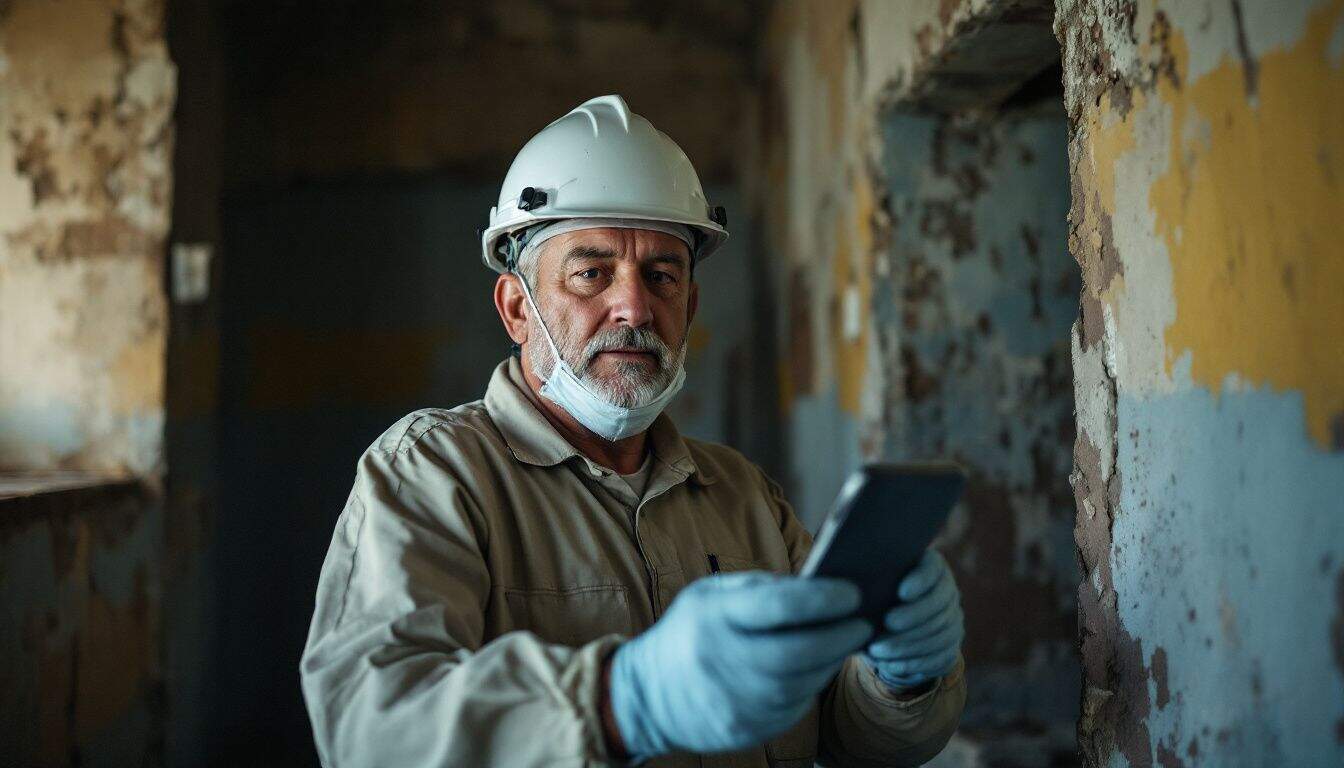
Building Hazardous Materials Surveys in Historic Properties: What Every Owner Needs to Know
Historic buildings are full of character — original cornicing, Victorian brickwork, Edwardian timber frames. They’re also full of hidden risks. If your property was built or refurbished before 2000, there’s a real chance it contains asbestos-containing materials (ACMs), and a thorough building hazardous materials survey is the only reliable way to find out where they are and what condition they’re in.
This isn’t a box-ticking exercise. Asbestos remains the single largest cause of work-related deaths in the UK, and historic buildings present particular challenges — layered renovations, inaccessible voids, and materials that don’t always look like what they are. Understanding the survey process properly puts you in control.
Why Historic Buildings Demand Specialist Attention
Asbestos was widely used in UK construction from the 1950s through to the late 1990s. It was valued precisely because it was durable, fire-resistant, and cheap — qualities that made it attractive for use in everything from ceiling tiles and pipe lagging to floor adhesives and textured coatings.
Historic buildings complicate matters because they often contain multiple layers of renovation work, each potentially introducing or concealing ACMs. A Georgian townhouse converted into offices in the 1970s, for example, may have original fabric beneath several decades of modernisation — and asbestos could be lurking at any layer.
Listed buildings add another dimension entirely. Any investigative work must be sympathetic to the structure, which means surveyors need to balance thorough inspection with conservation obligations. That’s why selecting the right surveyor matters so much.
What Does a Building Hazardous Materials Survey Actually Involve?
A building hazardous materials survey is a structured process. It isn’t a quick visual walkthrough — it involves records research, physical inspection, material sampling, laboratory analysis, and a detailed written report. Here’s how it unfolds in practice.
Step 1: Reviewing Historical Records and Building Documentation
Before a surveyor sets foot on site, they should be reviewing whatever documentation exists about the building. This includes original construction drawings, planning records, previous survey reports, and any maintenance logs that reference materials used over the years.
For historic properties, this research phase is particularly valuable. Building blueprints can reveal where asbestos-insulating board was used in service ducts, or where pipe lagging was installed in roof voids. This intelligence shapes the inspection plan and reduces the risk of missing concealed ACMs.
Where records are incomplete or unavailable — which is common in older properties — the surveyor will rely more heavily on their knowledge of construction practices from different eras. An experienced surveyor will know, for instance, that textured decorative coatings were routinely applied to ceilings in properties built between the 1960s and 1980s, and will sample accordingly.
Step 2: Systematic Site Inspection
The physical inspection of a historic building must be methodical and thorough. Surveyors should examine every accessible area of the structure, including:
- All rooms and corridors
- Basements and undercrofts
- Roof spaces and loft voids
- Service ducts and lift shafts
- Soffits, gutters, and external cladding
- Stairwells and plant rooms
- Window surrounds and external maintenance zones
Where non-destructive testing is appropriate — particularly in listed buildings where physical sampling could damage historic fabric — surveyors may use techniques such as X-ray fluorescence (XRF) analysis to identify material composition without taking a physical sample. However, laboratory analysis of physical samples remains the gold standard for confirming asbestos presence.
For listed buildings, surveyors should liaise with the relevant conservation officer before undertaking any intrusive work. This protects both the building’s heritage status and the surveyor’s legal position.
Choosing the Right Type of Building Hazardous Materials Survey
Not all building hazardous materials surveys are the same. The type of survey you need depends on what you’re planning to do with the property. Getting this wrong is a common and costly mistake.
Management Surveys
A management survey is the standard survey for buildings that are in normal use and occupation. Its purpose is to locate, as far as is reasonably practicable, ACMs that could be damaged or disturbed during everyday activities — maintenance work, moving furniture, or minor repairs.
The output is an asbestos register and management plan. This document tells you where ACMs are located, what condition they’re in, and what action (if any) is required. For duty holders — typically building owners or employers — maintaining an up-to-date asbestos register is a legal requirement under the Control of Asbestos Regulations.
Management surveys should be reviewed regularly, typically every 6 to 12 months, and updated whenever the building’s condition or use changes.
Refurbishment and Demolition Surveys
If you’re planning significant works — a conversion, extension, or full demolition — you’ll need a demolition survey (formally known as a refurbishment and demolition survey). This is a more intrusive process, conducted in vacated areas, designed to locate all ACMs before any structural work begins.
The law is clear: asbestos must be identified and removed by a licensed contractor before refurbishment or demolition work starts. Failure to do so puts workers at serious risk and exposes duty holders to significant legal liability.
For historic buildings undergoing restoration or conversion, this type of survey is especially critical. Renovation work routinely disturbs concealed materials — and without prior identification, contractors may unknowingly release asbestos fibres into the air.
Sampling and Laboratory Analysis
Visual inspection alone cannot confirm whether a material contains asbestos. Physical samples must be collected and sent to an accredited laboratory for analysis. This is non-negotiable.
How Samples Are Collected
Sampling must be carried out by trained personnel wearing appropriate personal protective equipment (PPE). The process involves taking small physical samples from suspected ACMs — enough material for accurate laboratory analysis, but no more than necessary to minimise disturbance.
Industry guidance recommends collecting a sufficient number of samples to be representative of the materials present. In practice, this means multiple samples per material type across different areas of the building. Cutting corners on sampling quantity increases the risk of false negatives — missing asbestos that is genuinely present.
Samples are stored and transported in sealed containers to prevent contamination and fibre release. Chain of custody documentation ensures the integrity of results.
Laboratory Testing
All samples should be analysed by a UKAS-accredited laboratory using recognised analytical methods. The lab report will identify whether asbestos is present, and if so, which type — chrysotile (white), amosite (brown), or crocidolite (blue), among others. Different fibre types carry different risk profiles, and this information feeds directly into the management plan.
You can find out more about the full asbestos testing process, including what happens at the laboratory stage and how results are interpreted.
For buildings where work is already underway or where there’s concern about airborne fibres, asbestos testing of the air itself may also be required. Air testing confirms whether fibre concentrations are within safe limits and is typically carried out during and after removal works.
Selecting a Competent Surveyor
The quality of a building hazardous materials survey is only as good as the person carrying it out. In the UK, surveyors should hold UKAS accreditation and operate in accordance with HSE guidance — specifically HSG264, the definitive industry guide for asbestos surveying.
When evaluating a surveyor, look for:
- UKAS accreditation (or working under an accredited body)
- Demonstrable experience with historic or listed buildings
- Clear methodology aligned with HSG264
- Transparent reporting with full photographic evidence
- Willingness to liaise with conservation officers where required
Be cautious of surveyors who offer unusually fast turnarounds or suspiciously low fees. A thorough survey of a complex historic building takes time — and cutting corners in the inspection or sampling phase can leave you with an incomplete picture of the risks present.
Supernova Asbestos Surveys holds the necessary accreditations and has completed over 50,000 surveys across the UK. Our surveyors are experienced in working within the constraints of historic and listed buildings, balancing thoroughness with sensitivity to the structure.
Reviewing and Acting on the Survey Report
Once the survey is complete and laboratory results are returned, the surveyor will produce a formal report. This document is the foundation of your asbestos management obligations — treat it accordingly.
A well-produced survey report should include:
- A full schedule of ACMs identified, with location, extent, and condition ratings
- Photographic evidence of each material and its location
- Floor plans or diagrams marking ACM locations clearly
- Risk assessments for each identified material
- Recommended actions — whether that’s monitoring, encapsulation, or removal
- Confirmation that sampling met the requirements of HSG264
Don’t accept a report that lacks photographic evidence, uses vague location descriptions, or fails to include a risk rating for each material. These are red flags that the survey may not meet the standard required by the Control of Asbestos Regulations.
Once you have the report, act on its recommendations. If removal is advised, engage a licensed contractor for asbestos removal. If monitoring is sufficient, set a review schedule and stick to it. The asbestos register must be kept current and made available to anyone who may disturb the materials — contractors, maintenance teams, and emergency services.
Your Legal Obligations as a Duty Holder
The Control of Asbestos Regulations place clear duties on those responsible for non-domestic premises. If you own, manage, or occupy a historic building in a capacity that gives you responsibility for maintenance and repair, you are likely a duty holder.
Your core obligations include:
- Taking reasonable steps to find out whether ACMs are present
- Presuming materials contain asbestos unless there is strong evidence to the contrary
- Making and keeping up-to-date a written record of the location and condition of ACMs
- Assessing the risk from those materials
- Preparing and implementing a written management plan
- Providing information about ACM locations to anyone who may disturb them
Ignorance is not a defence. If a contractor disturbs asbestos during maintenance work and it later emerges that no survey had been carried out, the duty holder faces potential prosecution, unlimited fines, and civil liability.
Where asbestos removal is required, it must be carried out by a contractor licensed by the HSE. This is a legal requirement for most types of asbestos work — not an optional extra.
Common Mistakes Owners of Historic Buildings Make
Even well-intentioned property owners can fall into traps that compromise safety and legal compliance. Here are the most frequent errors we encounter:
- Assuming a previous survey is still valid. If significant time has passed, or works have been carried out since the last survey, the register may no longer reflect the building’s current condition.
- Ordering the wrong survey type. Commissioning a management survey when a refurbishment and demolition survey is required — or vice versa — can leave critical ACMs unidentified before works begin.
- Failing to share the asbestos register. Contractors must be made aware of ACM locations before starting any work. Keeping the register locked in a drawer defeats its entire purpose.
- Accepting a survey without photographic evidence. A report without photographs cannot be verified and may not satisfy regulatory requirements.
- Choosing a surveyor on price alone. In a complex historic building, a cheap survey is rarely a thorough one. The consequences of an incomplete survey can far outweigh the saving.
Building Hazardous Materials Surveys Across the UK
Supernova Asbestos Surveys operates nationwide, with specialist teams covering major cities and their surrounding regions. Whether you need an asbestos survey London property owners trust, an asbestos survey Manchester teams rely on, or an asbestos survey Birmingham specialists recommend, our accredited surveyors can be on site quickly and deliver results you can rely on.
Historic buildings require surveyors who understand both the regulatory framework and the practical constraints of working in older structures. Our teams have extensive experience across all building types — from Grade I listed country houses to Victorian terraces converted into commercial premises.
We don’t take a one-size-fits-all approach. Every building hazardous materials survey we carry out is tailored to the property’s age, construction type, current use, and planned works.
Frequently Asked Questions
What is a building hazardous materials survey?
A building hazardous materials survey is a structured assessment of a property to identify materials that could pose a risk to health — most commonly asbestos-containing materials (ACMs). It involves records research, physical inspection, material sampling, and laboratory analysis, culminating in a formal report that informs your asbestos management obligations.
Do I need a building hazardous materials survey if my property is listed?
Yes. Listed status does not exempt a building from the requirements of the Control of Asbestos Regulations. However, the survey must be carried out sensitively to avoid damaging historic fabric. Surveyors working in listed buildings should liaise with the relevant conservation officer and may use non-destructive testing techniques where appropriate, alongside physical sampling where it can be carried out safely.
How long does a building hazardous materials survey take?
It depends on the size and complexity of the building. A straightforward commercial property might be surveyed in a day. A large historic building with multiple floors, extensive voids, and complex construction history could take several days on site, plus additional time for laboratory analysis and report preparation. Turnaround times for reports typically range from a few days to a couple of weeks depending on the scope of the survey.
What happens if asbestos is found during a building hazardous materials survey?
Finding asbestos doesn’t automatically mean it needs to be removed. The survey report will include a risk rating for each identified material. If the material is in good condition and unlikely to be disturbed, a management plan — involving regular monitoring — may be sufficient. If the material is damaged, deteriorating, or due to be disturbed by planned works, removal by an HSE-licensed contractor will be required.
How often should a building hazardous materials survey be reviewed?
The asbestos register and management plan should be reviewed at least every 12 months, and more frequently if the building’s condition or use changes. Any significant maintenance work, renovation, or change of occupancy should trigger a review to ensure the register remains accurate and up to date.
Get Your Building Hazardous Materials Survey Booked Today
If you’re responsible for a historic building — whether as an owner, manager, or employer — don’t leave asbestos risk to chance. Supernova Asbestos Surveys has completed over 50,000 surveys across the UK, working with property owners, facilities managers, and heritage organisations to deliver thorough, compliant building hazardous materials surveys.
Call us on 020 4586 0680 or visit asbestos-surveys.org.uk to request a quote or speak to one of our surveyors about your property.