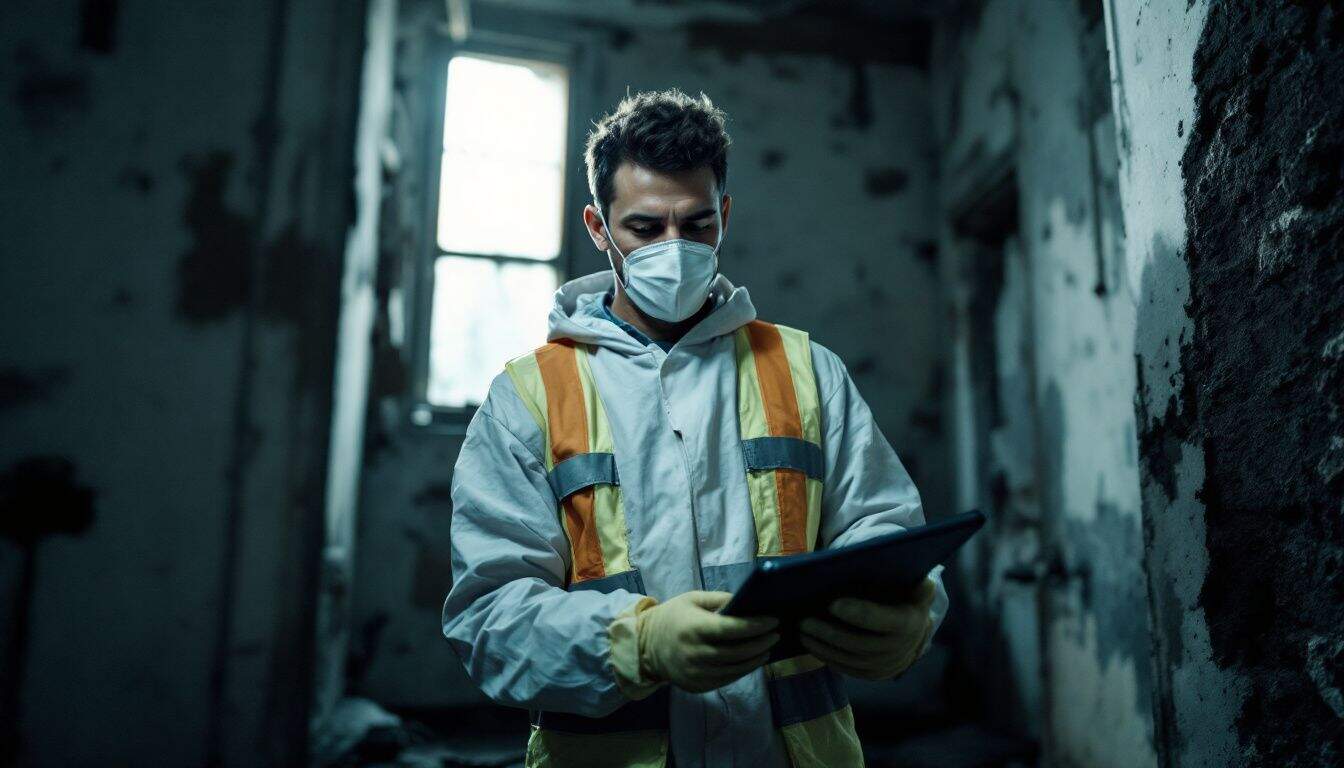
Why Asbestos Surveys for Healthcare and Public Buildings Are Non-Negotiable
Asbestos surveys for healthcare settings, schools, and other public buildings are not a box-ticking exercise — they are the foundation of protecting people who cannot choose to walk away from risk. Patients, staff, and visitors in hospitals and clinics have no control over the air they breathe while on site. That responsibility falls entirely on the duty holder.
The UK still has a significant legacy asbestos problem. The majority of NHS and private healthcare buildings constructed before 2000 contain asbestos-containing materials (ACMs) in some form. Without a structured survey programme, those materials remain an invisible hazard — until something disturbs them.
The Purpose of Asbestos Surveys in Healthcare Environments
Healthcare buildings present unique challenges for asbestos management. Maintenance work, refurbishments, and infrastructure upgrades happen constantly — often in occupied buildings where patients may already be immunocompromised or have underlying respiratory conditions.
Asbestos surveys for healthcare facilities serve three core functions:
- Identifying where ACMs are located before any work begins
- Assessing the condition of those materials to determine the level of risk
- Providing the data needed to build and maintain a compliant asbestos management plan
Without this baseline information, any contractor drilling into a ceiling void or cutting through a partition wall could unknowingly release asbestos fibres into a ward or corridor. In a healthcare setting, the consequences of that are far more severe than in an empty commercial unit.
What the Law Requires: The Control of Asbestos Regulations
The Control of Asbestos Regulations place a clear legal duty on anyone who manages or has control of non-domestic premises to manage asbestos risk. This applies directly to NHS trusts, private hospital operators, GP surgery landlords, and care home managers.
The ‘duty to manage’ requires dutyholders to:
- Identify the location and condition of all ACMs in their premises
- Assess the risk from those materials
- Prepare and implement a written asbestos management plan
- Ensure that anyone liable to disturb ACMs is informed of their location
- Review and monitor the plan regularly
HSE guidance, including HSG264, provides the technical framework for how surveys should be conducted and documented. Non-compliance is not treated lightly — enforcement action can include improvement notices, prohibition notices, and prosecution.
Types of Survey Required in Healthcare Settings
Not all surveys are the same. The type required depends on what activity is planned in the building.
Management surveys are the standard survey used to manage ACMs during the normal occupation and use of a building. They locate materials that could be disturbed during routine maintenance and verify their condition. Every occupied healthcare building should have a current management survey on file.
Refurbishment and demolition surveys are required before any refurbishment work or structural changes. These are more intrusive — surveyors access areas that would otherwise remain undisturbed, including voids, risers, and structural elements. If a healthcare facility is undergoing ward upgrades, extension work, or decommissioning, a demolition survey is a legal requirement before work begins.
What Happens During an Asbestos Survey in a Healthcare Building
Conducting asbestos surveys for healthcare properties requires careful planning, particularly when areas must remain operational. A competent surveyor will work with the facilities team to minimise disruption while ensuring full coverage of the building.
Identifying Potential Asbestos-Containing Materials
Surveyors systematically inspect the building, looking for materials commonly known to contain asbestos. In healthcare buildings, these often include:
- Ceiling tiles and floor tiles laid before 2000
- Pipe lagging and boiler insulation in plant rooms
- Textured coatings on walls and ceilings
- Partition walls and fire doors in older wards
- Roofing materials and external panels
- Adhesives, mastics, and gaskets in service runs
Surveyors access all accessible areas and document their findings in detail. Where access is restricted — for instance, in live electrical risers or occupied patient areas — this is clearly noted in the survey report.
Assessing the Condition of Identified Materials
Finding ACMs is only part of the job. The surveyor must also assess each material’s condition and its likelihood of releasing fibres. A sealed, intact asbestos ceiling tile in a rarely accessed roof void poses a very different risk to damaged pipe lagging in a busy maintenance corridor.
Condition assessments are recorded using a standardised scoring system, which feeds directly into the risk register. Materials in poor condition or in areas of high activity are flagged for priority action.
Sampling and Laboratory Analysis
Where materials are suspected to contain asbestos but cannot be confirmed visually, samples are taken and sent to a UKAS-accredited laboratory for analysis. Techniques including Polarised Light Microscopy (PLM) are used to identify the type and presence of asbestos minerals accurately. The results are incorporated into the survey report and the asbestos register.
The Asbestos Risk Register: The Backbone of Compliance
Every healthcare building with identified or suspected ACMs must have an asbestos risk register. This is not a document that gets filed away and forgotten — it is a live management tool that informs every maintenance decision made in the building.
A well-maintained register records:
- The precise location of each ACM
- The type of asbestos present
- The material’s current condition
- The risk score assigned to it
- Any remedial actions taken or planned
Contractors and maintenance staff must be given access to the register before carrying out any work. This is not optional — it is a legal requirement under the Control of Asbestos Regulations. In a healthcare setting, where contractors may be working on electrical systems, plumbing, or ventilation at short notice, having an up-to-date register is critical.
Regular audits of the register ensure it reflects the current state of the building. If refurbishment work removes or encapsulates ACMs, the register must be updated accordingly.
Asbestos Removal in Healthcare Settings
Sometimes management in place is not sufficient — materials may be too damaged, or planned works make disturbance unavoidable. In these cases, removal becomes necessary.
Licensed asbestos removal contractors must be used for high-risk materials, including sprayed coatings, asbestos insulation board, and pipe lagging. These tasks require an HSE licence, and the work must be notified to the HSE in advance. Asbestos removal in occupied healthcare buildings requires exceptional care — work areas must be fully sealed and air monitored throughout to protect patients and staff in adjacent areas.
For lower-risk materials, notifiable non-licensed work (NNLW) procedures apply. Employers must notify the HSE, keep health records, and ensure workers are medically examined. Even for NNLW, appropriate PPE — including FFP3 masks and disposable coveralls — is mandatory, and face-fit testing must be carried out for all workers wearing tight-fitting respiratory protection.
Personal Protective Equipment and Safety Protocols
Anyone working with or near ACMs in a healthcare building must use the correct PPE. This includes:
- FFP3 disposable masks or half-face respirators with P3 filters
- Disposable coveralls (Type 5/6 as a minimum)
- Disposable gloves and overshoes where required
Face-fit testing is not a formality. A mask that does not seal correctly provides no meaningful protection. All tight-fitting respiratory protective equipment must be fit-tested to the individual wearing it — every time there is a change in face shape, weight, or equipment model.
Decontamination procedures must also be followed rigorously. In a healthcare setting, the risk of tracking asbestos fibres into patient areas makes clean-down procedures especially important.
Training and Awareness: Who Needs to Know What
Asbestos awareness training is a legal requirement for anyone whose work could disturb ACMs. In a healthcare building, that includes maintenance engineers, porters, estates staff, and any contractors working on the fabric of the building.
Training should be refreshed regularly — at least annually is the standard expectation. It must cover:
- What asbestos is and where it is likely to be found
- The health risks associated with asbestos exposure
- How to recognise ACMs and what to do if they are disturbed
- The location and use of the asbestos register
- Emergency procedures if accidental exposure occurs
Surveyors themselves must hold recognised qualifications — typically the P402 qualification for building surveys and bulk sampling. Ensuring your survey provider employs properly qualified personnel is not just good practice, it is essential for the survey results to carry legal weight.
Incident Management: What to Do if Asbestos Is Disturbed
Despite the best planning, accidental disturbance of ACMs does occur. Having a clear incident response procedure in place is essential for any healthcare facility.
Immediate steps following inadvertent asbestos exposure should include:
- Stopping work immediately and evacuating the area
- Preventing anyone else from entering the affected zone
- Notifying the facilities manager and health and safety lead
- Arranging for air monitoring and a site inspection by a competent person
- Reporting the incident to the HSE under RIDDOR if applicable
- Updating the asbestos risk register to reflect the incident and any remedial action
Under RIDDOR (Reporting of Injuries, Diseases and Dangerous Occurrences Regulations), certain asbestos-related incidents must be reported to the HSE. Mesothelioma and other asbestos-related diseases diagnosed in workers are reportable. Prompt and accurate reporting is both a legal obligation and a public health duty.
Nationwide Coverage for Healthcare Asbestos Surveys
Healthcare facilities across the UK need access to qualified asbestos surveyors who understand the specific demands of working in clinical and care environments. Whether you manage a hospital trust, a private clinic, or a network of GP surgeries, local expertise matters.
Supernova Asbestos Surveys provides asbestos surveys for healthcare properties across the country. For facilities in the capital, our asbestos survey London service covers NHS trusts, private hospitals, and care homes throughout Greater London. In the North West, our asbestos survey Manchester team works with healthcare operators across the region. And for facilities in the Midlands, our asbestos survey Birmingham service delivers the same rigorous standard of surveying.
Frequently Asked Questions
Are asbestos surveys legally required in healthcare buildings?
Yes. The Control of Asbestos Regulations place a legal duty on anyone who manages or has control of non-domestic premises — including healthcare buildings — to manage asbestos risk. This requires identifying ACMs through a survey, assessing the risk, and maintaining a written management plan. Failure to comply can result in enforcement action from the HSE.
How often should an asbestos survey be carried out in a hospital or clinic?
A management survey should be in place for all occupied healthcare buildings, with the asbestos register reviewed and updated at least annually. A new refurbishment or demolition survey is required before any intrusive works take place, regardless of when the last management survey was conducted. The frequency of re-inspection for individual ACMs depends on their condition and risk score.
Can asbestos surveys be carried out in occupied wards?
Yes, but it requires careful planning and coordination with the facilities team. Competent surveyors will work around occupied areas, clearly noting any restricted access in the survey report. For areas that cannot be accessed during occupation, a follow-up inspection should be scheduled as soon as the area becomes available.
What types of asbestos are most commonly found in older healthcare buildings?
Chrysotile (white asbestos) is the most commonly encountered type in building materials such as ceiling tiles, floor tiles, and textured coatings. Amosite (brown asbestos) is often found in pipe lagging and insulation board. Crocidolite (blue asbestos) is less common but has been found in some older insulation applications. All three types are hazardous and regulated under the Control of Asbestos Regulations.
What should healthcare facilities do if asbestos is found in a poor condition?
Materials in poor condition that pose an immediate risk should be made safe without delay — this may mean encapsulation or removal by a licensed contractor. Where the risk is lower, the material should be clearly flagged in the asbestos register with a remedial action plan and a timescale for intervention. The decision on the appropriate course of action should be made by a competent person with reference to the survey findings and HSE guidance.
Get Expert Asbestos Surveys for Healthcare Properties
Supernova Asbestos Surveys has completed over 50,000 surveys across the UK, working with healthcare operators, estates managers, and facilities teams who need accurate, reliable asbestos data they can act on.
Our surveyors are fully qualified, our laboratories are UKAS-accredited, and our reports are written to meet HSE and HSG264 requirements. We understand the operational pressures of healthcare environments and work to minimise disruption while delivering thorough, legally compliant surveys.
To book an asbestos survey for your healthcare facility, call us on 020 4586 0680 or visit asbestos-surveys.org.uk to request a quote.