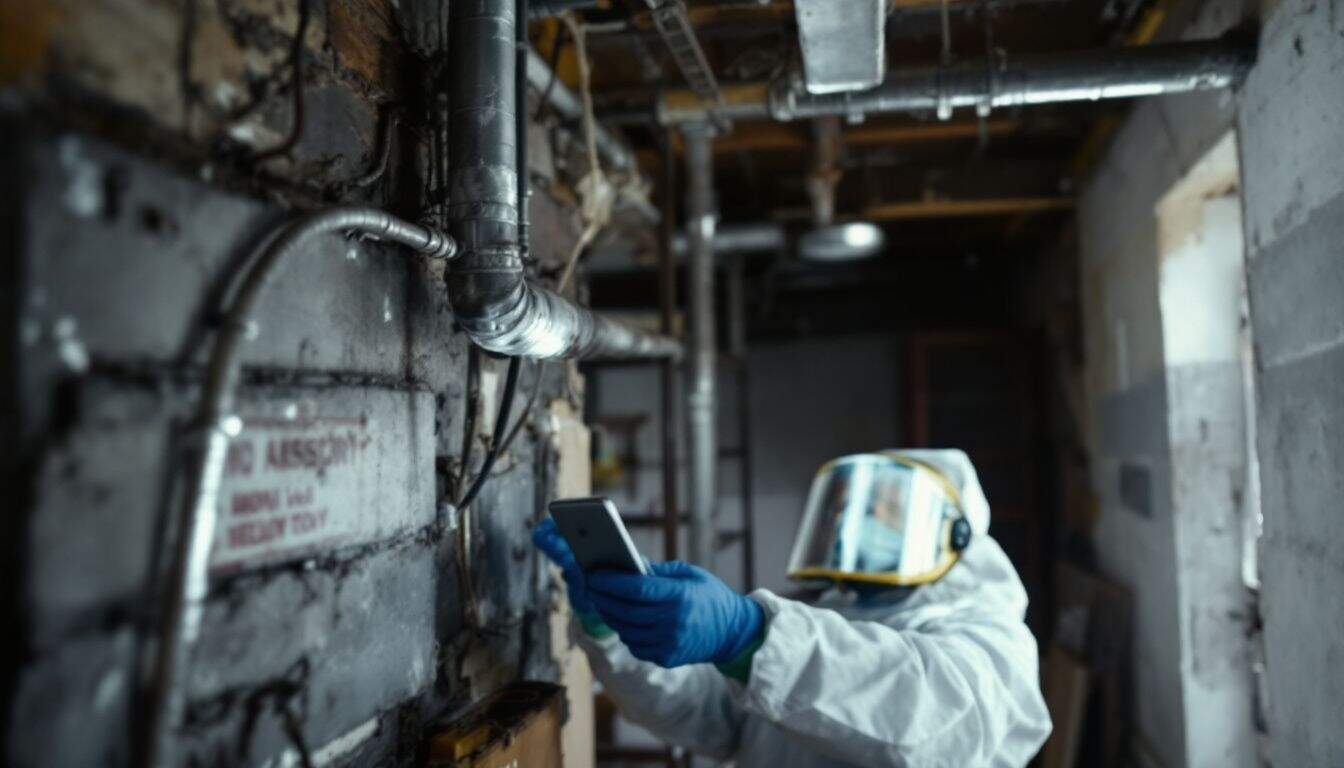
Why Asbestos Surveys for Healthcare Buildings Are a Critical Safety Priority
Hospitals, GP surgeries, care homes, and clinics are places people go to get better — not to be exposed to one of the most dangerous substances ever used in construction. Yet thousands of healthcare buildings across the UK were built during the era when asbestos was standard practice, meaning the risk is very real and very present.
Asbestos surveys for healthcare settings are not just a legal formality. They are a frontline defence for patients, staff, and visitors who may spend extended periods in these environments.
Understanding how these surveys work, what the law requires, and what happens after the survey is completed can mean the difference between a safe environment and a serious health crisis.
The Unique Risk Asbestos Poses in Healthcare Settings
Healthcare buildings present a distinct set of challenges when it comes to asbestos management. Unlike an empty office block or a warehouse, hospitals and care facilities are occupied around the clock — often by people whose immune systems are already compromised.
Patients undergoing treatment, elderly residents in care homes, and immunocompromised individuals face far greater health consequences if asbestos fibres are disturbed and become airborne. The latency period for asbestos-related diseases — including mesothelioma, asbestosis, and lung cancer — can be decades, which means exposure today may not manifest as illness for many years.
Healthcare workers are also at elevated risk. Maintenance engineers, porters, and contractors who carry out routine repairs in older NHS and private healthcare buildings may unknowingly disturb asbestos-containing materials (ACMs) during everyday tasks. This makes proactive surveying and robust management plans absolutely essential.
What the Law Requires for Healthcare Premises
The Control of Asbestos Regulations place a clear legal duty on those who manage non-domestic premises — and healthcare buildings fall firmly within that scope. The duty to manage asbestos applies to anyone responsible for the maintenance or repair of a building, including NHS trusts, private hospital operators, care home managers, and GP practice owners.
Under these regulations, duty holders must:
- Identify whether asbestos-containing materials are present in the building
- Assess the condition and risk level of any ACMs found
- Produce a written asbestos management plan
- Ensure the plan is implemented, monitored, and regularly reviewed
- Provide information about the location and condition of ACMs to anyone who may disturb them
HSE guidance, including HSG264, provides the technical framework surveyors follow to ensure surveys are thorough, accurate, and legally defensible. Failure to comply is not just a regulatory issue — it can result in prosecution, substantial fines, and most critically, serious harm to the people in your care.
Types of Asbestos Surveys Used in Healthcare Buildings
Not all asbestos surveys are the same, and the type required depends on the current use of the building and any planned works. Healthcare managers need to understand the distinction clearly before commissioning any survey work.
Management Surveys
A management survey is the standard survey required for any occupied building. It identifies the location, type, and condition of ACMs that could be disturbed during normal occupation and routine maintenance activities.
In a healthcare context, this means a surveyor will inspect all accessible areas — from plant rooms and ceiling voids to ward corridors and boiler rooms — documenting any materials that contain or are suspected to contain asbestos. The resulting report forms the foundation of your asbestos management plan and must be kept up to date with re-inspections, typically carried out annually.
For healthcare premises, this ongoing process is particularly important because maintenance activity is frequent and often involves areas where ACMs are commonly found, such as pipe lagging, floor tiles, and ceiling panels.
Refurbishment and Demolition Surveys
Whenever a healthcare building is being refurbished, extended, or demolished, a demolition survey is legally required before any work begins. This type of survey is far more intrusive than a management survey — surveyors need access to all areas, including those that would normally remain undisturbed.
For a hospital wing being converted, a care home undergoing renovation, or a clinic being stripped back to its shell, this survey is non-negotiable. It ensures that contractors are not unknowingly cutting into asbestos-containing materials, which would create an immediate and serious risk to health.
How an Asbestos Survey Is Conducted in a Healthcare Environment
The process of conducting asbestos surveys for healthcare buildings requires careful planning, particularly given the sensitive nature of the environment. Surveyors need to work around patient care schedules, infection control protocols, and restricted access areas.
Initial Planning and Site Assessment
Before entering the building, a competent surveyor will review any existing asbestos records, building plans, and maintenance logs. This helps identify high-risk areas and plan the survey efficiently without unnecessarily disrupting clinical operations.
Access to certain areas — such as operating theatres, intensive care units, or sterile environments — may need to be arranged outside of operational hours. A good surveying company will work closely with the facilities management team to minimise disruption at every stage.
Sampling and Laboratory Analysis
Where materials are suspected to contain asbestos, surveyors take small, carefully controlled samples. These are collected using appropriate personal protective equipment and sealed immediately to prevent fibre release.
Samples are sent to an accredited laboratory for analysis, where specialists confirm whether asbestos is present and identify the type. Common types found in healthcare buildings include chrysotile (white asbestos), amosite (brown asbestos), and crocidolite (blue asbestos), each carrying different risk profiles.
Risk Assessment and Reporting
Once analysis is complete, the surveyor produces a detailed report. This includes the location of every ACM, its condition, the type of asbestos present, and a risk rating. The report will also include recommendations for action — whether that means leaving materials undisturbed and monitoring them, encapsulating them, or arranging removal.
In healthcare settings, the risk assessment must account for the vulnerability of the building’s occupants, the frequency of maintenance activity in affected areas, and the likelihood of disturbance during normal operations.
What Happens After the Survey: Managing Asbestos in Healthcare Buildings
Identifying asbestos is only the first step. The real work lies in managing it effectively over the long term, and this is where many healthcare premises fall short.
Developing an Asbestos Management Plan
Every healthcare premises with known or suspected ACMs must have a written asbestos management plan. This document should clearly set out:
- The location and condition of all ACMs identified in the survey
- The risk level assigned to each material
- The actions required and the timeline for completing them
- Who is responsible for managing each element of the plan
- How and when re-inspections will be carried out
- How information will be communicated to staff and contractors
The plan must be a live document — reviewed and updated regularly, and revisited whenever building works are planned or when the condition of any ACM changes.
Communicating with Staff and Contractors
One of the most important — and most commonly overlooked — aspects of asbestos management in healthcare is communication. Every person who could potentially disturb an ACM needs to know where those materials are located.
This includes in-house maintenance teams, external contractors, and any workers brought in for refurbishment projects. Asbestos registers should be readily accessible, and contractors should be required to check the register before beginning any work.
Remedial Action: Removal or Encapsulation
Where ACMs are in poor condition or are at risk of disturbance, action is required. The two primary options are removal and encapsulation.
Asbestos removal eliminates the risk entirely but must be carried out by a licensed contractor under strict controlled conditions. In a healthcare setting, this often means careful planning to ensure clinical services are not disrupted and that infection control standards are maintained throughout.
Encapsulation involves sealing the ACM with a specialist coating that prevents fibre release. This is often appropriate where materials are in reasonable condition and removal would be more disruptive than the risk warrants. However, encapsulated materials still need to be monitored and will eventually require removal.
Regular Re-Inspections
ACMs that are left in place — whether encapsulated or simply managed in situ — must be re-inspected at regular intervals. Annual re-inspections are standard practice and are required to keep the asbestos management plan current.
In healthcare buildings, where maintenance activity is frequent and the building fabric is subject to ongoing wear, more frequent checks may be appropriate for high-risk areas. Any deterioration in condition should trigger an immediate review of the management plan and, where necessary, prompt remedial action.
Asbestos in Specific Healthcare Building Types
Asbestos is not distributed evenly across all building types, and healthcare premises have their own characteristic patterns of ACM use. Knowing where to look — and what to look for — is part of what makes specialist asbestos surveys for healthcare buildings so valuable.
NHS Hospitals and Acute Care Facilities
Large NHS hospitals built before 2000 are among the most complex asbestos management challenges in the UK. Many were constructed or extended during the peak asbestos usage years and contain ACMs in boiler rooms, pipe lagging, ceiling tiles, floor tiles, fire doors, and structural panels.
The scale of these buildings, combined with continuous 24-hour occupation, makes thorough and well-maintained asbestos management plans absolutely essential. NHS estates teams must ensure that all contractors working on site are briefed on the asbestos register before any work begins.
Care Homes and Residential Healthcare
Care homes present a particular challenge because residents may be living in rooms where ACMs are present in the fabric of the building. While undisturbed ACMs in good condition do not pose an immediate risk, any maintenance or refurbishment work must be carefully managed.
Operators of care homes have both a legal and a moral duty to ensure that the environment is safe for residents, many of whom are elderly and highly vulnerable to respiratory illness. Asbestos surveys for healthcare settings like these must be treated as an ongoing commitment, not a one-off exercise.
GP Surgeries and Health Centres
Smaller healthcare premises such as GP surgeries and health centres may not have dedicated facilities management teams, which means asbestos responsibilities can sometimes fall through the cracks. If your surgery is located in a building constructed before 2000, an asbestos survey is not optional — it is a legal requirement.
Practice managers and building owners must ensure that a current survey is in place, that an asbestos management plan exists, and that it is being actively managed. The absence of a dedicated estates team is not a defence against regulatory non-compliance.
Choosing a Competent Asbestos Surveyor for Healthcare Premises
The quality of an asbestos survey is only as good as the competence of the surveyor carrying it out. For healthcare buildings, where the stakes are particularly high, it is essential to work with a surveying company that holds the appropriate accreditations and has genuine experience in healthcare environments.
When selecting a surveyor, look for the following:
- UKAS-accredited laboratory analysis — samples must be analysed by a laboratory accredited to the relevant standard
- P402-qualified surveyors — the relevant BOHS qualification for building surveys and bulk sampling
- Demonstrable healthcare experience — ask for examples of previous work in hospitals, care homes, or clinical settings
- Understanding of infection control requirements — surveyors working in clinical environments must follow appropriate hygiene protocols
- Clear, detailed reporting — the survey report must be thorough, clearly written, and immediately usable as the basis for your management plan
Do not commission surveys on price alone. A poorly conducted survey that misses ACMs in a healthcare building is far more costly — in every sense — than the saving made on the initial fee.
Asbestos Surveys for Healthcare Facilities Across the UK
Healthcare premises requiring asbestos surveys are spread across every region of the UK, from large urban NHS trusts to small rural GP practices. Wherever your premises are located, the legal obligations are identical and the need for a competent, experienced surveyor is the same.
For healthcare operators in the capital, our asbestos survey London service covers the full range of NHS and private healthcare premises across all London boroughs. In the North West, our asbestos survey Manchester team works regularly with NHS trusts, care home groups, and independent healthcare providers. For healthcare premises in the West Midlands, our asbestos survey Birmingham service delivers the same standard of thorough, accredited surveying.
Supernova Asbestos Surveys operates nationwide, so regardless of where your healthcare premises are located, our team can mobilise quickly and work around your operational requirements.
Frequently Asked Questions
Are asbestos surveys legally required for all healthcare buildings?
Yes. The Control of Asbestos Regulations require duty holders responsible for non-domestic premises — which includes all healthcare buildings — to manage asbestos. If your premises were built or refurbished before 2000, a management survey is a legal requirement. This applies equally to NHS trusts, private hospitals, care homes, GP surgeries, and health centres.
How often does an asbestos survey need to be updated in a healthcare setting?
The initial management survey provides the baseline, but the asbestos management plan derived from it must be reviewed and updated regularly. Annual re-inspections of known ACMs are standard practice. In healthcare buildings where maintenance activity is frequent, more regular checks of high-risk areas may be appropriate. A new refurbishment or demolition survey is required before any significant building works begin.
What types of asbestos are most commonly found in healthcare buildings?
The three types most commonly encountered are chrysotile (white asbestos), amosite (brown asbestos), and crocidolite (blue asbestos). In healthcare buildings, ACMs are frequently found in pipe lagging, ceiling and floor tiles, fire doors, structural panels, and plant room insulation. All three types are hazardous, with crocidolite and amosite generally considered to carry the highest risk.
Can a healthcare building remain operational during an asbestos survey?
In most cases, yes. A management survey is designed to be carried out with minimal disruption to normal operations. Surveyors will work around patient care schedules and can arrange access to sensitive areas — such as operating theatres or ICUs — outside of operational hours. Where asbestos removal is required, more detailed planning will be needed to ensure clinical services are not affected.
What should I do if asbestos is found in a healthcare building?
Finding asbestos does not automatically mean there is an immediate risk. ACMs in good condition that are unlikely to be disturbed can often be managed safely in place. Your surveyor will provide a risk-rated report with clear recommendations. Where materials are damaged or at risk of disturbance, remedial action — either encapsulation or removal by a licensed contractor — will be required. The key is to act on the survey findings promptly and ensure your asbestos management plan is in place and actively maintained.
Get Expert Asbestos Surveys for Healthcare Premises
Supernova Asbestos Surveys has completed over 50,000 surveys nationwide, including extensive work across NHS and private healthcare settings. Our UKAS-accredited surveyors understand the specific demands of clinical environments and will work around your operational requirements to deliver thorough, accurate, and legally compliant survey reports.
Whether you manage a large hospital estate, a network of care homes, or a single GP surgery, we can provide the right survey for your needs — quickly, professionally, and with minimum disruption to your services.
Call us today on 020 4586 0680 or visit asbestos-surveys.org.uk to request a quote or discuss your requirements with one of our specialist team.