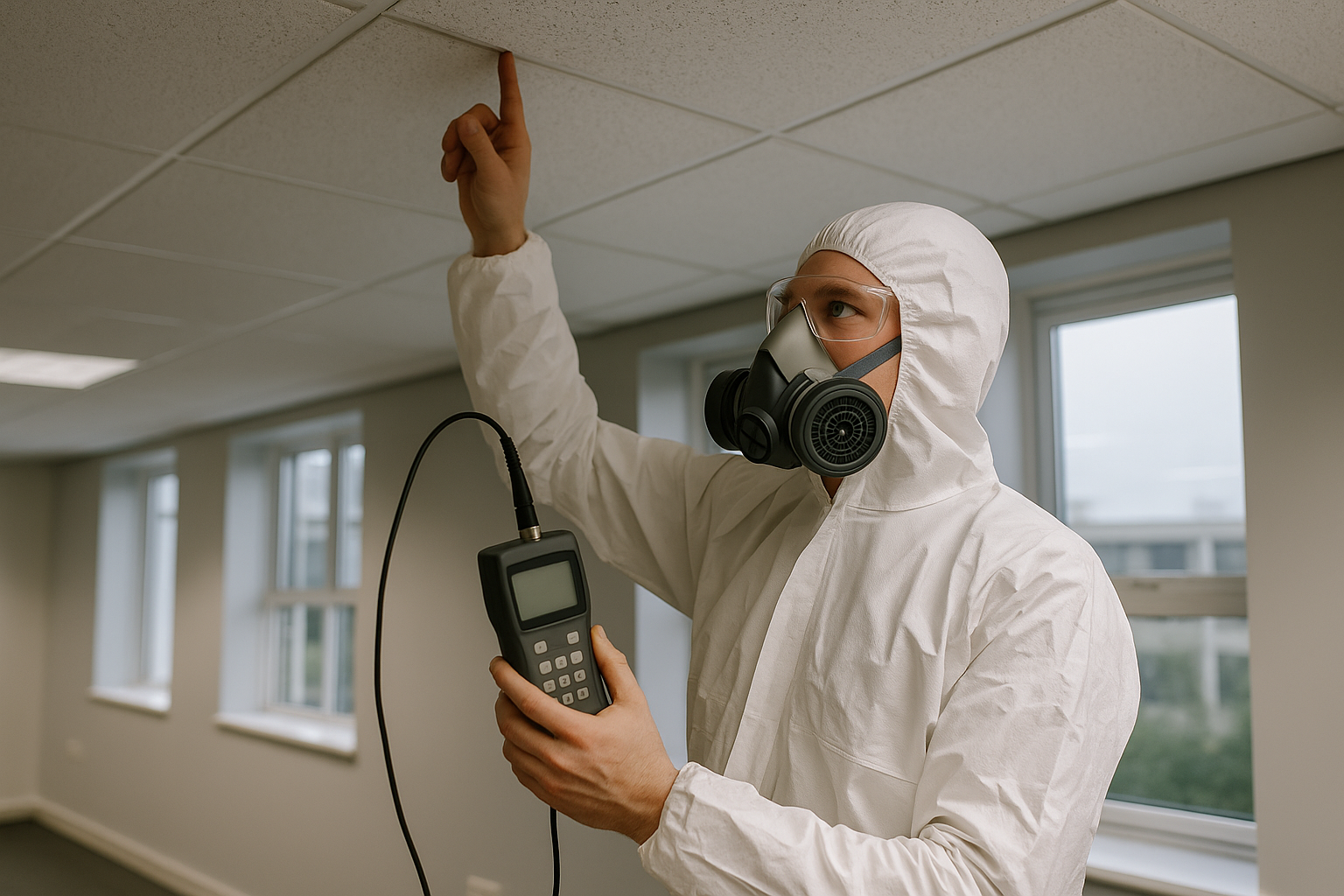
One missed panel above a suspended ceiling is all it takes to turn a routine job into a costly stop-start project. A reliable asbestos report gives you the facts you need before maintenance teams, contractors or occupants are put at risk.
For landlords, dutyholders, facilities managers and commercial property owners, an asbestos report is far more than a file for compliance. It is the working document that supports safe management under the Control of Asbestos Regulations, follows the survey principles set out in HSG264, and helps you act on current HSE guidance with confidence.
If your building was constructed or altered when asbestos-containing materials were commonly used, you need to know what is present, where it is, what condition it is in, and whether planned work could disturb it. That starts with the right survey and ends with an asbestos report that is clear enough to use in the real world.
Why an asbestos report matters
An asbestos report is the formal record produced after an asbestos survey. It identifies suspected or confirmed asbestos-containing materials, explains where they are, describes their condition, and sets out what action is needed to manage the risk properly.
Without a dependable asbestos report, it becomes much harder to decide whether routine occupation is safe, whether maintenance can go ahead, or whether planned works need to stop until further inspection is carried out. It also weakens your ability to show that you have met your legal responsibilities as a dutyholder.
A useful asbestos report should help you:
- Identify asbestos-containing materials that could be disturbed during normal use
- Understand the condition and potential risk of those materials
- Prioritise repairs, encapsulation or removal where needed
- Create or update your asbestos register
- Inform contractors before they start work
- Support your asbestos management plan
- Plan future maintenance, refurbishment or demolition safely
The key point is simple: an asbestos report should be used, not archived and forgotten. If it cannot guide practical decisions on site, it is not doing its job.
Choosing the right survey before the asbestos report is issued
Not every asbestos report comes from the same type of inspection. The survey type affects the level of access, the amount of intrusion, and what decisions the final report can support.
Choosing the wrong survey is one of the most common reasons projects are delayed. A report based on the wrong scope may leave hidden asbestos unidentified, which creates risk and often leads to extra cost later.
Management survey
A management survey is designed for the normal occupation and use of a building. Its purpose is to locate, as far as reasonably practicable, the presence and extent of suspected asbestos-containing materials that could be disturbed during everyday use, routine maintenance, or simple installation work.
This type of survey is usually non-intrusive or only minimally intrusive. The resulting asbestos report is commonly used for offices, schools, retail premises, healthcare buildings, warehouses and communal areas in residential blocks.
A management survey is often suitable when you need to manage asbestos in place. It is not enough if the building fabric is going to be opened up.
Refurbishment survey
Where works will disturb walls, ceilings, floors, risers, ducts or other concealed areas, a refurbishment survey is needed. This is an intrusive survey focused on the specific area affected by the planned works.
Because the survey may involve breaking through finishes and accessing hidden voids, it is normally carried out in unoccupied areas. The asbestos report from this survey is used to plan works safely and avoid accidental disturbance during the project.
Demolition survey
If a building, or part of it, is going to be demolished, a demolition survey is required. This is fully intrusive and aims to identify asbestos-containing materials throughout the relevant structure before demolition starts.
The asbestos report from a demolition survey must be thorough enough to support safe stripping, dismantling and structural removal. Full access is essential.
What to arrange before the survey visit
Good preparation makes for a better asbestos report. Surveyors can only inspect the areas they are given access to, so delays and limitations are often avoidable if the site is organised properly before the visit.
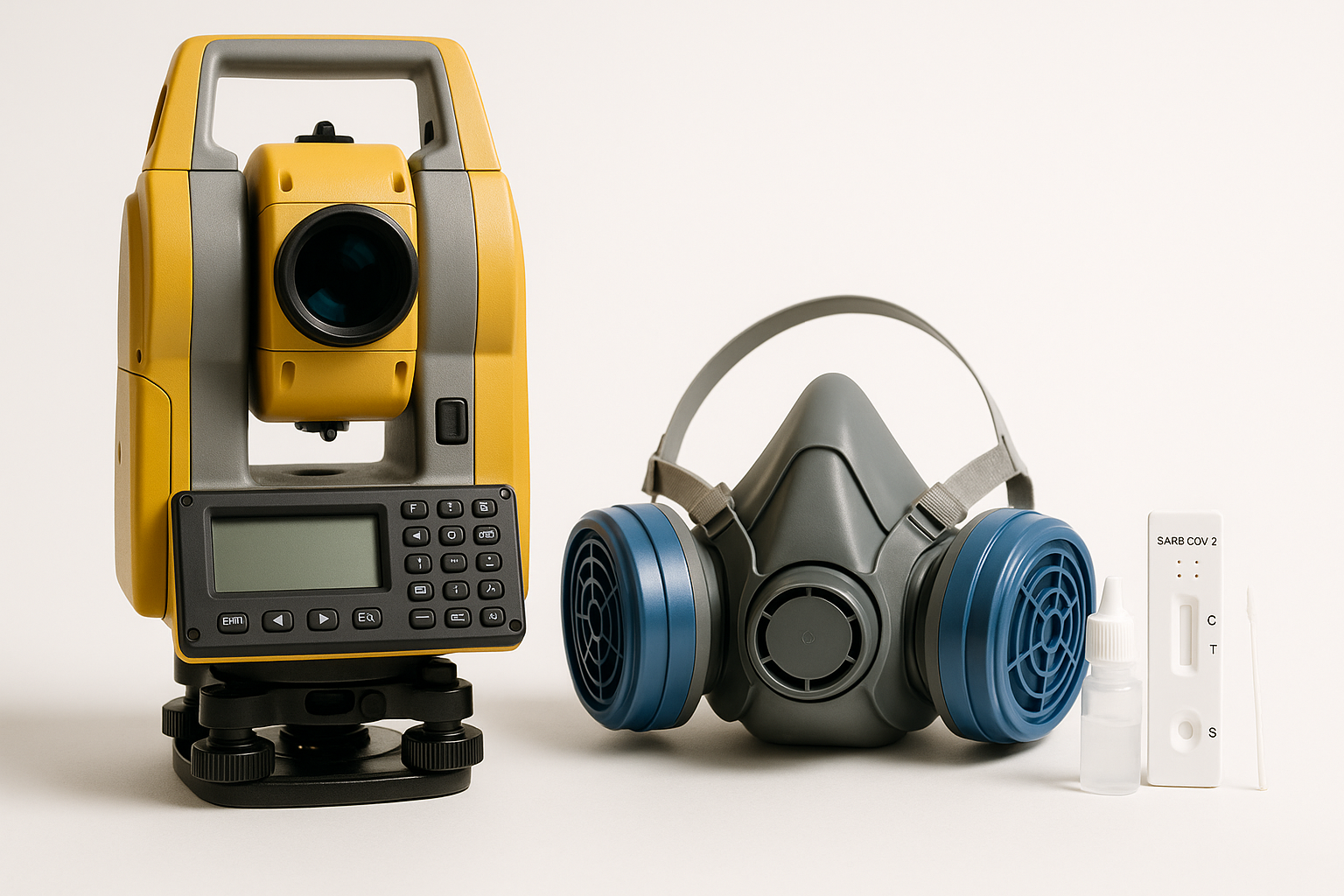
Before the survey takes place, gather:
- Existing asbestos records or previous survey reports
- Building plans, room numbers and site layouts
- Details of any alterations, fit-outs or previous removals
- Information about locked, restricted or high-level areas
- The scope of any planned maintenance or refurbishment work
- Contact details for the responsible person on site
If there are access restrictions, deal with them early. A ceiling void that cannot be opened, a plant room that cannot be isolated, or a roof area that cannot be reached may lead to limitations in the asbestos report.
Those limitations matter. If hidden areas are left uninspected, the report may not be suitable for the work you intend to carry out.
Planned refurbishment and renovation works: why the asbestos report must come first
Refurbishment is one of the most common points at which asbestos is disturbed. New lighting, HVAC upgrades, toilet refurbishments, roof works, service replacements and partition changes can all affect materials hidden behind finishes.
If contractors start work without the correct asbestos report, they may cut into asbestos insulating board, disturb textured coatings, damage asbestos cement products, or expose debris in voids. That can stop the job immediately and create a serious health and compliance issue.
Before planned refurbishment and renovation works begin, take these steps:
- Define exactly what work is being carried out
- Identify which parts of the building fabric will be disturbed
- Commission the correct survey for those areas
- Review the asbestos report before tendering or starting work
- Share the findings with contractors and project managers
- Arrange remedial action or licensed work where required
Do not rely on an old management survey for intrusive works. A management survey asbestos report may not include the concealed materials that become relevant once walls are opened, floors are lifted or services are stripped out.
Common refurbishment triggers for a new asbestos report
You should stop and check whether a new or updated asbestos report is needed if the work includes:
- Removing ceilings or partitions
- Replacing electrical or mechanical services
- Opening risers, voids or service cupboards
- Lifting floor finishes or screeds
- Roof repairs or roof replacement
- Window replacement programmes
- Strip-out of kitchens, washrooms or plant rooms
- External façade or cladding works
If the work is likely to disturb the building fabric, assume a more intrusive survey may be needed until a competent surveyor advises otherwise.
What happens during the survey
Property managers often want to know what surveyors actually do on site and how that turns into an asbestos report. A professional survey should be methodical, clearly scoped and easy to follow once the final document is issued.
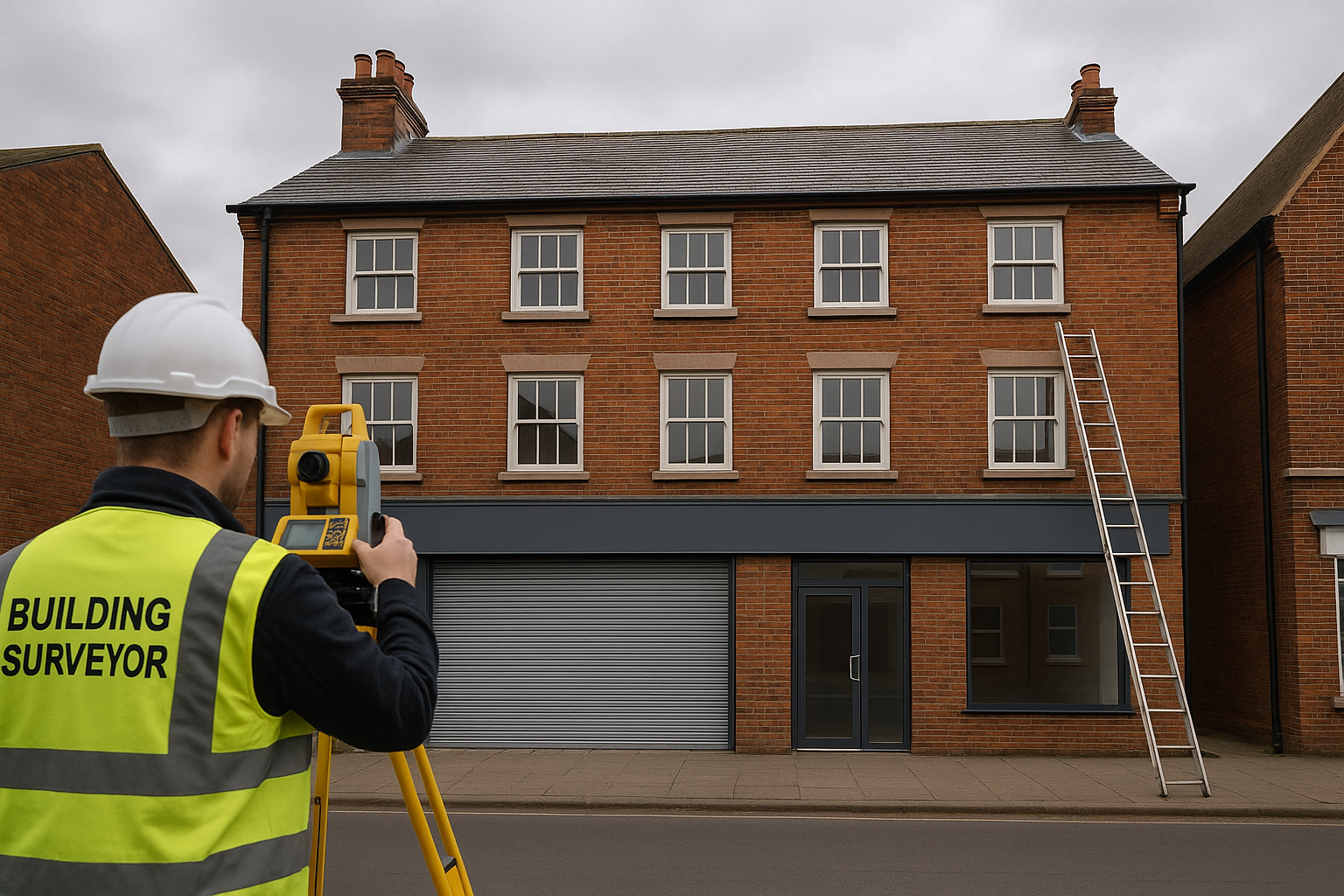
In most cases, the process includes:
- Reviewing the brief, access arrangements and building use
- Inspecting the agreed areas
- Identifying suspect materials
- Taking samples where appropriate in a controlled way
- Sending samples for analysis by a UKAS-accredited laboratory
- Assessing material condition and accessibility
- Producing the asbestos report and register
During the site visit
The surveyor will inspect the agreed scope and record any materials that may contain asbestos. Depending on the survey type, this may involve a visual inspection of accessible areas only, or intrusive access into concealed spaces.
Samples may be taken from materials such as insulation board, pipe lagging, textured coatings, floor tiles, cement sheets, gaskets, bitumen products or debris. Sampling should be targeted and controlled, with the area left in a safe condition afterwards.
The scope of invasive surveys
The scope of invasive surveys is often misunderstood. If planned works will disturb hidden elements, the survey must go beyond visible surfaces to be useful.
An intrusive inspection may include:
- Ceiling voids and service risers
- Wall cavities and boxing
- Floor voids and undercroft areas
- Plant rooms and ductwork
- Lift shafts and service cupboards
- Behind fixed panels and linings
- Roof voids and external service runs
The exact scope should reflect the planned work. There is little value in commissioning a limited survey if the project is likely to expand into adjacent areas once it starts.
Why access and isolation matter
Intrusive surveys often need isolated areas, permits, safe access equipment and temporary shutdown of services. If those arrangements are not made in advance, the asbestos report may contain significant limitations.
That can affect whether contractors are able to rely on it. If a hidden void was not inspected because the area remained occupied, asbestos may still be present behind the surface.
What a good asbestos report should contain
A strong asbestos report should be detailed enough for someone who was not on site to understand the findings clearly. Vague wording, poor location references and unclear limitations make a report much less useful.
A well-prepared asbestos report will usually include:
- An executive summary of the main findings
- The survey scope and methodology
- Areas inspected and any access limitations
- Material assessments covering condition and risk factors
- Laboratory sample results
- Photographs and location references
- An asbestos register or schedule of findings
- Recommendations for management, remedial work or further inspection
The report should also make clear where materials have been presumed to contain asbestos because sampling was not possible. Presumed asbestos must be treated with the same care as confirmed asbestos until proven otherwise.
How to read the findings properly
When reviewing an asbestos report, focus on more than just whether asbestos was found. You also need to understand the condition of the material, whether it is likely to be disturbed, and what action is recommended.
Look closely at:
- The exact location of each item
- The material type and extent
- Its condition and surface treatment
- Accessibility and vulnerability to damage
- Any recommendation for encapsulation, repair, monitoring or removal
- Any areas that were not accessed
If the report is unclear, ask questions before anyone starts work. Assumptions on site are where mistakes happen.
How the results are used in practice
The value of an asbestos report depends on what happens next. Once issued, it should feed directly into your day-to-day management arrangements and project planning.
The results are commonly used to:
- Create or update the asbestos register
- Support the asbestos management plan
- Brief maintenance staff and external contractors
- Set priorities for inspection and reinspection
- Control access to affected areas
- Plan remedial works
- Arrange asbestos removal where management in place is not suitable
- Support refurbishment and demolition projects
If asbestos-containing materials are in good condition and unlikely to be disturbed, the asbestos report may recommend management in place. That usually means recording the material, making sure relevant people know it is there, and inspecting it at suitable intervals.
If the material is damaged, friable, in a vulnerable location or likely to be disturbed by planned work, stronger action may be needed. That could include repair, encapsulation, enclosure or removal by the appropriate contractor.
Practical steps after receiving an asbestos report
Once the asbestos report lands in your inbox, do not just file it away. Treat it as a working document and act on it straight away.
A sensible post-report checklist looks like this:
- Review the findings and limitations in full
- Update your asbestos register
- Add actions to your asbestos management plan
- Share relevant information with contractors and maintenance teams
- Arrange any recommended remedial work
- Set dates for reinspection where materials remain in place
- Keep the report accessible for anyone who needs it
For occupied buildings, make sure the information flows to the people who actually need it. That often includes facilities teams, project managers, approved contractors, health and safety leads and building managers.
When an old asbestos report may no longer be enough
An asbestos report is only useful if it reflects the current building and the planned activity. You may need a new survey or an update if:
- The building has been altered since the last survey
- Areas were previously inaccessible
- Planned works are more intrusive than before
- Damage has occurred to known asbestos-containing materials
- The existing report is unclear, incomplete or poorly referenced
If there is any doubt, get advice before work starts. It is far cheaper to clarify the survey scope than to stop a live project after accidental disturbance.
Common mistakes that make an asbestos report less useful
Most asbestos-related problems are not caused by the report itself. They happen because the report was commissioned too late, read too quickly, or not shared with the right people.
Common mistakes include:
- Commissioning a management survey when a refurbishment survey is required
- Allowing access limitations to remain unresolved
- Failing to brief contractors before they start work
- Assuming a clean-looking area is free from asbestos
- Ignoring presumed asbestos because it was not sampled
- Not updating the asbestos register after works are completed
- Using an old report for a changed scope of work
Avoiding these mistakes is largely about timing and communication. Get the right survey early, make sure the asbestos report is clear, and put the findings into the hands of the people on site.
Getting local support for surveys and reports
If you manage property across multiple sites, local knowledge and fast attendance can make a real difference. The right survey team should be able to scope the work properly, explain what type of asbestos report you need, and deliver findings that contractors can actually use.
Supernova supports clients nationwide, including those needing an asbestos survey London service for commercial and residential properties, an asbestos survey Manchester appointment for planned works in the North West, or an asbestos survey Birmingham visit for sites across the Midlands.
Wherever the property is located, the principle stays the same: the asbestos report must match the building, the level of access and the work being planned.
Frequently Asked Questions
What is an asbestos report?
An asbestos report is the document produced after an asbestos survey. It records suspected or confirmed asbestos-containing materials, their location, condition, extent, and the action recommended to manage the risk safely.
Is a management survey asbestos report enough for refurbishment works?
Usually not. A management survey is intended for normal occupation and routine maintenance. If refurbishment will disturb the building fabric, you will usually need a refurbishment survey and a new asbestos report for the affected area.
What should I do if the asbestos report says access was limited?
Review the limitation carefully and decide whether the uninspected area could be affected by occupation, maintenance or planned works. If it could, arrange further access and an additional inspection before work starts.
Does an asbestos report always mean asbestos has to be removed?
No. If asbestos-containing materials are in good condition and unlikely to be disturbed, they can often be managed in place. Removal is usually considered where the material is damaged, difficult to protect, or likely to be disturbed during planned work.
How often should an asbestos report be updated?
There is no single fixed interval for every building. The report and asbestos register should be reviewed when conditions change, when damage is found, when access limitations are resolved, or before more intrusive works are planned.
If you need a clear, usable asbestos report for a commercial, residential or public-sector property, Supernova Asbestos Surveys can help. We carry out management, refurbishment and demolition surveys nationwide, with practical advice you can act on straight away. Call 020 4586 0680 or visit asbestos-surveys.org.uk to book your survey.