When Was White Asbestos Banned in the UK — and What Does It Mean for Your Building Today?
White asbestos was banned in the UK in 1999 — but that single date tells only part of the story. If you own, manage, or are responsible for a building constructed before the turn of the millennium, the full timeline of the UK asbestos ban has direct implications for your legal duties right now. Understanding what was banned, when, and why still matters is not a history lesson. It is the foundation of sound asbestos management.
The UK Asbestos Ban: A Timeline
The UK did not prohibit all asbestos types in a single legislative moment. The ban was phased in over more than a decade, with different fibre types restricted at different points as evidence of their health impacts accumulated and political pressure grew.
Blue and Brown Asbestos — Banned in 1985
Crocidolite (blue asbestos) and amosite (brown asbestos) were the first to be prohibited in the UK. Both belong to the amphibole family of asbestos fibres, widely regarded as the most hazardous due to their rigid, needle-like structure and the ease with which they penetrate deep lung tissue.
The 1985 ban also covered tremolite, actinolite, and anthophyllite — lesser-known amphibole types used in smaller quantities but carrying the same serious health risks. Their prohibition was a significant step, but it left the most commercially widespread form of asbestos still in legal use.
When Was White Asbestos Banned? — The 1999 Prohibition
White asbestos, known scientifically as chrysotile, was banned in the UK in 1999. This completed a full prohibition on all commercial asbestos types, covering import, supply, and use from that point onwards. Chrysotile is the only serpentine form of asbestos and was by far the most widely used — accounting for the vast majority of asbestos-containing materials still present in UK buildings today.
The delay in banning white asbestos relative to the amphibole types was partly the result of sustained industry lobbying that argued chrysotile was less dangerous. That argument has since been thoroughly discredited. Chrysotile causes mesothelioma, lung cancer, and asbestosis, and the HSE makes no distinction in terms of the duty of care required when managing it.
From 1999 onwards, the Control of Asbestos Regulations have governed how existing asbestos in buildings must be identified, managed, removed, and disposed of safely. The regulations apply to all non-domestic premises and place enforceable duties on anyone responsible for their maintenance or repair.
Why White Asbestos Is Still Found Across the UK
The 1999 ban stopped new asbestos from being installed. It did not — and could not — remove the asbestos already present in millions of buildings across the country. There is a great deal of it.
Chrysotile was used extensively in UK construction from the 1950s through to the late 1990s. It was incorporated into a wide range of building materials, including:
- Asbestos cement sheets and roofing panels
- Floor tiles and vinyl floor coverings
- Textured coatings such as Artex
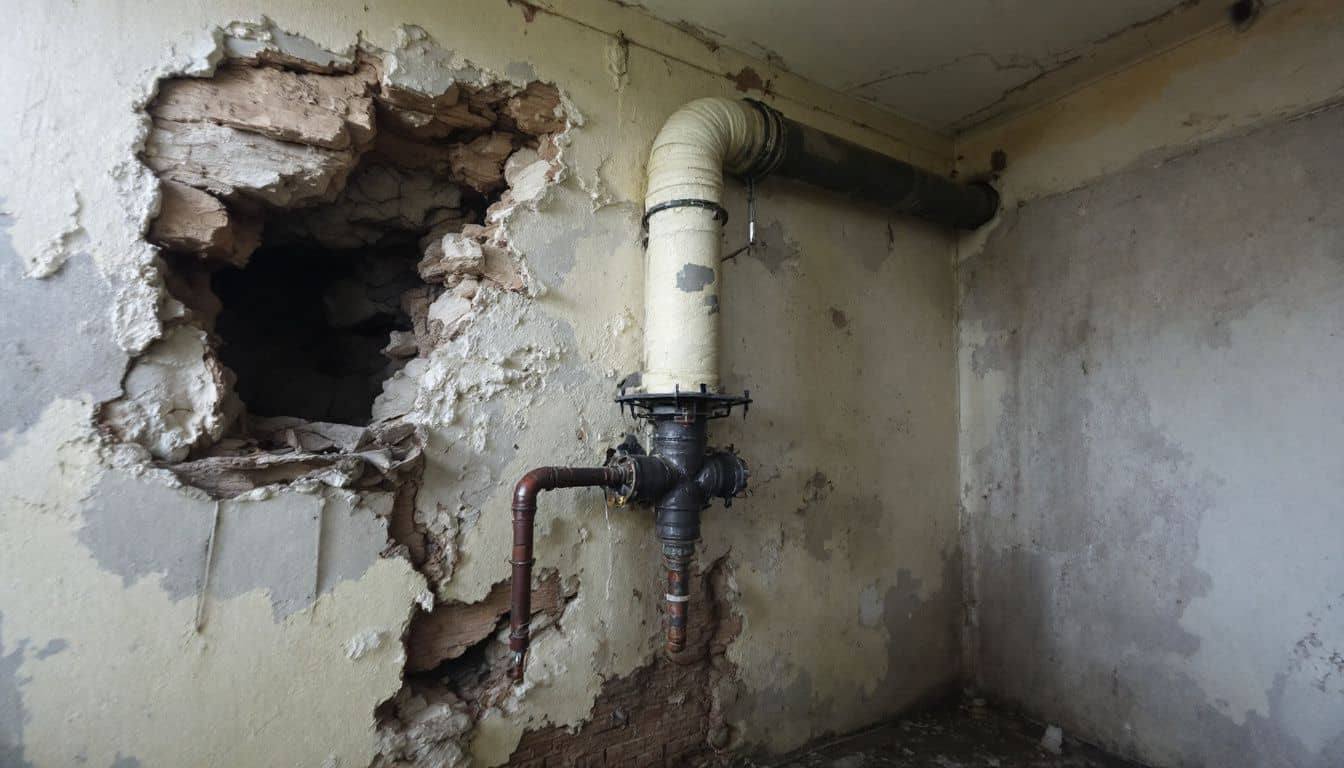
- Pipe lagging and boiler insulation
- Ceiling tiles and partition boards
- Gaskets and rope seals in industrial plant
- Guttering, downpipes, and soffits
Any building constructed or refurbished before 2000 could contain white asbestos in one or more of these forms. The material is not always visible, and it is rarely labelled. Without a professional survey, there is no reliable way to know what is present or where it sits within a structure.
If you manage a non-domestic property, the law requires you to identify and manage asbestos-containing materials. An management survey carried out by a UKAS-accredited surveying company is typically the starting point for meeting that duty.
Illegal Asbestos Use Since the Ban
Despite the comprehensive prohibition introduced in 1999, illegal activity involving asbestos has continued to surface across a range of industries. The Health and Safety Executive has pursued prosecutions, issued fines, and conducted targeted inspection campaigns to address this. The pattern of offences falls into several distinct categories.
Construction and Refurbishment
The construction sector accounts for a significant proportion of asbestos-related enforcement action. Firms have been prosecuted for disturbing asbestos-containing materials without adequate controls, failing to commission pre-demolition surveys, and continuing work after asbestos has been identified on site.
Fines in construction cases have reached significant sums, with additional costs and remediation requirements imposed by the courts. The use of an demolition survey before any structural work begins is not optional — it is a legal requirement under the Control of Asbestos Regulations, and the absence of one will be treated as a serious failing by the HSE.
Shipbuilding and Industrial Maintenance
Shipyards and heavy industrial facilities have featured repeatedly in HSE enforcement cases. Asbestos was used extensively in vessels and industrial plant built before the ban, and illegal disturbance during maintenance or repair work remains a persistent problem. Fines and mandatory health surveillance for exposed workers have been imposed in several notable cases.
Improper Removal and Disposal
Not all illegal activity involves attempting to use new asbestos. A significant category of offences relates to improper removal of existing asbestos-containing materials — work carried out without the required HSE licence, without adequate respiratory protective equipment, or without correct disposal procedures at a licensed facility.
Unlicensed asbestos removal is a serious criminal offence. Licensed contractors are legally required for work on most notifiable asbestos-containing materials, and the consequences of using unlicensed operators extend to the client as well as the contractor. Commissioning proper asbestos removal from a licensed contractor is the only legally compliant route.
Educational and Public Buildings
Schools and other public buildings have also featured in enforcement actions. Failures to maintain asbestos registers properly, combined with inadequate controls during maintenance works, have led to prosecutions and enforcement notices. The HSE has been clear that dutyholder responsibilities apply equally to public sector organisations.
Ignorance of what is in a building is not a defence. The duty is to find out — and to act on what is found.
Small Businesses and Sole Traders
Enforcement is not limited to large organisations. Plumbers, electricians, and small building contractors have been prosecuted for disturbing asbestos during routine maintenance work. In many cases, the individuals involved were unaware that the materials they were working with contained asbestos — which is precisely why pre-work surveys and awareness training are legal requirements, not optional extras.
The Health Consequences of Asbestos Exposure
Understanding when white asbestos was banned matters in part because the diseases it causes have a very long latency period. Mesothelioma, the cancer most closely associated with asbestos exposure, typically takes between 20 and 50 years to develop after initial exposure. People being diagnosed today were often exposed decades ago — during periods when asbestos use was still legal, or in the years immediately following the ban when illegal use was more common.
The main asbestos-related diseases include:
- Mesothelioma — a cancer of the lining of the lungs or abdomen, almost exclusively caused by asbestos exposure
- Lung cancer — asbestos exposure significantly increases risk, particularly in combination with smoking
- Asbestosis — scarring of the lung tissue caused by prolonged exposure, leading to progressive breathlessness
- Pleural thickening — thickening of the membrane surrounding the lungs, which can restrict breathing
- Pleural plaques — areas of fibrous thickening on the pleura, often used as a marker of past exposure
There is no safe level of asbestos exposure. All fibre types, including white asbestos, carry these risks. The HSE’s position is unambiguous on this point, and the Control of Asbestos Regulations reflect it in the duties they impose.
Your Legal Duties Under the Control of Asbestos Regulations
The Control of Asbestos Regulations place a duty to manage asbestos on anyone responsible for the maintenance or repair of non-domestic premises. This includes landlords, facilities managers, employers, and building owners. The duty is not triggered by finding asbestos — it is triggered by being responsible for the premises.
The duty requires you to:
- Find out whether asbestos-containing materials are present in the building
- Assess the condition and risk posed by any materials found
- Prepare and maintain a written asbestos management plan
- Share information about asbestos locations with anyone who might disturb it
- Review and update the plan regularly
Failure to comply is a criminal offence. The HSE can issue improvement notices, prohibition notices, and prosecute dutyholders in the magistrates’ or crown court. Fines are unlimited at crown court level.
For properties across the capital, an asbestos survey London carried out by a qualified, accredited surveyor is the most straightforward way to establish your baseline position and demonstrate compliance with the regulations.
What HSE Inspections Look For
The Health and Safety Executive conducts both reactive inspections — following complaints or incidents — and proactive inspection campaigns targeting higher-risk sectors. Construction, building maintenance, and refurbishment are consistently among the priority areas.
During an inspection, the HSE will typically want to see:
- An up-to-date asbestos register or management survey
- Evidence that workers have been informed of asbestos locations before starting work
- Records of any asbestos removal or disturbance work carried out
- Confirmation that licensed contractors were used where required
- Training records for relevant employees
If these documents cannot be produced, enforcement action is likely. The HSE’s guidance document HSG264 sets out the standards expected for asbestos surveys and is the benchmark against which survey quality is assessed. A survey that does not meet HSG264 standards may not satisfy the HSE — or a court — that you have fulfilled your duty.
Compensation for Those Affected by Asbestos Exposure
For individuals who have developed an asbestos-related disease, civil claims against former employers or premises owners remain an important route to compensation. Specialist legal support is available through solicitors who focus exclusively on this area, and successful mesothelioma claims can result in significant awards.
The government’s Diffuse Mesothelioma Payment Scheme provides a route to compensation where a former employer is no longer traceable or has ceased trading. Mesothelioma UK also publishes guidance for those affected and their families.
In Scotland, the law has developed to allow claims for pleural plaques — a position that differs from England and Wales, where pleural plaques alone are not currently actionable.
What to Do If You Suspect Asbestos in Your Building
If you suspect asbestos-containing materials are present in a property you own or manage, the single most important rule is: do not disturb them. Asbestos in good condition that is left undisturbed poses a significantly lower risk than material that has been damaged, drilled into, or broken up.
The correct steps are:
- Commission a management survey from a UKAS-accredited surveying company
- Review the findings and have any high-risk materials assessed for condition and friability
- Update your asbestos register and management plan accordingly
- Ensure all contractors working on the premises are briefed on asbestos locations before starting work
- If materials need to be removed, use a licensed contractor and ensure correct disposal procedures are followed at a licensed waste facility
For businesses and property managers in the North West, an asbestos survey Manchester from an experienced, accredited team will give you the information you need to manage your obligations with confidence. For those in the West Midlands, an asbestos survey Birmingham provides the same baseline assessment to keep you on the right side of the law.
Frequently Asked Questions
When was white asbestos banned in the UK?
White asbestos (chrysotile) was banned in the UK in 1999. Blue asbestos (crocidolite) and brown asbestos (amosite) had already been banned in 1985. The 1999 prohibition completed a full ban on all commercial asbestos types, covering import, supply, and use across the UK.
Is white asbestos still found in UK buildings?
Yes — and in large quantities. The ban prevented new asbestos from being installed, but it did not remove the asbestos already in place. White asbestos remains present in a very large number of buildings constructed or refurbished before 2000, including in floor tiles, cement sheets, textured coatings, and insulation materials. Without a professional survey, there is no reliable way to confirm what is present.
What are my legal duties if asbestos is found in my building?
If you are responsible for a non-domestic premises, the Control of Asbestos Regulations require you to identify asbestos-containing materials, assess their condition, and produce a written management plan. You must also inform anyone working on the premises of asbestos locations before they begin work. Failure to comply is a criminal offence and can result in prosecution, unlimited fines, and enforcement notices.
Can I remove asbestos myself?
In most cases, no. Work on notifiable asbestos-containing materials must be carried out by a contractor holding a licence issued by the HSE. Unlicensed removal is a criminal offence, and the consequences apply to the client as well as the contractor. Even for minor work that may not require a licence, strict controls and correct disposal procedures must be followed.
What is the difference between a management survey and a demolition survey?
A management survey is used to locate and assess asbestos-containing materials in a building that remains in normal use. It informs the asbestos management plan and helps dutyholders meet their ongoing obligations. A demolition or refurbishment survey is required before any structural work, demolition, or significant refurbishment takes place — it is more intrusive and designed to locate all asbestos that could be disturbed during the work. Both must be carried out to HSG264 standards by a competent, accredited surveyor.
Get Expert Asbestos Advice from Supernova Asbestos Surveys
Supernova Asbestos Surveys has completed over 50,000 surveys nationwide, working with property managers, landlords, employers, and contractors across the UK. Whether you need a management survey, a pre-demolition survey, or advice on your asbestos management obligations, our UKAS-accredited team can help.
Call us on 020 4586 0680 or visit asbestos-surveys.org.uk to arrange a survey or speak to one of our specialists.