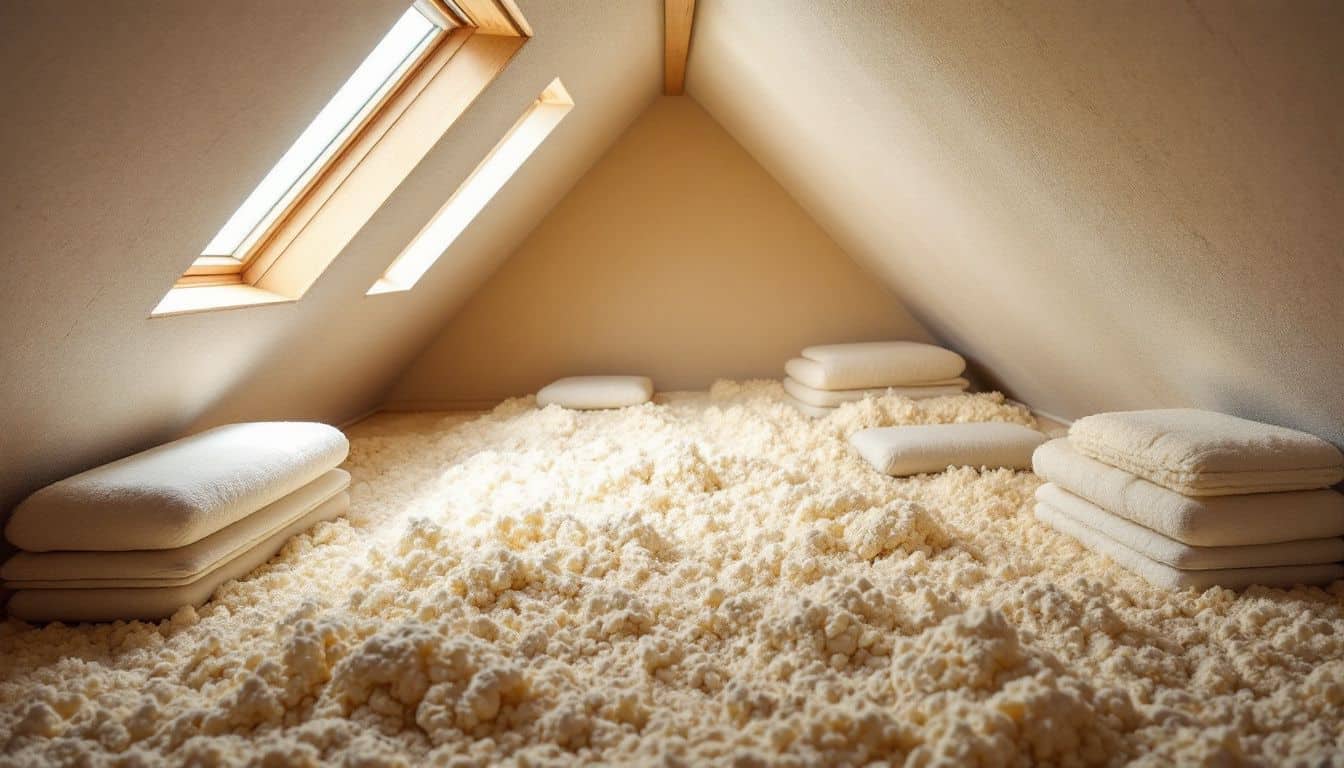
Why the Replacement of Asbestos Fibre Transformed UK Construction
When the UK banned asbestos, the construction industry faced a genuine challenge: find materials that could match asbestos’s remarkable thermal, acoustic, and fire-resistant properties — without the devastating health consequences. The replacement of asbestos fibre has since driven some of the most significant material innovations in modern building science, reshaping everything from domestic insulation to industrial fireproofing.
Whether you manage commercial property, work in construction, or simply want to understand what’s inside your building, this post covers every major category of asbestos substitute now in use across the UK — from early alternatives like mineral wool through to cutting-edge synthetic foams and natural fibre composites.
Why the Replacement of Asbestos Fibre Became Urgent
Asbestos was used extensively in UK buildings throughout the twentieth century. Its insulating properties were genuinely impressive — resistant to heat, flame, and chemical attack, cheap to produce, and easy to work with.
The problem was that disturbed asbestos releases microscopic fibres that cause mesothelioma, asbestosis, and lung cancer. The UK banned blue and brown asbestos (crocidolite and amosite) first, followed by white asbestos (chrysotile). The European Union subsequently extended the prohibition to all asbestos types.
These regulations, enforced through the Control of Asbestos Regulations and supported by HSE guidance including HSG264, created immediate demand for safe, effective substitutes across every sector of the built environment. Insurers, employers, and building owners all faced mounting liability from asbestos-related disease claims, and market forces aligned with legislation to accelerate innovation.
If you manage a property that may still contain legacy asbestos materials, understanding your obligations under current regulations is the essential first step. An asbestos survey in London or any other major UK city will identify what’s present and help you plan safely.
Early Alternatives: Mineral Wool and Fiberglass
The first materials to fill the gap left by asbestos were mineral wool and fiberglass. Both were already in limited use before the ban, but they scaled up rapidly to meet demand across the UK construction sector.
Mineral Wool
Mineral wool — which includes rock wool and slag wool — offers excellent thermal insulation and genuine fire resistance. It is produced by melting rock or industrial slag and spinning the molten material into fibres, creating a product with a high melting point and strong acoustic dampening properties.
It is heavier than some alternatives and energy-intensive to manufacture, but its performance credentials are well established. Mineral wool is now one of the most widely used insulation materials in UK commercial and residential construction, and it complies fully with current building regulations.
Fiberglass Insulation
Fiberglass is lightweight, non-combustible, and provides reliable thermal insulation. It is manufactured from molten glass drawn into fine fibres, giving it good resistance to heat and moisture.
Early concerns about respiratory irritation during installation have been addressed through improvements in fibre diameter and bonding agents. When appropriate PPE is used, fiberglass installation carries a well-managed risk profile — a significant contrast to the dangers posed by asbestos fibres.
Polyurethane Foam: Versatile and Long-Lasting
Polyurethane foam became one of the most commercially successful replacements for asbestos insulation. Available as spray foam, rigid boards, and panel insulation, it delivers outstanding thermal performance and can be applied to irregular surfaces that other materials struggle to cover.
Spray polyurethane foam expands on application, filling gaps and creating a continuous insulating layer. This makes it particularly effective in retrofit projects where older buildings require upgrading without full strip-out.
While the upfront cost is higher than mineral wool or fiberglass, the long service life and reduced heat loss typically deliver cost savings over the building’s lifetime. Polyurethane foam also contributes to fire safety when used in the correct formulation with appropriate fire retardants, and it is used in insulation boards, ceiling tiles, and cavity wall applications across the UK.
If your property still contains legacy asbestos insulation that needs replacing, understanding the full scope of asbestos removal is the essential first step before any new insulation is installed.
Advances in Safe Insulation: EPS, XPS, and Cellulose
The insulation market diversified considerably in the years following the ban, producing a range of materials suited to different applications and performance requirements.
Cellulose Insulation
Cellulose insulation is manufactured primarily from recycled paper fibres, typically treated with borate compounds to provide fire and pest resistance. It offers a high R-value per unit thickness, making it thermally efficient, and its recycled content appeals to projects targeting sustainability credentials.
Cellulose is blown or sprayed into cavities and roof spaces, conforming to the shape of the space and reducing air infiltration. It has been used successfully in UK retrofit and new-build projects and complies fully with current health and safety regulations.
Expanded Polystyrene (EPS)
Expanded polystyrene replaced asbestos cement in a wide range of building applications. Lightweight, easy to cut, and thermally effective, EPS does not release harmful fibres and poses no respiratory risk during normal installation.
It is used extensively in insulated concrete formwork, below-slab insulation, and external wall insulation systems — all areas where asbestos-containing products were once commonplace.
Extruded Polystyrene (XPS)
Extruded polystyrene offers similar thermal performance to EPS but with greater density and moisture resistance. XPS is the preferred choice for applications where water ingress is a risk — ground floors, inverted roofs, and below-grade walls.
It is manufactured in consistent thicknesses and provides reliable long-term performance without degradation. Neither EPS nor XPS poses the health risks associated with asbestos, and both materials are widely available through UK building merchants and insulation specialists.
Non-Asbestos Construction Boards and Panels
Asbestos was used extensively in flat sheet materials — ceiling tiles, partition boards, soffit panels, and roof sheets. Replacing these required materials that could match asbestos’s structural and fire-resistant properties without the associated health risks.
Synthetic Gypsum Board
Synthetic gypsum board — commonly known as plasterboard or drywall — became the dominant replacement for asbestos-containing flat sheet products. Produced as a by-product of industrial processes including flue gas desulphurisation, synthetic gypsum is a stable, non-toxic material with good fire resistance.
Gypsum board is fire-rated, easy to install, and widely accepted under UK building regulations. It is now the standard internal lining material for walls and ceilings in commercial and residential buildings alike.
Recycled Cotton Denim Insulation
Recycled cotton denim insulation has gained traction as an eco-conscious alternative, particularly in the residential sector. Manufactured from post-consumer denim fibres, it offers good thermal and acoustic insulation properties without any of the health risks associated with asbestos or early synthetic fibres.
It is safe to handle without specialist PPE, which reduces installation costs and makes it accessible for smaller contractors. Its acoustic performance makes it particularly popular in partition walls and floor assemblies where sound transmission is a concern.
Innovations in Fireproofing: Ceramic Fibres and Basalt Fibre
Asbestos was heavily relied upon in high-temperature industrial applications — furnace linings, pipe lagging, boiler insulation, and fire doors. Replacing it in these demanding environments required materials that could genuinely withstand extreme heat.
Ceramic Fibres
Ceramic fibres are manufactured from aluminium silicate and related compounds, producing a material that maintains structural integrity at temperatures far exceeding those where organic materials fail. They are used in industrial furnaces, kilns, and high-temperature process equipment, and have also found application in automotive brake systems where asbestos was previously standard.
Ceramic fibres are classified as a possible human carcinogen by some regulatory bodies, and their use requires appropriate controls. However, they do not carry the same catastrophic risk profile as asbestos, and their application is typically confined to industrial settings with robust occupational health management in place.
Basalt Fibre
Basalt fibre is produced by melting naturally occurring basalt rock and drawing it into continuous filaments. The resulting material has an impressive strength-to-weight ratio, excellent chemical resistance, and high-temperature tolerance.
It is non-toxic, does not require the same handling precautions as ceramic fibre, and is fully compatible with existing composite manufacturing processes. Basalt fibre is increasingly used in construction reinforcement, fire-resistant panels, and pipe insulation — representing one of the more promising long-term replacements for asbestos where both mechanical strength and heat resistance are required.
Eco-Friendly and Natural Fibre Alternatives
Sustainability has become a significant driver in the selection of asbestos replacements. A range of natural and recycled materials now compete effectively with synthetic alternatives, particularly in low-energy and Passivhaus construction.
Hemp, Flax, and Jute Composites
Natural plant fibres — hemp, flax, and jute — have been developed into composite insulation and construction materials. These fibres are renewable, low in embodied carbon, and biodegradable at end of life.
When combined with appropriate binders, they produce rigid or semi-rigid boards suitable for wall, floor, and roof insulation. Their thermal and acoustic performance is competitive with mineral wool, and compliance with UK health and safety regulations is straightforward, as these materials present no significant inhalation risk.
Cork Board Insulation
Cork board insulation is harvested from the bark of cork oak trees — a process that does not harm the tree and allows repeated harvesting over the tree’s lifetime. Cork offers natural thermal and acoustic insulation, inherent fire resistance, and moisture regulation without requiring chemical treatment.
It is used in floor underlays, wall insulation, and flat roof assemblies. Cork’s natural properties mean it resists mould growth and does not require added biocides, making it a genuinely low-impact building material with a strong sustainability case.
Modern Synthetic Alternatives: Polyimide Foams and High-Performance Polymers
At the high-performance end of the market, a new generation of synthetic materials has been developed specifically for applications where temperature resistance and structural integrity are critical.
Polyimide Foams
Polyimide foams are engineered to withstand sustained high temperatures while maintaining their insulating properties. They are used in aerospace, defence, and specialist industrial applications where conventional insulation would fail, and in construction they are specified for fire-rated assemblies and areas with extreme thermal demands.
These foams do not release harmful fibres and do not pose the chronic health risks associated with asbestos. Their adoption supports both safer working environments and compliance with current asbestos regulations.
High-Performance Plastics and Fibre-Reinforced Polymers
Carbon fibre reinforced polymers (CFRP) and glass fibre reinforced polymers (GFRP) have replaced asbestos in structural and semi-structural applications. Materials such as PEEK (polyether ether ketone) offer outstanding heat resistance and chemical stability without any associated carcinogenic risk.
These materials are now standard in automotive, aerospace, and industrial manufacturing, and are increasingly specified in demanding construction applications. Their higher cost compared to legacy asbestos products is offset by superior performance, longer service life, and the complete elimination of asbestos-related liability.
What This Means for Property Owners and Managers
The range of replacement materials now available means there is no legitimate technical reason to retain asbestos-containing materials in any building. Every application where asbestos was once used — insulation, fireproofing, structural boards, pipe lagging — has at least one safe, effective, and regulation-compliant alternative.
The practical challenge for property owners is not finding a replacement material. It is identifying exactly what asbestos-containing materials are present, where they are located, and whether they are in a condition that requires management or removal before any refurbishment or upgrade work begins.
Steps to Take Before Replacing Asbestos-Containing Materials
- Commission a management survey — required for any non-domestic premises under the Control of Asbestos Regulations. This identifies the location, type, and condition of any asbestos-containing materials.
- Commission a refurbishment or demolition survey — required before any intrusive work that could disturb asbestos. This is a legal requirement, not optional.
- Obtain a written asbestos register — this must be kept up to date and made available to contractors before they begin any work on the premises.
- Arrange licensed removal where required — certain asbestos materials, including sprayed coatings and pipe lagging, must be removed by a licensed contractor. Others may be removed by trained operatives following HSE guidance.
- Specify your replacement material — once asbestos has been safely removed and the area has been cleared, select your replacement insulation or board product based on the performance requirements, building regulations, and sustainability targets for your project.
If your building is located in the north of England, an asbestos survey in Manchester can be arranged quickly to support your refurbishment programme. For properties in the Midlands, an asbestos survey in Birmingham will give you the information you need before any work begins.
The Ongoing Legacy of Asbestos in UK Buildings
Despite decades of innovation in replacement materials, asbestos remains present in a significant proportion of UK buildings constructed before the year 2000. It does not always need to be removed — undisturbed, well-maintained asbestos in good condition can often be managed in place. But any planned refurbishment, maintenance work, or change of use creates the potential for disturbance.
The replacement of asbestos fibre is not simply a historical story about what happened after the ban. It is an ongoing responsibility for every building owner, facilities manager, and contractor working with the existing UK building stock. Getting it right means surveying first, removing safely where necessary, and specifying the right modern material for each application.
The materials science has caught up. The regulatory framework is clear. The only remaining variable is whether the people responsible for individual buildings are acting on the information available to them.
Frequently Asked Questions
What is the most common replacement for asbestos insulation in UK buildings?
Mineral wool — including rock wool and slag wool — is the most widely used replacement for asbestos insulation in UK construction. It offers comparable fire resistance and thermal performance, is available in a range of formats for different applications, and complies with current building regulations. Fiberglass and polyurethane foam are also widely used depending on the specific application.
Is it safe to remove asbestos-containing materials myself before installing new insulation?
No. The removal of most asbestos-containing materials must be carried out by trained operatives, and certain materials — including sprayed asbestos coatings and pipe lagging — must be removed by a licensed contractor under the Control of Asbestos Regulations. Attempting DIY removal risks exposure to airborne asbestos fibres and is a criminal offence in commercial premises. Always commission a survey and use an accredited contractor.
Do I need an asbestos survey before installing new insulation in an older building?
Yes. If your building was constructed or refurbished before the year 2000, there is a realistic possibility that asbestos-containing materials are present. A refurbishment and demolition survey is legally required before any intrusive work that could disturb asbestos. This applies to both commercial and residential properties where contractors are involved.
Are modern replacement materials as effective as asbestos?
In most applications, yes — and in some cases they outperform asbestos. Materials such as polyimide foam, basalt fibre, and high-performance polymers match or exceed asbestos’s thermal and fire-resistant properties. The key difference is that these modern materials do not release carcinogenic fibres when disturbed, making them fundamentally safer throughout their service life.
How do I find out whether my building contains asbestos before beginning a refurbishment project?
The only reliable method is a professional asbestos survey carried out by a qualified surveyor following HSG264 guidance. Visual inspection alone is not sufficient — asbestos-containing materials are often indistinguishable from non-asbestos products without laboratory analysis. Supernova Asbestos Surveys provides management surveys and refurbishment and demolition surveys across the UK. Call us on 020 4586 0680 or visit asbestos-surveys.org.uk to arrange a survey.
Get Expert Advice from Supernova Asbestos Surveys
Supernova Asbestos Surveys has completed over 50,000 surveys across the UK, helping property owners, facilities managers, and contractors manage asbestos safely and in full compliance with current regulations. Whether you need a management survey, a refurbishment and demolition survey, or advice on asbestos removal before installing modern replacement materials, our team is ready to help.
Call us on 020 4586 0680 or visit asbestos-surveys.org.uk to book your survey or speak to one of our specialists.