
Ask when was asbestos legally banned in the UK, and most people will say 1999. That answer is correct, but it only tells part of the story. If you manage property, commission maintenance or plan refurbishment works, the real issue is not just the ban date but the fact that asbestos is still sitting inside a huge number of UK buildings.
That is why this question still matters. Knowing when was asbestos legally banned in the UK helps you understand the legal history, but knowing what remains in place, where it is found and what your duties are under current law is what protects people on site.
When Was Asbestos Legally Banned in the UK?
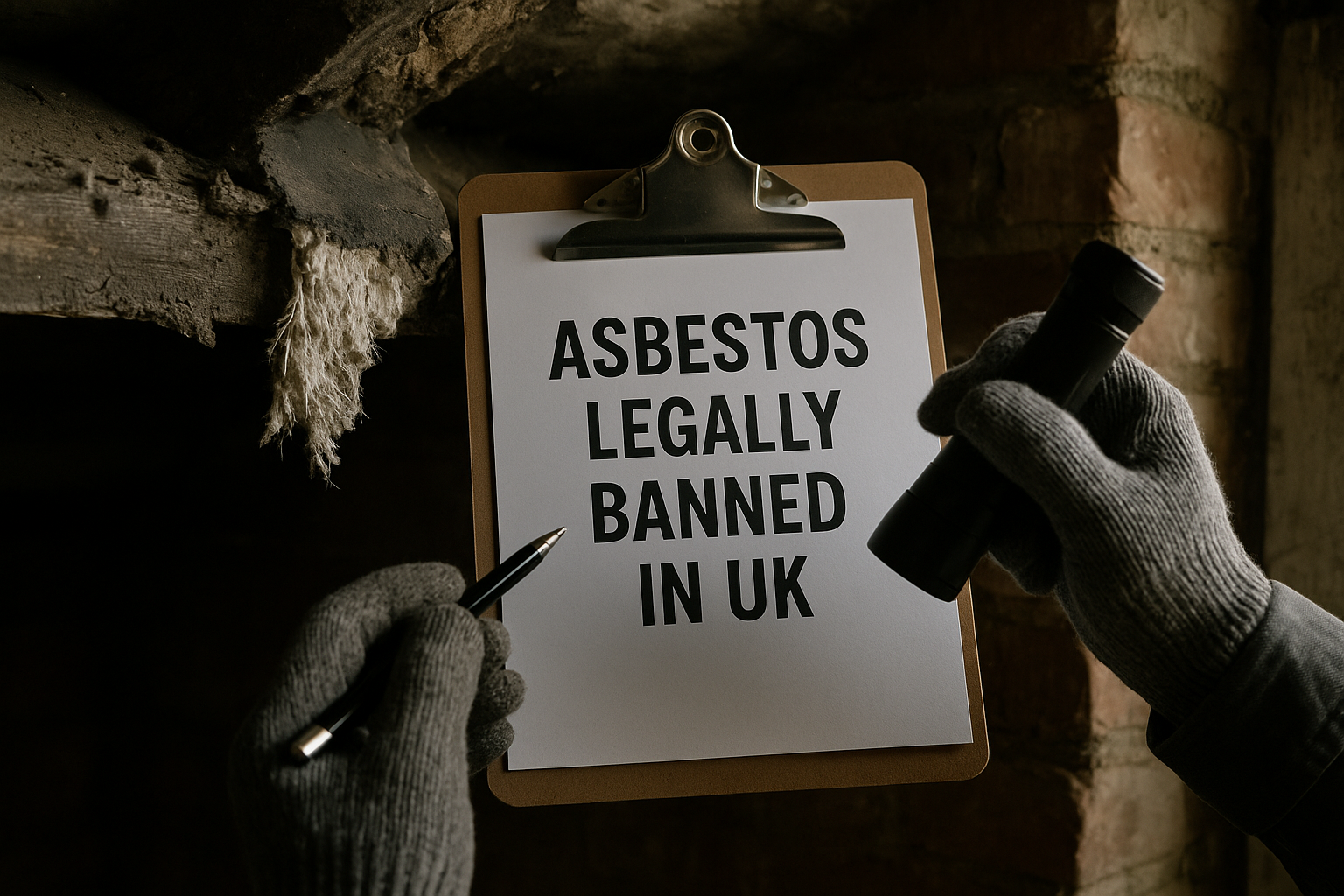
The short answer to when was asbestos legally banned in the UK is 1999. That was the point at which the importation, supply and use of all remaining asbestos types were prohibited.
However, asbestos was not banned in one single step. The most hazardous amphibole types, including blue asbestos and brown asbestos, were prohibited before white asbestos. White asbestos, also known as chrysotile, remained in legal use for longer and appeared in a wide range of building products.
So if someone asks when was asbestos legally banned in the UK, the practical answer is:
- Blue asbestos was banned earlier
- Brown asbestos was banned earlier
- White asbestos remained in use for longer
- All asbestos types were fully banned in 1999
That final date is the one most commonly quoted. It is also the reason any building constructed or refurbished before 2000 should be treated as potentially containing asbestos unless there is evidence to show otherwise.
Why Asbestos Was Used So Widely Before the Ban
Asbestos became common because it was seen as highly useful. It offered fire resistance, heat insulation, durability and chemical resistance, and it could be mixed into a wide variety of products at relatively low cost.
Builders, manufacturers and public bodies used it extensively across the UK. It appeared in commercial premises, industrial units, schools, hospitals, housing stock and public buildings.
Common asbestos-containing materials in UK properties
Asbestos can still be found in many forms, including:
- Pipe and boiler lagging
- Asbestos insulating board in partitions, risers and ceiling tiles
- Sprayed coatings used for insulation or fire protection
- Textured coatings on ceilings and walls
- Vinyl floor tiles and bitumen adhesives
- Asbestos cement roof sheets, gutters and wall panels
- Fire doors, backing boards and service panels
- Gaskets, ropes and seals in older plant and equipment
One of the biggest problems is that asbestos cannot be identified reliably by sight alone. Some asbestos-containing materials look identical to safer alternatives. If there is doubt, arrange professional asbestos testing before any work starts.
Why Was Asbestos Banned?
Asbestos was banned because inhaling airborne asbestos fibres can cause serious and often fatal disease. When asbestos-containing materials are damaged, drilled, cut, sanded or removed without proper controls, tiny fibres can be released into the air.
Once inhaled, those fibres can remain in the body for decades. The health consequences may not appear for many years, which is one reason asbestos-related disease continues long after the ban.
Diseases linked to asbestos exposure
- Mesothelioma
- Asbestos-related lung cancer
- Asbestosis
- Pleural thickening and other pleural disease
There is no sensible reason to take chances with suspect materials. If a product could contain asbestos, stop work and get it assessed properly.
The ban did not happen because of a single study or one isolated concern. It followed a substantial body of medical and occupational evidence showing the connection between asbestos exposure and severe disease. That evidence shaped HSE guidance and the legal framework that now governs asbestos management in existing premises.
Have There Been Public Health Improvements Since Asbestos Was Banned?
Yes, but the picture is more complicated than many people expect. If you are asking when was asbestos legally banned in the UK because you want to know whether the ban improved public health, the honest answer is that the benefits are real but gradual.
The ban stopped new legal use of asbestos. Better awareness, tighter site controls, licensed removal requirements and improved training have also reduced the risk of fresh occupational exposure.
Even so, asbestos-related disease has not disappeared. The reason is latency. People exposed decades ago may only develop illness much later in life, so the health burden continues long after the original exposure.
Why disease still appears after the ban
- Asbestos-related diseases often take decades to develop
- Workers exposed before effective controls are still living with the consequences
- Asbestos remains present in many older properties
- New exposure can still happen when materials are disturbed during maintenance or refurbishment
So while the ban was essential, it did not remove asbestos from the built environment overnight. That is why the question when was asbestos legally banned in the UK should always be followed by another one: does this building still contain it?
What Still Poses a Risk Today?
The main risk now does not come from new asbestos products entering the market. It comes from asbestos already installed in older buildings. If those materials remain in good condition and are not disturbed, the risk may be manageable. If they are damaged or affected by work, the risk changes quickly.
Tradespeople are especially vulnerable where asbestos has not been identified in advance. Electricians, plumbers, decorators, joiners, maintenance teams and refurbishment contractors routinely disturb hidden materials during everyday work.
Typical situations where asbestos exposure still happens
- Drilling through textured coatings or boards
- Removing old ceiling tiles or partition walls
- Lifting floor finishes without checking the adhesive beneath
- Working in plant rooms, risers and service voids
- Demolishing garages, outbuildings or industrial structures with cement sheets
Practical advice is simple: if the building predates 2000 and the work is intrusive, assume asbestos may be present until a competent survey or test proves otherwise.
What UK Law Requires Now
Knowing when was asbestos legally banned in the UK is useful background, but your current duties matter more. The Control of Asbestos Regulations place legal responsibilities on those who manage or control maintenance and repair in non-domestic premises.
HSE guidance and HSG264 set out how asbestos surveys should be carried out and what a suitable approach looks like in practice. If you are responsible for a building, you need to know whether asbestos is present, what condition it is in and how people will avoid disturbing it.
Core duties under the Control of Asbestos Regulations
- Identify whether asbestos-containing materials are present
- Presume materials contain asbestos if there is no strong evidence to the contrary
- Assess the risk from those materials
- Maintain an asbestos register
- Prepare and review an asbestos management plan
- Provide asbestos information to anyone who may disturb the material
These duties are not optional paperwork exercises. They affect contractor safety, project planning, compliance and liability.
Which Survey Do You Need?
The right survey depends on what is happening in the building. Choosing the wrong one can leave hidden asbestos in place and create serious risk when work begins.
Management survey
For occupied buildings in normal use, a management survey is usually the starting point. It is designed to locate, as far as reasonably practicable, asbestos-containing materials that could be disturbed during routine occupation, maintenance or minor works.
This survey supports your asbestos register and management plan. It is essential for offices, schools, retail units, communal areas and many other non-domestic settings.
Demolition survey
If a structure is due to be knocked down, stripped out or taken back to shell, a demolition survey is required. This is a fully intrusive survey intended to identify asbestos hidden within the fabric of the building before demolition starts.
It is not interchangeable with a management survey. Demolition and major strip-out works demand a much more invasive inspection because hidden materials are likely to be disturbed.
How to Tell If Your Property Is Likely to Contain Asbestos
If your property was built or refurbished before 2000, asbestos may be present. Age alone does not confirm it, but it should trigger caution.
This applies to:
- Offices
- Schools and colleges
- Hospitals and healthcare premises
- Warehouses and factories
- Retail units
- Blocks of flats and communal areas
- Domestic garages and outbuildings
- Public buildings and social housing stock
Common locations to check
- Ceiling coatings and ceiling tiles
- Boxing around columns and pipework
- Panels in service cupboards
- Floor tiles and black adhesive
- Soffits, fascias, gutters and garage roofs
- Boiler rooms, ducts and insulation systems
- Older fire doors and backing panels
If any of these materials are damaged, friable or due to be disturbed, stop work. Do not rely on assumption, memory or a contractor saying it looks harmless.
Testing and Sample Analysis
Sometimes you do not need a full survey straight away. If there is one suspect material and you need a clear answer before proceeding, targeted testing may be appropriate.
Where a material needs laboratory confirmation, professional sample analysis can provide a reliable result. This is useful for resolving uncertainty about a specific product, but it does not replace a full survey where wider asbestos risk needs to be assessed.
For many clients, local access matters as much as speed. If you need a second route for arranging checks, you can also book asbestos testing through Supernova’s dedicated service page.
Practical Steps for Property Managers and Dutyholders
If you are responsible for a site, the safest approach is structured and proactive. Waiting until contractors uncover a suspect board or damaged lagging is how delays, extra cost and exposure incidents happen.
What good asbestos management looks like
- Check the age and history of the building before planning works
- Commission the correct survey for the activity
- Keep the asbestos register current and easy to access
- Make sure contractors review asbestos information before starting
- Do not allow intrusive works where suspect materials remain unassessed
- Review the management plan regularly
- Reinspect known asbestos-containing materials as needed
A practical rule is this: survey early, test where necessary and share the information before tools come out. That avoids emergency stoppages and protects everyone involved.
Special Considerations During Pregnancy
Asbestos exposure should be avoided entirely during pregnancy. The immediate concern is inhalation of fibres by the mother, which creates an unnecessary health risk.
If asbestos is suspected in a home, workplace or project area, the material should be assessed before anyone disturbs it. There is no benefit in taking chances where a simple survey or test can provide clarity.
Asbestos Surveys Across London, Manchester and Birmingham
Supernova Asbestos Surveys supports clients nationwide, from single-site landlords to multi-property organisations. If you need local support in the capital, our asbestos survey London service covers commercial and residential properties across Greater London.
For sites in the North West, our asbestos survey Manchester team provides surveys and testing for offices, industrial units, schools and housing stock. In the Midlands, our asbestos survey Birmingham service helps clients manage compliance before maintenance, refurbishment and demolition works.
Why the Ban Date Still Matters Today
The reason people keep asking when was asbestos legally banned in the UK is simple: the date helps identify risk. If a building predates the full ban, asbestos may still be there. That affects maintenance planning, contractor control, budgeting and legal compliance.
The ban ended legal use, but it did not remove asbestos from schools, offices, warehouses, flats or plant rooms. For dutyholders, the lesson is practical rather than historical. Treat older premises carefully, commission the right survey and never let intrusive work start on assumptions.
If you need help identifying asbestos risks, arranging testing or commissioning the correct survey, Supernova Asbestos Surveys can help. We provide management surveys, demolition surveys, testing and compliance support across the UK. Call 020 4586 0680 or visit asbestos-surveys.org.uk to book a survey or speak to our team.
Frequently Asked Questions
When was asbestos legally banned in the UK?
All asbestos types were fully banned in the UK in 1999. Blue and brown asbestos were prohibited earlier, while white asbestos remained in use for longer before the final ban came into force.
Can a building still contain asbestos if it was built before 2000?
Yes. Any building constructed or refurbished before 2000 may contain asbestos-containing materials. Age does not confirm asbestos, but it is a strong reason to arrange a survey before intrusive work.
Do I need an asbestos survey before refurbishment works?
If the works are likely to disturb the fabric of the building, you should arrange the appropriate asbestos survey before work starts. A management survey is not enough for demolition or major strip-out works.
Is asbestos dangerous if it is left alone?
Asbestos is most dangerous when fibres are released through damage or disturbance. Some asbestos-containing materials can be managed safely in place if they are in good condition and properly recorded, monitored and protected.
What should I do if I suspect asbestos in my property?
Stop work immediately and prevent further disturbance. Arrange professional testing or an asbestos survey so the material can be identified and the risk assessed properly.