Banning Asbestos Was Only the Beginning — How the UK Has Worked to Educate the Public
Asbestos kills more than 5,000 people in the UK every year, and every single one of those deaths results from exposure that happened decades ago. The ban on all forms of asbestos came into force in 1999, but banning a material and managing its legacy are two entirely different challenges. Understanding what measures have been taken to educate the public about the dangers of asbestos following the ban in the UK means examining everything from legislation and workplace enforcement to school safety programmes, community campaigns, and the digital resources that now reach millions of people.
The fibres are still out there. Millions of UK buildings constructed before 2000 contain asbestos-containing materials (ACMs), and without sustained public education, those materials remain a serious risk to anyone who disturbs them unknowingly. The work of keeping people safe didn’t end with the ban — in many ways, it was just getting started.
The Legal Framework That Underpins Public Awareness
Education about asbestos in the UK doesn’t rely on goodwill alone. It’s driven by a legal framework that compels building owners, employers, and contractors to act — and in doing so, to inform the people around them.
The Control of Asbestos Regulations is the cornerstone of this framework. It places a legal duty on those responsible for non-domestic premises to identify ACMs, assess the risk they pose, and produce a written management plan. That plan must be shared with anyone who might disturb those materials — from maintenance staff to visiting contractors.
The Health and Safety Executive (HSE) enforces these regulations and publishes detailed guidance, including HSG264, which sets the professional standard for asbestos surveys. By making compliance a legal requirement rather than a recommendation, the government effectively embedded asbestos education into everyday building management across the country.
The Duty to Manage: Informing Everyone Who Needs to Know
Under the duty to manage asbestos, owners and managers of non-domestic premises must not only identify and record ACMs but actively communicate that information. Survey results must be made available to staff, contractors, and safety representatives — not filed away in a drawer.
This requirement alone has driven a significant increase in awareness among tradespeople and facilities managers who might otherwise never have considered the issue. Commissioning an asbestos management survey is often the first step a duty holder takes, and it sets in motion a chain of communication that spreads awareness through an entire organisation.
Licensed contractors carrying out asbestos removal are required to hold specific licences from the HSE and follow strict protocols. The licensing regime acts as an educational filter — only those with the right training and knowledge can legally carry out notifiable work, raising the standard of understanding across the entire sector.
The HSE’s Role in Educating the Public After the Ban
The HSE is arguably the single most important institution when it comes to educating the public about asbestos dangers in the post-ban era. Its website serves as a central hub for guidance on everything from identifying ACMs to understanding legal responsibilities as a building owner or employer.
The HSE publishes plain-English guides aimed at different audiences — employers, workers, building owners, and members of the public. These aren’t dry regulatory documents; they’re practical resources designed to help people make informed decisions about asbestos in their environment.
Workplace Inspections as an Educational Tool
HSE inspectors visit workplaces to check that asbestos management plans are in place and being followed. When they find gaps, they don’t just issue notices — they explain what needs to change and why, creating a direct educational effect on employers and their workforce.
The HSE also publishes enforcement notices and prosecution outcomes, which serve as a public record of what happens when asbestos regulations are ignored. These cases act as cautionary examples that reinforce the seriousness of asbestos management across industries, from construction and property management to healthcare.
HSE Inspection Programmes in Schools
Schools present a particular challenge. A significant proportion of UK school buildings were constructed during the period when asbestos use was at its peak, and many still contain ACMs today.
The HSE has conducted targeted inspection programmes in schools to assess how well asbestos is being managed — checking whether management plans exist, whether they’re up to date, and whether staff have been properly informed about the location of ACMs. One of the key findings from these programmes has been the critical importance of communication: staff need to know not just that asbestos is present, but precisely where it is and what activities they must avoid.
For example, inserting pins or staples into asbestos ceiling tiles or boards can release dangerous fibres into the air — something a teacher might do without a second thought unless they’ve been properly informed.
Government Initiatives Targeting Schools and Educational Settings
Recognising the scale of the challenge in educational buildings, the government and trade unions have focused considerable effort on the school environment. The Department for Education has issued specific guidance on managing asbestos in school buildings, providing clear direction for headteachers, governors, and estates managers.
This guidance outlines responsibilities, inspection requirements, and the steps that must be taken when ACMs are found or disturbed. It’s a practical document designed to be used by people who are not asbestos specialists — which is exactly the point.
Union Involvement: NEU and JUAC
The National Education Union (NEU) and the Joint Union Asbestos Committee (JUAC) have been vocal advocates for stronger asbestos management in schools. Both organisations have produced guidance materials, checklists, and campaign resources specifically aimed at teachers, support staff, and school safety representatives.
The JUAC in particular has pushed for higher standards of asbestos surveying in educational buildings, raising concerns about the quality and consistency of surveys carried out in schools. Their campaigning has helped keep the issue firmly on the agenda for school governors and local authorities.
Safety representatives have a legal right under the Safety Representatives and Safety Committees Regulations to be consulted on asbestos matters. Unions have actively encouraged their members to exercise this right, creating another channel through which asbestos awareness spreads within educational institutions.
Community Education Programmes and Awareness Campaigns
Beyond the workplace and school setting, broader community education has played an important role in raising public awareness of asbestos dangers. These programmes take a variety of forms and target very different audiences.
Public Workshops and Seminars
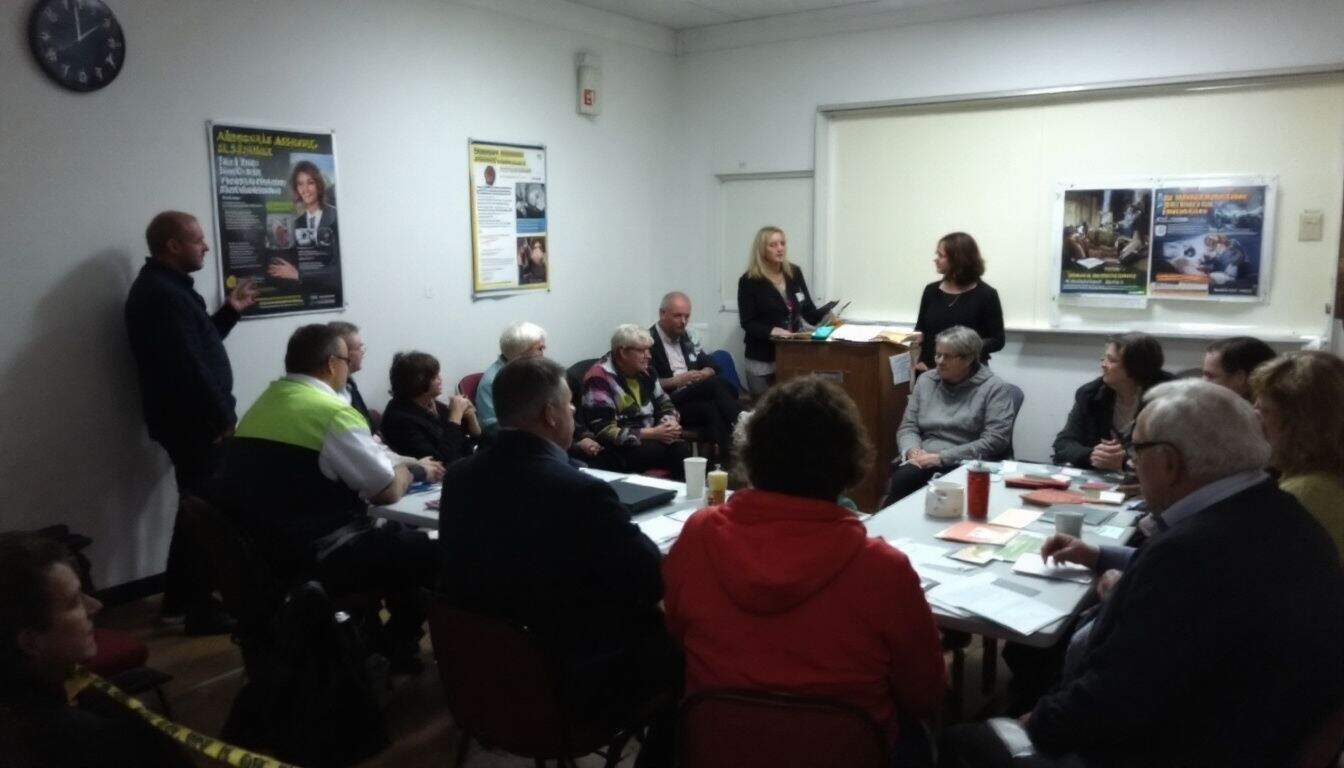
HSE experts and accredited professionals have led public seminars on asbestos risks, explaining how to identify potential ACMs in homes and what to do if you suspect their presence. These events are particularly valuable for homeowners carrying out renovation work, who may inadvertently disturb asbestos without realising it.
Local councils and housing associations have also run awareness sessions for tenants in older properties, particularly in areas with high concentrations of pre-2000 housing stock. These sessions cover practical topics such as when to call a professional and how to avoid disturbing materials that may contain asbestos.
Leaflets, Posters, and Charity Campaigns
Printed materials remain a surprisingly effective awareness tool, particularly for reaching older demographics who may be less likely to search for information online. Leaflets distributed through GP surgeries, libraries, and community centres have been used to explain the link between asbestos exposure and diseases such as mesothelioma, asbestosis, and lung cancer.
Mesothelioma UK, a specialist charity, has been instrumental in raising public awareness of the disease and its connection to asbestos. Their campaigns have helped bring asbestos-related illness into mainstream public consciousness, reducing the stigma around seeking information and encouraging people to get support early.
Training Programmes for Contractors and Tradespeople
One of the most targeted forms of asbestos education has been the mandatory training requirement for workers who may encounter ACMs. Anyone carrying out non-licensable work with asbestos must have received appropriate training under the Control of Asbestos Regulations.
This has created a structured pathway for education that reaches tens of thousands of workers in the construction and maintenance sectors each year. Licensed contractors must complete specific training and demonstrate competency before they can legally carry out higher-risk asbestos work — ensuring that the people most likely to disturb ACMs are also the most informed about the risks involved.
This training covers a wide range of practical knowledge, including:
- Identifying ACMs by appearance and location
- Understanding fibre release risks and how disturbance occurs
- Using the correct personal protective equipment (PPE)
- Following safe decontamination procedures on site
- Knowing when to stop work and call in a licensed contractor
For tradespeople working in older buildings, this knowledge is not a theoretical exercise — it’s a practical safeguard applied on site, every day. A plumber drilling into an old ceiling or a carpenter cutting through partition boards needs to know what they might be dealing with before they pick up a tool.
Online Resources and Digital Awareness Tools
The growth of digital resources has significantly expanded the reach of asbestos education in the UK. The HSE website is the primary source of authoritative guidance, offering downloadable documents, interactive tools, and plain-English explanations of legal responsibilities.
Educational videos and webinars hosted by the HSE and other bodies cover topics ranging from how to conduct a management survey to the health effects of fibre inhalation. These resources are accessible around the clock and can be revisited as often as needed — a significant advantage over one-off training sessions.
NEU Digital Materials for Schools
The National Education Union has developed a suite of online resources specifically for schools, including asbestos checklists, template management plans, and guidance documents for safety representatives. These materials are freely available and regularly updated to reflect current best practice.
Interactive asbestos management plan templates are available through several organisations, helping duty holders in schools and other non-domestic premises meet their legal obligations without needing specialist knowledge from the outset.
Support Forums and Online Q&A Platforms
Online forums and Q&A platforms have created informal but valuable spaces for people to ask questions about asbestos in their homes and workplaces. Health professionals and asbestos management experts contribute to these discussions, helping to correct misinformation and provide accurate, practical guidance.
This peer-to-peer element of asbestos education is increasingly important. When someone discovers what they think might be asbestos in their home, the first place many people turn is online — and having accurate, accessible information available in those moments can prevent dangerous DIY removal attempts that put lives at risk.
Regional Outreach: Bringing Awareness Closer to Home
Asbestos education isn’t just a national effort — it happens at a regional level too. Accredited surveying companies, local authorities, and industry bodies run awareness initiatives tailored to the specific building stock and demographics of their areas.
In major cities with large volumes of pre-2000 commercial and residential properties, the need for localised outreach is particularly acute. Property managers and building owners in these areas face a higher statistical likelihood of encountering ACMs, and regionally focused guidance helps them understand the risks specific to their context.
If you’re a property manager or building owner in the capital, an asbestos survey London provider can offer advice tailored to the types of buildings and ACMs most commonly found in London’s diverse property stock. Similarly, those managing properties in the North West can access specialist guidance through an asbestos survey Manchester service, while Midlands-based duty holders can benefit from working with an asbestos survey Birmingham team who understand the region’s industrial and commercial building heritage.
Local outreach matters because asbestos risk isn’t uniform across the country. Different regions have different concentrations of specific building types — former industrial premises, post-war social housing, Victorian terraces — and the ACMs found in those buildings vary accordingly. Regional expertise translates into more relevant, more actionable education for the people who need it most.
What Still Needs to Happen: The Gaps That Remain
Despite significant progress, there are still gaps in public awareness that leave people at risk. Homeowners remain one of the most underserved groups when it comes to asbestos education. Unlike employers and building managers, private individuals have no legal duty to manage asbestos in their own homes — which means many of them never receive any formal guidance on the subject.
DIY renovation work remains one of the most common causes of unintentional asbestos disturbance in the UK. A homeowner sanding down an old artex ceiling, removing vinyl floor tiles, or drilling through a partition wall in a pre-2000 property may be exposing themselves and their family to dangerous fibres without any awareness that the risk exists.
The key practical steps any homeowner should take before starting renovation work on a pre-2000 property include:
- Assume that ACMs may be present until you know otherwise
- Arrange a professional survey before any intrusive work begins
- Never sand, drill, or cut materials that might contain asbestos
- If you suspect you’ve disturbed asbestos, stop work immediately and seek professional advice
- Do not attempt to remove suspected ACMs yourself — always use a licensed contractor
The message is straightforward, but it needs to reach people before they pick up a power tool — not after.
The Ongoing Importance of Professional Surveys
All the public education in the world is only as effective as the action it prompts. For building owners and managers, the most important action they can take is commissioning a professional asbestos survey carried out by a qualified, accredited surveyor.
A survey doesn’t just identify where ACMs are located — it provides a risk assessment, informs a management plan, and gives duty holders the documented evidence they need to demonstrate compliance with the Control of Asbestos Regulations. It’s the foundation on which everything else is built.
Without that baseline knowledge, even the best-intentioned building manager is working blind. Awareness of asbestos risks is valuable; knowing precisely where those risks exist in your specific building is essential.
Frequently Asked Questions
What measures have been taken to educate the public about the dangers of asbestos following the ban in the UK?
Since the 1999 ban, the UK has implemented a wide range of educational measures. These include the legal duty to manage asbestos in non-domestic premises under the Control of Asbestos Regulations, HSE enforcement and public guidance, targeted inspection programmes in schools, union-led campaigns, mandatory contractor training, community awareness programmes, and a growing library of digital resources. The combined effect of these measures has significantly raised awareness, though gaps remain — particularly among homeowners carrying out renovation work.
Is asbestos still a danger in UK buildings even though it’s been banned?
Yes. The ban prevents new asbestos from being used, but it does not remove the ACMs already present in millions of buildings constructed before 2000. As long as those materials remain undisturbed, they are generally considered low risk. However, any activity that disturbs them — drilling, cutting, sanding, or demolition — can release dangerous fibres into the air. This is why ongoing management and public education remain critical.
Who is responsible for managing asbestos in a non-domestic building?
Under the Control of Asbestos Regulations, the duty to manage asbestos falls on the person or organisation responsible for maintaining or repairing the premises — typically the building owner, landlord, or facilities manager. This duty includes identifying ACMs, assessing their condition and risk, producing a written management plan, and communicating relevant information to anyone who might disturb those materials.
Do homeowners have a legal duty to manage asbestos in their own homes?
No. The duty to manage asbestos applies to non-domestic premises. Private homeowners are not legally required to survey their properties or produce management plans. However, they are strongly advised to arrange a professional survey before carrying out any renovation or refurbishment work on a pre-2000 property. Disturbing ACMs without knowing they’re there is one of the most common causes of unintentional asbestos exposure in the UK.
What should I do if I think I’ve found asbestos in my property?
Stop any work in the area immediately and do not disturb the material further. Do not attempt to remove or sample it yourself. Contact a qualified asbestos surveying company to arrange a professional inspection. If the material has already been disturbed, seek advice on whether air testing is needed. Never attempt DIY asbestos removal — it is illegal for licensable materials and dangerous regardless of the type of ACM involved.
At Supernova Asbestos Surveys, we’ve completed more than 50,000 surveys across the UK, helping building owners, facilities managers, schools, and homeowners understand and manage asbestos risk with confidence. Whether you need a management survey, a refurbishment and demolition survey, or specialist advice on ACMs in your property, our accredited team is ready to help.
Call us on 020 4586 0680 or visit asbestos-surveys.org.uk to find out more or book a survey today.