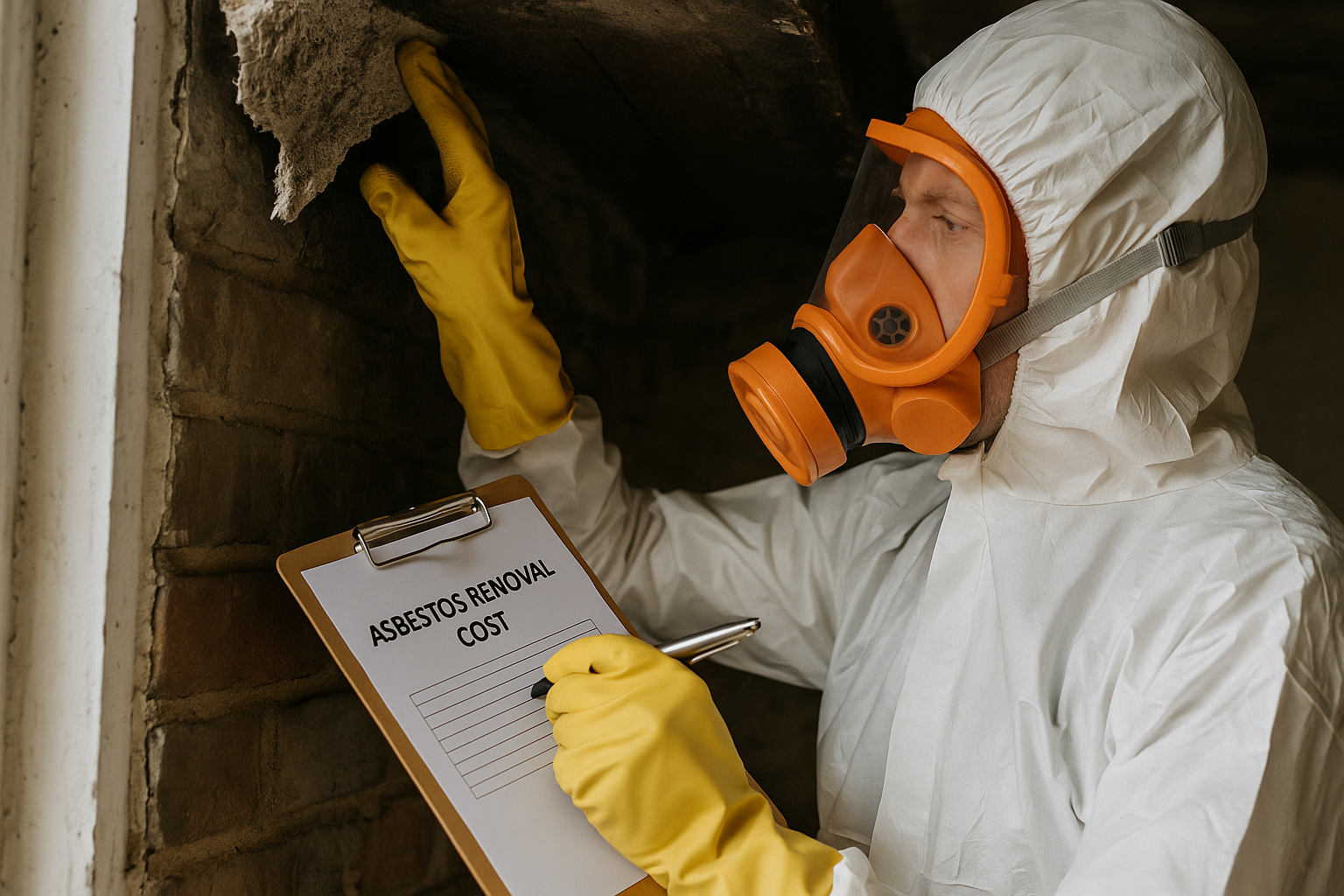
One line in a project budget can throw everything off: asbestos removal cost. For commercial property managers, landlords and facilities teams, the issue is rarely just the headline figure. The real question is what sits behind that price, whether removal is actually necessary, and how to keep the job compliant without inflating the programme or exposing occupants to avoidable risk.
Commercial asbestos work is priced around risk, access, scope, occupation and control measures. A small high-risk task can cost more than a larger low-risk one. That is why sensible budgeting starts with identifying the material properly, understanding the work category under the Control of Asbestos Regulations, and using survey information prepared in line with HSG264 where a survey is required.
Supernova Asbestos Surveys has completed more than 50,000 surveys nationwide. That experience gives property professionals something more useful than a generic online estimate: a practical route from uncertainty to a clear plan.
What is the typical asbestos removal cost for commercial property?
There is no universal UK price list for asbestos removal cost. Online guides can help with early budgeting, but they cannot replace a site-specific quotation. The final price depends on the material, its condition, the work method, access restrictions, whether the building is occupied, and how waste is packaged and removed.
For commercial buildings, broad budgeting ranges often look like this:
- Small asbestos cement removal: around £400 to £1,500
- Asbestos cement roof sheets or canopies: around £1,000 to £5,000+
- Asbestos garage roofs: around £1,000 to £3,500+
- Asbestos floor tiles and bitumen adhesive: around £800 to £3,000+ for a contained area
- Textured coatings or Artex ceiling removal: around £1,500 to £6,000+
- Soffits, fascias and undercloaking: around £800 to £4,000+
- Asbestos Insulation Board (AIB) removal: around £2,000 to £15,000+
- Pipe lagging removal: around £2,000 to £20,000+
- Emergency clean-up after accidental disturbance: highly variable and often costly
These figures are guides for budgeting only. They may not include surveys, sampling, analyst charges, scaffolding, access platforms, out-of-hours work, waste consignment charges, project management or reinstatement.
When comparing quotes, ask for a clear breakdown. A lower figure may simply exclude key items that appear later as extras.
What drives asbestos removal cost?
The biggest pricing mistake is treating asbestos work like ordinary strip-out. It is not. The physical removal is only part of the cost. Planning, containment, cleaning, waste handling, supervision and documentation can be just as significant.
Two jobs involving the same product can be priced very differently. A few boards in a vacant storeroom are not the same as the same boards above a trading retail unit or inside an occupied office floor.
Main cost drivers
- Material type: asbestos cement is usually cheaper to remove than AIB, lagging or sprayed coatings
- Condition: damaged or friable materials require tighter controls
- Work category: licensed, notifiable non-licensed and non-licensed work are priced differently
- Access: risers, ceiling voids, basements, plant rooms and roof edges all add complexity
- Building occupation: live environments often need phasing, segregation and out-of-hours attendance
- Control measures: enclosures, negative pressure units and decontamination arrangements increase cost
- Waste disposal: hazardous waste packaging, transport and disposal are essential
- Analyst attendance: some projects need independent air monitoring and clearance procedures
- Reinstatement: replacement ceilings, boards, roof sheets or finishes are often separate from removal
Why commercial work is often more expensive than domestic work
Commercial sites usually involve more coordination. You may need permits, tenant liaison, inductions, segregated access routes, loading restrictions, welfare arrangements and sequencing around operations.
If the building stays open, the contractor may need to mobilise in stages. That pushes up asbestos removal cost because setup, cleaning and decontamination are repeated rather than done once.
Asbestos removal costs by type
Different asbestos-containing materials carry different levels of risk. That is why asbestos removal cost varies so sharply by product type. The material itself matters, but so does how it has been installed and how likely it is to release fibres during the work.
Asbestos cement
Asbestos cement is generally one of the lower-risk materials when intact. It is commonly found in roof sheets, wall panels, gutters, downpipes, flues and outbuildings.
Because the fibres are bound into cement, removal is often more straightforward than with friable materials. Typical budgets can range from a few hundred pounds for small items to several thousand pounds for larger roofs or difficult access.
Costs rise where sheets are broken, access is poor, edge protection is needed or the work must be phased around occupants.
Asbestos Insulation Board (AIB)
AIB is a major cost driver in commercial property. It was used in ceiling tiles, partitions, fire breaks, service risers, soffits and cupboard linings.
AIB is more friable than cement products and often requires licensed removal depending on the task and condition. Even modest quantities can require enclosure work, decontamination procedures and analyst attendance, which is why the asbestos removal cost can rise quickly.
Textured coatings and Artex
Textured coatings are often assumed to be simple decorative finishes. In practice, the cost depends on whether the coating alone is being removed, whether the underlying board is also affected, and how the area is accessed and controlled.
Ceiling works in commercial spaces can involve lighting, ductwork, high-level access and repeated cleaning across multiple rooms. That is why broad online figures are often misleading.
Floor tiles and bitumen adhesive
Asbestos floor tiles are common in older offices, schools, retail units and plant areas. The tiles themselves may look straightforward, but the adhesive can complicate the method and programme.
Costs rise if the area is large, the tiles are damaged, the adhesive also contains asbestos, or the building needs to remain operational while work is phased room by room.
Sprayed coatings
Sprayed coatings are high-risk and specialist. They are far less common than cement or floor tiles, but where present they can be expensive to manage and remove because of the level of fibre release risk.
Jobs involving sprayed coatings usually sit at the higher end of the asbestos removal cost range due to enclosure requirements, licensed work procedures and extensive cleaning.
Asbestos cement flues, soffits and undercloaking
These are often mid-range jobs. They may be lower risk than AIB or lagging, but access can be awkward and external works can require scaffolding or traffic management.
Where multiple elevations are involved, the labour and access costs can exceed the removal cost of the material itself.
Pipe lagging: why it is often one of the most expensive jobs
Pipe lagging is one of the clearest examples of why a small area can produce a high asbestos removal cost. Lagging is a friable insulation material, and the risk of fibre release is much higher than with bonded products like cement sheets.
In commercial buildings, lagging is often found in basements, plant rooms, service ducts, ceiling voids and risers. It may be hidden behind boxing, mixed with later repairs, or located in areas with poor access.
Why pipe lagging removal costs more
- It commonly falls into licensed work
- Enclosures and negative pressure units may be required
- Decontamination arrangements are more involved
- Independent analyst attendance may be needed
- Access to live services can complicate the programme
- Cleaning and waste handling are more intensive
Broad budgets often start from around £2,000 for limited sections and can rise well beyond £20,000 where lagging is extensive or difficult to access. If the lagging runs through occupied areas or critical services, expect the programme and cost to increase further.
If lagging is suspected, do not allow maintenance teams or general contractors to disturb it. Confirm the material first through professional asbestos testing and then obtain a method-specific quotation.
Where is asbestos commonly found in commercial buildings?
Before anyone can estimate asbestos removal cost properly, they need to know what may be present and where. Many commercial buildings still contain asbestos-containing materials, particularly where the structure or finishes pre-date the ban on asbestos use.
Common locations include:
- Garage and outbuilding roofs
- Warehouse and industrial roof sheets
- Ceiling tiles and ceiling voids
- Partition walls and service risers
- Plant rooms and boiler houses
- Pipe insulation and lagging
- Floor tiles and bitumen adhesive
- Textured coatings on ceilings and walls
- Soffits, fascias and undercloaking
- Cement flues, gutters and downpipes
- Fire doors, panels and linings
- Lift shafts, ducts and service cupboards
The material type matters more than appearance. A board, tile or coating may look harmless but still contain asbestos. The safest approach is to identify suspect materials before works are priced or started.
Survey or testing first?
If you are planning refurbishment, maintenance or strip-out, a survey is usually the right starting point. It gives contractors a defined scope and reduces pricing based on worst-case assumptions.
Where you only need to identify a specific item, targeted asbestos testing may be enough. For isolated suspect materials, some dutyholders also look at an asbestos testing kit for early-stage screening, though sampling must only be done where it can be carried out safely and appropriately.
If you need a regional survey before tendering works, Supernova can help with an asbestos survey London, an asbestos survey Manchester or an asbestos survey Birmingham service.
Asbestos garage roofs: typical cost and what affects it
Asbestos garage roofs are one of the most commonly searched jobs because they are widespread and relatively visible. In many cases, these roofs are made from asbestos cement sheets, which are lower risk than friable materials when in good condition.
That often makes them one of the more affordable categories of asbestos removal cost. Typical budgets are often around £1,000 to £3,500+, but the final figure depends on more than roof size.
Main cost factors for asbestos garage roofs
- Size of the garage or block
- Condition of the sheets
- Ease of access for labour and waste loading
- Need for scaffolding or edge protection
- Terraced or shared garage arrangements
- Proximity to neighbours or public areas
- Waste handling and transport logistics
For commercial estates, management companies and block managers, there is often a practical way to reduce cost: bundle multiple garage roofs into one planned package. Mobilisation, access equipment and waste collection can then be spread across several units.
If the sheets are weathered but intact, ask whether immediate removal is necessary or whether short-term management is acceptable until a wider estate programme is ready. That decision should be based on condition and likelihood of disturbance, not guesswork.
Do councils or insurance cover asbestos removal?
This is one of the most common budget questions. The honest answer is: sometimes, but not usually in the way people hope.
Council schemes
Some local authorities offer limited support for domestic asbestos cement disposal or collection, particularly for small quantities from household properties. Schemes vary widely by council. Some offer designated disposal arrangements, some provide guidance only, and some offer no collection service at all.
For commercial property, council support is far less common. Businesses, landlords and managing agents should generally budget on the basis that they are responsible for arranging compliant asbestos removal and disposal through the correct channels.
If a council scheme exists in your area, check the details carefully:
- Is it domestic only?
- Does it exclude commercial or mixed-use sites?
- Does it cover bonded cement only?
- Are there quantity limits?
- Is collection available, or is drop-off required?
Do not assume that a local authority scheme will reduce your commercial asbestos removal cost. In most cases, it will not.
Insurance cover
Standard property insurance does not usually cover routine asbestos removal simply because asbestos is present. Insurers often treat asbestos as a pre-existing material rather than an insured event.
There can be exceptions. If asbestos is disturbed as part of an insured incident such as a fire, flood or impact event, some associated costs may be considered under the policy. Even then, cover depends on the wording, the cause of loss and any exclusions.
Before assuming insurance will help, check:
- The policy wording
- Any asbestos exclusions
- Whether contamination clean-up is covered
- Whether the trigger is an insured event rather than planned maintenance
- Whether consequential delays or reinstatement are included
For planned refurbishment or routine risk management, most owners and dutyholders should expect to fund the work themselves.
Can you remove asbestos yourself? DIY vs professional asbestos removal
Many people ask whether they can cut the asbestos removal cost by doing the work themselves. For commercial property, that is usually the wrong question. The better question is whether DIY removal is lawful, safe and likely to save money once the real risks are understood.
Some lower-risk asbestos work may fall outside licensed work, but that does not make it suitable for untrained people. The Control of Asbestos Regulations still require work to be properly assessed, planned and carried out with suitable precautions. Waste must also be handled correctly.
Why DIY removal is risky
- You may misidentify the material
- You may disturb a higher-risk product such as AIB or lagging
- You may contaminate surrounding areas
- You may expose staff, tenants or contractors
- You may create a much more expensive clean-up
- You may breach legal duties as a dutyholder or employer
What looks like a saving can quickly become a larger bill. Once asbestos debris is spread through a live building, the final asbestos removal cost can be far higher than the original planned job.
When professional removal is the sensible option
For commercial premises, professional removal is usually the correct route where:
- The material has not been confirmed
- The building is occupied
- The work affects common parts or trading areas
- The material is damaged or friable
- The task may be licensed or notifiable
- You need documentation for compliance and contractors
If you need to identify a suspect material before making a decision, a testing kit may help in limited, low-risk situations, but for commercial decision-making a professional inspection is usually the safer and more reliable route.
Where removal is required, use a competent specialist for asbestos removal rather than relying on general trades.
Licensed, non-licensed and notifiable work: why classification changes the cost
One of the biggest influences on asbestos removal cost is the legal category of the work. Under the Control of Asbestos Regulations, asbestos work is not all treated the same. The material type, condition and likely fibre release determine whether the task is licensed work, notifiable non-licensed work or non-licensed work.
Non-licensed work
This often covers lower-risk bonded materials in good condition, such as some asbestos cement products or certain floor tile tasks. The work still needs proper planning, trained personnel, suitable controls and compliant waste handling.
Because the setup is generally simpler, this is usually the lower-cost category.
Notifiable non-licensed work
Some tasks sit in the middle. They may not require a licensed contractor, but they still require notification and additional precautions. That usually pushes the asbestos removal cost above standard non-licensed work.
Licensed work
Licensed removal commonly applies to higher-risk materials such as pipe lagging, sprayed coatings and much AIB work. It can involve:
- Formal notification
- Detailed plans of work
- Full enclosures
- Negative pressure units
- Decontamination arrangements
- Independent analyst attendance
- Four-stage clearance where required
This is why a small quantity of high-risk material can cost more than a much larger area of asbestos cement. If you are trying to budget accurately, the work category matters as much as the quantity.
Reducing asbestos removal costs without cutting corners
There are ways to reduce asbestos removal cost, but they do not involve taking shortcuts. The best savings come from better planning, clearer scope and avoiding emergency decisions.
1. Identify the material before tendering
Quotes based on assumptions are often inflated. If contractors do not know whether a board is cement, AIB or something else, they may price for the worst case.
Testing or survey information gives them a defined scope and usually leads to more accurate pricing.
2. Separate removal from reinstatement in your budget
Many clients compare one quote that includes making good against another that does not. Separate the asbestos works from reinstatement so you can compare like with like.
3. Bundle similar works
If you manage multiple units, garage blocks or repeated defects across an estate, combining them into one package can improve value. Mobilisation, waste collection and access equipment can then be used more efficiently.
4. Plan works in vacant periods where possible
Occupied buildings often require phasing, segregation and out-of-hours attendance. If a floor, unit or block can be vacated temporarily, the programme is often simpler and cheaper.
5. Avoid accidental disturbance
Emergency response work is usually far more expensive than planned work. Make sure contractors have asbestos information before drilling, stripping out or accessing hidden voids.
6. Consider whether removal is actually necessary
Not every asbestos-containing material needs immediate removal. If the material is in good condition and unlikely to be disturbed, management in place or encapsulation may be more proportionate.
That decision should be based on risk assessment, condition and planned works. Removal is not automatically the cheapest or safest answer in every case.
7. Get a line-by-line quote
Ask contractors to break down:
- Labour
- Access equipment
- Enclosure or control measures
- Analyst charges
- Waste disposal
- Out-of-hours costs
- Reinstatement exclusions
This makes it easier to spot where the real cost sits and where efficiencies may be possible.
Removal vs encapsulation: which is better for cost?
Sometimes the lowest immediate asbestos removal cost is achieved by not removing the material at all. If an asbestos-containing material is in good condition and is unlikely to be disturbed, encapsulation or management in place may be the better option.
Encapsulation can involve sealing, enclosing or protecting the material so fibres are less likely to be released. It is not suitable in every case, and it does not remove the duty to manage the risk.
Encapsulation may be appropriate when:
- The material is in good condition
- It will remain undisturbed
- Access can be controlled
- Future maintenance can be managed safely
- Refurbishment is not imminent
Removal may still be the better choice where the material is damaged, in a vulnerable location, repeatedly disturbed or likely to obstruct future works. For commercial property managers, the right decision is often the one that balances immediate cost against future disruption and risk.
Do you need a survey before pricing asbestos removal?
In many cases, yes. If the material has not been identified, any quote is provisional. The fastest way to control asbestos removal cost is to confirm what you are dealing with before asking contractors to price the work.
A proper survey can:
- Distinguish asbestos-containing materials from non-asbestos items
- Define the extent of affected areas
- Reduce overpricing based on assumptions
- Prevent underpricing that leads to delays later
- Support planning in line with HSG264 where survey information is needed
For refurbishment, maintenance and strip-out, survey information is often what turns a vague budget into a workable scope.
Practical steps for property managers budgeting asbestos work
If you are preparing a budget or tender pack, keep the process simple and structured. That alone can reduce delays and help control asbestos removal cost.
- Identify suspect materials early. Do not wait until contractors are on site.
- Confirm whether testing or a survey is needed. Use the right level of information for the project.
- Check whether the building will remain occupied. Occupation changes the method and cost.
- Ask for work category clarification. Licensed and non-licensed work are priced very differently.
- Request itemised quotations. Make sure access, waste and analyst costs are clear.
- Separate asbestos work from reinstatement. This avoids confusion when comparing quotes.
- Coordinate with other trades. Good sequencing prevents double handling and emergency call-outs.
- Keep asbestos information available. Maintenance teams and contractors need it before starting work.
Most overspends happen because the material was not identified early enough or because the scope changed once work started. Good information is the most reliable cost control tool you have.
Frequently Asked Questions
How much is the average asbestos removal cost in the UK?
There is no single average that fits every job. Small asbestos cement removals may start from a few hundred pounds, while higher-risk work such as AIB or pipe lagging can run into many thousands. The final cost depends on material type, condition, access, occupation and the control measures required.
Do councils pay for asbestos removal?
Some councils offer limited schemes for domestic asbestos cement disposal or collection, but support varies by area and is often restricted. Commercial properties should usually assume they will need to fund compliant removal and disposal themselves.
Can you remove asbestos yourself?
For commercial property, DIY removal is rarely sensible. Even where work is not licensed, it still needs proper assessment, planning, controls and compliant waste handling. Misidentifying or disturbing asbestos can create contamination and increase the overall cost significantly.
Why is pipe lagging removal so expensive?
Pipe lagging is a friable, higher-risk material that often requires licensed procedures. Enclosures, decontamination, specialist labour and analyst attendance can all be needed, which is why even a small amount can produce a high removal cost.
Are asbestos garage roofs expensive to remove?
They are often cheaper than higher-risk materials because many are asbestos cement. Typical costs are commonly around £1,000 to £3,500+, but access, roof size, sheet condition and disposal logistics can all affect the final figure.
If you need clear pricing, fast identification or a survey before works start, Supernova Asbestos Surveys can help. We provide surveys, sampling, testing and support for asbestos projects across the UK. Call 020 4586 0680 or visit asbestos-surveys.org.uk to book the right service for your property.