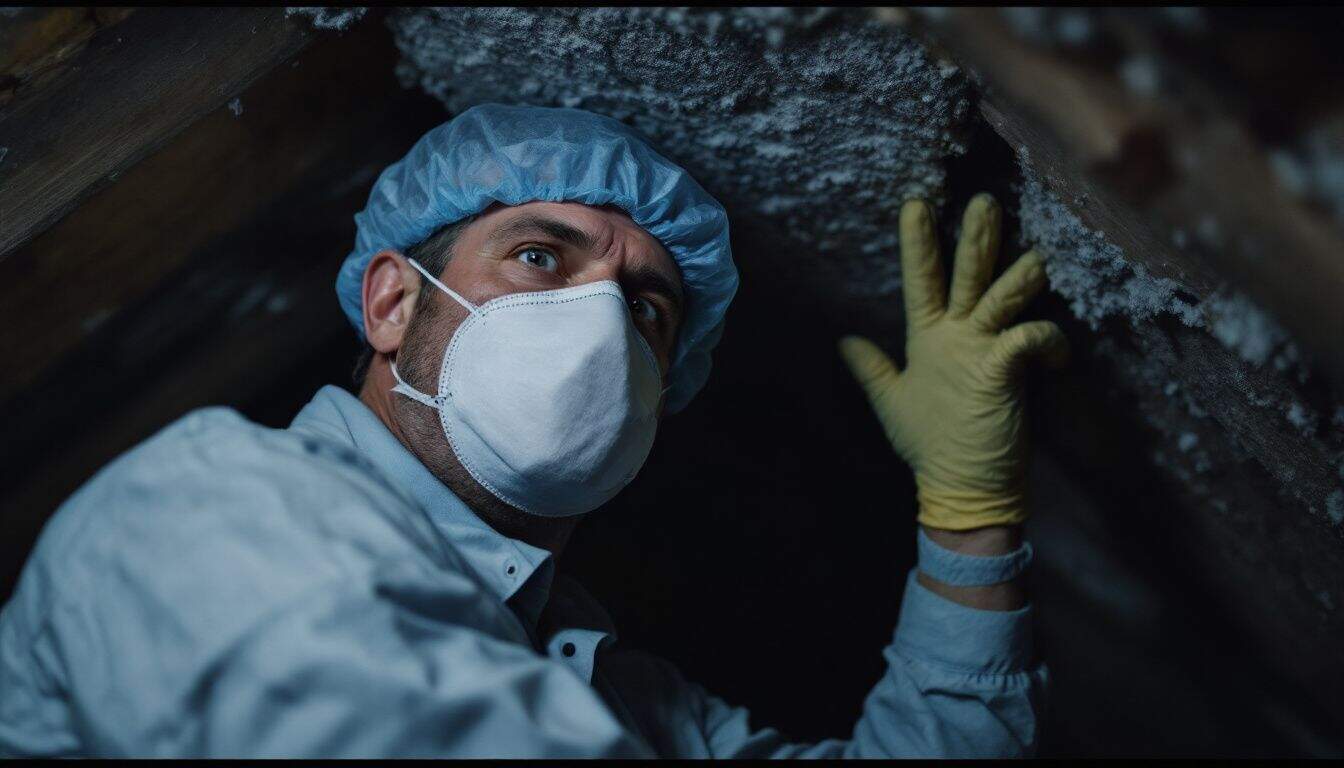
DIY Asbestos Removal: Why It’s Never Worth the Risk
Every year, people across the UK attempt to remove asbestos themselves — and every year, some of them pay for that decision with their health. Safe asbestos removal is not something you can achieve with a dust mask, a pair of rubber gloves, and a YouTube tutorial. The fibres are invisible, the diseases they cause take decades to develop, and by the time symptoms appear, the damage is already done.
If you’ve found what you think might be asbestos in your home or commercial property, this post will explain exactly what you’re dealing with, why DIY is not an option, and what the correct process looks like.
What Makes Asbestos So Dangerous?
Asbestos is a naturally occurring mineral that was widely used in UK construction throughout the 20th century. Its fire resistance and insulating properties made it popular in everything from floor tiles and ceiling panels to pipe lagging and roofing felt. The problem is that when asbestos-containing materials (ACMs) are disturbed, they release microscopic fibres into the air.
Those fibres, once inhaled, become permanently lodged in lung tissue. The body cannot break them down or expel them. Over time — often 20 to 40 years — they cause serious and often fatal diseases.
Asbestos-related diseases
- Mesothelioma — an aggressive cancer of the lining of the lungs or abdomen, almost exclusively caused by asbestos exposure and with a very poor prognosis
- Asbestosis — scarring of the lung tissue that causes progressive breathlessness and has no cure
- Lung cancer — asbestos exposure significantly increases the risk, particularly in smokers
- Pleural thickening — a condition where the lining around the lungs thickens, restricting breathing
Asbestos remains the single largest cause of work-related deaths in the UK. There is no safe level of exposure — even a brief, one-off encounter with disturbed asbestos fibres carries a real risk.
Is DIY Asbestos Removal Legal in the UK?
The Control of Asbestos Regulations sets out clear rules on who can handle asbestos and under what conditions. The short version: most meaningful asbestos work requires a licensed contractor, and attempting it yourself is likely to put you on the wrong side of the law.
The Regulations divide asbestos work into three categories:
- Licensed work — high-risk activities such as removing asbestos insulation, asbestos insulating board (AIB), or working with sprayed asbestos coatings. This must only be carried out by a contractor holding an HSE licence.
- Notifiable non-licensed work (NNLW) — lower-risk tasks that still require notification to the relevant enforcing authority, health surveillance for workers, and proper record-keeping.
- Non-licensed work — the lowest-risk category, covering activities such as working with asbestos cement in good condition, where strict exposure limits are not exceeded.
The vast majority of domestic removal scenarios — stripping old pipe lagging, removing ceiling tiles, taking out floor panels — fall into the licensed or NNLW category. Assuming your project qualifies as non-licensed work without a proper assessment is a serious mistake.
Penalties for non-compliance
Breaching the Control of Asbestos Regulations is a criminal offence. The Health and Safety Executive (HSE) has the power to issue improvement and prohibition notices, pursue prosecutions, and impose substantial fines. For individuals, fines can reach £20,000 in magistrates’ courts, with unlimited fines and custodial sentences possible in crown court proceedings.
Beyond the legal consequences, improper handling creates a contaminated property that is difficult and expensive to remediate — and may need to be declared when selling.
Why Safe Asbestos Removal Requires Professional Expertise
Safe asbestos removal is a technically demanding process. Licensed contractors don’t simply put on a mask and start pulling materials out — they follow a carefully controlled procedure designed to protect workers, building occupants, and the wider environment.
The correct removal process
A licensed asbestos removal contractor will typically follow these steps:
- Pre-removal survey and risk assessment — identifying the type, condition, and extent of ACMs before any work begins
- Preparation of a method statement — a detailed written plan covering how the work will be carried out, what controls will be in place, and how waste will be managed
- Enclosure and containment — sealing off the work area using heavy-duty polythene sheeting, creating an airtight enclosure to prevent fibre migration
- Negative pressure ventilation — using specialist equipment to maintain lower air pressure inside the enclosure than outside, so any air movement is inward rather than outward
- Wetting and controlled removal — dampening ACMs before removal to suppress fibre release, then carefully removing materials with hand tools rather than power tools wherever possible
- Air monitoring — ongoing monitoring throughout the job to ensure fibre levels remain within safe limits
- Decontamination — all workers, tools, and equipment pass through a decontamination unit before leaving the work area
- Clearance inspection — an independent four-stage clearance procedure, including a visual inspection and air testing, before the enclosure is removed
- Licensed waste disposal — all asbestos waste is double-bagged, labelled, and transported to a licensed waste facility
None of these steps are optional. Each one exists because previous experience — often measured in lives — demonstrated what happens when it’s skipped.
The equipment involved
Licensed contractors use equipment that is simply not available to the general public, including:
- Type H HEPA-filtered vacuum cleaners (standard vacuum cleaners spread asbestos fibres rather than capturing them)
- Powered air-purifying respirators (PAPRs) or full-face air-fed respirators
- Disposable Type 5 coveralls changed and disposed of inside the work area
- Negative pressure units with HEPA filtration
- Specialist air monitoring equipment
A dust mask from a hardware shop offers no meaningful protection against asbestos fibres. The fibres are too fine for standard filtration materials to capture effectively.
What About Encapsulation — Is That a Safer Option?
In some circumstances, encapsulation is a legitimate alternative to removal. This involves applying a specialist sealant to the surface of ACMs to bind the fibres and prevent them from becoming airborne. It does not remove the asbestos — it manages it in place.
Encapsulation is appropriate when:
- The ACM is in good condition with no visible damage or deterioration
- The material is unlikely to be disturbed by future maintenance or building work
- Removal would cause more disturbance than leaving the material in place
However, encapsulation is not a DIY job either. It requires a proper assessment of the ACM’s condition, the correct product applied correctly, and documentation for the building’s asbestos register. It also doesn’t eliminate the asbestos — any future work that disturbs the encapsulated material will still require a licensed contractor.
Our dedicated asbestos removal service covers both removal and encapsulation options, with expert guidance on which approach is appropriate for your specific situation.
What to Do If You Suspect Asbestos in Your Property
Finding suspected asbestos is not an emergency — provided you don’t disturb it. Asbestos in good condition, left undisturbed, poses minimal risk. The danger comes from disturbance. So the first rule is: don’t touch it, drill it, sand it, scrape it, or cut it until you know what you’re dealing with.
Step 1: Get a professional survey
An asbestos survey carried out by a qualified surveyor is the only reliable way to identify whether ACMs are present, what type of asbestos they contain, and what condition they’re in. The HSE’s guidance document HSG264 sets out the standards that surveys must meet.
There are two main types of survey:
- Management survey — used to locate and assess ACMs that could be disturbed during normal occupancy and maintenance. Required for all non-domestic premises.
- Refurbishment and demolition survey — required before any refurbishment or demolition work. More intrusive, as it needs to locate all ACMs that could be disturbed by the planned work.
Samples taken during the survey are analysed in a UKAS-accredited laboratory to confirm the presence and type of asbestos fibres.
Step 2: Act on the survey findings
Once you have survey results, a qualified professional can advise on the appropriate management strategy — whether that’s leaving materials in place with monitoring, encapsulation, or full removal. This decision should be based on the condition of the ACM, its location, and the likelihood of future disturbance.
Step 3: Use a licensed contractor for any removal
If removal is required, only use a contractor holding a current HSE asbestos removal licence. You can verify a contractor’s licence status on the HSE’s public register. Don’t be tempted by unlicensed operators offering lower prices — the risk to your health and your legal liability are not worth the saving.
Where Supernova Asbestos Surveys Operates
We carry out asbestos surveys and support safe removal processes across the UK. Whether you’re a homeowner, landlord, property manager, or contractor, our UKAS-accredited surveyors can provide the assessments you need to manage asbestos safely and legally.
We cover major cities and regions nationwide, including dedicated teams for asbestos survey London projects across all London boroughs, asbestos survey Manchester and the wider Greater Manchester area, and asbestos survey Birmingham covering the West Midlands region.
With over 50,000 surveys completed, we have the experience to handle everything from a single domestic property to large commercial portfolios.
Frequently Asked Questions
Is there any asbestos removal that a homeowner can legally do themselves?
In very limited circumstances, non-licensed asbestos work is technically permitted under the Control of Asbestos Regulations — for example, minor work with asbestos cement in good condition that doesn’t exceed strict exposure limits. However, correctly identifying whether your situation qualifies requires professional assessment. The vast majority of domestic removal tasks require a licensed contractor. If in doubt, always get a survey first.
How do I know if a material in my home contains asbestos?
You cannot identify asbestos by sight alone. Many ACMs look identical to non-asbestos materials. The only reliable method is laboratory analysis of a sample taken during a professional asbestos survey. If your property was built or refurbished before 2000, there is a reasonable possibility that some materials contain asbestos, and a management survey is advisable before any building work.
What happens if I accidentally disturb asbestos?
Stop work immediately, leave the area, and close it off to prevent others from entering. Don’t attempt to clean up the debris yourself — a standard vacuum cleaner will spread fibres rather than contain them. Contact a licensed asbestos contractor who can assess the situation, carry out air monitoring, and arrange professional decontamination and clearance testing.
How much does professional asbestos removal cost?
Costs vary significantly depending on the type of asbestos, the quantity of material, its location, and the complexity of the work. Licensed removal of high-risk materials such as asbestos insulation is more expensive than removing asbestos cement sheets. Getting a proper survey first allows contractors to quote accurately. Attempting to save money through DIY removal risks costs far greater than professional fees — both in health terms and in remediation costs if contamination occurs.
Do I need an asbestos survey before renovation work?
Yes. If your property was built before 2000 and you’re planning any refurbishment or demolition work, a refurbishment and demolition survey is a legal requirement for non-domestic premises and strongly recommended for domestic properties. Disturbing hidden ACMs during building work is one of the most common causes of significant asbestos exposure in the UK. A survey before work starts is far cheaper and safer than dealing with the consequences afterwards.
Get Expert Help With Safe Asbestos Removal
Asbestos is not something to gamble with. The consequences of getting it wrong are severe, irreversible, and long-lasting. If you suspect asbestos in your property, or you’re planning work that could disturb existing materials, the right first step is always a professional survey.
Supernova Asbestos Surveys has completed over 50,000 surveys nationwide. Our UKAS-accredited team can identify what’s in your property, advise on the appropriate management strategy, and connect you with licensed contractors for any removal work required.
Call us on 020 4586 0680 or visit asbestos-surveys.org.uk to book a survey or speak to one of our team.