Why Asbestos Equipment Hire Is Never the Right Answer
The idea of asbestos equipment hire for DIY removal might look like a sensible way to cut costs. It is not. In the vast majority of cases, attempting to remove asbestos yourself is a criminal offence under UK law — and the health consequences can be fatal.
If you own or manage a property containing asbestos-containing materials (ACMs), understanding your legal obligations is not optional. Your health, your finances, and potentially your freedom depend on getting this right.
Asbestos fibres are microscopic. Once disturbed, they become airborne and can be inhaled without any immediate sensation or warning. The diseases they cause — mesothelioma, asbestosis, and lung cancer — can take decades to develop. That delay is precisely what makes asbestos so deceptive and so deadly.
What UK Law Actually Says About Asbestos Removal
The Control of Asbestos Regulations sets out clear legal duties for anyone who manages, disturbs, or removes asbestos in the UK. These regulations apply to non-domestic premises and to any contractor or individual carrying out work that could disturb ACMs.
Under these regulations, licensable asbestos work — which covers the vast majority of removal tasks — must only be carried out by a contractor holding a licence issued by the Health and Safety Executive (HSE). This is not a technicality. It is a hard legal requirement, and breaching it can result in criminal prosecution, substantial fines, and in serious cases, imprisonment.
Even for notifiable non-licensed work (NNLW), there are strict requirements around notification, medical surveillance, and record-keeping. The HSE’s guidance document HSG264 makes clear that identifying, managing, and removing asbestos is a task for trained, competent professionals — not DIY enthusiasts armed with rented equipment.
What Counts as Licensable Work?
Most asbestos removal tasks require a licence. This includes:
- Removal of asbestos insulation, asbestos insulating board (AIB), and asbestos coatings
- Any work where the risk of fibre release is high or the exposure time is significant
- Removal of ACMs in poor condition or that are heavily damaged
- Work in confined spaces or areas with limited ventilation
Non-licensed work covers a narrow range of lower-risk tasks — and even these carry strict controls. If you are uncertain which category your situation falls into, the safest and most legally sound step is to commission a professional asbestos survey before any work begins.
The Real Problem With Asbestos Equipment Hire
Some tool hire companies do offer equipment marketed for asbestos-related tasks — negative pressure units, HEPA vacuum cleaners, disposable coveralls. The availability of this equipment does not make DIY asbestos removal legal or safe.
Professional asbestos removal requires far more than the right hardware. It demands trained operatives, site-specific risk assessments, air monitoring during and after the work, correct waste disposal procedures, and — for licensable work — an HSE licence. Renting a HEPA vacuum gives you none of these things.
Equipment Alone Cannot Manage the Risk
Even with respiratory protective equipment (RPE) and disposable coveralls, an untrained person removing asbestos is likely to make critical errors. These include:
- Failing to wet ACMs before disturbing them, which dramatically increases fibre release
- Incorrect donning and doffing of PPE, leading to cross-contamination
- Inadequate enclosure of the work area, allowing fibres to spread throughout the building
- Improper double-bagging and labelling of asbestos waste
- Disposing of asbestos waste at standard household or commercial waste facilities — which is illegal
Each of these errors can result in widespread contamination, exposure to other occupants, and serious legal consequences. The cost of remediation following a botched DIY removal can far exceed the cost of hiring a licensed professional in the first place.
When You Must Call a Licensed Professional
There is no grey area here. If you are dealing with any of the following situations, you need a licensed asbestos removal contractor — not asbestos equipment hire.
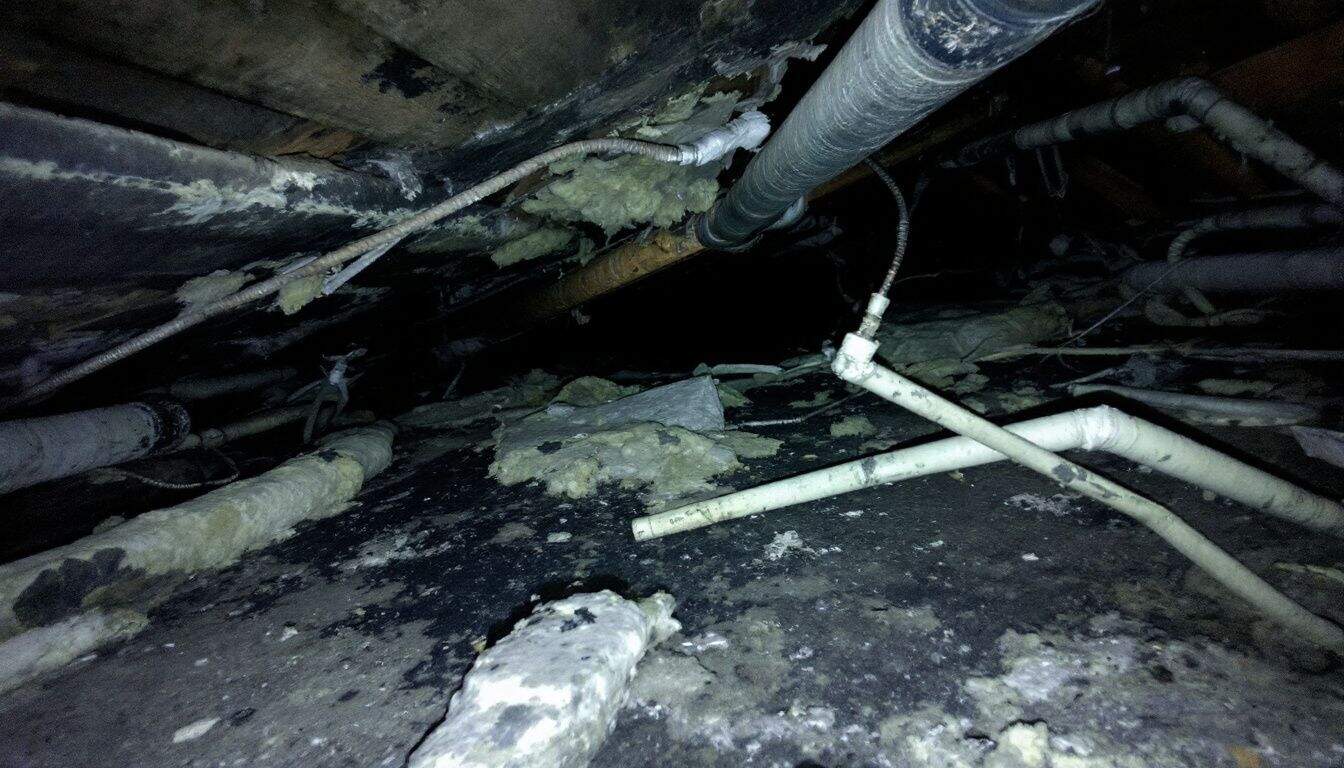
Damaged or deteriorating ACMs. Friable asbestos — material that crumbles easily — releases fibres readily. This includes deteriorating pipe lagging, damaged ceiling tiles, or crumbling spray coatings. Do not touch it.
Pre-demolition or pre-refurbishment work. Before any significant building work, a demolition survey is legally required. Any ACMs identified must be removed by a licensed contractor before work proceeds.
Commercial or industrial properties. The duty to manage asbestos applies to all non-domestic premises. Employers and building managers have a legal duty of care to workers and visitors, and that duty cannot be discharged with hired equipment and good intentions.
Residential properties undergoing renovation. If your home was built before 2000 and you are planning renovation work, there is a real possibility of encountering asbestos. A survey before you start could save your life.
Emergency situations. If ACMs have been accidentally damaged — during a flood, fire, or accidental impact — professional assessment and remediation must happen quickly to prevent ongoing exposure. For property owners in the capital, an asbestos survey London team can mobilise quickly to assess the situation and advise on the correct course of action.
What Professional Asbestos Removal Actually Involves
Understanding what licensed professionals do during an asbestos removal project makes it clear why this work cannot be replicated with hired equipment and good intentions.
Site Assessment and Survey
Before any removal work begins, a thorough survey identifies the location, type, and condition of all ACMs on site. This informs the risk assessment and the method statement — both of which are legal requirements for licensable work.
The survey results determine the correct approach: encapsulation, enclosure, or full removal. Commissioning a management survey for an occupied non-domestic property gives you the baseline information you need to make legally compliant decisions about your building.
Controlled Enclosure and Negative Pressure
Licensed contractors erect a fully sealed enclosure around the work area. A negative pressure unit — a powerful HEPA-filtered air extraction system — maintains lower air pressure inside the enclosure than outside. This means any airborne fibres are drawn inward rather than escaping into the rest of the building.
This level of controlled containment simply cannot be achieved with hired equipment operated by an untrained person. The enclosure must be smoke-tested to verify its integrity before work begins — a step that requires both specialist equipment and the knowledge to interpret the results correctly.
Controlled Removal and Decontamination
Operatives work in full PPE — including powered air-purifying respirators (PAPRs) or appropriate half-face masks with P3 filters, disposable Type 5/6 coveralls, and gloves. ACMs are wetted to suppress fibre release and removed in manageable sections.
All waste is double-bagged in UN-approved asbestos waste sacks, clearly labelled, and stored in a designated waste skip. Decontamination units (DCUs) ensure operatives do not carry fibres out of the enclosure on their clothing or skin. There is no equivalent to this process in any DIY scenario.
Air Monitoring and Clearance Testing
During the work, air monitoring checks that fibre concentrations remain within safe limits. Once removal is complete, a four-stage clearance procedure is followed — including a thorough visual inspection and a final air test carried out by an independent UKAS-accredited analyst.
Only when the air test returns a satisfactory result can the enclosure be dismantled and the area reoccupied. This independent clearance process is a legal requirement for licensable work. No amount of asbestos equipment hire can replicate it.
The Financial Case for Professional Removal
Some property owners are drawn to asbestos equipment hire because they perceive professional removal as prohibitively expensive. This calculation rarely holds up when you examine the full picture.
A botched DIY removal that results in contamination of a building can cost tens of thousands of pounds to remediate — because the entire affected area must be treated as contaminated and decontaminated by licensed professionals. Legal penalties for unlicensed asbestos removal can be severe. And the long-term health costs — to yourself or to others who were exposed — are incalculable.
Professional asbestos removal carried out by a licensed contractor gives you a legally compliant, independently verified result. The cost is an investment in safety and legal protection, not an unnecessary overhead.
Asbestos Surveys: The Essential First Step
Before any removal work is considered, the right starting point is always a professional asbestos survey. A survey tells you exactly what ACMs are present, where they are, what condition they are in, and what risk they pose. Without this information, any decisions about removal are made in the dark.
Supernova Asbestos Surveys has completed over 50,000 surveys across the UK. Our UKAS-accredited surveyors work across all property types — from residential homes and commercial offices to industrial facilities and public buildings.
If you are based in the North West, our asbestos survey Manchester team covers the full Greater Manchester area and surrounding regions. In the Midlands, our asbestos survey Birmingham specialists serve property owners and managers across the city and beyond.
Managing Asbestos Safely: Your Practical Checklist
If you suspect your property contains asbestos, here is what you should do — and what you must avoid.
Do:
- Commission a management survey if you own or manage a non-domestic property
- Commission a refurbishment and demolition survey before any building, renovation, or demolition work
- Keep an asbestos register and management plan updated
- Engage only HSE-licensed contractors for licensable removal work
- Request independent air testing and clearance certificates after removal
- Ensure all asbestos waste is disposed of at a licensed hazardous waste facility
Do Not:
- Attempt to remove ACMs yourself, regardless of what equipment you hire
- Disturb suspected ACMs during renovation without a prior survey
- Assume that because a material looks intact it poses no risk — condition can change rapidly
- Dispose of asbestos waste in standard skips or at household waste centres
- Rely on a contractor who cannot provide evidence of their HSE licence
What to Do If You Accidentally Disturb Asbestos
Accidents happen — especially during renovation work in older buildings. If you suspect you have accidentally disturbed an ACM, the steps you take in the next few minutes matter enormously.
- Stop work immediately and put down any tools
- Leave the area and close any doors behind you to limit the spread of fibres
- Prevent anyone else from entering the area
- Do not attempt to clean up the material yourself
- Contact a licensed asbestos contractor for emergency assessment
- Notify your employer or building manager if applicable
Do not return to the area until it has been assessed and, if necessary, remediated by a licensed professional. The HSE’s guidance is unambiguous on this point: the area must be treated as potentially contaminated until proven otherwise by independent air testing.
Choosing the Right Asbestos Contractor
Not all contractors offering asbestos-related services are equal — and not all are legally permitted to carry out the work they advertise. Before engaging any contractor, verify the following:
- HSE licence: For licensable work, the contractor must hold a current HSE asbestos licence. You can verify this on the HSE’s publicly available register.
- UKAS accreditation: For survey and analytical work, look for UKAS accreditation to ISO 17020 (inspection) or ISO 17025 (testing). This is the recognised standard for competence in asbestos surveying and analysis.
- Insurance: Ensure the contractor holds adequate public liability and professional indemnity insurance for asbestos work specifically.
- Method statements and risk assessments: Any reputable contractor will provide these before work begins. If they cannot or will not, walk away.
- References and track record: Ask for evidence of similar projects completed to a satisfactory standard, including clearance certificates.
Cutting corners on contractor selection is as dangerous as attempting DIY removal. The consequences of engaging an unlicensed or incompetent contractor fall squarely on the property owner or manager who commissioned the work.
The Bottom Line on Asbestos Equipment Hire
Asbestos equipment hire exists. But in the context of asbestos removal, it represents a false economy and a genuine legal and health risk. The equipment available through hire companies is not a substitute for training, accreditation, site-specific risk management, and the independent verification that licensed professional removal provides.
The regulatory framework in the UK is clear. HSG264 and the Control of Asbestos Regulations exist to protect workers, building occupants, and the wider public from a substance that has caused and continues to cause serious harm. Those regulations do not make allowances for DIY approaches, however well-intentioned.
If you manage a property and asbestos is a concern, the right first step is a professional survey — not a trip to a tool hire company. Get the facts about what is in your building, understand your legal obligations, and engage qualified professionals to manage the risk properly.
Frequently Asked Questions
Can I legally hire asbestos equipment and remove asbestos myself?
In most cases, no. The Control of Asbestos Regulations requires that licensable asbestos work — which covers the majority of removal tasks — is carried out only by contractors holding a current HSE asbestos licence. Attempting to carry out licensable work without a licence is a criminal offence, regardless of what equipment you use. Even for lower-risk non-licensed work, strict controls apply. A professional survey is always the correct first step before any removal is considered.
What equipment do licensed asbestos contractors use that I cannot hire?
Licensed contractors use a combination of specialist equipment and trained expertise that cannot be replicated through hire. This includes fully sealed negative pressure enclosures, smoke-tested to verify integrity; powered air-purifying respirators calibrated and fit-tested for individual operatives; decontamination units for safe exit from the work area; and UKAS-accredited air monitoring equipment. Beyond the hardware, contractors bring trained operatives, site-specific method statements, legal waste disposal arrangements, and the ability to obtain independent clearance certification. None of this is available through equipment hire alone.
How much does professional asbestos removal cost compared to DIY?
Professional asbestos removal costs vary depending on the type, quantity, and location of the ACMs, as well as the complexity of the work. However, the true cost comparison must account for the potential consequences of DIY removal: remediation of a contaminated building can run to tens of thousands of pounds, legal penalties for unlicensed work can be severe, and the long-term health costs of asbestos exposure are incalculable. Professional removal by a licensed contractor provides a legally compliant, independently verified outcome — which represents genuine value, not an unnecessary expense.
Do I need an asbestos survey before removal work begins?
Yes. A survey is the essential first step before any removal work is considered. For occupied non-domestic properties, a management survey establishes what ACMs are present, their condition, and the risk they pose. Before any refurbishment or demolition work, a refurbishment and demolition survey is a legal requirement under the Control of Asbestos Regulations. Without survey data, any decisions about removal are made without the information needed to manage the risk safely or comply with the law.
What should I do if I discover asbestos during renovation work?
Stop work immediately. Leave the area, close doors to limit fibre spread, and prevent anyone else from entering. Do not attempt to clean up or remove the material yourself. Contact a licensed asbestos contractor for an emergency assessment. The area should be treated as potentially contaminated until it has been independently assessed and, if necessary, remediated. Only when a UKAS-accredited analyst has confirmed the area is clear through air testing should work resume.
Speak to Supernova Asbestos Surveys Today
Supernova Asbestos Surveys is the UK’s leading asbestos surveying company, with over 50,000 surveys completed nationwide. Our UKAS-accredited surveyors provide management surveys, refurbishment and demolition surveys, and expert guidance on asbestos management across all property types.
If you are concerned about asbestos in your property — whether you are planning renovation work, managing a commercial building, or dealing with an emergency situation — the right step is a professional survey, not asbestos equipment hire.
Call us today on 020 4586 0680 or visit asbestos-surveys.org.uk to book a survey or speak to one of our specialists. We cover the whole of the UK, with dedicated teams serving London, Manchester, Birmingham, and beyond.