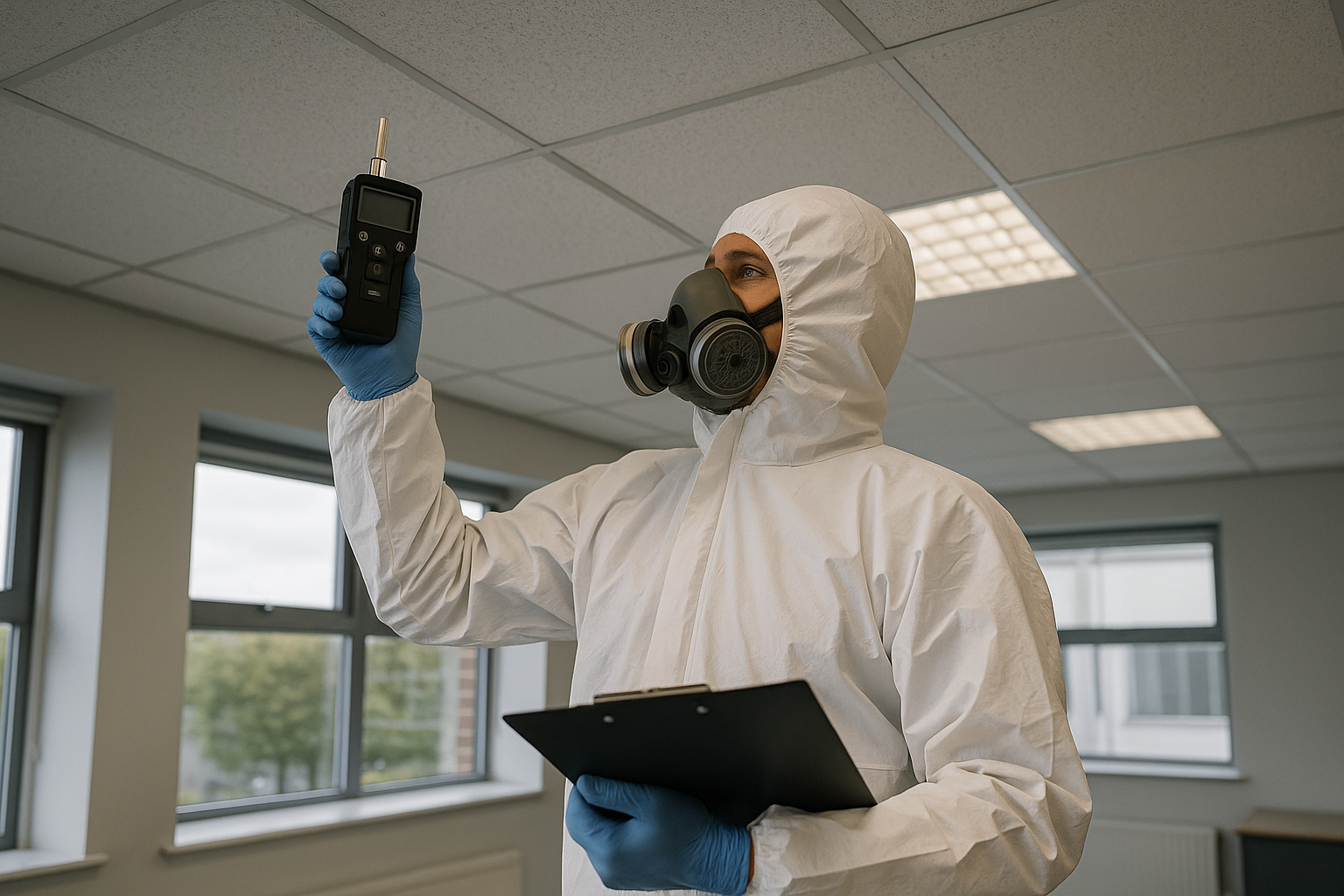
A missing or outdated asbestos report for commercial property can slow a sale, disrupt maintenance and leave the dutyholder exposed when questions start coming from tenants, contractors, solicitors or the HSE. In commercial buildings, asbestos is rarely the surprise. The real problem is not having reliable information about where it is, what condition it is in and what needs to happen next.
That matters whether you manage one office, a retail parade, an industrial unit or a national portfolio. A proper asbestos report for commercial property is not just paperwork for a file. It supports your asbestos register, informs your management plan and helps show that the premises are being managed in line with the Control of Asbestos Regulations, HSG264 and wider HSE guidance.
What an asbestos report for commercial property should actually tell you
An asbestos report for commercial property records the findings of a survey and turns them into practical instructions. It should identify asbestos containing materials, or materials presumed to contain asbestos, and explain their location, extent, condition and risk of disturbance.
A good report does more than list materials. It helps a property manager decide what to do on site, what to tell contractors and whether the current arrangements are enough for compliance.
What should be included in the report
- Locations of suspected or confirmed asbestos containing materials
- Description of each material and any surface treatment
- Assessment of condition, damage and accessibility
- Extent of the material, where visible
- Risk of disturbance during occupation, maintenance or planned works
- Recommendations for management, repair, encapsulation, monitoring or removal
- Photographs, plans or clear location references
- Sampling results where materials have been analysed
If the premises are occupied and the aim is to manage asbestos during normal use, the starting point is often a management survey. That survey is designed to locate, as far as reasonably practicable, the presence and extent of asbestos containing materials that could be disturbed during routine occupation and maintenance.
If the wording is vague, the plans are unclear or the recommendations do not match the way the building is actually used, the report may not be enough for due diligence or day-to-day control. A useful asbestos report should be easy for a site team, managing agent or contractor to follow without guesswork.
Is an asbestos report for commercial property legally required when selling?
There is no separate rule saying every commercial sale must automatically include a brand-new asbestos report for commercial property. That catches many sellers out. The legal issue sits within the duty to manage asbestos in non-domestic premises under the Control of Asbestos Regulations, not the sale process itself.
If you remain responsible for maintenance or repair while the property is being marketed, you may still be the dutyholder. That means you must take reasonable steps to find out whether asbestos is present, assess the risk and manage it properly.
So while a sale does not always create a stand-alone duty to commission a fresh survey, current asbestos information is often essential in practice. Buyers, lenders and solicitors regularly ask for it during due diligence, and missing records can create immediate delays.
Why transactions stall without proper asbestos information
- Buyers cannot assess future management or removal liabilities
- Solicitors raise additional enquiries
- Lenders and insurers may want clearer evidence of risk control
- Planned fit-out or refurbishment cannot be scoped properly
- The buyer may assume the worst and renegotiate the price
If you already hold a valid asbestos report for commercial property, together with the asbestos register and management records, disclose them early. If the records are old, incomplete or clearly no longer reflect the building, deal with that before legal enquiries begin.
Who is responsible for asbestos in a commercial property?
This is one of the most common areas of confusion. Responsibility usually sits with the dutyholder, but that does not always mean the owner alone. In commercial property, the duty to manage can fall on the landlord, freeholder, tenant, managing agent or another party with responsibility for maintenance and repair.
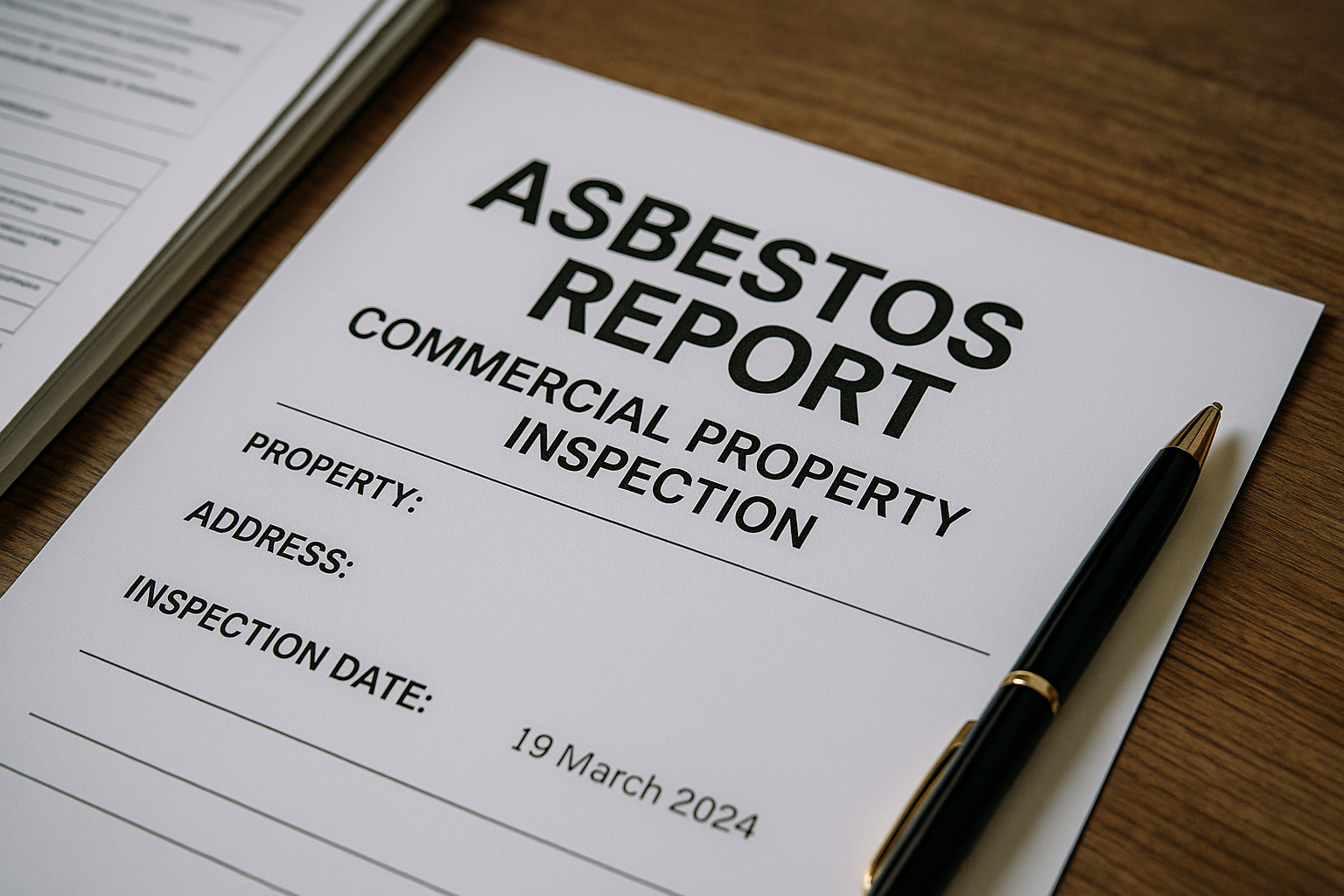
The answer depends on the lease, occupational agreement and actual management arrangements. Job title is not enough. You need to look at who controls access, who arranges repairs and who has obligations for the relevant parts of the premises.
Typical responsibility split
- Freeholder or landlord: often responsible for common parts, retained structure, plant rooms, risers and shared services
- Tenant: may be responsible for asbestos within the demised premises if the lease places repair obligations on them
- Managing agent: may coordinate compliance on behalf of the owner, but only within the authority granted
- Employer in occupation: may still have health and safety duties towards staff and contractors even where ownership sits elsewhere
In multi-let buildings, responsibility is often split between landlord-controlled common parts and tenant-controlled units. If you are preparing to sell, refinance or carry out works, settle this point early. A request for an asbestos report for commercial property becomes much harder to deal with when nobody is sure who should provide it.
What buyers, sellers and property managers should ask for
If you are involved in a transaction or taking over management, do not ask only whether an asbestos survey exists. Ask whether the records are current, whether they reflect the present layout and whether any changes have been made to the building since the survey was completed.
A report can be genuine and still be of limited use. If walls have moved, plant has been replaced or voids have been opened since the inspection, the information may no longer support safe management.
Key documents to request
- The latest asbestos survey report
- The asbestos register
- The asbestos management plan
- Records of any remedial works, encapsulation or removal
- Previous air monitoring or clearance paperwork, where relevant
- Recent inspection notes for known asbestos containing materials
- Any contractor communication procedures or permit controls linked to asbestos
Where asbestos has already been identified, condition should be reviewed periodically. If you need to confirm whether known materials remain in the same state, a re-inspection survey is often the practical next step.
How to obtain or update an asbestos report for commercial property
If your records are missing, outdated or too vague to rely on, act before the issue becomes urgent. Leaving it until a buyer’s solicitor, insurer or contractor asks for an asbestos report for commercial property usually means more pressure, tighter timescales and less room to plan access properly.
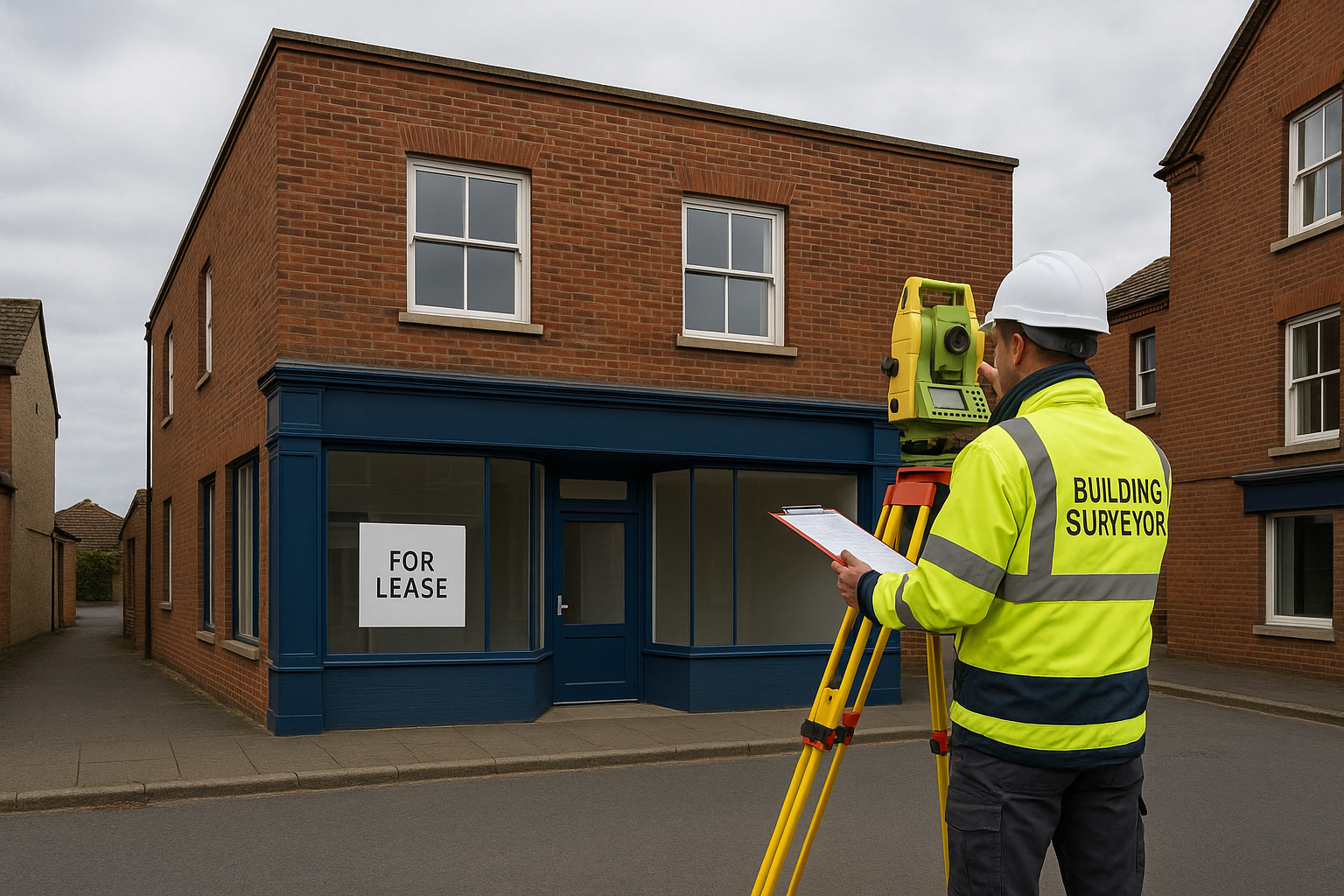
The right approach depends on the building’s use, whether it is occupied and whether intrusive works are planned. In most cases, the process is straightforward when handled early.
1. Check existing records first
Start with what you already have. Previous surveys, old asbestos registers, operation and maintenance manuals, removal paperwork and maintenance files can all help build the picture.
This matters for two reasons. First, you may already have enough information to update records rather than start again. Second, giving the surveyor historic information can improve the quality and efficiency of the new inspection.
2. Confirm the building’s current use and future plans
An occupied office with routine maintenance needs a different survey scope from a vacant warehouse being stripped out. The survey type must match the purpose.
If the premises are in normal use and the aim is day-to-day management, a management survey is usually suitable. If intrusive refurbishment or structural alteration is planned, you need a more intrusive survey of the affected areas before work starts.
3. Identify suspect materials properly
You cannot manage what you have not identified. The survey should inspect accessible areas and record suspect materials clearly, with enough detail to support on-site management.
Common asbestos containing materials in commercial premises include:
- Asbestos insulation board in partitions, risers and ceiling voids
- Pipe insulation and thermal lagging
- Sprayed coatings
- Vinyl floor tiles and bitumen adhesive
- Cement sheets, soffits, gutters and roof products
- Textured coatings
- Gaskets, rope seals and plant insulation products
Where a material needs laboratory confirmation, targeted sample analysis can establish whether asbestos is present and help remove uncertainty before decisions are made.
4. Assess the risk of disturbance
The condition of the material is only part of the picture. You also need to consider how likely it is to be disturbed by occupiers, contractors or planned works.
A cement panel in a locked external store does not present the same practical risk as damaged insulation board beside a frequently accessed service route. A usable asbestos report for commercial property should reflect those real-world differences.
Practical risk assessment should consider:
- Who uses the area
- How often access is needed
- Whether contractors work nearby
- The condition and friability of the material
- Whether maintenance, fit-out or refurbishment is planned
5. Decide on management, repair or removal
Not every asbestos containing material needs immediate removal. In many cases, the safest approach is to leave it in place and manage it properly, provided it is in good condition and unlikely to be disturbed.
Possible actions include:
- Manage in place: record it, monitor it and control access or work around it
- Encapsulate: seal or protect the surface to reduce the risk of fibre release
- Repair: address minor damage where safe and suitable
- Remove: where condition, location or planned works make ongoing management unsuitable
The report should help you choose the right route. If the property is about to be reconfigured or stripped back, management alone may not be enough.
When a management survey is not enough
One of the most common mistakes in commercial property is relying on a management survey when intrusive works are planned. A management survey is for normal occupation and routine maintenance. It is not designed to locate all asbestos that could be disturbed during major building work.
If refurbishment, strip-out or demolition is proposed, the affected areas must be surveyed to a more intrusive level before work begins. This is essential for contractor safety, project planning and legal compliance.
Refurbishment and demolition works
Where the scope of work involves opening up walls, ceilings, floors, ducts or service voids, the survey must access those areas. If the building is due to be demolished, all areas should be inspected as far as reasonably practicable so asbestos can be identified and dealt with before demolition starts.
For full strip-out or takedown projects, a demolition survey is the correct option. This type of survey is intrusive by design and should be planned around vacancy, isolation of services and safe access arrangements.
How often should an asbestos report be reviewed or updated?
An asbestos report for commercial property is not something you commission once and forget. If asbestos containing materials remain in the building, their condition should be monitored and the records kept current.
There is no single review period that suits every building. The right interval depends on the materials present, their condition, the level of activity in the area and the likelihood of disturbance.
What matters is that inspections are regular enough to support effective management and that records are updated when circumstances change.
Update the records when any of these happen
- The condition of a known material changes
- Damage is reported by staff or contractors
- Refurbishment or maintenance exposes hidden areas
- Part of the building is altered, reconfigured or extended
- Asbestos has been removed, sealed or repaired
- The existing report is too old or too unclear to rely on
If you manage a portfolio, set a clear internal process for reviewing asbestos records after works, tenant changes and contractor reports. That is often where gaps appear.
What can affect the cost of updating asbestos records?
The cost of updating an asbestos report for commercial property depends on the scope of work, not just the size of the building. A small but complex site with multiple plant areas, restricted access and poor historic records can require more time than a larger but simple layout.
Trying to estimate cost without defining the purpose of the survey usually leads to confusion. The first question should always be: what decision do you need the report to support?
Factors that commonly affect cost
- Type of survey required
- Size and layout of the premises
- Number of floors, units or separate access points
- Whether the building is occupied
- Need for out-of-hours access
- Extent of sampling required
- Availability of existing records and plans
- Whether intrusive inspection is needed
- Travel and logistics for multi-site instructions
For example, updating records after minor changes in an occupied office may be relatively straightforward. By contrast, obtaining a new asbestos report for commercial property for a vacant industrial site ahead of strip-out may involve intrusive access, more sampling and more detailed planning.
The cheapest option is not always the most economical. If a survey is too limited for the work you intend to do, you may end up paying twice and delaying the programme.
Practical advice for property managers handling asbestos information
Good asbestos management is mostly about systems. Even a well-prepared asbestos report for commercial property loses value if nobody can find it, interpret it or pass the information to the right people.
If you are responsible for a commercial building or portfolio, a few practical controls make a big difference.
Best practice steps
- Keep the latest survey, register and management plan together. Do not split them across different systems or filing locations.
- Make asbestos information available to contractors before work starts. Waiting until they arrive on site is too late.
- Review records after any works. Even small alterations can affect the accuracy of the register.
- Train site teams on escalation. They should know what to do if damage is found or a suspect material is exposed.
- Use clear location references. Photos, marked plans and room references reduce mistakes.
- Record actions taken. If materials are repaired, encapsulated or removed, update the file straight away.
Where several parties are involved, nominate one person to control the asbestos information flow. That can be the difference between an orderly process and repeated confusion.
Common mistakes that create compliance and transaction problems
Most asbestos issues in commercial property do not start with the material itself. They start with poor records, unclear responsibility or the wrong survey for the job.
These are the mistakes we see causing the most disruption:
- Assuming an old survey still reflects the current building layout
- Relying on a management survey for intrusive refurbishment works
- Failing to share asbestos information with contractors
- Keeping a survey report but no live asbestos register or management plan
- Not clarifying whether the landlord or tenant is the dutyholder for specific areas
- Leaving updates until a sale, lease event or fit-out deadline is already under pressure
- Using reports with unclear plans or vague recommendations
If you avoid those mistakes, an asbestos report for commercial property becomes a useful management tool rather than a last-minute problem.
Local support for commercial properties across the UK
Access, building type and local logistics can all affect how quickly asbestos information is gathered and updated. If you manage premises in the capital, our asbestos survey London service supports offices, retail units, schools, industrial sites and mixed-use buildings across the city.
For northern portfolios and single-site instructions alike, our asbestos survey Manchester team helps commercial clients obtain the right survey for occupation, maintenance and planned works.
In the Midlands, our asbestos survey Birmingham service supports landlords, agents and business owners who need clear reporting and fast turnaround for compliance or transactions.
Frequently Asked Questions
Does every commercial building need an asbestos report?
Not every building needs a brand-new report at all times, but non-domestic premises built when asbestos was commonly used often need asbestos information to support the duty to manage. If you are responsible for maintenance or repair, you should have suitable information about asbestos risks in the premises.
Can I rely on an old asbestos report for commercial property?
Only if it still reflects the building and remains suitable for the purpose. If the layout has changed, works have been carried out or the condition of known materials may have altered, the records should be reviewed and updated.
What is the difference between a management survey and a demolition survey?
A management survey is used for normal occupation and routine maintenance. A demolition survey is intrusive and designed to identify asbestos before full strip-out or demolition so materials can be dealt with safely before work starts.
Do all asbestos materials need to be removed from commercial property?
No. If asbestos containing materials are in good condition and unlikely to be disturbed, they can often be managed in place. Removal is usually considered where materials are damaged, higher risk or likely to be affected by planned works.
How quickly should I update asbestos records after building works?
As soon as reasonably practicable. If removal, repair, encapsulation or alterations have changed the asbestos picture, the register and supporting records should be updated promptly so future maintenance and contractor access are based on accurate information.
Need a clear asbestos report for commercial property?
If your records are missing, outdated or no longer fit the building, Supernova Asbestos Surveys can help. We carry out surveys nationwide for landlords, managing agents, tenants and commercial property owners, with clear reporting that supports compliance, transactions and planned works.
Call 020 4586 0680 or visit asbestos-surveys.org.uk to arrange the right survey for your property.