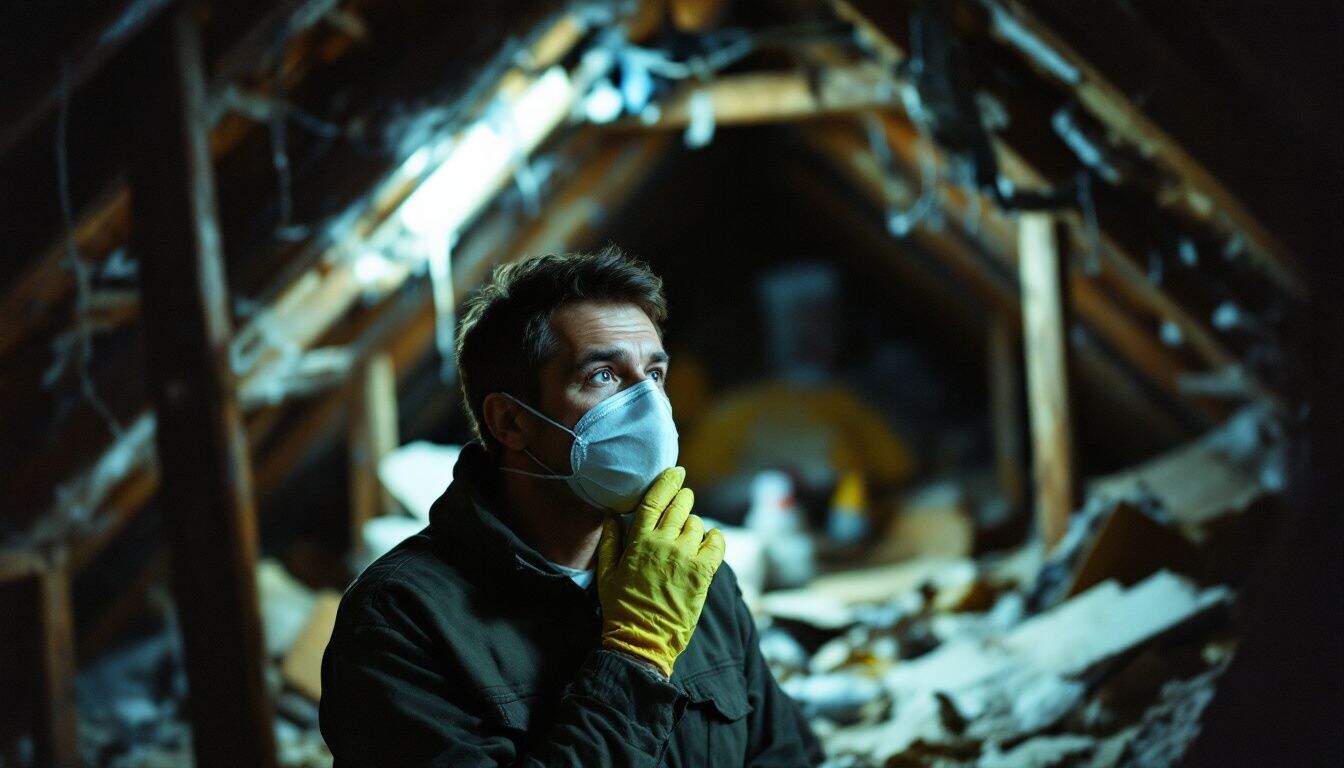
Is It Illegal to Remove Asbestos Yourself? What UK Law Actually Says
Asbestos is still hiding in millions of UK properties, and every year homeowners make the costly mistake of trying to deal with it themselves. So, is it illegal to remove asbestos yourself? The short answer is: in most cases, yes — and the consequences of getting it wrong go far beyond a fine.
Whether you’ve found suspicious material during a renovation or you’re simply trying to cut costs, understanding the legal framework around asbestos removal could protect your health, your wallet, and your freedom from prosecution.
Why Asbestos Is Still Such a Live Issue in the UK
The UK banned the import, supply, and use of all asbestos in 1999. But that ban didn’t make existing asbestos disappear. Any building constructed or refurbished before 2000 may still contain asbestos-containing materials (ACMs) — and there are tens of millions of such properties across the country.
Asbestos was used extensively in construction because it’s cheap, fire-resistant, and durable. You’ll find it in:
- Ceiling tiles and textured coatings (including Artex)
- Floor tiles and the adhesive beneath them
- Pipe lagging and boiler insulation
- Roof sheeting and guttering
- Partition walls and ceiling panels
- Insulating boards around heating systems
When these materials are disturbed — during drilling, sanding, cutting, or demolition — they release microscopic fibres into the air. Those fibres are what cause the damage.
Is It Illegal to Remove Asbestos Yourself? Understanding the Law
The Control of Asbestos Regulations is the primary legislation governing how asbestos must be managed, handled, and removed in the UK. These regulations divide asbestos removal work into three categories, and the rules differ significantly depending on which category applies.
Licensed Work
The most hazardous types of asbestos removal — particularly those involving sprayed coatings, asbestos insulation, and asbestos insulating board (AIB) — must only be carried out by a contractor holding a licence issued by the Health and Safety Executive (HSE). This is non-negotiable.
If you attempt licensed asbestos removal without the appropriate HSE licence, you are breaking the law. Full stop.
Notifiable Non-Licensed Work (NNLW)
Some lower-risk asbestos work doesn’t require a full HSE licence but must still be notified to the relevant enforcing authority before it begins. Workers carrying out NNLW must have appropriate training, and medical surveillance records must be maintained.
Non-Licensed Work
A narrow category of work — involving materials in very good condition that release minimal fibres — can be carried out without a licence or notification. However, this still requires a proper risk assessment, appropriate PPE, and safe disposal of waste.
It does not mean a homeowner can simply rip out materials with no preparation. The critical point here is that correctly identifying which category your situation falls into requires professional expertise. Misidentifying ACMs is extremely common and extremely dangerous.
What About Homeowners? Is DIY Asbestos Removal Ever Legal?
This is where many people get confused. The Control of Asbestos Regulations technically applies to work activities rather than private domestic settings. In theory, a homeowner working on their own home is not subject to the same obligations as an employer or contractor.
However, this does not mean DIY asbestos removal is safe, advisable, or without legal risk. Here’s why:
- You cannot legally hire unlicensed workers to remove licensed asbestos materials from your home — even if you supervise them yourself.
- Fly-tipping asbestos waste is a criminal offence under the Environmental Protection Act, with prosecutions and significant fines.
- If you disturb asbestos and it affects neighbours or other occupants, you could face civil liability and even prosecution under health and safety legislation.
- Most local authorities have bylaws and enforcement powers that apply to residential asbestos removal.
- Asbestos waste cannot go into your standard household bins — it requires specialist licensed waste carriers.
In practice, even where the law technically permits a homeowner to carry out minor non-licensed work on their own property, doing so safely requires training, specialist PPE, and proper waste disposal — resources that most homeowners simply don’t have.
The Health Risks Are Not Theoretical
Asbestos-related diseases kill more people in the UK each year than road accidents. The fibres released during disturbance are invisible to the naked eye, odourless, and can remain suspended in the air for hours. Once inhaled, they lodge permanently in the lung tissue.
The diseases caused by asbestos exposure include:
- Mesothelioma — a terminal cancer of the lining of the lungs or abdomen, almost exclusively caused by asbestos exposure
- Asbestos-related lung cancer — particularly prevalent in those who also smoked
- Asbestosis — scarring of the lung tissue that causes progressive and irreversible breathing difficulties
- Pleural thickening — stiffening of the membrane surrounding the lungs, which restricts breathing capacity
These diseases have a latency period of between 15 and 60 years. That means you won’t know you’ve been harmed until decades after the exposure. By then, it is too late to reverse the damage.
Common DIY Mistakes That Make Things Worse
Homeowners attempting to remove asbestos without training frequently make the situation significantly worse. The act of removal itself — done incorrectly — can turn a manageable problem into a serious contamination event affecting the entire property.
Common mistakes include:
- Using power tools such as angle grinders, drills, and sanders that generate high volumes of airborne fibres
- Using a standard vacuum cleaner, which passes fibres straight through the filter and back into the air
- Breaking materials rather than carefully removing them intact
- Failing to wet materials before removal, which helps suppress fibre release
- Not sealing the work area, allowing fibres to spread throughout the property
- Bagging waste incorrectly or disposing of it in general waste
Licensed professionals use HEPA-filtered negative pressure units, full-face respiratory protective equipment, disposable Type 5 coveralls, and wet suppression techniques. They also carry out air monitoring during and after removal to confirm the area is safe before it’s reoccupied.
Penalties for Unlicensed Asbestos Removal
The HSE takes asbestos enforcement seriously, and the penalties for non-compliance reflect that. Contractors and individuals who carry out unlicensed removal of licensable materials can face:
- Unlimited fines in the Crown Court
- Fines of up to £20,000 in Magistrates’ Court
- Custodial sentences in serious cases
- Improvement notices and prohibition notices stopping all work on site
- Prosecution under both the Control of Asbestos Regulations and the Health and Safety at Work etc. Act
Local councils also have enforcement powers, particularly in residential settings. And if asbestos waste is fly-tipped or incorrectly disposed of, the Environment Agency can pursue separate criminal proceedings.
If you sell a property where asbestos removal was carried out improperly, you may also face claims from future owners — particularly if the work created contamination that wasn’t disclosed.
The Duty to Manage: What Commercial Property Owners Must Do
For non-domestic premises, the Control of Asbestos Regulations places a clear legal duty on those who manage buildings to identify, assess, and manage any ACMs present. This is commonly referred to as the ‘duty to manage’.
Duty holders — which includes landlords, employers, and facilities managers — must:
- Commission a suitable asbestos management survey of the premises
- Produce a written asbestos management plan detailing how ACMs will be monitored and managed
- Ensure all ACMs are regularly monitored for condition
- Share asbestos information with anyone who may disturb the materials — contractors, maintenance workers, and tradespeople
- Arrange for licensed removal where ACMs are deteriorating or will be disturbed by planned work
Failure to fulfil the duty to manage is a criminal offence. The HSE has prosecuted duty holders who failed to commission surveys, failed to maintain management plans, or allowed contractors to work on sites without informing them of known ACMs.
What to Do If You Suspect Asbestos in Your Property
If you think a material in your property may contain asbestos, the first and most important rule is: don’t disturb it. Asbestos that is in good condition and left undisturbed poses minimal risk. The danger comes from disturbance.
Here’s what you should do instead:
- Stop any work in the area immediately if you’ve already started disturbing the material
- Commission a management survey from a UKAS-accredited surveying company before any further work takes place
- Get a sample analysed in a UKAS-accredited laboratory if you need confirmation of whether a material contains asbestos
- Follow the surveyor’s recommendations — which may be to leave the material in place, encapsulate it, or arrange licensed removal
- Only use licensed contractors for any removal work involving licensable materials
If you’re based in London, our team provides a full asbestos survey London service, covering both management surveys and refurbishment and demolition surveys across all London boroughs.
For clients in the North West, our asbestos survey Manchester service delivers the same accredited standard of surveying across Greater Manchester and the surrounding region.
And for the Midlands, our asbestos survey Birmingham team is on hand to assess commercial and residential properties across the city and beyond.
When Is Asbestos Removal Actually Necessary?
Not all asbestos needs to be removed. In many cases, the safest option is to leave ACMs in place and manage them — provided they’re in good condition and won’t be disturbed. Removal itself creates risk if not done correctly, which is why HSE guidance acknowledges that management in situ is often preferable.
Removal becomes necessary when:
- The material is deteriorating and can no longer be safely managed in place
- Planned refurbishment or demolition work will disturb the material — in which case a demolition survey is legally required before work begins
- The material has already been damaged and fibres may have been released
- The duty holder or property owner decides removal is the most practical long-term solution
When removal is required, always use a licensed contractor. Our asbestos removal service is carried out by fully licensed operatives in accordance with HSE guidance and the Control of Asbestos Regulations, using safe working methods and proper waste disposal throughout.
How to Choose a Licensed Asbestos Removal Contractor
Not all asbestos contractors are equal. When selecting a company to carry out removal work, check the following:
- HSE licence — verify the contractor holds a current asbestos removal licence via the HSE’s online register
- UKAS accreditation — for surveying and testing work, look for accreditation from the United Kingdom Accreditation Service
- Experience and references — ask for examples of similar projects and client references
- Air monitoring — confirm that independent air monitoring will be carried out during and after removal
- Waste disposal documentation — the contractor should provide a waste transfer note confirming correct disposal at a licensed facility
- Insurance — ensure the contractor carries adequate public liability and employer’s liability insurance
Be wary of any contractor who offers asbestos removal at a price that seems too good to be true, or who cannot produce a valid HSE licence on request. Cutting corners on asbestos is never worth the risk — to health, to finances, or to your legal standing.
The Bottom Line on DIY Asbestos Removal
The question of whether it is illegal to remove asbestos yourself doesn’t have a single yes-or-no answer — it depends on the type of material, the condition it’s in, and the nature of the work involved. But in the vast majority of real-world situations, the answer is yes, it is illegal, and even where it technically isn’t, it is almost always unsafe and inadvisable.
The legal framework exists for good reason. Asbestos-related diseases are devastating, irreversible, and fatal. The only sensible approach is to have suspected materials professionally surveyed, assessed, and — where necessary — removed by licensed specialists who have the training, equipment, and legal authority to do the job safely.
At Supernova Asbestos Surveys, we’ve completed over 50,000 surveys nationwide and work with homeowners, landlords, facilities managers, and contractors across the UK. Whether you need a management survey, a refurbishment survey, or a full licensed removal, our team is ready to help.
Call us on 020 4586 0680 or visit asbestos-surveys.org.uk to book your survey or speak to one of our specialists today.
Frequently Asked Questions
Is it illegal to remove asbestos yourself in the UK?
For most types of asbestos — particularly sprayed coatings, asbestos insulation, and asbestos insulating board — yes, removal without an HSE licence is illegal. Even for lower-risk materials that fall outside the licensed work category, safe removal still requires proper risk assessment, specialist PPE, and correct waste disposal. In practice, DIY removal is almost never advisable and carries serious legal and health risks.
Can a homeowner remove asbestos from their own property?
The Control of Asbestos Regulations primarily applies to work activities rather than private domestic settings, so homeowners are not subject to exactly the same obligations as employers or contractors. However, this does not mean DIY removal is legal in all circumstances or safe in any. Fly-tipping asbestos waste is a criminal offence, and disturbing asbestos that affects neighbours or other occupants can lead to prosecution. The safest and most legally secure approach is always to use a licensed professional.
What happens if you illegally remove asbestos?
Penalties for unlicensed removal of licensable asbestos materials include unlimited fines in the Crown Court, fines of up to £20,000 in Magistrates’ Court, and custodial sentences in serious cases. The HSE and local councils both have enforcement powers, and the Environment Agency can pursue separate proceedings if asbestos waste is incorrectly disposed of. There may also be civil liability if the work affects other people or future property owners.
How do I know if a material contains asbestos?
You cannot tell whether a material contains asbestos by looking at it. The only way to confirm the presence of asbestos is to have a sample analysed by a UKAS-accredited laboratory. Before any analysis takes place, a qualified surveyor should inspect the property and identify materials that may be ACMs. Do not attempt to take samples yourself without proper training and PPE — the sampling process itself can release fibres if done incorrectly.
Do I need a survey before having asbestos removed?
Yes. Before any refurbishment or demolition work that may disturb asbestos, a refurbishment and demolition survey is a legal requirement for non-domestic premises and strongly recommended for residential properties. For ongoing management of known or suspected ACMs in commercial buildings, a management survey is required under the duty to manage provisions of the Control of Asbestos Regulations. A survey ensures the correct materials are identified, the correct removal category is applied, and the work is carried out safely and legally.