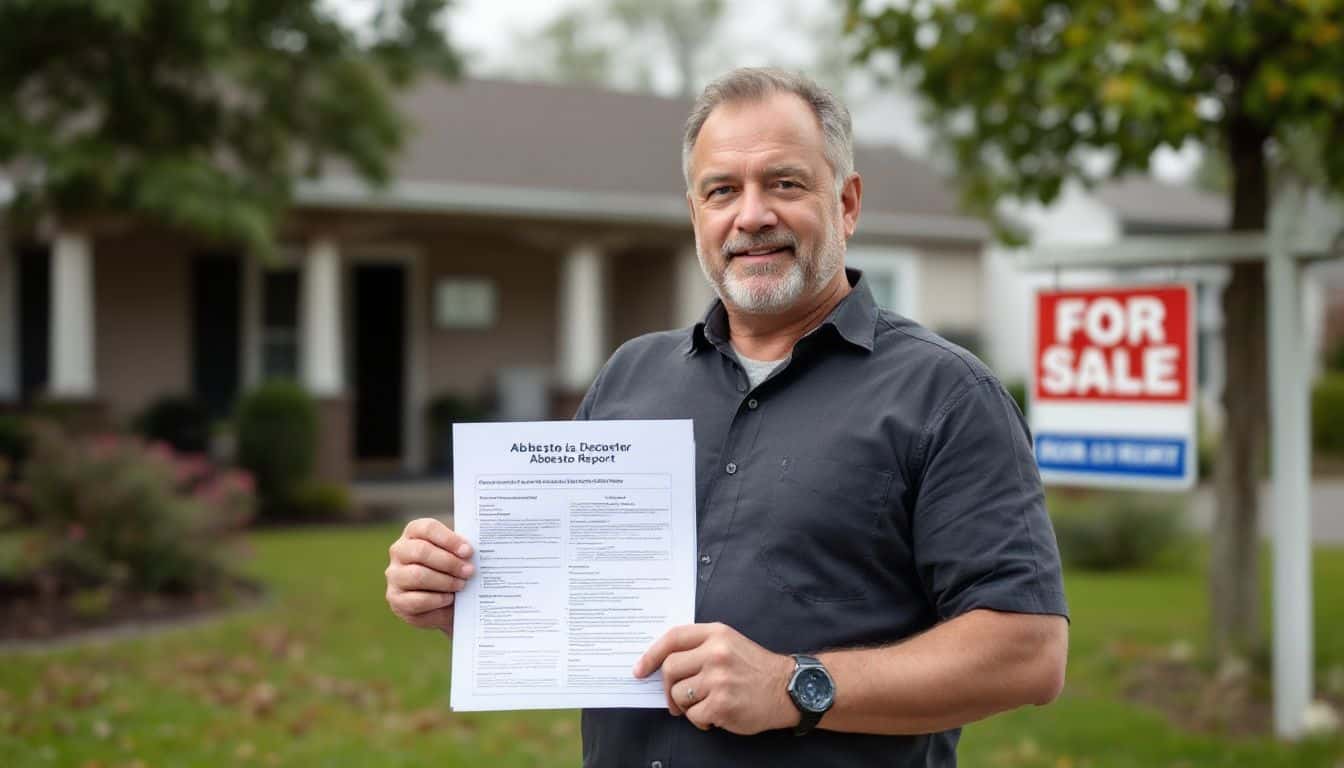
Does Asbestos Affect the Value of Your Property? What Every Owner Needs to Know
Asbestos and property value are inextricably linked — and not always in the way owners expect. Whether you’re preparing to sell, managing a commercial building, or protecting a long-term investment, the question of whether asbestos affects the value of your property will need answering before a buyer, surveyor, or lender answers it for you.
The short answer is yes, it can — but how much, and in which direction, depends almost entirely on how the asbestos is managed and documented.
Properties with well-maintained asbestos records and clear management plans regularly achieve better sale prices than those where asbestos has been ignored or poorly handled. The presence of asbestos doesn’t have to be a dealbreaker. The absence of proper documentation, however, almost certainly will be.
Why Asbestos Has Such a Significant Impact on Property Value
Asbestos-containing materials (ACMs) were used extensively in UK construction until the late 1990s. Any building constructed or refurbished before 2000 may contain them — and that covers an enormous proportion of the UK’s commercial and residential property stock.
When a buyer, investor, or lender encounters a property with known or suspected asbestos and no supporting documentation, they face uncertainty. In property transactions, uncertainty translates directly into reduced offers, extended sales timelines, and in some cases, deals falling through entirely.
The financial impact works in several ways:
- Reduced offers: Buyers factor in the potential cost of asbestos remediation and discount their offer accordingly — often more aggressively than the actual remediation cost warrants.
- Longer time on market: Properties with unresolved asbestos questions sit unsold for longer, which in itself can further depress perceived value.
- Higher insurance premiums: Some insurers will exclude asbestos-related claims or increase premiums where ACMs are present without a management plan.
- Mortgage complications: Lenders may refuse to advance funds or impose conditions on properties where asbestos hasn’t been properly assessed.
Conversely, a property with a current, professionally produced asbestos survey and a clear management plan signals to buyers that risks are understood and controlled. That confidence has real monetary value.
How Updated Asbestos Reports Directly Influence Market Price
An up-to-date asbestos report does far more than satisfy a legal checkbox. It actively shapes how buyers, surveyors, and valuers perceive a property’s worth.
Chartered surveyors and RICS-registered valuers are required to consider asbestos when assessing a property. If no survey exists, they must make assumptions — and those assumptions are rarely favourable. A current survey removes that uncertainty and allows the valuer to assess the property on its actual condition rather than a worst-case estimate.
Estate agents also benefit from having current documentation. It allows them to present the property accurately, address buyer concerns proactively, and avoid the drawn-out renegotiations that often arise when asbestos is discovered mid-transaction.
For commercial properties in particular, an asbestos management survey forms a cornerstone of the due diligence pack. Institutional buyers and commercial investors will expect to see one — its absence can be a deal-stopper regardless of the property’s other merits.
The Legal Framework: What UK Property Owners Are Required to Do
Understanding the legal picture is critical, because non-compliance doesn’t just carry regulatory risk — it directly damages property value and can expose sellers to serious legal consequences.
The Duty to Manage
Under the Control of Asbestos Regulations, the duty holder for any non-domestic premises built before 2000 is legally required to manage asbestos. This means identifying ACMs, assessing their condition, producing an asbestos register, and keeping it current through regular reinspection.
This isn’t optional. Failure to comply can result in enforcement action by the Health and Safety Executive (HSE), improvement notices, and substantial financial penalties.
Mandatory Disclosure During Property Sales
When selling a commercial property, sellers are required to disclose known asbestos information to prospective buyers. Withholding this information can constitute a breach of contract or fraud, with serious legal and financial consequences.
For residential properties, the position is somewhat different — there is no specific statutory duty to disclose asbestos in the same way — but sellers who knowingly conceal material defects risk misrepresentation claims. Transparency is always the safer and more commercially sensible approach.
Key disclosure obligations include:
- Sharing the current asbestos register with buyers
- Disclosing the location and condition of any identified ACMs
- Providing details of any remediation work carried out
- Outlining the current asbestos management plan
- Ensuring the Property Information Questionnaire is completed accurately
Consequences of Non-Disclosure
The consequences of failing to disclose asbestos information are severe. Property owners can face significant fines, and in cases of serious negligence, custodial sentences are a real possibility under health and safety legislation.
Beyond the legal penalties, non-disclosure damages buyer trust irreparably. When asbestos is discovered after exchange, buyers may seek to rescind the contract, claim damages, or pursue the seller through the courts. The financial and reputational damage can far exceed the cost of a proper survey in the first place.
Does Asbestos Affect the Value of Your Property When You’re Buying?
If you’re on the buying side of a transaction, understanding how asbestos affects the value of your prospective purchase is equally important. Asbestos present in a building you’re considering isn’t necessarily a reason to walk away — but it absolutely warrants careful scrutiny.
Before exchanging contracts on any pre-2000 building, ensure you have:
- A current asbestos survey from an accredited surveyor
- A copy of the asbestos register showing all identified ACMs and their condition
- Details of any previous remediation, encapsulation, or removal work
- An asbestos management plan showing how ongoing risks will be controlled
If the seller cannot provide this documentation, factor the cost of commissioning a survey and any necessary remediation into your offer. Use it as a negotiating point, not a reason to abandon the purchase.
For properties undergoing significant refurbishment or where demolition is planned, a demolition survey will be required before any intrusive work begins. This is a legal requirement under the Control of Asbestos Regulations, not a discretionary step.
Asbestos Management vs. Removal: Which Approach Protects Property Value Better?
One of the most common misconceptions is that asbestos must always be removed to protect property value. In many cases, this simply isn’t true — and unnecessary removal can itself create risk if not carried out correctly.
When Encapsulation Is the Right Choice
Encapsulation involves sealing ACMs so that fibres cannot become airborne. It’s appropriate when the asbestos is in good condition and is unlikely to be disturbed. It’s faster and less expensive than full removal, and when properly documented and maintained, it can be entirely acceptable to buyers, lenders, and insurers.
The key is documentation. Encapsulated asbestos that appears in a current asbestos register with a clear management plan is a known and controlled risk — a very different proposition to undocumented asbestos of unknown condition.
When Professional Removal Is Necessary
Full asbestos removal is required in certain circumstances — particularly when ACMs are deteriorating, when refurbishment work will disturb them, or when a buyer or lender insists upon it as a condition of sale.
Removal must be carried out by a licensed contractor in accordance with HSE guidance, and a clearance certificate issued on completion. While removal carries a higher upfront cost, it eliminates the ongoing management obligation and can make a property significantly more attractive to buyers who would otherwise be deterred by the presence of ACMs.
Choosing the Right Approach
The decision between encapsulation and removal should be guided by:
- The current condition of the ACMs
- The likelihood of disturbance during normal use or planned works
- The type of buyer you’re targeting and their likely expectations
- The requirements of any lender involved in the transaction
- The recommendations of your accredited asbestos surveyor
The Importance of Keeping Your Asbestos Report Up to Date
An asbestos survey is not a one-and-done exercise. The condition of ACMs can change over time — materials deteriorate, buildings are modified, and previously safe asbestos can become a risk. Regular reinspection and report updates are essential to maintaining both legal compliance and property value.
The HSE’s guidance document HSG264 provides detailed advice on asbestos surveying and reinspection intervals. As a general principle, the asbestos register should be reviewed and updated whenever there is a change in the condition of ACMs, following any works that may have affected them, and at least annually as part of routine building management.
For property owners preparing to sell, an outdated survey is almost as problematic as no survey at all. Buyers and their solicitors will scrutinise the date of the survey and the condition of any identified ACMs. A survey that hasn’t been reviewed in several years will raise questions about whether the property has been properly managed in the interim.
Keeping your management survey current is one of the most straightforward and cost-effective steps a property owner can take to protect and enhance their asset’s value.
Practical Steps to Protect and Enhance Your Property’s Value
If you own a pre-2000 property and want to ensure asbestos isn’t undermining its value, here’s a practical roadmap:
- Commission a professional asbestos survey from an accredited surveyor if you don’t already have one. This is the foundation of everything else.
- Review and update your asbestos register regularly — at minimum annually, and before any planned sale or refurbishment.
- Implement a management plan for any identified ACMs. Document all inspections, maintenance activities, and any changes in condition.
- Address deteriorating materials promptly — either through encapsulation or removal, depending on the circumstances and professional advice.
- Prepare a clear disclosure pack before marketing the property, including the current survey, register, management plan, and any remediation records.
- Work with an accredited surveyor throughout the process — not a generalist, but a specialist with UKAS-accredited laboratory support.
Documented, managed asbestos is a known quantity. Unknown asbestos is a liability. That distinction defines the difference between a smooth property transaction and a costly, protracted dispute.
Regional Considerations: Does Location Change the Picture?
The fundamentals of asbestos management and its impact on property value apply consistently across England, Scotland, Wales, and Northern Ireland. The Control of Asbestos Regulations and HSE guidance apply UK-wide.
That said, local market conditions can influence how asbestos is perceived by buyers. In highly competitive markets, buyers may be more willing to accept properties with managed asbestos. In slower markets, any uncertainty tends to be amplified.
Whether you require an asbestos survey London for a city-centre commercial premises, an asbestos survey Manchester for an industrial unit, or an asbestos survey Birmingham for a mixed-use development, the principle remains the same: documented, well-managed asbestos protects value, while undocumented asbestos erodes it.
Supernova Asbestos Surveys operates nationally, with surveyors covering every region of the UK. Local knowledge of building types, planning conditions, and market expectations is built into every survey we carry out.
What to Look for in an Asbestos Surveyor
Not all asbestos surveys are equal, and the quality of your documentation directly affects how much confidence it instils in buyers, lenders, and valuers. When selecting a surveyor, look for the following:
- UKAS accreditation: The surveying organisation should hold UKAS accreditation for asbestos surveying. This is the recognised standard in the UK and is required for surveys to be considered credible by most lenders and institutional buyers.
- Experience with your property type: Commercial, industrial, residential, and mixed-use properties each present different challenges. Choose a surveyor with relevant experience.
- Clear, detailed reporting: The survey report should include photographic evidence, precise location information, condition assessments, and a risk-prioritised action plan.
- Ongoing support: The best surveyors don’t just hand over a report and disappear. They support you through reinspections, management plan updates, and any remediation decisions.
A well-produced survey from a credible, accredited provider carries significantly more weight in a property transaction than a cheap, poorly documented report. The upfront saving is rarely worth the commercial risk.
Frequently Asked Questions
Does asbestos automatically reduce a property’s value?
Not automatically, no. The presence of asbestos in a property does not by itself determine whether value is lost. What matters most is whether the asbestos has been identified, assessed, and properly managed. A property with a current asbestos survey, a complete register, and a clear management plan can achieve a strong sale price. It’s the absence of documentation — or evidence of poor management — that typically causes buyers, lenders, and valuers to discount a property significantly.
Do I have to disclose asbestos when selling a property?
For commercial properties, yes — sellers are required to disclose known asbestos information to prospective buyers under the Control of Asbestos Regulations and general property law obligations. For residential properties, the statutory position is less prescriptive, but knowingly concealing a material defect such as asbestos can expose a seller to misrepresentation claims. The safest and most commercially sensible approach is always full transparency, supported by up-to-date documentation.
How often should an asbestos survey be updated?
HSE guidance under HSG264 recommends that asbestos registers and management plans are reviewed at least annually, and following any works that may have affected identified ACMs. If you are preparing to sell a property, an outdated survey — even one that was thorough when originally conducted — can raise concerns about whether the building has been properly managed in the intervening period. Regular reinspection is both a legal expectation and a commercial safeguard.
Is it better to remove asbestos or manage it in place before selling?
There is no single correct answer — it depends on the condition of the ACMs, the type of property, the likely buyer profile, and any lender requirements. Asbestos in good condition that is properly encapsulated and documented can be entirely acceptable to buyers. Deteriorating or high-risk materials may need to be removed before sale. The decision should always be guided by advice from an accredited asbestos surveyor who can assess the specific circumstances of your property.
Can a buyer use asbestos as a reason to renegotiate after survey?
Yes, and this is one of the most common scenarios in pre-2000 property transactions. If asbestos is discovered during a buyer’s survey that was not disclosed or documented by the seller, the buyer may use this as grounds to reduce their offer, request remediation as a condition of sale, or in some cases withdraw from the transaction entirely. Sellers who proactively commission and share a current asbestos survey are in a much stronger negotiating position, as the asbestos is already a known and quantified factor in the agreed price.
Get Expert Asbestos Advice from Supernova
Supernova Asbestos Surveys has completed over 50,000 surveys across the UK, working with commercial property owners, landlords, developers, and managing agents to protect asset value and ensure full regulatory compliance.
Whether you need a management survey ahead of a sale, a reinspection to bring your records up to date, or advice on the best approach to ACMs in your building, our accredited surveyors are ready to help.
Call us on 020 4586 0680 or visit asbestos-surveys.org.uk to request a quote or speak to a member of our team.