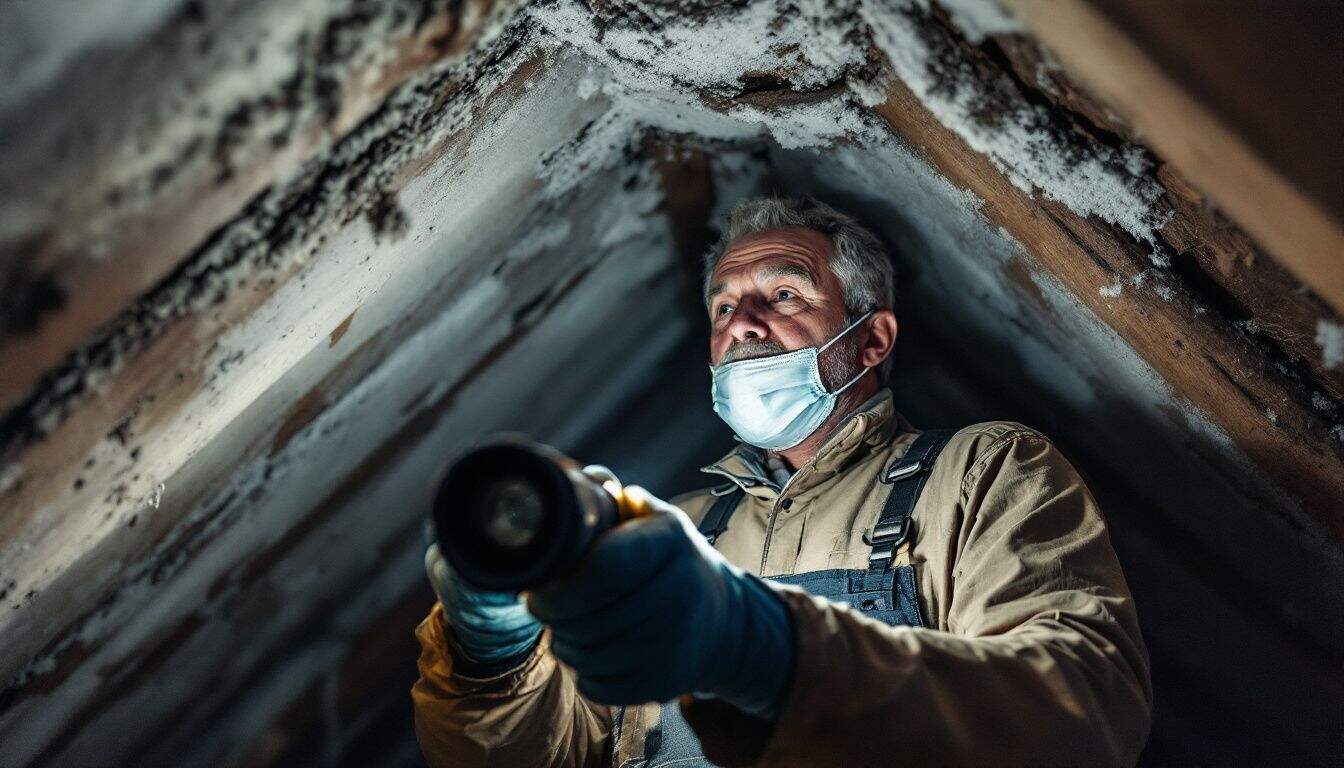
Why Every Leisure Centre Needs an Asbestos Survey
Leisure centres present one of the most complex asbestos management challenges of any building type in the UK. High footfall, ageing infrastructure, and a demanding mix of wet and dry environments make an asbestos survey for leisure centre buildings not just a legal obligation — it is an operational necessity.
If your facility was built or refurbished before 2000, there is a realistic chance asbestos-containing materials (ACMs) are present somewhere in the structure. The Control of Asbestos Regulations place a clear duty on those responsible for non-domestic premises to identify, assess, and manage ACMs.
For leisure centre managers and local authority operators, that duty is ongoing — not a one-off tick-box exercise.
Why Leisure Centres Are High-Risk Asbestos Environments
Leisure centres built during the 1960s, 1970s, and 1980s were routinely constructed using asbestos-containing materials. Asbestos was cheap, fire-resistant, and widely available — making it a popular choice for insulation, ceiling tiles, floor tiles, pipe lagging, and spray coatings.
The physical nature of leisure facilities creates specific risks that most other commercial buildings simply do not face to the same degree:
- High humidity environments — Swimming pool halls, changing rooms, and steam rooms can accelerate the degradation of ACMs, making fibres more likely to become airborne.
- Frequent maintenance activity — Mechanical plant rooms, boiler rooms, and pipework are regularly accessed by maintenance staff, increasing the risk of accidental disturbance.
- Structural alterations — Leisure centres are often upgraded or repurposed, meaning walls, ceilings, and floors are regularly disturbed.
- Public access — Unlike an office or warehouse, leisure centres host members of the public, including children, who may be present in areas close to deteriorating ACMs.
- Complex layouts — Plant rooms, roof voids, service ducts, and suspended ceilings create numerous concealed spaces where asbestos may be hidden.
These factors combine to make thorough asbestos surveying and management genuinely critical in this setting. The consequences of getting it wrong are serious — both for public health and for the dutyholder’s legal standing.
Legal Duties for Leisure Centre Operators
Under the Control of Asbestos Regulations, the dutyholder — typically the owner, managing organisation, or facilities manager — must take reasonable steps to find ACMs, assess their condition, and put a management plan in place. This applies to all non-domestic premises, and leisure centres are firmly within scope.
The HSE’s guidance document HSG264 sets out exactly how asbestos surveys should be planned and conducted. It is the definitive reference for surveyors and dutyholders alike, and any survey carried out at your facility should follow its methodology.
Key legal obligations include:
- Maintaining an up-to-date asbestos register for the premises.
- Ensuring all contractors and maintenance staff have access to that register before undertaking any work.
- Regularly reviewing the condition of known ACMs.
- Commissioning a refurbishment or demolition survey before any intrusive work begins.
- Notifying the HSE at least two weeks in advance of any licensable asbestos removal work.
Failure to comply can result in significant financial penalties and, in serious cases, prosecution. More importantly, non-compliance puts staff, contractors, and the public at genuine risk of exposure to one of the most hazardous substances found in UK buildings.
Types of Asbestos Survey Used in Leisure Centres
Not all asbestos surveys serve the same purpose. The type of survey required depends on what is happening at your facility and what you need to know.
Management Survey
A management survey is the standard survey for premises in normal occupation and use. Its purpose is to locate, as far as reasonably practicable, all ACMs that could be damaged or disturbed during everyday activities — including routine maintenance.
For a leisure centre, this means a surveyor will inspect accessible areas throughout the building: pool hall ceilings, changing room walls, plant rooms, boiler rooms, roof spaces (where safely accessible), and any other areas where ACMs might reasonably be present.
Samples are taken from suspect materials and sent for laboratory analysis to confirm whether asbestos is present and, if so, what type. The result is a detailed asbestos register and condition report — the foundation of your asbestos management plan.
Every contractor who works on the site should be handed a copy, or at minimum made aware of its contents, before they start.
An asbestos management survey is not a one-time exercise. As conditions change and materials age, the register must be reviewed and updated. Many leisure centre operators commission resurveys every few years, or whenever significant changes are made to the building — particularly given how rapidly ACMs can deteriorate in humid pool environments.
Refurbishment Survey
When a leisure centre is being upgraded — new changing facilities, a gym refit, replacement of pool plant equipment, or a café refurbishment — a refurbishment survey is legally required before work begins.
This is a more intrusive type of survey than a management survey. The surveyor will access areas that would normally remain undisturbed, including breaking into walls, lifting floors, and inspecting voids. The area being surveyed must be vacated during the inspection, as the process itself can disturb materials.
An asbestos refurbishment survey ensures that contractors know exactly what they are dealing with before they start cutting, drilling, or demolishing. Without this information, tradespeople can unknowingly release asbestos fibres — putting themselves and others at serious risk and exposing the dutyholder to significant legal liability.
Demolition Survey
If a leisure centre — or part of one — is being demolished, a demolition survey is required. This is the most thorough type of survey and must cover the entire structure, including areas that are normally inaccessible.
An asbestos demolition survey must be completed before demolition work begins. All identified ACMs must be removed by a licensed contractor before the structure is brought down. This protects demolition workers, neighbouring properties, and the wider environment from asbestos contamination.
Where Asbestos Is Commonly Found in Leisure Centres
Knowing where to look is half the battle. Experienced surveyors working in leisure facilities will pay particular attention to the following areas:
- Roof structures and ceiling tiles — Textured coatings (such as Artex), ceiling tiles, and insulation boards in older buildings frequently contain asbestos.
- Plant rooms and boiler rooms — Pipe lagging, boiler insulation, and gaskets are common sources of ACMs in mechanical spaces.
- Floor tiles and adhesives — Vinyl floor tiles and the bitumen adhesive used to fix them were commonly manufactured with asbestos, particularly in changing rooms and corridors.
- Partition walls — Asbestos insulating board (AIB) was widely used in internal partitions.
- Spray coatings — Some older buildings have asbestos spray coatings applied to structural steelwork for fire protection.
- Electrical equipment — Older fuse boxes, switchgear, and electrical panels sometimes contain asbestos components.
- Roof sheeting — Corrugated asbestos cement roofing was common in sports hall extensions and outbuildings.
- Swimming pool plant rooms — The combination of heat, moisture, and ageing pipework makes these spaces particularly prone to ACM degradation.
A thorough asbestos survey for leisure centre buildings will assess all of these areas and record the type, location, extent, and condition of any ACMs found. Gaps in coverage can leave real risks undetected.
The Asbestos Survey Process: What to Expect
Understanding what happens during a survey helps leisure centre managers plan effectively and minimise disruption to operations.
Pre-Survey Planning
Before the surveyor arrives, they will want to review any existing asbestos records, building plans, and maintenance history. This helps them plan their inspection route and identify areas of particular concern.
You will need to arrange access to all parts of the building, including plant rooms, roof voids, and any areas that are normally locked or restricted. The more access the surveyor has, the more complete the resulting register will be.
It is also worth briefing your facilities team in advance. Staff who know the building well can flag areas of concern or point out recent maintenance work that may have disturbed materials.
On-Site Inspection and Sampling
The surveyor will carry out a methodical inspection of the building, recording suspect materials and their condition. Where materials are suspected of containing asbestos, small samples are taken using controlled techniques to minimise fibre release.
These samples are then sent for sample analysis at an accredited laboratory. Results will confirm whether asbestos is present and identify the fibre type — whether chrysotile (white asbestos), amosite (brown asbestos), or crocidolite (blue asbestos).
Different fibre types carry different risk profiles, and this information directly informs the management recommendations. Crocidolite and amosite are generally considered to pose a greater risk than chrysotile, and their presence will typically prompt a more urgent response.
Survey Report and Asbestos Register
Once analysis is complete, the surveyor will compile a detailed report. This will include:
- A full schedule of all ACMs identified, with locations clearly mapped.
- Condition assessments for each material.
- Risk assessments indicating the priority for action.
- Recommendations for management, encapsulation, or removal.
- Photographs supporting the findings.
This report becomes your asbestos register. Keep it accessible — it must be available to any contractor working on the premises, and it forms the basis of your ongoing management obligations.
Managing Asbestos Once It Has Been Identified
Finding asbestos does not automatically mean it needs to be removed. In many cases, ACMs that are in good condition and are unlikely to be disturbed are best left in place and managed. Disturbance during unnecessary removal can create more risk than leaving materials undisturbed.
However, where materials are deteriorating, located in high-traffic areas, or in spaces where maintenance work regularly takes place, asbestos removal may be the safest long-term option. A qualified surveyor will advise on the appropriate course of action for each material identified.
Your asbestos management plan should set out:
- How each ACM will be managed going forward.
- Who is responsible for monitoring condition.
- How frequently condition checks will be carried out.
- What action will be taken if condition deteriorates.
- How contractors will be informed of ACM locations.
This plan is a living document. It should be reviewed at least annually and updated whenever the building changes or new information becomes available. For leisure centres undergoing frequent refurbishment cycles, this review cadence is especially important.
Special Considerations for Publicly Accessible Facilities
Leisure centres are not like offices or warehouses. They are open to the public, often including children and elderly users, and they operate long hours with a high volume of footfall. This creates additional responsibilities for dutyholders beyond the standard requirements of the Control of Asbestos Regulations.
Where ACMs are present in areas accessible to the public — even if those materials are currently in good condition — the risk assessment must take into account the consequences of unexpected disturbance. A ceiling tile dislodged by a ball in a sports hall, or a damaged floor tile in a changing room, can represent a real exposure risk if the material contains asbestos.
Signage, physical barriers, and regular condition monitoring are all practical measures that should form part of your management plan where ACMs are present in publicly accessible spaces.
Staff training is equally important. Every member of your team — from reception staff to maintenance operatives — should understand what asbestos is, where it may be present in your building, and what to do if they suspect a material has been disturbed. This awareness does not require specialist knowledge; it requires clear communication and a well-maintained register.
Choosing the Right Surveying Company
Not all asbestos surveyors have equal experience with leisure facilities. The complexity of these buildings — the range of environments, the volume of accessible and inaccessible spaces, and the operational demands of a live public facility — means that experience matters.
When selecting a surveying company, look for the following:
- UKAS accreditation — The surveying company should be accredited by the United Kingdom Accreditation Service, confirming they meet the required standards for asbestos surveying and testing.
- Experience with leisure and public sector buildings — Ask specifically about previous work in leisure centres, sports facilities, or similar environments.
- Clear methodology aligned with HSG264 — The survey approach should follow HSE guidance, with no shortcuts on sampling or reporting.
- Transparent reporting — The final report should be clear, detailed, and immediately usable as an asbestos register.
- Ongoing support — A good surveying partner will help you understand your obligations and advise on next steps, not just hand over a report and disappear.
If your leisure centre is based in the capital, an asbestos survey London service from an experienced local team can help ensure rapid mobilisation and familiarity with the types of construction common in your area. Similarly, facilities in the north-west can benefit from an asbestos survey Manchester service with proven regional experience.
When to Commission an Asbestos Survey for Your Leisure Centre
There are several triggers that should prompt you to commission or review an asbestos survey:
- No existing asbestos register — If your facility does not have a current, documented asbestos register, a management survey should be commissioned without delay.
- An outdated register — If your last survey was conducted more than a few years ago, or if significant changes have been made to the building since, the register needs updating.
- Planned refurbishment or building work — Any intrusive work requires a refurbishment survey to be completed first, regardless of what the existing register shows.
- Change of ownership or management — When responsibility for a building changes hands, the incoming dutyholder should verify the currency and completeness of the asbestos register.
- Suspected or confirmed ACM disturbance — If there is any reason to believe asbestos-containing materials have been disturbed, specialist advice should be sought immediately.
- Planned demolition — A full demolition survey is a legal requirement before any demolition work proceeds.
Acting on these triggers promptly is not just about legal compliance. It is about protecting the people who use and work in your facility every day.
Get an Asbestos Survey for Your Leisure Centre Today
Supernova Asbestos Surveys has completed over 50,000 surveys across the UK, working with leisure operators, local authorities, and facilities managers to identify and manage asbestos risk effectively. Our surveyors are fully qualified, our laboratories are UKAS accredited, and our reports are clear, actionable, and compliant with HSG264.
Whether you need a routine management survey, a pre-refurbishment inspection, or urgent advice following a suspected disturbance, our team is ready to help.
Call us on 020 4586 0680 or visit asbestos-surveys.org.uk to request a quote or speak to one of our surveyors directly.
Frequently Asked Questions
Is an asbestos survey legally required for a leisure centre?
Yes. Under the Control of Asbestos Regulations, the dutyholder for any non-domestic premises — including leisure centres — has a legal duty to manage asbestos. This begins with identifying whether ACMs are present, which requires a professional asbestos survey. Operating without an up-to-date asbestos register is a breach of your legal obligations and exposes you to enforcement action by the HSE.
How often should a leisure centre commission an asbestos survey?
There is no single fixed interval prescribed in law, but the asbestos register and management plan must be kept up to date. Most leisure centre operators review their register annually and commission a full resurvey every three to five years, or sooner if significant building work has taken place. In humid environments such as swimming pool halls, more frequent condition monitoring is advisable given the accelerated degradation of ACMs.
What is the difference between a management survey and a refurbishment survey?
A management survey is designed for buildings in normal use. It identifies ACMs that could be disturbed during routine maintenance and everyday activity. A refurbishment survey is more intrusive and is required before any building work that will disturb the fabric of the structure — such as fitting out a new gym, replacing pool plant equipment, or renovating changing rooms. The two surveys serve different purposes and one does not replace the other.
Can asbestos be left in place at a leisure centre, or does it always need to be removed?
Asbestos does not always need to be removed. Where ACMs are in good condition, are unlikely to be disturbed, and are not located in areas of high public access, they can often be safely managed in place. Your asbestos management plan should set out how each material will be monitored and what action will be taken if its condition changes. Removal is typically recommended where materials are deteriorating, are in areas of frequent maintenance activity, or are located where the public could come into contact with them.
What happens if asbestos is disturbed at a leisure centre without a survey?
Disturbing asbestos without prior surveying can have serious consequences. Workers and members of the public may be exposed to airborne asbestos fibres, which carry significant long-term health risks. The dutyholder may face enforcement action, improvement notices, or prosecution under the Control of Asbestos Regulations. Any area where disturbance has occurred should be vacated immediately, and specialist advice sought from a licensed asbestos contractor before the space is reoccupied.