What Does an Asbestos Surveyor Actually Do — and Why Does It Matter?
Asbestos remains the single largest cause of work-related deaths in the UK. If you own, manage, or are responsible for a building constructed before the year 2000, understanding what is the role of an asbestos surveyor is not just useful background knowledge — it is a legal and moral imperative.
A qualified asbestos surveyor is the professional standing between hidden, dangerous materials and the people who live or work in your building. This is not a box-ticking exercise. The work these specialists carry out directly shapes how asbestos-containing materials (ACMs) are managed, monitored, and dealt with over the entire life of a building.
The Core Role of an Asbestos Surveyor
At its most fundamental level, an asbestos surveyor inspects buildings to locate, identify, and assess ACMs. But that description barely scratches the surface of what the role involves in practice.
A surveyor must approach every building with a methodical, evidence-based mindset. They are not simply walking around with a clipboard — they are making professional judgements that will inform legal compliance decisions, maintenance programmes, and in some cases, major refurbishment or demolition projects.
Conducting the Physical Inspection
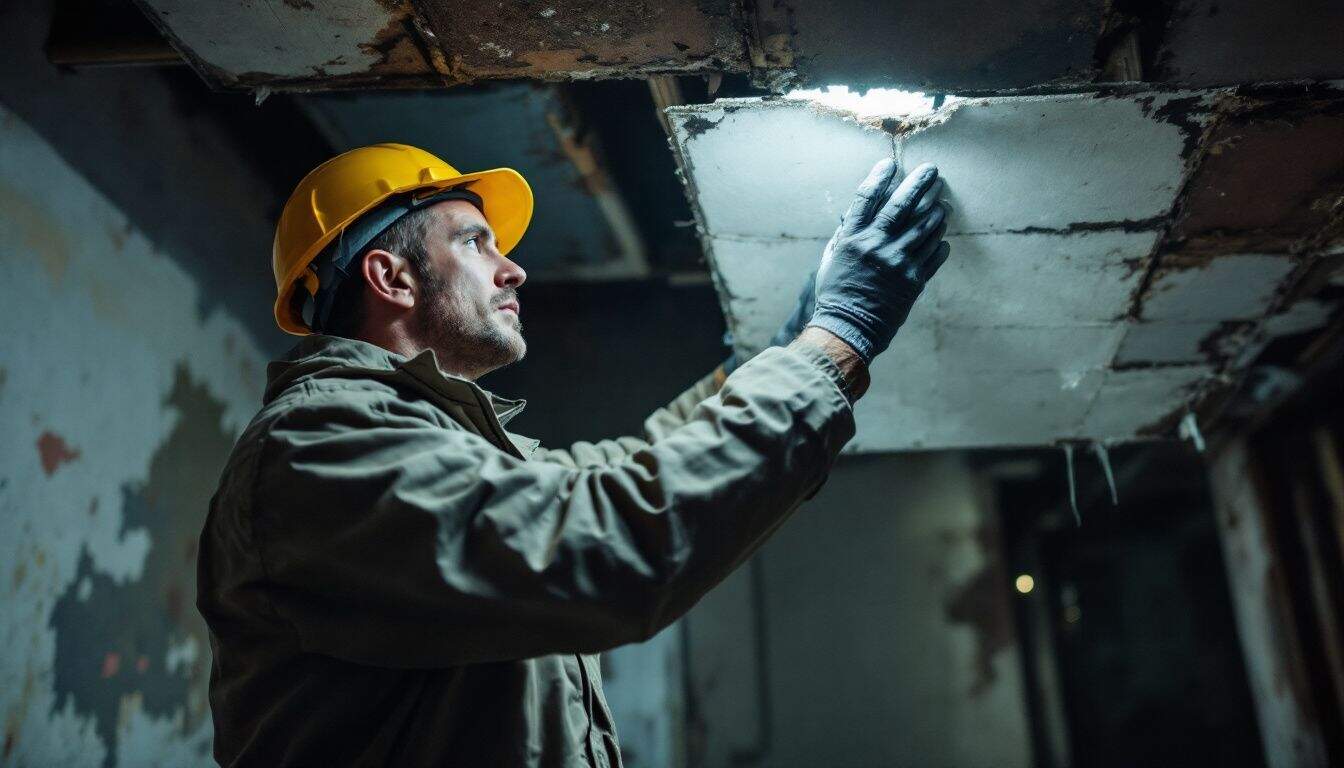
The surveyor carries out a thorough physical inspection of the property, examining accessible areas and — depending on the survey type — areas that are not normally accessible. This includes roof voids, ceiling cavities, service ducts, floor spaces, and any areas where ACMs are commonly found.
Common locations for ACMs include:
- Pipe lagging and boiler insulation
- Floor tiles and adhesives
- Textured coatings such as Artex
- Insulating boards around heating systems
- Roofing sheets and guttering
- Fire doors and partition walls
Where materials are suspected to contain asbestos, the surveyor collects samples using appropriate personal protective equipment (PPE). These samples are then sent to a UKAS-accredited laboratory for sample analysis to confirm whether asbestos is present and, if so, which fibre type.
Assessing Risk and Condition
Identifying asbestos is only part of the job. The surveyor must also assess the condition of each ACM and evaluate the risk it presents to building occupants and maintenance workers.
A material in poor condition that is likely to be disturbed poses a very different risk from one that is intact and in an undisturbed location. This risk assessment forms the foundation of any subsequent management strategy — determining whether materials should be left in place and monitored, encapsulated, or removed entirely.
Producing the Survey Report
Once the inspection and sampling are complete, the surveyor prepares a detailed written report. This document records every ACM found, its precise location, condition, and risk rating. It also includes clear recommendations for how each material should be managed going forward.
This report is, in practical terms, a legal document. Duty holders rely on it to fulfil their obligations under the Control of Asbestos Regulations, and it must be accurate, clear, and thorough. A poorly produced report is not just unhelpful — it can leave a duty holder exposed to significant legal and health risks.
The Two Main Types of Asbestos Survey
Not all asbestos surveys are the same, and part of what is the role of an asbestos surveyor involves understanding which survey type is appropriate for each situation. Getting this wrong can mean either under-surveying a building or commissioning unnecessary intrusive work.
Management Surveys
A management survey is the standard survey required for buildings in normal occupation. Its purpose is to locate ACMs that could be disturbed during routine maintenance or day-to-day activities, and to assess their condition so that a robust asbestos management plan can be put in place.
This type of survey is a legal requirement for non-domestic premises under the Control of Asbestos Regulations — specifically the duty to manage provision under Regulation 4. It is the survey most property managers, landlords, and facilities teams will need to arrange on a regular basis.
Refurbishment and Demolition Surveys
Where a building is about to undergo significant refurbishment or be demolished, a more intrusive survey is required. A demolition survey involves accessing areas that would not normally be disturbed and may require destructive investigation techniques to locate all ACMs before work begins.
This survey must be completed before any refurbishment or demolition work starts. No licensed contractor should begin intrusive work without one — and under the Control of Asbestos Regulations, commissioning this survey is a legal obligation, not an optional precaution.
Qualifications and Accreditation: What to Look For
When asking what is the role of an asbestos surveyor, you also need to ask what makes someone qualified to carry out that role. The answer is specific and non-negotiable.
The P402 Certificate
The primary qualification for asbestos surveyors in the UK is the P402 Certificate, awarded by the British Occupational Hygiene Society (BOHS). This qualification demonstrates that the surveyor has the technical knowledge and practical skills to carry out surveys to the standard required by the HSE and its guidance document HSG264.
Some surveyors may hold equivalent qualifications, such as a Level 3 NVQ in Asbestos Surveying. What matters is that the qualification is recognised by the HSE and that the individual can demonstrate genuine competence in practice — not just on paper.
UKAS Accreditation
Beyond individual qualifications, the organisation employing the surveyor should hold accreditation from the United Kingdom Accreditation Service (UKAS) to BS EN ISO/IEC 17020. This is the international standard for inspection bodies, and UKAS is the sole national accreditation body in the UK.
UKAS accreditation means the organisation has been independently assessed against rigorous criteria covering technical competence, management systems, and quality assurance. You can verify accredited bodies directly on the UKAS website. If a surveyor or company cannot demonstrate UKAS accreditation, treat that as a significant red flag.
Ongoing Competence
Qualifications alone are not enough. A competent asbestos surveyor keeps their knowledge current with changes in HSE guidance, sampling methodologies, and best practice. The HSE’s HSG264 guidance document is the key reference point for survey methodology in the UK, and surveyors must work in accordance with it at all times.
When you commission a survey, it is entirely reasonable to ask the surveyor how they stay up to date with changes in guidance and regulation. A professional will welcome the question.
The Legal Framework Asbestos Surveyors Work Within
The asbestos surveyor operates within a clearly defined legal framework, and understanding this framework is central to understanding what is the role of an asbestos surveyor in a UK context.
The Control of Asbestos Regulations
The Control of Asbestos Regulations place a legal duty on those who own, occupy, or manage non-domestic premises to manage asbestos. This duty to manage requires duty holders to identify whether ACMs are present, assess their condition, and put in place a written management plan.
An asbestos survey carried out by a qualified, UKAS-accredited surveyor is the recognised method for meeting this obligation. Without a survey, a duty holder cannot demonstrate compliance — and the consequences of non-compliance can include prosecution, substantial fines, and unlimited liability in the event of harm.
HSG264: The Surveyor’s Reference Standard
HSG264 — the HSE’s guidance on asbestos surveying — sets out in detail how surveys should be planned, conducted, and reported. It covers everything from how to approach different building types to the correct procedures for sampling and the information that must appear in a survey report.
A competent surveyor will be thoroughly familiar with HSG264 and will apply its principles consistently across every job they carry out. Any survey report that does not align with HSG264 guidance should be treated with caution — regardless of how professional it looks on the surface.
Why Regular Asbestos Surveys Matter
A single survey is not a permanent solution. The condition of ACMs can change over time through deterioration, accidental damage, or maintenance activities. This is why ongoing monitoring and periodic re-inspection are a core part of effective asbestos management — not an optional extra.
Regular surveys allow duty holders to:
- Track changes in the condition of known ACMs
- Identify any materials that may have been disturbed since the last inspection
- Update their asbestos management plan to reflect current conditions
- Demonstrate ongoing due diligence to regulators and insurers
The HSE recommends that the condition of ACMs is reviewed at least annually, and more frequently where materials are in poor condition or located in high-traffic areas.
Protecting Occupants and Workers
Asbestos-related diseases — including mesothelioma, asbestosis, and asbestos-related lung cancer — have a long latency period. Symptoms may not appear until decades after exposure, which means the harm caused by inadequate asbestos management today may not become apparent for many years.
Regular, professionally conducted surveys are the most effective tool available for preventing that harm. They ensure ACMs are identified before they can be disturbed and that appropriate controls are in place to protect everyone in the building.
Protecting Duty Holders
Beyond the health imperative, regular surveys also protect duty holders from legal exposure. A well-maintained asbestos register, supported by up-to-date survey reports, demonstrates that a duty holder is taking their obligations seriously.
In the event of an incident, this documentation is essential evidence of due diligence. Without it, a duty holder’s position in any enforcement action or civil claim is significantly weakened.
Where Asbestos Surveyors Work: Property Types and Locations
Asbestos surveyors work across a wide range of property types and sectors. Commercial offices, industrial units, schools, hospitals, housing association properties, and public buildings all fall within the scope of the duty to manage.
Geographically, the demand for qualified surveyors is nationwide. If you need an asbestos survey London covering commercial or residential premises in the capital, the same standards of qualification and accreditation apply as anywhere else in the country.
Equally, an asbestos survey Manchester for industrial or public sector buildings, or an asbestos survey Birmingham for any property type, must be carried out by a UKAS-accredited provider following HSG264 methodology. The location of the building does not change the standard required.
Any building constructed or refurbished before the year 2000 should be treated as potentially containing asbestos until a survey demonstrates otherwise.
What to Expect When You Commission a Survey
If you are commissioning an asbestos survey for the first time, here is what the process typically looks like:
- Initial scoping: The surveyor discusses the building’s age, size, construction type, and the purpose of the survey to determine which survey type is appropriate.
- Site visit: The surveyor attends the property and carries out the physical inspection, collecting samples where necessary.
- Laboratory analysis: Samples are sent to a UKAS-accredited laboratory for fibre identification and confirmation.
- Report production: The surveyor compiles a detailed report including an asbestos register, risk assessments, and management recommendations.
- Debrief and advice: A good surveyor will walk you through the findings and help you understand your next steps clearly.
The timeline from survey to report varies depending on building size and complexity, but you should typically expect a report within five to ten working days of the site visit.
Choosing the Right Asbestos Surveyor
With so much at stake — legally, financially, and in terms of public health — choosing the right surveyor is not a decision to make on price alone. Here is what to check before appointing anyone:
- Does the company hold UKAS accreditation to BS EN ISO/IEC 17020? (Verify directly on the UKAS website.)
- Do the individual surveyors hold P402 or equivalent qualifications?
- Does the company work in accordance with HSG264?
- Can they provide sample reports so you can assess quality before committing?
- Are they experienced with your property type and sector?
- Do they use a UKAS-accredited laboratory for sample analysis?
A reputable surveyor will be transparent about all of the above without hesitation. If any of these questions are met with evasion or vague answers, look elsewhere.
Get a Professional Asbestos Survey from Supernova
Supernova Asbestos Surveys has completed over 50,000 surveys nationwide, working with property managers, landlords, local authorities, housing associations, and commercial clients across every sector. Our surveyors are fully qualified, and our organisation holds UKAS accreditation — so you can commission with confidence.
Whether you need a management survey, a refurbishment and demolition survey, or straightforward advice on your obligations, our team is ready to help.
Call us on 020 4586 0680 or visit asbestos-surveys.org.uk to request a quote or speak to a surveyor directly.
Frequently Asked Questions
What is the role of an asbestos surveyor in the UK?
An asbestos surveyor inspects buildings to locate, identify, and assess asbestos-containing materials (ACMs). They collect samples for laboratory analysis, evaluate the risk each material presents, and produce a detailed report that duty holders use to manage asbestos safely and comply with the Control of Asbestos Regulations.
Do I legally need an asbestos survey?
If you own or manage a non-domestic building constructed before the year 2000, you have a legal duty to manage asbestos under the Control of Asbestos Regulations. A survey carried out by a qualified, UKAS-accredited surveyor is the recognised way to meet that duty. Residential landlords also have obligations where common areas are involved.
What qualifications should an asbestos surveyor have?
The primary qualification is the P402 Certificate awarded by the British Occupational Hygiene Society (BOHS). Surveyors may also hold a Level 3 NVQ in Asbestos Surveying. In addition to individual qualifications, the company they work for should hold UKAS accreditation to BS EN ISO/IEC 17020.
How often should an asbestos survey be carried out?
There is no single fixed interval, but the HSE recommends that the condition of known ACMs is reviewed at least annually. A full re-survey may be needed following significant maintenance work, changes in building use, or if materials have deteriorated. Your asbestos management plan should specify the review frequency based on the condition and location of materials in your building.
What is the difference between a management survey and a demolition survey?
A management survey is carried out on buildings in normal use and focuses on identifying ACMs that could be disturbed during routine activities. A demolition survey is a more intrusive investigation required before any significant refurbishment or demolition work begins. It must locate all ACMs, including those in areas not normally accessible, and is a legal requirement before intrusive work starts.