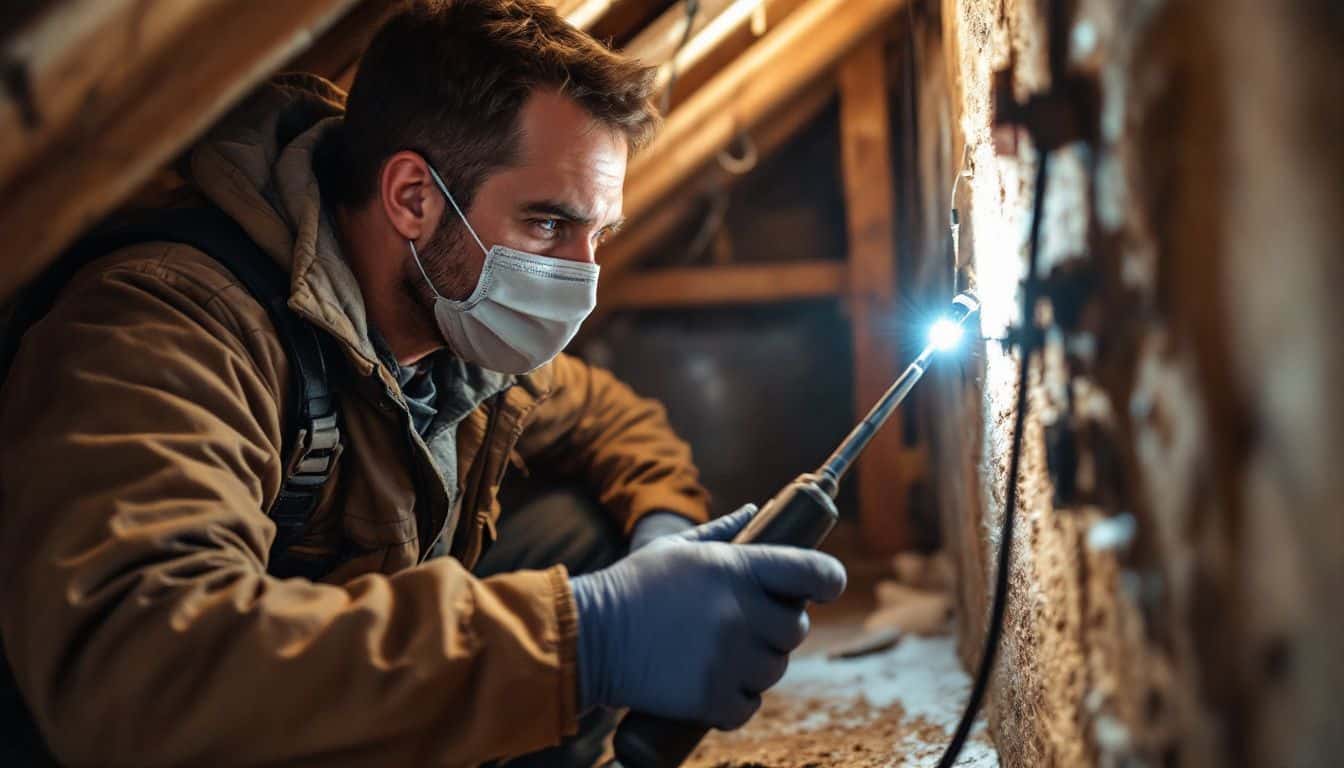
What Is an Asbestos Core Sampling Kit — and Why Does It Matter?
If you own or manage a building constructed before 2000, asbestos-containing materials (ACMs) could be concealed almost anywhere — in floor tiles, ceiling boards, pipe lagging, or behind plasterwork. The only way to know for certain is to have a sample extracted and analysed by a UKAS-accredited laboratory. That is precisely what an asbestos core sampling kit is designed to do: it is the frontline tool that makes safe, controlled sample collection possible on site.
Understanding what goes into a professional kit, how each component is used, and what supporting equipment surrounds it will help you make better decisions about your property and your legal obligations. This post covers everything from basic hand tools to advanced analytical equipment, protective gear, and the regulatory framework that governs it all.
What Exactly Is an Asbestos Core Sampling Kit?
An asbestos core sampling kit is a collection of purpose-built tools designed to extract small, representative samples from suspected ACMs without causing unnecessary fibre release. Once collected, the samples are sealed and sent to a laboratory for analysis.
A standard professional kit typically contains the following:
- Core borers — hollow cylindrical cutters that extract a clean plug of material with minimal disturbance
- Stanley knives and scalpels — for cutting softer materials such as ceiling tiles, floor tiles, and pipe lagging
- Pliers and chisels — for accessing harder or more rigid ACMs
- Airtight sealable sample bags — double-bagged, clearly labelled, and tamper-evident
- Wetting agent (water spray bottle) — dampening material before cutting significantly suppresses fibre release
- Adhesive tape and filler — to seal the sampling point immediately after collection
- Pre-printed sample labels — recording location, material type, date, and surveyor reference
Each component serves a specific purpose. Skipping steps — such as failing to wet the material first or using a single bag instead of double-bagging — increases the risk of fibre release and compromises sample integrity. In a professional context, that is not an acceptable outcome.
Who Should Be Using a Core Sampling Kit?
Asbestos core sampling kits are available commercially, and some duty holders wonder whether they can collect samples themselves to cut costs. The honest answer is: in most circumstances, you should not attempt this without proper training.
The Control of Asbestos Regulations requires that any work liable to disturb asbestos is carried out by competent persons. Sampling from ACMs falls squarely within that definition. A trained surveyor knows how to minimise fibre release, correctly identify the material before sampling, and maintain the chain of custody in a way that produces legally defensible results.
If you instruct an unqualified person to collect samples, you risk contaminated results, a health and safety breach, and data that cannot be relied upon. The cost saving is simply not worth it.
For most commercial, industrial, or residential properties, the right starting point is a professional management survey carried out by a qualified surveyor who arrives on site with calibrated equipment — including a properly stocked asbestos core sampling kit.
Visual Inspection Tools Used Alongside the Sampling Kit
An asbestos core sampling kit does not work in isolation. Before any sample is taken, the surveyor must identify and document suspected ACMs through a thorough visual inspection. Several tools support this stage of the process.
Cameras and Lighting
High-resolution digital cameras capture photographic evidence of every suspected ACM. These images form part of the asbestos register and support the risk assessment. Good lighting — including powerful handheld torches — is essential for examining dark roof voids, service ducts, and ceiling cavities where ACMs are frequently found.
Borescopes
A borescope is a flexible or rigid camera on a probe that allows surveyors to see inside wall cavities, ceiling voids, and other inaccessible spaces without causing significant structural damage. They are particularly useful in occupied buildings where intrusive work must be kept to a minimum.
Basic Hand Tools
Screwdrivers, pry bars, and pliers help surveyors access concealed areas — lifting floor tiles, removing access panels, and opening service ducts. These tools are deployed before the asbestos core sampling kit is brought into use, ensuring the surveyor has a clear view of the material in question before any cutting begins.
Air Testing Equipment: Measuring What You Cannot See
Sampling a material is only one part of the picture. In many situations — particularly after disturbance, during removal works, or where occupants may have been exposed — it is necessary to test the air itself for asbestos fibres. This requires a separate category of equipment entirely.
Air Sampling Pumps
Air sampling pumps draw a measured volume of air through a filter cassette, trapping any airborne fibres present. High-volume pumps are used for background monitoring over short periods; personal pumps are worn by workers to assess individual exposure levels. Each pump must be calibrated before use to ensure accuracy.
Sampling Cassettes and Filters
The cassette holds a membrane filter — typically a mixed cellulose ester filter — through which the air passes. Fibres are trapped on the filter surface and later counted under a microscope in a UKAS-accredited laboratory. Cassettes are sealed immediately after sampling and transported in airtight bags to prevent any contamination in transit.
Flow Meters and Calibrators
Accurate air volume measurement depends on the pump running at the correct flow rate throughout the sampling period. Flow meters verify the rate in real time, while electronic calibrators confirm the total volume of air collected before and after sampling. Without calibration, fibre count data is unreliable and unusable.
Real-Time Particle Monitors
In higher-risk situations — such as during licensed asbestos removal — real-time particle counters provide instant feedback on airborne particulate levels. They do not specifically identify asbestos fibres, but they act as an early warning system, alerting operatives if levels are rising unexpectedly during work.
Professional asbestos testing combines both material sampling and air monitoring to give a complete picture of risk at any given site.
Personal Protective Equipment: Non-Negotiable on Every Job
No discussion of asbestos survey equipment is complete without covering personal protective equipment (PPE). When working with or near ACMs, the right protection is not optional — it is a legal requirement under the Control of Asbestos Regulations.
Respiratory Protective Equipment (RPE)
Half-mask respirators fitted with P3 filters are the standard for asbestos survey work. P3 filters remove at least 99.95% of airborne particles, providing effective protection against asbestos fibres. The mask must be correctly fitted and face-fit tested for each individual wearer — a poor seal renders the respirator ineffective regardless of filter quality.
For higher-risk environments, powered air-purifying respirators (PAPRs) or full-face masks may be required. The appropriate level of RPE should always be specified in the risk assessment before work begins.
Protective Clothing
Disposable coveralls — typically Type 5 Category 3 — prevent asbestos fibres from contaminating clothing and being carried out of the work area. Surveyors also wear nitrile or latex gloves, protective overshoes or boots that can be decontaminated, and eye protection where there is a risk of dust or fibre contact.
All disposable PPE must be double-bagged and disposed of as asbestos waste after use. It must never be taken home for washing or reuse — doing so risks secondary exposure for anyone in contact with contaminated items.
Advanced Analytical Equipment: What Happens in the Laboratory
Once samples are collected using the asbestos core sampling kit and returned to the laboratory, sophisticated analytical equipment takes over. Understanding what happens at this stage helps you appreciate why UKAS accreditation is so important — and why results from non-accredited labs should not be relied upon.
Polarised Light Microscopy (PLM)
PLM is commonly used to identify asbestos fibre types in bulk material samples. The optical properties of different asbestos types — chrysotile, amosite, crocidolite, and others — are distinctive under polarised light. This is typically the first analytical step after bulk sampling from an asbestos core sampling kit.
Phase Contrast Microscopy (PCM)
PCM is the standard method for counting airborne fibres in air samples. It uses light microscopy to count fibres above a certain size threshold. It is fast and cost-effective but cannot distinguish asbestos fibres from other mineral fibres — which is why it is used for quantification rather than identification.
Transmission and Scanning Electron Microscopy (TEM and SEM)
For the most precise identification and quantification, electron microscopy is the gold standard. TEM can detect fibres far smaller than those visible under light microscopy, making it essential for clearance testing after removal works and for situations where chrysotile is suspected at low concentrations. SEM with energy-dispersive X-ray analysis (EDX) can confirm fibre chemistry as well as morphology.
Portable X-Ray Fluorescence (XRF) Analysers
Portable XRF devices allow surveyors to scan building materials on site without taking a physical sample. The device fires X-rays at the material and analyses the energy returned, identifying elemental composition. While XRF cannot confirm asbestos with the same certainty as laboratory microscopy, it is a useful screening tool that can prioritise which materials need formal sampling — particularly useful where minimising disturbance is a priority.
Documentation and Compliance Software
Modern asbestos surveying is as much about data management as it is about physical inspection. Surveyors use specialist software to record findings, manage sample chains of custody, and produce reports that meet the requirements of HSE guidance document HSG264.
A professional asbestos survey report will include:
- An executive summary of findings
- A full asbestos register listing every ACM, its location, condition, and risk score
- Photographic evidence linked to each entry
- Laboratory certificates of analysis for every sample taken
- Recommendations for management, remediation, or removal
- A survey limitations section noting any areas that could not be accessed
This documentation is not just good practice — it is what you need to demonstrate compliance with the Control of Asbestos Regulations. Tracking software also ensures that asbestos registers are kept current when conditions change, when remedial work is carried out, or when a building changes hands.
Clearance Testing Equipment: The Final Stage After Removal
After asbestos removal work is completed, a four-stage clearance procedure is required before the area can be reoccupied. The final stage — air clearance testing — uses the same air sampling equipment described above, but the stakes are considerably higher: the results determine whether the enclosure is safe to open.
The clearance air test must be carried out by an independent analyst who was not involved in the removal work. Samples are collected, sent to a UKAS-accredited laboratory, and counted under PCM. The area is only cleared for reoccupation once fibre levels fall below the clearance criterion set in HSE guidance.
This independence requirement exists for a clear reason. It removes any conflict of interest and provides an objective, legally defensible confirmation that the asbestos removal was completed successfully.
Choosing the Right Survey — and the Right Equipment — for Your Property
The equipment deployed on any given job depends on the type of survey being carried out. Under HSG264, there are two principal survey types, each with different requirements for sampling depth and equipment use.
Management Survey
A management survey is a standard survey designed to locate and assess ACMs in a building that is occupied or in normal use. It involves targeted sampling using an asbestos core sampling kit but is designed to be minimally intrusive — access panels are replaced, sampling points are sealed, and the building remains operational throughout.
Refurbishment and Demolition Survey
A demolition survey is a fully intrusive survey required before any refurbishment or demolition work begins. It involves extensive sampling across the entire structure, including areas that would be inaccessible during normal occupation. The asbestos core sampling kit is used extensively throughout, and destructive access methods — such as breaking through walls or lifting floor screeds — may be necessary to ensure all ACMs are located.
Getting the survey type right from the outset is critical. Commissioning a management survey when a refurbishment survey is required is a common and costly mistake that can delay projects and create legal exposure.
Where Supernova Operates Across the UK
Supernova Asbestos Surveys provides professional survey and testing services across England, with specialist teams covering major urban centres and surrounding areas.
If you are based in the capital, our team carries out asbestos survey London work across all boroughs, covering commercial, residential, and industrial properties of every type.
In the North West, our surveyors deliver asbestos survey Manchester services to property managers, housing associations, local authorities, and private clients throughout Greater Manchester and the surrounding region.
In the Midlands, our team handles asbestos survey Birmingham projects across the city and surrounding areas, from large industrial sites to smaller commercial premises.
What to Look for When Commissioning an Asbestos Survey
Not all surveyors are equal. When selecting a company to carry out your survey, there are several things to verify before you agree to anything.
- UKAS-accredited laboratory — all samples must be analysed by a UKAS-accredited lab. Ask for evidence of this before work begins.
- P402 or equivalent qualification — surveyors should hold the relevant BOHS qualification or equivalent for the type of survey being carried out.
- Calibrated equipment — ask whether the asbestos core sampling kit and any air sampling equipment are regularly calibrated and maintained.
- HSG264-compliant reporting — the final report should follow the structure and content requirements set out in HSE guidance.
- Clear chain of custody — from sample collection through to laboratory analysis, there should be a documented and unbroken chain of custody for every sample taken.
If a surveyor cannot confirm any of these points clearly and confidently, look elsewhere. For independent asbestos testing and survey services that meet all of these standards, Supernova Asbestos Surveys has completed over 50,000 surveys across the UK.
Frequently Asked Questions
What is included in a standard asbestos core sampling kit?
A standard professional asbestos core sampling kit includes core borers, Stanley knives, scalpels, pliers, chisels, a wetting agent spray bottle, airtight double-sealable sample bags, adhesive tape and filler for sealing sampling points, and pre-printed sample labels. Each component plays a specific role in minimising fibre release and maintaining sample integrity from site to laboratory.
Can I collect asbestos samples myself using a DIY kit?
While asbestos core sampling kits are sold commercially, collecting samples yourself is not recommended in most circumstances. The Control of Asbestos Regulations requires that work liable to disturb asbestos is carried out by competent persons. An untrained person risks releasing fibres, producing unreliable results, and breaching health and safety law. A qualified surveyor should always be instructed for formal sampling work.
How are asbestos samples analysed after collection?
Samples collected using an asbestos core sampling kit are sent to a UKAS-accredited laboratory where they are analysed using techniques such as polarised light microscopy (PLM) to identify fibre type, and phase contrast microscopy (PCM) for fibre counting in air samples. For more complex cases, transmission electron microscopy (TEM) may be used to detect very fine fibres.
What is the difference between a management survey and a demolition survey?
A management survey is a minimally intrusive survey suitable for occupied buildings in normal use — it locates and assesses accessible ACMs using targeted sampling. A demolition survey is fully intrusive, required before any refurbishment or demolition work, and involves extensive sampling throughout the entire structure, including areas that would not normally be accessible. Both surveys use an asbestos core sampling kit, but the scope and depth of sampling differ significantly.
How long does asbestos sample analysis take?
Standard turnaround from a UKAS-accredited laboratory is typically three to five working days for bulk material samples. Many laboratories offer an express or priority service for urgent cases, which can reduce turnaround to 24 hours. Your surveyor should be able to advise on timescales when commissioning the work, and laboratory certificates of analysis should be included in the final survey report.
Speak to Supernova Asbestos Surveys
Supernova Asbestos Surveys has completed over 50,000 surveys across the UK, working with property managers, housing associations, local authorities, contractors, and private clients. Whether you need a management survey, a demolition survey, air testing, or independent clearance testing, our qualified surveyors bring fully calibrated equipment — including a professional asbestos core sampling kit — to every job.
Call us on 020 4586 0680 or visit asbestos-surveys.org.uk to request a quote or discuss your requirements with a member of our team.