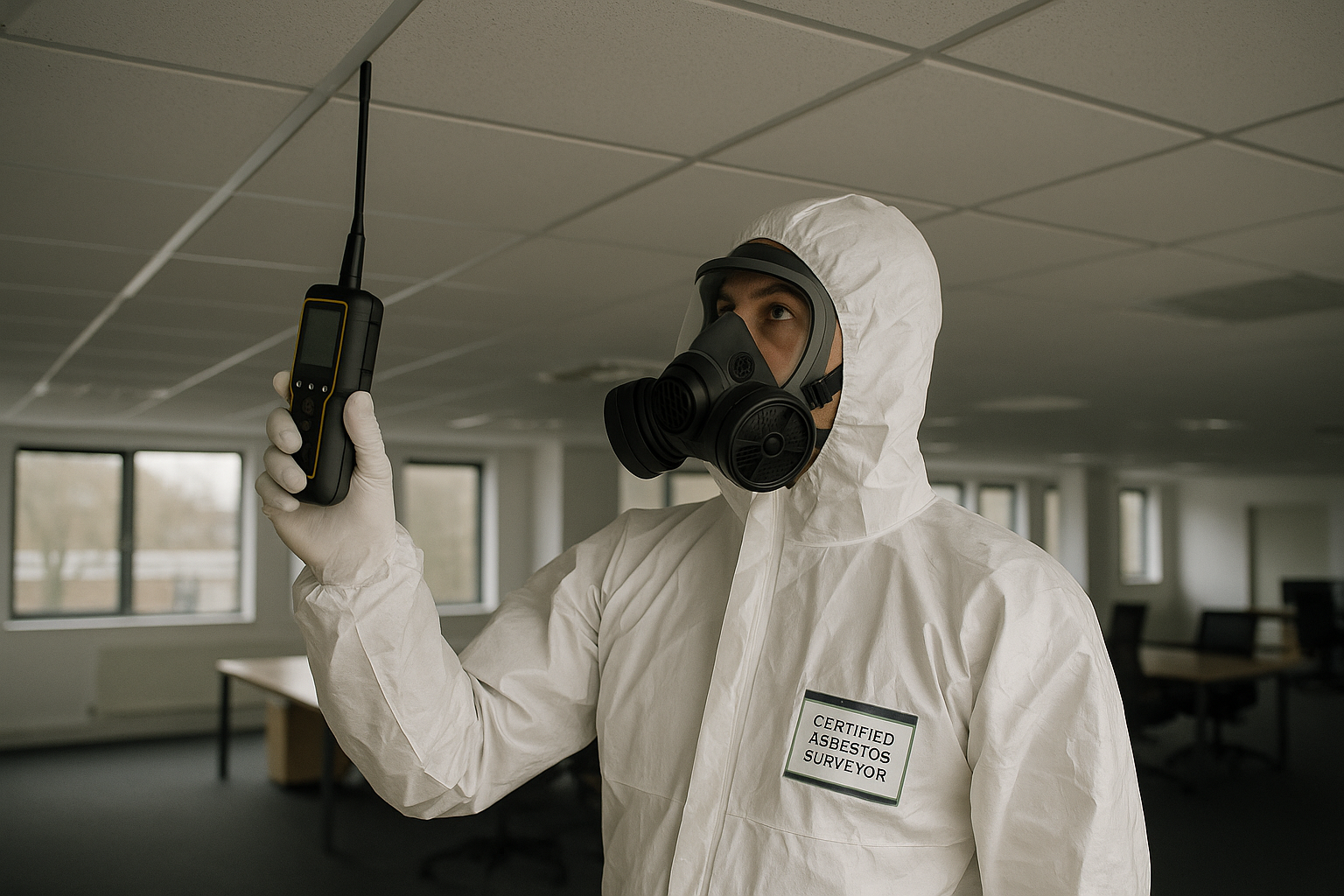
A quick walk-round can spot obvious damage, but a proper asbestos inspection does far more than glance at ceilings and pipework. If you manage a building constructed before 2000, the difference between a simple visual check and the right level of survey can affect compliance, project timelines and, most importantly, people’s safety.
Under the Control of Asbestos Regulations, dutyholders must take reasonable steps to find asbestos-containing materials, assess their condition and manage the risk. That means choosing an asbestos inspection that matches the building’s use and any planned work, rather than relying on assumptions or outdated records.
Why the Right Asbestos Inspection Matters
Asbestos is still present in a significant number of UK properties, particularly commercial, public and residential buildings constructed before the ban on its use. It can be found in obvious places such as garage roofs and ceiling tiles, but also in hidden areas like risers, voids, floor layers and behind wall linings.
The point of an asbestos inspection is not simply to confirm whether asbestos exists somewhere in the building. It is there to identify or presume asbestos-containing materials, record where they are, assess their condition and support safe decisions about management, maintenance, refurbishment or demolition.
Choose the wrong inspection and problems follow quickly:
- Hidden asbestos may be missed entirely
- Contractors may start work without the right information
- Projects can halt when suspect materials are uncovered mid-job
- Your asbestos register may be incomplete or unreliable
- You may fall short of your duties under HSE guidance
For property managers, facilities teams and landlords, the practical rule is straightforward: match the asbestos inspection to what will actually happen in the building.
When an Asbestos Inspection Is Required
There are two main situations where an asbestos inspection is usually needed. The first is for day-to-day occupation and routine maintenance. The second is before any work that will disturb the building fabric.
That distinction matters because the scope changes completely. A non-intrusive inspection for normal occupation is not the same as an intrusive survey before strip-out works.
Typical triggers for an asbestos inspection include:
- You have taken responsibility for a building with no reliable asbestos records
- Your existing asbestos information is out of date
- Contractors are due to carry out maintenance that may disturb suspect materials
- You are planning a fit-out, refurbishment or structural alteration
- All or part of the property is due for demolition
- Known asbestos-containing materials remain in place and need reviewing
If you are unsure what level of asbestos inspection is appropriate, get the planned works reviewed before booking anything. Paying for the wrong survey often costs more in delays, repeat visits and emergency sampling later.
Types of Asbestos Inspection and When to Use Each One
The term asbestos inspection is often used loosely, but in practice there are several distinct survey types. Each has a different purpose, level of intrusion and output. Understanding which applies to your situation is the first practical step.
Management Survey
A management survey is the standard asbestos inspection for occupied premises during normal use. Its purpose is to locate, as far as reasonably practicable, the presence and extent of suspect asbestos-containing materials that could be damaged or disturbed during everyday occupation, including foreseeable maintenance.
This survey is usually non-intrusive or only lightly intrusive. The surveyor inspects accessible areas and may take samples where needed, but does not generally carry out destructive access into the building fabric.
A management survey is typically suitable where:
- The building is occupied and in active use
- You need an asbestos register for ongoing management
- Only routine maintenance is planned
- There is no major opening up of floors, walls or ceilings
Refurbishment Survey
If planned works will disturb walls, ceilings, floors, service ducts or other concealed areas, a management survey is not sufficient. You will usually need a refurbishment survey for the specific area affected by the works.
This type of asbestos inspection is intrusive. It is designed to find asbestos that could be disturbed during refurbishment, fit-out, structural alteration or strip-out. Because the survey itself can disturb asbestos-containing materials, it is normally carried out in vacant areas or under controlled conditions.
Use a refurbishment survey when:
- You are replacing kitchens, bathrooms or ceilings
- You are altering layouts or removing partitions
- You are upgrading services, heating systems or electrical installations
- Contractors will access hidden voids or enclosed risers
Demolition Survey
Where a building, or part of it, is due to be pulled down or heavily stripped back, a demolition survey is needed. This is the most intrusive form of asbestos inspection.
Its purpose is to locate and identify, as far as reasonably practicable, all asbestos-containing materials in the areas due for demolition. That can involve opening up floors, walls, ceilings, boxing, plant spaces and service risers.
A demolition survey is appropriate when:
- A whole structure is being demolished
- A major extension requires removal of existing sections
- Substantial strip-out is planned before redevelopment
- The works will expose hidden construction layers throughout the building
Re-Inspection Survey
Where asbestos-containing materials remain in place, they need periodic review. A re-inspection survey checks known or presumed materials to confirm whether their condition has changed and whether management actions are still suitable.
This type of asbestos inspection supports ongoing compliance. It helps keep the asbestos register current and flags deterioration before it becomes a more serious problem.
What an Asbestos Inspection Actually Looks For
A proper asbestos inspection is about more than spotting obvious insulation boards. Surveyors look for materials that may contain asbestos, assess how likely they are to release fibres if disturbed, and record enough detail for the findings to be used in practice.
Common asbestos-containing materials include:
- Pipe lagging and thermal insulation
- Asbestos insulating board in ceilings, partitions and service risers
- Textured coatings on walls and ceilings
- Vinyl floor tiles and bitumen adhesive
- Cement sheets, soffits, gutters and roof panels
- Sprayed coatings on structural elements
- Bath panels, toilet cisterns and moulded products
- Gaskets, rope seals and boiler insulation
Not every asbestos-containing material presents the same level of risk at the time of inspection. The product type, its condition, surface treatment, accessibility and likelihood of disturbance all matter.
A damaged insulation board in a service cupboard is a different risk from an intact cement sheet on an outbuilding. That is why an asbestos inspection must always be tied to how the premises are used and what work is planned next.
Visual Inspection Versus a Full Asbestos Survey
This is where confusion often starts. People use the phrase visual inspection to describe anything from a quick maintenance walk-round to part of a formal survey. In reality, a simple visual check on its own is rarely enough for compliance or project planning.
What a Visual Inspection Can Do
A visual inspection may help identify obvious damage to known asbestos-containing materials. It can also be useful as part of routine monitoring where asbestos has already been formally identified and recorded.
For example, a facilities manager might visually check whether labelled insulation board in a plant room has been knocked, drilled or exposed since the last formal review. That has value, but only because the prior survey work was already done.
What a Visual Inspection Cannot Do
A visual inspection cannot reliably confirm whether a material contains asbestos. It cannot see behind fixed panels, inside risers, above sealed ceilings or beneath floor finishes.
It also does not provide the structured scope, sampling strategy and reporting standards expected under HSE guidance for formal asbestos surveying. If you need evidence for compliance, contractor information or planned works, a proper asbestos inspection is the right route.
Why Surveys Follow HSG264
HSG264 sets out the survey standard used across the industry. It explains survey types, planning requirements, sampling, limitations and reporting expectations. A competent asbestos inspection should align with this guidance so the findings are clear, usable and defensible.
For property managers, the practical takeaway is clear: do not treat a casual visual look as a substitute for a survey. The two serve different purposes and carry very different weight when compliance is tested.
Sampling and Analysis During an Asbestos Inspection
Some materials can be strongly suspected by appearance and location, but visual identification alone is not always reliable. Many asbestos-containing products look similar to non-asbestos alternatives, particularly older floor tiles, textured coatings and cement products.
During an asbestos inspection, the surveyor may take controlled samples from suspect materials where it is safe and appropriate to do so. These samples are then analysed by a UKAS-accredited laboratory, and the results are matched to the exact material and location in the report.
How Sampling Is Usually Handled
- The surveyor identifies a suspect material
- The risk of taking a sample is assessed
- A small sample is taken using controlled techniques
- The sample is sealed, labelled and logged
- Laboratory analysis confirms whether asbestos is present
- The result is added to the survey report and asbestos register
If you only need to check a single suspect item, professional asbestos testing can be a practical option. Some clients also use an asbestos testing kit where a limited sample submission is suitable for a one-off identification need.
A testing kit can help with isolated queries, but it does not replace an asbestos inspection where dutyholder responsibilities or refurbishment plans are involved. A lab result on its own does not give you material assessments, location plans, access notes or management recommendations.
This page on asbestos testing explains when standalone testing may be useful and when a full survey is the more appropriate choice.
Planning an Asbestos Inspection Properly
The best asbestos inspection starts before the surveyor arrives. Poor planning leads to missed rooms, unclear scope and reports that do not answer the question you actually needed resolved.
What to Prepare in Advance
- Existing asbestos reports and registers
- Site plans and room lists
- Refurbishment drawings or work specifications
- Details of previous asbestos removal or encapsulation
- Access arrangements for roof voids, risers, plant rooms and basements
- Occupancy information and any operational restrictions
For intrusive work, isolate the survey area where possible. Make sure the survey brief clearly states every room, corridor, void, outbuilding or service area that the project will affect. Gaps at this stage often become expensive surprises once work begins.
Questions to Ask Before Booking
- What type of asbestos inspection do we actually need?
- Will the survey be intrusive?
- Which areas are included and which are excluded?
- How will inaccessible areas be recorded?
- Will samples be taken and analysed on-site or sent to a laboratory?
- When will the report be issued and in what format?
If you manage sites in the capital, arranging an asbestos survey London service with clear local access planning can save time and prevent scope gaps. The same principle applies across any regional portfolio.
Why Surveyor Competence Matters
An asbestos inspection is only as reliable as the person carrying it out. HSE guidance makes it clear that asbestos surveyors must be competent. That means training, practical experience, knowledge of building construction, understanding of asbestos product types and the ability to produce accurate, actionable reports.
Choosing on price alone is a false economy. A cheap inspection that misses hidden asbestos, records locations poorly or gives vague recommendations can leave you with a much bigger problem when works begin or when a regulatory inspection takes place.
What Competence Should Look Like
- Relevant qualifications and demonstrable experience in asbestos surveying
- Knowledge of different building types, construction methods and material locations
- Clear, structured reports that identify materials, locations, condition and risk
- Sampling carried out to the correct standard with UKAS-accredited laboratory analysis
- Willingness to explain scope limitations and inaccessible areas clearly
The survey report should be something you can hand to a contractor, a solicitor or an HSE inspector with confidence. If it would not stand up to scrutiny, it is not doing its job.
What Happens After the Asbestos Inspection
The inspection itself is not the end of the process. The findings need to be acted on in a way that is proportionate to the risk identified.
For management surveys, the output typically feeds into an asbestos management plan. This records what materials are present, their condition, who is responsible for monitoring them and what action is needed. The plan should be reviewed regularly and updated after any work that affects the building fabric.
For refurbishment and demolition surveys, the findings go directly to the contractor and principal designer so that the works can be planned safely. Where asbestos-containing materials need to be removed before works proceed, licensed asbestos removal will be required for certain material types.
Not all asbestos has to be removed. Many materials in good condition and low-risk locations are better managed in place than disturbed unnecessarily. The survey findings and the material risk assessment together inform that decision.
Keeping records up to date matters too. An asbestos register that was accurate five years ago may not reflect the current state of the building. Periodic re-inspection surveys ensure the information remains current and that any changes in condition are captured before they become a hazard.
Frequently Asked Questions
What is the difference between a visual inspection and an asbestos inspection?
A visual inspection is an informal check of visible surfaces and known materials. It can help monitor the condition of already-identified asbestos but cannot confirm whether a material contains asbestos or identify hidden materials. A formal asbestos inspection follows HSG264 guidance, involves a structured scope, may include sampling and laboratory analysis, and produces a report suitable for compliance and contractor use.
Do I need an asbestos inspection before refurbishment work?
Yes. If refurbishment work will disturb the building fabric — including walls, ceilings, floors or service areas — a refurbishment survey is required for the affected zones before work begins. A management survey alone is not sufficient for intrusive works. Starting without the right survey puts workers at risk and may breach your duties under the Control of Asbestos Regulations.
How often should an asbestos inspection be carried out?
There is no single fixed interval that applies to every building. Where asbestos-containing materials are managed in place, a re-inspection survey is typically carried out annually, though the frequency should reflect the condition of materials, the level of activity in the building and any changes to use or occupancy. Your asbestos management plan should specify the review schedule.
Can I use an asbestos testing kit instead of a full survey?
A testing kit can be useful for identifying whether a single suspect material contains asbestos, but it does not replace a formal asbestos inspection. It provides a laboratory result for one sample only — it does not give you material condition assessments, location records, risk ratings or management recommendations. Where dutyholder responsibilities apply or works are planned, a proper survey is needed.
Who can carry out an asbestos inspection?
Asbestos inspections must be carried out by a competent surveyor with the appropriate training, qualifications and practical experience. HSE guidance sets out what competence means in this context. Many clients choose surveyors who hold relevant BOHS qualifications and work within a quality management framework. Checking the surveyor’s credentials before booking is a straightforward step that protects both safety and compliance.
Supernova Asbestos Surveys has completed over 50,000 surveys across the UK. Whether you need a management survey for an occupied building, a refurbishment or demolition survey ahead of planned works, or a re-inspection to keep your register current, our surveyors are ready to help. Call us on 020 4586 0680 or visit asbestos-surveys.org.uk to discuss your requirements and book your asbestos inspection.