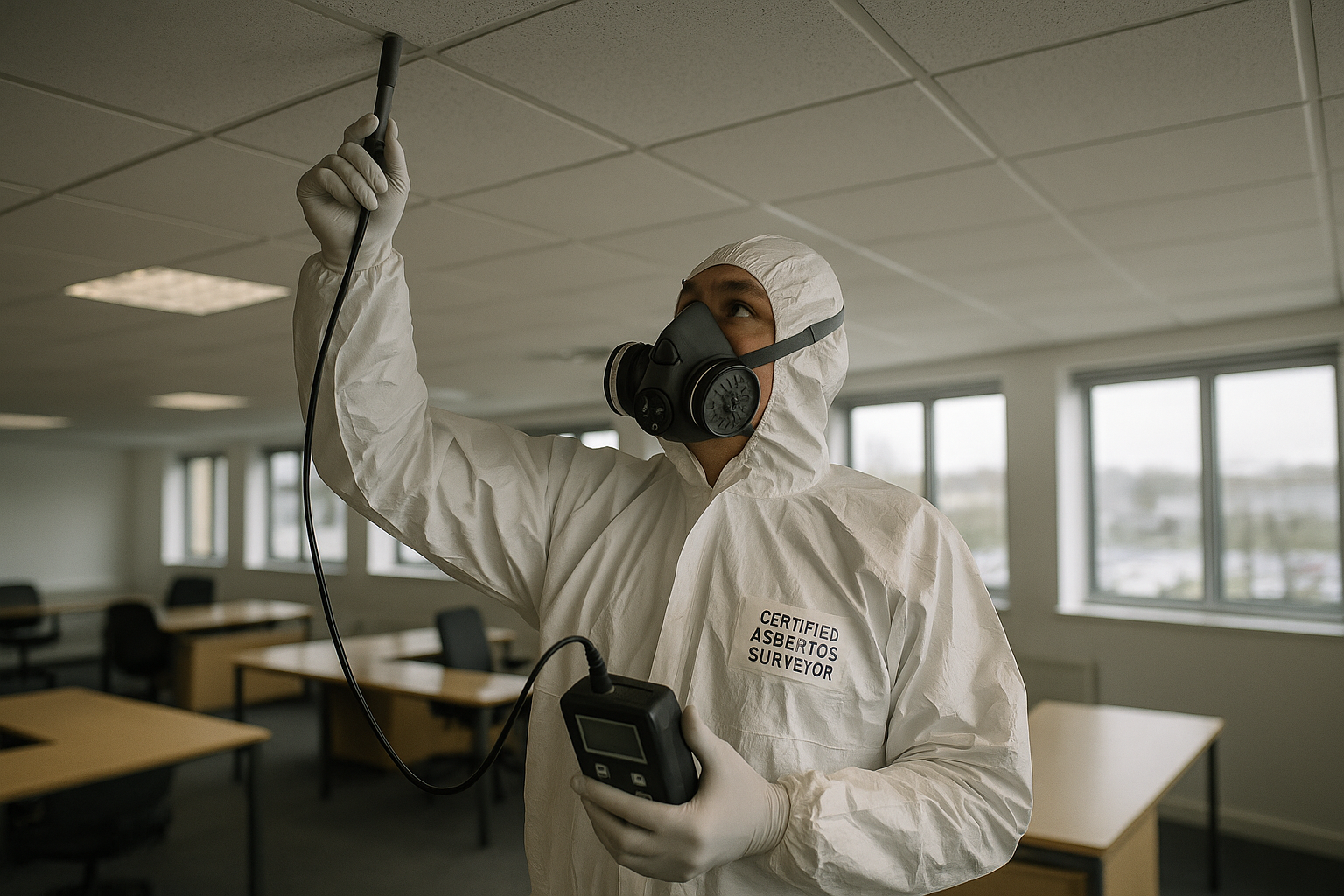
One hidden board above a ceiling or behind a riser can turn a routine job into a serious health and compliance problem. A properly specified asbestos survey gives you the facts before maintenance teams, contractors or refurbishment works disturb materials that should have been identified and managed.
For landlords, duty holders, estates teams and property managers, an asbestos survey is not paperwork for its own sake. It is a practical tool for protecting occupants, controlling contractor risk and meeting duties under the Control of Asbestos Regulations, with surveying carried out in line with HSG264 and relevant HSE guidance.
Why an asbestos survey matters
Asbestos was used widely in many UK buildings, so it can still be present in ceiling tiles, pipe insulation, textured coatings, floor tiles, cement products, panels, gaskets and many other materials. When these materials are in good condition and left undisturbed, the immediate risk may be low. The problem starts when work damages them.
That is why an asbestos survey matters. It helps you find asbestos-containing materials, assess their condition, record where they are and decide what needs to happen next.
A good survey helps you:
- protect staff, visitors and contractors
- avoid disturbing hidden asbestos during routine works
- support an asbestos register and management plan
- plan maintenance and projects with fewer delays
- show that decisions are based on suitable information
If you manage non-domestic premises or common parts of residential buildings, you need reliable asbestos information that can actually be used on site. Vague records and outdated reports create avoidable risk.
How an asbestos survey works in practice
A professional asbestos survey is a structured inspection, not a quick visual check. The surveyor works methodically through the property, looking for suspect materials as far as reasonably practicable and recording findings in a way that can support real decisions.
Typical stages of the survey process
- Define the scope – The surveyor reviews the building type, age, use, access arrangements and the reason the survey is needed.
- Select the right survey type – The purpose of the survey determines whether a management, refurbishment or demolition survey is required.
- Inspect the premises – Accessible areas are examined systematically, with the level of intrusion matched to the survey objective.
- Take samples where needed – Suspect materials may be sampled safely for laboratory confirmation.
- Assess condition and potential for disturbance – The report records material condition, accessibility and likely exposure routes.
- Issue the report – Findings are presented with location details, sample results, photographs, limitations and recommendations.
The value of an asbestos survey is not just that it identifies materials. It gives you information you can use for contractor control, maintenance planning and day-to-day compliance.
What happens on site during an asbestos survey
On survey day, the surveyor may inspect offices, corridors, plant rooms, service ducts, risers, ceiling voids, store rooms and external areas, depending on the building and the survey type. In occupied premises, disruption is often limited.
Where refurbishment or demolition is planned, the inspection becomes more intrusive by design. Floors, walls, ceilings and enclosed voids may need to be opened to identify hidden asbestos before work starts.
Access limitations must be recorded clearly. Locked rooms, sealed voids, high-level areas or live plant can all affect what the surveyor can inspect, and those restrictions should never be hidden behind vague wording.
Choosing the right asbestos survey for your building
One of the most common mistakes is booking the wrong asbestos survey. The right option depends on what is happening at the property, not what seems quickest or cheapest.
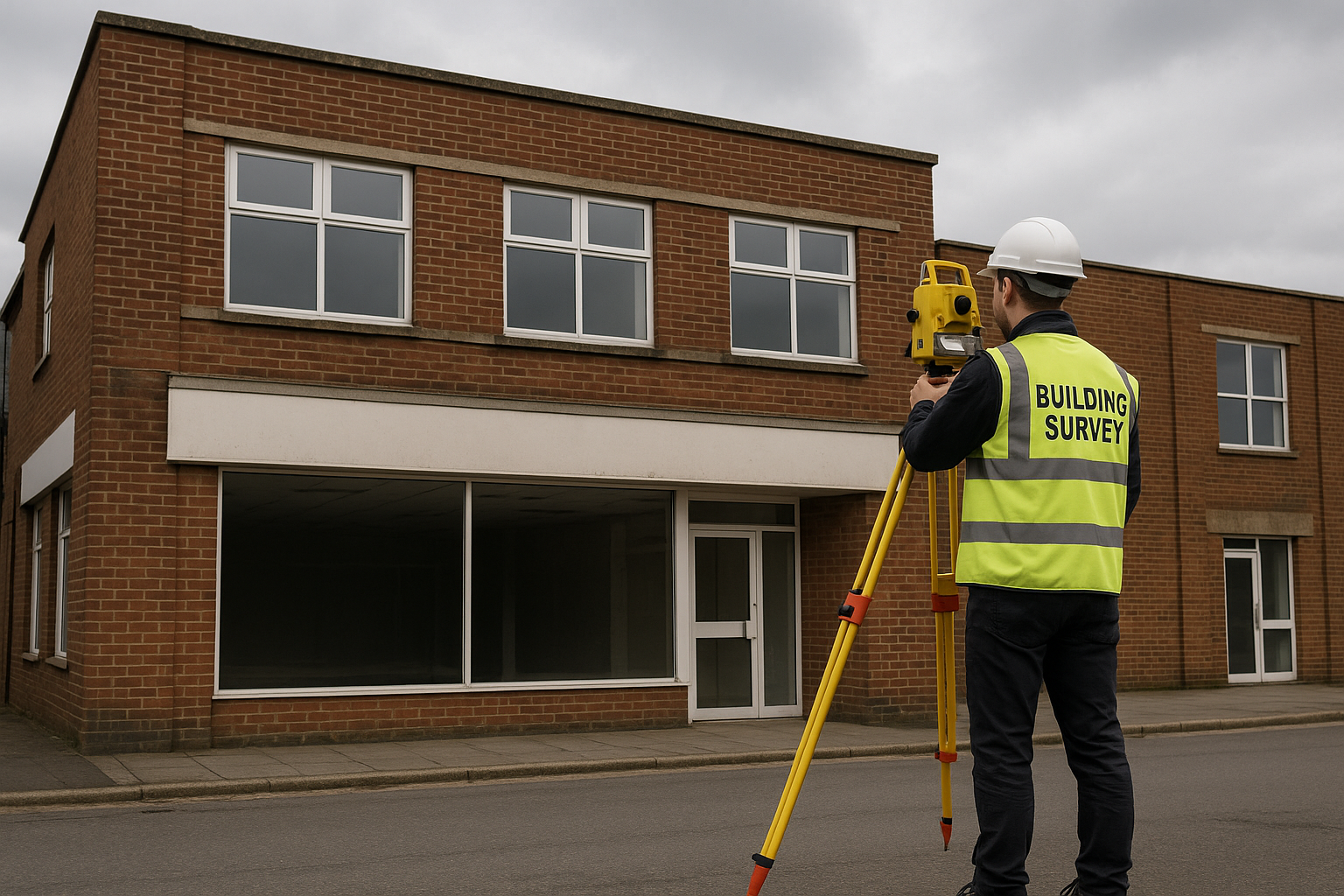
Before arranging a survey, ask:
- Is the building occupied and in normal use?
- Are contractors only carrying out routine maintenance?
- Is there planned refurbishment, strip-out or structural alteration?
- Is all or part of the building being demolished?
Your answers determine the survey type. If a provider cannot explain why a particular survey is being recommended, push for a clear justification.
Management survey
A management survey is the standard asbestos survey for occupied buildings in normal use. Its purpose is to locate, as far as reasonably practicable, asbestos-containing materials that could be damaged or disturbed during normal occupation, routine maintenance or foreseeable works.
This survey is usually non-intrusive or only mildly intrusive. It supports the asbestos register and helps duty holders manage asbestos safely in place where appropriate.
A management survey is commonly suitable for:
- offices and commercial premises in everyday use
- schools, colleges and healthcare settings
- warehouses and industrial units with ongoing occupation
- common parts of residential blocks
- buildings where no major intrusive works are planned
It is not designed to uncover every concealed material behind walls or beneath floors. If intrusive works are planned, you need a different type of asbestos survey.
Refurbishment survey
A refurbishment survey is required before structural changes, major upgrades, strip-out or intrusive works. This type of asbestos survey is intended to identify hidden asbestos in the specific area where work will take place.
It is intrusive by nature. Surveyors may need to open up floors, walls, ceilings, risers and service voids, so the area is often inspected while vacant or isolated from normal occupation.
If contractors are about to cut, drill, remove or alter building fabric, a management survey is not enough. The refurbishment survey should come first.
Demolition survey
A demolition survey is needed where a building, or part of it, is due to be demolished. This is the most intrusive asbestos survey because its aim is to identify all asbestos-containing materials, as far as reasonably practicable, so they can be managed or removed before demolition starts.
For strip-out and demolition projects, this survey is essential. Demolition work without suitable asbestos information creates obvious safety and legal risks.
Sampling, testing and laboratory confirmation
Visual inspection alone is not enough to confirm asbestos. Many non-asbestos materials look similar, and assumptions can lead to the wrong decision. That is why sampling and analysis are such an important part of a reliable asbestos survey.
Where appropriate, the surveyor takes representative samples safely and sends them for laboratory testing. The results confirm whether asbestos is present and identify the material accurately for management purposes.
When asbestos testing may be enough
Sometimes you do not need a full asbestos survey. If you only need to check one suspect item, targeted asbestos testing can be a practical first step.
This may suit situations such as:
- a suspect garage roof sheet
- a floor tile or adhesive
- textured coating in one room
- a single insulation board panel
- one isolated cement product
If you need direct laboratory submission, sample analysis is available for suspect materials. If you need a safe way to send a sample, you can order a testing kit.
For a broader overview of your options, this page on asbestos testing explains when standalone testing may be suitable and when a full asbestos survey is the better choice.
What a good asbestos survey report should include
A report should do far more than prove an asbestos survey took place. It should give you clear, usable information that can guide maintenance, support contractor briefings and stand up to scrutiny if questions are asked later.

When reviewing a report, look for the following:
- Clear scope and purpose – It should state why the survey was carried out and what type of survey it was.
- Areas inspected and limitations – Any inaccessible rooms, voids or restricted areas must be listed clearly.
- Location details – Plans, room references or marked-up drawings should show where materials are located.
- Photographs – Images help users identify materials on site.
- Sample results – Laboratory findings should match the material descriptions and locations.
- Condition notes – Damage, surface treatment and accessibility should be recorded properly.
- Practical recommendations – The report should explain whether to manage, monitor, encapsulate, repair or remove.
If anything is unclear, ask before relying on it. A weak report can cause confusion, delay works and increase costs once contractors are on site.
Questions to ask after receiving the report
- Does the asbestos survey match the work planned at the property?
- Are all access limitations recorded properly?
- Can contractors identify exactly where asbestos-containing materials are?
- Have suspect materials been sampled or clearly presumed?
- Do the recommendations translate into practical next steps?
Accuracy is not just technical wording. It is whether the report helps you make safe decisions in the real world.
What happens after an asbestos survey
An asbestos survey is the starting point, not the end of the process. Once asbestos-containing materials have been identified, you need to decide how they will be managed.
In many cases, asbestos can remain in place if it is in good condition and unlikely to be disturbed. The key is to record it properly, communicate the information to anyone who may work near it and review the condition over time.
Managing asbestos in place
If materials remain in situ, practical management steps usually include:
- updating the asbestos register
- making relevant information available to contractors and maintenance staff
- labelling or otherwise identifying materials where appropriate
- monitoring condition for signs of damage or deterioration
- reviewing the management plan regularly
Where asbestos is known to remain, a re-inspection survey helps keep records current and checks whether the condition of known materials has changed.
When removal may be needed
If asbestos-containing materials are damaged, deteriorating or likely to be disturbed by planned works, removal may be the safest option. In those cases, professional asbestos removal should be arranged through the appropriate specialist contractor.
Removal is not automatically the answer to every asbestos finding. The right decision depends on condition, location, accessibility and the likelihood of disturbance. A good asbestos survey report should help you weigh those factors sensibly.
Property types that commonly need an asbestos survey
Asbestos is not limited to one sector. Many buildings across the UK still contain asbestos-containing materials because they were constructed or refurbished when asbestos use was widespread.
Property types that often require an asbestos survey include:
- commercial offices and mixed-use premises
- schools, colleges and universities
- hospitals, clinics and care settings
- factories, warehouses and industrial estates
- retail units and shopping parades
- hotels, leisure venues and entertainment spaces
- local authority buildings and community facilities
- residential blocks and managed common areas
If you manage any of these premises and the building predates the asbestos ban, it is sensible to assume asbestos may be present until suitable information shows otherwise.
For clients in the capital, our asbestos survey London service supports commercial, public sector and residential block properties across the city.
Practical advice for property managers arranging an asbestos survey
Most property managers do not need theory. They need a straightforward process that helps them keep the site safe and the job moving.
Use this checklist before booking an asbestos survey:
- Check the building history – Review age, previous works, old survey reports and any existing asbestos register.
- Match the survey to the task – Management for normal occupation, refurbishment for intrusive works, demolition for teardown.
- Confirm access arrangements – Make sure keys, permits, plant shutdowns and vacant areas are organised in advance.
- Tell the surveyor what is planned – Be clear about maintenance, strip-out, upgrades or demolition so the scope is correct.
- Review the report carefully – Focus on limitations, sample results, plans and recommendations.
- Share the information properly – Contractors need current asbestos information before they start work.
That simple process prevents rushed decisions and expensive surprises.
Common mistakes to avoid
- booking a management survey when refurbishment is planned
- relying on an old report without checking whether it still reflects the building
- ignoring access limitations that leave gaps in the findings
- failing to brief contractors before maintenance starts
- assuming a material is asbestos-free without testing or suitable evidence
Most asbestos problems on site are not caused by the material itself. They happen because the available information was incomplete, outdated or not passed on to the right people.
How an asbestos survey protects public health
The public health value of an asbestos survey is straightforward. It reduces the chance that asbestos fibres will be released through avoidable disturbance.
That protection extends beyond the people who work in the building every day. It also helps protect visiting contractors, maintenance teams, cleaners, delivery staff and members of the public who may enter shared or managed spaces.
Public health protection starts with basic control measures:
- knowing where asbestos-containing materials are located
- understanding their condition
- preventing unnecessary disturbance
- making sure anyone likely to work on the building has the right information
- reviewing and updating records over time
Without a suitable asbestos survey, those controls become guesswork. With one, you can make informed decisions about management, repair, monitoring or removal.
When to arrange an asbestos survey
Timing matters. Leaving an asbestos survey until contractors are already booked is a common cause of project delay.
Arrange a survey when:
- you take responsibility for a building and records are missing or unclear
- routine maintenance is planned and asbestos information is outdated
- refurbishment or strip-out works are being designed
- demolition is being considered
- known asbestos materials need periodic review
- a suspect material has been found and needs investigation
The earlier you deal with asbestos information, the easier it is to plan works properly and avoid disruption later.
Frequently Asked Questions
What is the purpose of an asbestos survey?
The purpose of an asbestos survey is to locate asbestos-containing materials as far as reasonably practicable, assess their condition and provide information for safe management or planned works. It helps duty holders, landlords and property managers protect occupants and contractors while meeting legal duties.
Which type of asbestos survey do I need?
If the building is occupied and in normal use, a management survey is usually appropriate. If intrusive refurbishment works are planned, you need a refurbishment survey for the affected area. If the building is being demolished, a demolition survey is required.
Can asbestos testing replace a full asbestos survey?
Sometimes. If you only need to identify one suspect material, targeted testing may be enough. If you need wider information about asbestos across a building for occupation, maintenance or project planning, a full asbestos survey is usually the better option.
What happens if asbestos is found during a survey?
If asbestos is identified, the next step depends on its condition, location and likelihood of disturbance. It may be managed safely in place, monitored through re-inspection, repaired, encapsulated or removed where necessary.
How often should asbestos be checked after a survey?
Known asbestos-containing materials left in place should be reviewed periodically as part of the asbestos management plan. The frequency depends on their condition, location and risk of disturbance, and re-inspection surveys help keep that information up to date.
If you need a reliable asbestos survey, practical advice on the right survey type, or support with testing, re-inspections and removal planning, speak to Supernova Asbestos Surveys. We have completed more than 50,000 surveys nationwide. Call 020 4586 0680 or visit asbestos-surveys.org.uk to book the right service for your property.