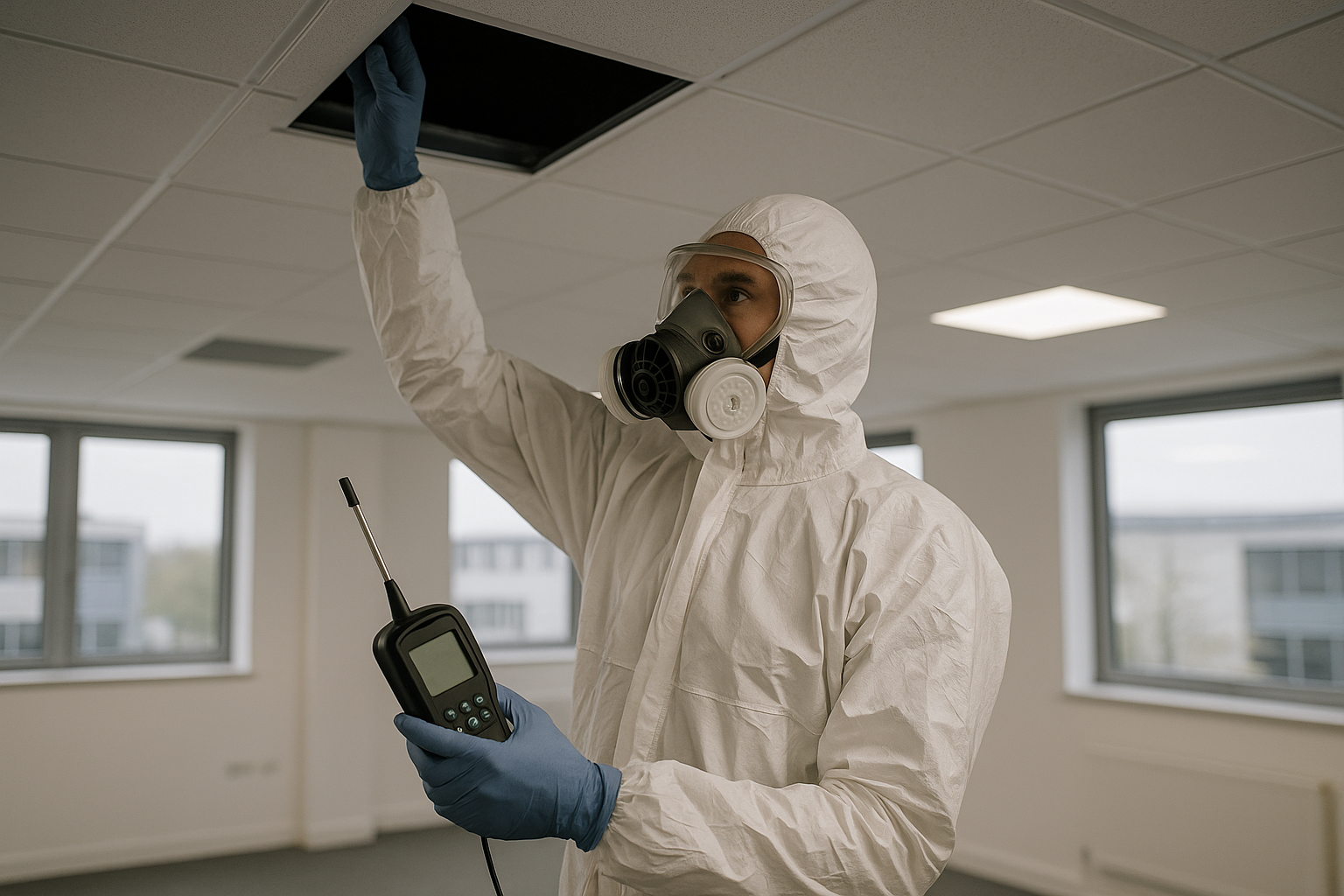
Older homes often keep awkward secrets behind ceilings, under floors and inside service ducts. Asbestos is one of the most common, and it still turns up in domestic properties across the UK when owners least expect it.
That does not mean every older house is dangerous. In many cases, asbestos-containing materials can remain in place safely if they are in good condition and unlikely to be disturbed. The real problem starts when asbestos is drilled, sanded, broken, stripped out or disturbed during repairs and refurbishment.
For homeowners, landlords and property managers, the right response is usually simple: do not guess, do not disturb it, and do not let trades start work without proper information. A calm, practical approach protects health, avoids unnecessary expense and keeps work moving in the right direction.
Why asbestos is still found in UK homes
Asbestos was widely used in residential construction because it was strong, heat resistant and affordable. It appeared in insulation, boards, cement products, textured coatings, floor tiles and many other building materials.
Although asbestos is no longer used in the way it once was, many homes built or refurbished before the UK ban may still contain it. A property can look modern on the surface and still hide older asbestos materials in lofts, risers, garages, boxing, ceilings or behind later finishes.
This is why age alone is only part of the picture. Previous alterations, extensions and partial refurbishments can make asbestos harder to predict, not easier.
Why asbestos matters for health and safety
Asbestos becomes hazardous when fibres are released into the air and breathed in. Those fibres are microscopic, so you cannot rely on sight or smell to tell you whether an area is safe.
Exposure to asbestos is associated with serious diseases including mesothelioma, asbestos-related lung cancer, asbestosis and pleural thickening. These conditions can take many years to develop, which is one reason asbestos must be handled with care rather than treated like ordinary rubble or dust.
Short-term and long-term exposure
People often ask whether a one-off incident is dangerous. Any exposure to asbestos should be avoided, but the level of risk depends on the material, the amount disturbed and how long fibres were airborne.
For practical purposes, the message is straightforward. If you suspect asbestos has been disturbed, stop work immediately, keep people out of the area and get professional advice before anyone goes back in.
Where asbestos is commonly found in the home
There is no single appearance that confirms asbestos. Some asbestos-containing materials are obvious only to trained surveyors, while others look almost identical to non-asbestos products.

Common locations in domestic properties include:
- Loft insulation and roof void materials
- Pipe lagging and boiler insulation
- Textured coatings on ceilings and walls
- Vinyl floor tiles and bitumen adhesives
- Ceiling tiles and partition boards
- Bath panels, boxing and service risers
- Soffits, guttering and cement roof sheets
- Garage and outbuilding roofs
- Fuse boards and backing panels
- Fire-resistant panels and older doorsets
Homes that have been altered over time can be especially unpredictable. A refurbished kitchen or loft conversion does not rule out asbestos elsewhere in the property.
Higher-risk and lower-risk asbestos materials
Not all asbestos materials release fibres in the same way. Broadly speaking, friable materials that crumble easily tend to present a higher risk than firmly bonded products.
Materials often treated as higher risk include:
- Pipe lagging
- Loose fill insulation
- Asbestos insulating board
Materials that may present a lower risk when in good condition include:
- Asbestos cement sheets
- Roof panels
- Some floor tiles
Lower risk does not mean harmless. Drilling into a cement sheet or lifting old tiles without controls can still release asbestos fibres.
How to identify possible asbestos safely
A visual check can help you spot materials that deserve caution, but it cannot confirm whether asbestos is present. The only reliable way to know is through professional sampling and analysis.
If you suspect asbestos, look from a safe distance for:
- Damaged insulation around pipes or boilers
- Cracked or flaking textured coatings
- Old floor tiles or adhesive residues
- Crumbling boards around heaters, cupboards or ducts
- Weathered cement sheets on garages, sheds or outbuildings
Do not break off a piece to inspect it more closely. Do not scrape, sand or cut it. Trying to confirm asbestos yourself can create the very risk you are trying to avoid.
When asbestos testing is the right next step
If a suspect material is damaged, you are planning work, or you simply need certainty before buying or renovating, professional asbestos testing is usually the sensible next step. Sampling can confirm whether a material contains asbestos and help determine what should happen next.
Testing is particularly useful when:
- You need to confirm a suspect material before maintenance
- A contractor wants clarity before starting work
- You are dealing with hidden materials behind finishes
- You are buying an older property and want evidence rather than assumptions
If you want a broader overview of the process, this page on asbestos testing explains when sampling is appropriate and what property owners should expect.
What UK law says about asbestos in homes
Domestic homeowners are not subject to every duty that applies in commercial premises, but asbestos is still governed by strict legal and safety expectations where work is involved. The main framework is the Control of Asbestos Regulations, supported by HSE guidance and surveying standards in HSG264.
Those rules shape how asbestos is identified, surveyed, managed and removed. They also affect builders, tradespeople, landlords, managing agents and anyone commissioning refurbishment or demolition work.
When regulations become especially relevant
You should pay particular attention to asbestos duties if you:
- Own rental property
- Manage communal areas in residential blocks
- Are instructing contractors to carry out refurbishment
- Are planning structural alterations
- Are responsible for non-domestic parts of a mixed-use or residential building
In these situations, assumptions are risky. Survey information must be suitable for the work being planned, and any asbestos identified must be handled in line with HSE guidance.
Management survey or refurbishment survey?
Choosing the right survey matters. The wrong survey can leave hidden asbestos in place, delay work and expose occupants or contractors to avoidable risk.
When a management survey is suitable
A management survey is designed to locate, as far as reasonably practicable, the presence and condition of asbestos-containing materials that could be disturbed during normal occupation, routine maintenance or simple installation work.
This type of survey is often appropriate when a property is occupied and you need to understand what asbestos may be present for day-to-day management. It helps create a record so future work can be planned safely.
When a refurbishment survey is required
If you are planning intrusive work, a refurbishment survey is usually required. This survey is more invasive because it is designed to identify asbestos in the specific area where refurbishment will take place.
That could include removing kitchens, replacing bathrooms, rewiring, installing downlights, lifting floors, opening ceilings or knocking through walls. Starting this kind of work without the correct survey is one of the most common ways asbestos is accidentally disturbed.
What to do if you find asbestos in your home
Finding asbestos does not automatically mean your property is unsafe. In many cases, the safest option is to leave the material where it is and manage it properly, provided it is in good condition and unlikely to be disturbed.
If you suspect or confirm asbestos, take these steps:
- Stop work immediately if drilling, sanding, stripping or demolition is underway.
- Keep people away from the area, including children and pets.
- Do not sweep, vacuum or brush up debris.
- Do not touch the material or try to bag it yourself.
- Arrange professional assessment so you know exactly what you are dealing with.
If the material has been damaged, a specialist may recommend sealing the area, controlled cleaning, further sampling, air monitoring or removal depending on the type and condition of the asbestos.
When asbestos can stay in place
Asbestos can often remain safely in place if:
- The material is in good condition
- It is sealed, enclosed or encapsulated
- It is not likely to be disturbed
- Its condition can be checked over time
This is common with some bonded products such as cement sheets. The key is having a clear record so future maintenance does not disturb them by accident.
When removal is the better option
Removal is often the better choice when asbestos is damaged, deteriorating, difficult to protect or directly affected by planned building work. In those cases, controlled asbestos removal is usually the safest route.
Some asbestos work must be carried out by licensed contractors, while other tasks may be non-licensed or notifiable depending on the material and method. This is not an area for DIY judgement calls.
Safe asbestos management for older properties
If you live in or manage an older property, asbestos management should be part of normal property care. That does not mean constant alarm. It means knowing what is present, keeping records and making sure future work is planned properly.
Practical asbestos management steps include:
- Keep a record of known or suspected asbestos locations
- Review that record before decorating, maintenance or upgrades
- Check visible materials periodically for damage
- Tell tradespeople before they start work
- Arrange testing if there is any doubt
This is especially useful in properties that have only been partly modernised. One room may be fully refurbished while other areas still contain older asbestos materials behind finishes or within hidden voids.
Regular inspections and condition checks
Regular checks help you spot deterioration early. You do not need to interfere with the material to inspect it. A visual condition check and a simple note of cracks, impact damage, water damage or surface wear is often enough to decide whether further action is needed.
For landlords and property managers, documented follow-up is even more useful. Good records reduce the chance of contractors disturbing asbestos during future maintenance.
Renovations and repairs that commonly disturb asbestos
Refurbishment work is one of the most common ways asbestos is uncovered. Jobs that seem minor can disturb hidden materials very quickly.
Be cautious with:
- Drilling textured ceilings
- Replacing old vinyl flooring
- Removing boxing around pipes
- Breaking out partition walls
- Upgrading fuse boards
- Working on garage roofs
- Installing spotlights or extractor fans
- Rewiring older rooms
Before intrusive work begins, take a few practical steps:
- Review the age and history of the property.
- Check whether any previous survey information exists.
- Identify the exact area affected by the works.
- Arrange the correct survey if materials could be disturbed.
- Make sure contractors understand the survey findings before they start.
A short pause before work starts is far cheaper than contamination, emergency clean-up or a stopped project halfway through.
Choosing the right asbestos professional
Not every asbestos issue needs the same service. The right specialist depends on whether you need identification, sampling, surveying, management advice or removal.
As a simple rule:
- Choose a surveyor when you need to locate and assess asbestos-containing materials
- Choose sampling and analysis when you need to confirm a suspect material
- Choose a removal contractor when asbestos must be taken out under controlled conditions
Good asbestos advice should be clear about the material, the level of risk, whether it can stay in place and what controls are needed if work goes ahead. It should not rely on guesswork or vague reassurance.
A competent asbestos professional should also explain the limits of any survey or sample result. For example, a sample confirms the material tested, while a survey helps identify likely asbestos-containing materials in the inspected area. That distinction matters when planning work.
Local asbestos survey support
If you are arranging works in the capital, booking an asbestos survey London service before contractors arrive can save time and prevent disruption. The same applies in other major cities where refurbishment schedules are tight and access needs to be planned properly.
Property owners in the North West can arrange an asbestos survey Manchester appointment for homes, rental properties and managed residential buildings. If your property is in the Midlands, an asbestos survey Birmingham visit can help you identify risks before work starts.
Wherever the property is located, the principle is the same: get the right asbestos information before disturbing the building fabric.
Practical advice for homeowners, landlords and property managers
When asbestos is suspected, the safest approach is usually the least dramatic one. Stop, assess and get evidence before making decisions.
Use this checklist as a working rule:
- Do not assume a material is safe because it looks solid
- Do not assume a material contains asbestos based on appearance alone
- Do not let contractors start intrusive work without suitable survey information
- Do keep records of any known asbestos in the property
- Do review those records before maintenance or refurbishment
- Do seek professional help if materials are damaged or uncertain
That approach protects health, limits delays and avoids the common mistake of treating asbestos as either a total emergency or a minor nuisance. In reality, asbestos needs measured, informed management.
Need expert help with asbestos?
If you need clear advice on asbestos in a home, rental property or residential block, Supernova Asbestos Surveys can help. We carry out surveys, testing and support for refurbishment planning across the UK, helping property owners understand what is present and what action is actually needed.
To arrange a survey, discuss asbestos testing or get guidance on the next step, call 020 4586 0680 or visit asbestos-surveys.org.uk.
Frequently Asked Questions
Is asbestos in the home always dangerous?
No. Asbestos is usually most dangerous when it is damaged or disturbed, releasing fibres into the air. If asbestos-containing materials are in good condition and unlikely to be disturbed, they can often be managed safely in place.
Can I remove asbestos myself?
DIY removal is rarely a sensible option. Some asbestos work must be carried out by licensed contractors, and even lower-risk materials can release fibres if handled incorrectly. Professional advice should always come first.
Do I need a survey before renovating my house?
If refurbishment will disturb the building fabric, a refurbishment survey is usually the right step. This helps identify asbestos in the specific area of planned work so contractors are not exposed unexpectedly.
Can a visual inspection confirm asbestos?
No. A visual inspection can only identify suspect materials. To confirm asbestos, you need sampling and analysis by a competent professional.
What should I do if I accidentally drill into asbestos?
Stop work immediately, keep everyone out of the area and avoid sweeping or vacuuming debris. Seek professional advice as soon as possible so the area can be assessed and managed safely.