
One overlooked ceiling void or one contractor drilling into the wrong board is all it takes for asbestos regulations to stop being a paper exercise and become a live site incident. For property managers, landlords and duty holders, the real issue is rarely whether asbestos exists. It is whether you have the right information, the right survey and the right controls in place before anyone disturbs the building fabric.
Across the UK, asbestos remains present in many older premises. If a building was constructed or refurbished before 2000, the sensible starting point is to presume asbestos may be present unless reliable evidence shows otherwise. That is why asbestos regulations affect everyday maintenance, contractor management and planned works, not just major strip-outs.
Asbestos regulations in the UK: the legal framework
The main legal framework is the Control of Asbestos Regulations. These regulations set out duties for those who manage premises, employ workers, commission works and carry out tasks that could disturb asbestos-containing materials.
They are supported by HSE guidance and the Approved Code of Practice. When survey quality is concerned, HSG264 is the key guidance document. If you are relying on an asbestos report to make decisions about safety, maintenance or project planning, it should align with HSG264 in scope, inspection method and reporting standard.
In practical terms, asbestos regulations deal with:
- Identifying asbestos-containing materials
- Managing asbestos in non-domestic premises
- Assessing the risk of disturbance
- Providing information to workers and contractors
- Training anyone who may encounter asbestos
- Controlling exposure during asbestos work
- Licensing and notification for higher-risk tasks
- Waste handling, record keeping and health surveillance where required
The law is clear enough. Most failures happen because information is outdated, responsibilities are split between different parties, or work starts before the correct survey has been carried out.
Who asbestos regulations apply to
A common mistake is assuming asbestos regulations only apply to licensed removal contractors. They apply much more widely than that. If you control maintenance, repairs, access or construction activity, there is a strong chance the regulations affect your role.
Duty holders in non-domestic premises
Under the duty to manage, responsibility usually sits with the person or organisation that has control of maintenance or repair. Depending on the building and lease arrangements, that could be:
- A landlord or freeholder
- A managing agent
- A facilities management company
- An employer occupying its own premises
- A tenant with repairing obligations
Shared buildings can be more complicated. Common parts, risers, plant rooms, service cupboards and roof spaces are often where responsibility becomes blurred. If the lease or maintenance agreement is unclear, resolve that before instructing works.
Domestic properties
The duty to manage does not apply to owner-occupied private homes in the same way it applies to non-domestic premises. Even so, asbestos regulations still affect employers and tradespeople working in domestic settings.
If a contractor is rewiring a house, replacing a heating system or carrying out intrusive alterations, they still need suitable asbestos information before disturbing walls, ceilings, floors or services. Domestic work does not remove the need for proper risk control.
Property types most often affected
Any older building can contain asbestos, but some types of premises encounter it more regularly during maintenance and refurbishment:
- Commercial offices
- Schools and colleges
- Hospitals and healthcare buildings
- Factories and industrial units
- Retail and hospitality premises
- Warehouses and logistics sites
- Local authority estates
- Transport-related buildings
Typical asbestos-containing materials include insulation board, cement sheets, pipe lagging, floor tiles, textured coatings, sprayed coatings and hidden materials inside ducts, risers and ceiling voids. That is why asbestos regulations sit firmly within routine property risk management.
The duty to manage under asbestos regulations
The duty to manage is one of the most practical parts of asbestos regulations. It requires duty holders to identify asbestos, assess the risk and put controls in place so nobody disturbs it accidentally.
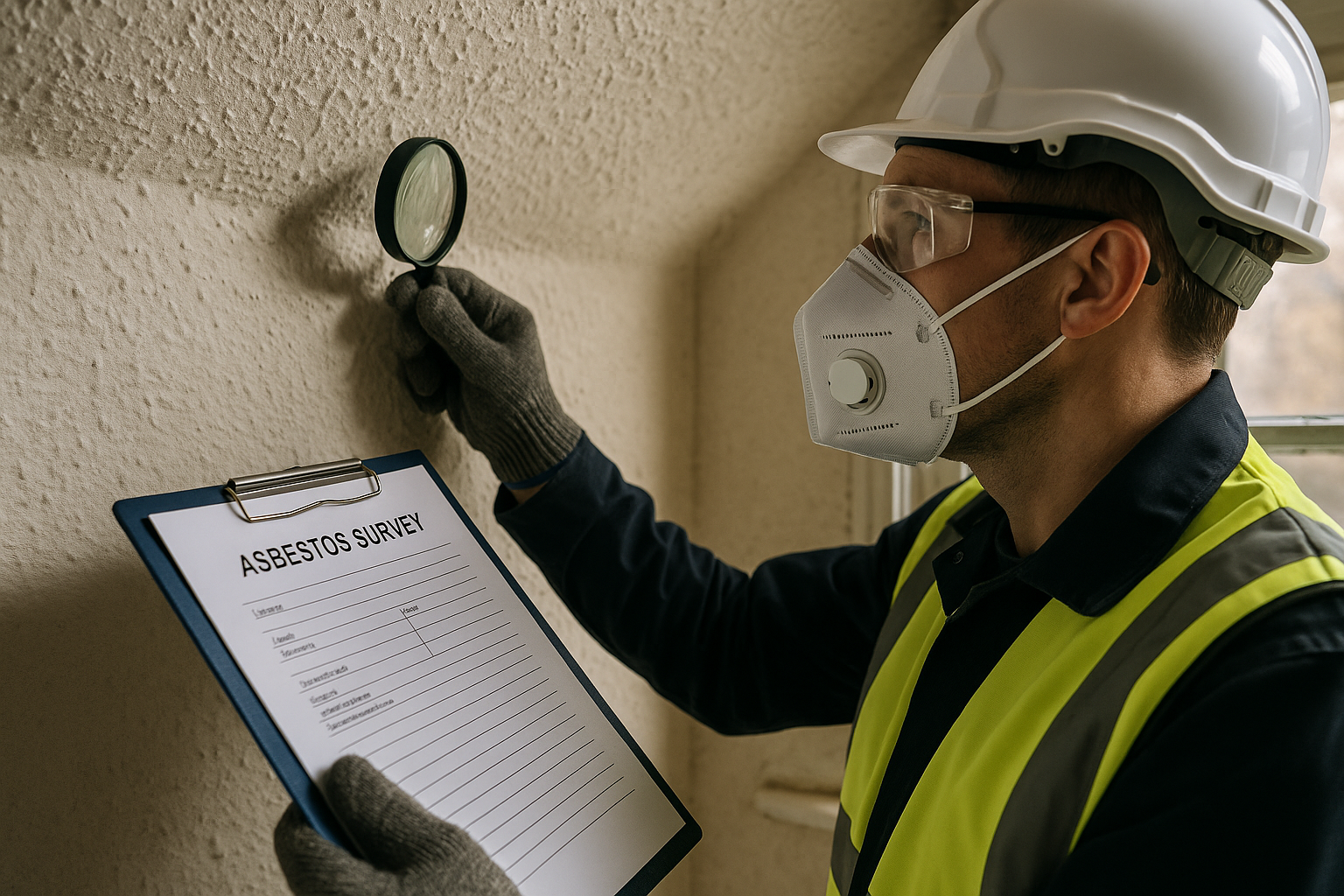
You should not wait until a contractor damages a panel or maintenance staff report suspicious debris. By that stage, the failure has already happened.
What the duty to manage involves
In straightforward terms, duty holders should:
- Find out whether asbestos-containing materials are present, or presume they are present where evidence is uncertain
- Assess the condition of those materials
- Assess the risk of fibre release and exposure
- Keep an up-to-date asbestos register
- Prepare a written asbestos management plan
- Review known materials regularly
- Share relevant information with anyone who may disturb asbestos
An asbestos register is only useful if people actually use it. If it sits in a folder that no contractor sees, it will not protect anyone and it will not demonstrate compliance.
Practical steps for property managers
If you manage multiple sites, consistency matters. Use the same register format across your portfolio, link asbestos checks to your permit-to-work system and make asbestos review part of contractor onboarding.
It also helps to build asbestos checkpoints into planned maintenance. Before approving lighting upgrades, data cabling, HVAC changes, fire alarm works or access panel removals, check whether the existing survey information is suitable for that exact task.
Good day-to-day practice includes:
- Making asbestos information part of every work order
- Requiring contractors to confirm they have reviewed the register
- Flagging known or presumed asbestos in the work area
- Reviewing reports after leaks, fire, impact damage or layout changes
- Stopping work immediately if unexpected materials are found
Survey requirements under asbestos regulations
One of the most frequent failures under asbestos regulations is using the wrong survey for the job. A survey must match the purpose of the work. If it does not, the information may be both legally and practically inadequate.
Management survey
A management survey is used to support the duty to manage in occupied buildings. Its purpose is to locate, as far as reasonably practicable, the presence and extent of asbestos-containing materials that could be damaged or disturbed during normal occupation, routine maintenance or minor installation work.
It is not fully intrusive. It focuses on accessible areas and helps you create or update the asbestos register and management plan. For offices, schools, shops, warehouses and communal areas, this is often the correct starting point.
Refurbishment survey
A refurbishment survey is needed before any work that will disturb the building fabric. That includes strip-outs, partition changes, kitchen and bathroom replacements, plant upgrades, rewiring, intrusive maintenance and major building services works.
This survey is intrusive by design. Floors, walls, ceilings and service ducts may need to be opened up so asbestos in the work area can be identified. If refurbishment is planned and you only have a management survey, you do not have enough information to proceed safely.
Demolition survey
A demolition survey is required before a building, or part of one, is demolished. It is the most intrusive type of survey and aims to identify all asbestos-containing materials within the relevant structure so they can be managed and removed appropriately before demolition begins.
Partial demolition still counts. If you are removing an extension, plant room, structural wing or another defined section of a property, that area needs the correct level of survey information.
When survey information should be reviewed
Survey data does not remain reliable forever. You should review, update or replace it when:
- The building layout has changed
- Known asbestos-containing materials have deteriorated
- Previously inaccessible areas become accessible
- Water, fire or impact damage has occurred
- Refurbishment or demolition is planned
- The report is old, unclear or incomplete
Old reports are a common weak point. If a survey predates major works, misses key areas or uses vague descriptions, do not rely on it without a competent review.
Licensed, non-licensed and notifiable work
Not all asbestos work is treated in the same way under asbestos regulations. The legal controls depend on the type of material, its condition, the likely level of fibre release and the nature of the task.

Licensed work
Higher-risk work generally requires an HSE-licensed contractor. This commonly includes work involving pipe lagging, loose fill insulation, sprayed coatings and some higher-risk work on asbestos insulation board.
Licensed contractors must meet strict requirements for training, supervision, equipment and work methods. If you are appointing a contractor for this kind of work, check that the planned activity falls within the scope of their licence and that their method statement reflects the actual site conditions.
Notifiable non-licensed work
Some tasks do not require a licence but still need to be notified because the risk is above simple low-risk work. This category is known as notifiable non-licensed work.
Where it applies, employers may also need to meet additional duties such as medical surveillance and record keeping. This is not an area for guesswork. If there is any doubt, get specialist advice before work starts.
Non-licensed work
Lower-risk tasks involving certain asbestos-containing materials may be non-licensed, but they are not uncontrolled. Suitable training, risk assessments, safe methods, PPE, cleaning arrangements and waste controls are still required.
For duty holders, the practical rule is simple: never accept a casual statement that asbestos work is low risk. Ask what material is involved, what category of work applies and what controls will be used.
Training, communication and contractor control
Even accurate survey data fails if nobody sees it. A large part of complying with asbestos regulations is making sure the right people receive the right information before work begins.
Asbestos awareness training
Anyone liable to disturb asbestos during their work should have suitable asbestos awareness training. Typical examples include:
- Electricians
- Plumbers
- Heating engineers
- Joiners
- General maintenance staff
- Telecoms installers
- Fire and security engineers
- Roofing workers
Awareness training does not qualify someone to remove asbestos. It helps them recognise likely asbestos-containing materials, understand the risk and know when to stop work.
Sharing the asbestos register
Before any task begins, contractors should receive the relevant asbestos information for the area they will access. Best practice includes:
- Issuing the asbestos register with permits or work orders
- Highlighting known or presumed asbestos in the work zone
- Recording that the contractor has reviewed the information
- Stopping work if unexpected materials are found
If a contractor says they were never shown the register, that points to a serious gap in your management system.
Questions to ask before authorising work
These checks prevent many avoidable incidents:
- Have you reviewed the asbestos information for this site?
- Do your staff have current asbestos awareness training?
- Will the work disturb walls, ceilings, floors or services?
- Do we need a refurbishment or demolition survey first?
- What is your stop-work procedure if suspicious materials are found?
What happens if asbestos is damaged or discovered unexpectedly
When asbestos is accidentally disturbed, speed and control matter. Poor decisions in the first few minutes can turn a manageable issue into a wider contamination problem.
If you suspect asbestos has been damaged:
- Stop work immediately
- Keep people out of the affected area
- Prevent the spread of dust and debris
- Do not dry sweep or use a standard vacuum cleaner
- Arrange a competent assessment from an asbestos professional
- Review whether sampling, decontamination or remedial work is required
Do not let contractors improvise. A calm, documented stop-work process should already be in place before works begin.
After any incident, review the root cause. Was the survey incomplete, unsuitable or not shared? Did the work scope change without checking asbestos information? Was the area accessed outside the agreed permit? Those answers matter because they show where your system failed.
Common compliance mistakes under asbestos regulations
Most asbestos compliance problems are not caused by obscure legal points. They come from routine management gaps that are easy to miss until something goes wrong.
The most common mistakes include:
- Relying on an old survey that no longer reflects the building
- Using a management survey for intrusive refurbishment work
- Failing to share the asbestos register with contractors
- Assuming domestic work carries no asbestos risk
- Not reviewing inaccessible areas when they later become available
- Leaving responsibility unclear between landlord, tenant and managing agent
- Allowing scope creep on projects without checking asbestos implications
- Keeping records that are technically complete but operationally useless
If any of those sound familiar, the fix is usually practical rather than complicated. Review your survey coverage, tighten your contractor controls and make asbestos checks part of work planning instead of an afterthought.
How to build asbestos regulations into everyday property management
The best way to comply with asbestos regulations is to make them part of normal building management. That means asbestos should sit alongside fire safety, water hygiene and contractor control, rather than being treated as a separate specialist issue that only appears during major projects.
A workable system for multi-site portfolios
If you manage several properties, standardise your process. Use one reporting route for damaged materials, one approval route for intrusive works and one method for issuing asbestos information to contractors.
A practical system usually includes:
- A current asbestos register for each site
- A written management plan with named responsibilities
- Clear review dates and reinspection arrangements
- Permit-to-work checks linked to asbestos information
- Escalation steps for damaged or suspected materials
- Survey triggers for refurbishment, strip-out and demolition
When to seek fresh advice
You should get competent advice when survey findings are unclear, materials have been damaged, the planned work is intrusive, or responsibilities between parties are disputed. Delaying that decision usually creates more cost and disruption later.
If you operate in the capital or surrounding areas, arranging an asbestos survey London service before works begin can prevent programme delays. The same applies in the North West, where an asbestos survey Manchester can help clarify risk before maintenance teams or contractors start opening up the building. For Midlands properties, booking an asbestos survey Birmingham is often the quickest way to establish whether your existing information is still fit for purpose.
Practical checklist for staying compliant
If you want a simple way to test whether your current arrangements are working, use this checklist:
- Do you know who the duty holder is for each property?
- Do you have the correct survey type for the building and planned work?
- Does the survey align with HSG264 expectations?
- Is your asbestos register current, clear and accessible?
- Do contractors receive the relevant asbestos information before starting?
- Are staff who may disturb asbestos trained to the appropriate level?
- Do you have a stop-work procedure for suspected asbestos?
- Have you reviewed reports after damage, alterations or newly accessible areas?
If the answer to any of those is no, that is where to focus first. Small procedural improvements often prevent the biggest compliance failures.
Why acting early matters
Asbestos regulations are not there to create paperwork for its own sake. They exist to prevent exposure by making sure asbestos is identified, assessed and managed before work begins.
For property managers, the practical lesson is straightforward. Do not wait for a refurbishment project, a contractor question or an incident to test whether your asbestos information is good enough. Check it before the next job is instructed.
If you need clear, survey-led advice, Supernova Asbestos Surveys can help with management, refurbishment and demolition surveys across the UK. Call 020 4586 0680 or visit asbestos-surveys.org.uk to arrange the right survey for your property.
Frequently Asked Questions
What are the main asbestos regulations in the UK?
The main legal framework is the Control of Asbestos Regulations. These regulations set out duties for managing asbestos in premises, controlling exposure during work, providing training and information, and using the correct controls for licensed, notifiable or non-licensed asbestos work.
When is an asbestos survey required?
An asbestos survey is required whenever you need reliable information about asbestos-containing materials in a building. A management survey is typically used for normal occupation and routine maintenance, while refurbishment and demolition surveys are required before intrusive works or demolition.
Who is responsible for asbestos in a commercial building?
Responsibility usually sits with the duty holder, meaning the person or organisation with control of maintenance or repair. That may be a landlord, managing agent, facilities management company, employer or tenant, depending on the lease and how responsibilities are allocated.
Can I rely on an old asbestos report?
Only if it is still relevant, clear and suitable for the planned activity. If the building has changed, materials have deteriorated, inaccessible areas have been opened up or intrusive work is planned, the report should be reviewed and may need updating or replacing.
What should happen if asbestos is found during building work?
Work should stop immediately, the area should be secured and dust spread should be prevented. A competent asbestos professional should then assess the material and advise on sampling, remedial action, cleaning and any further controls needed before work can continue.