Worry about the chances of getting lung cancer from asbestos is understandable. Asbestos is a proven cause of serious disease, but the level of risk is not the same for every person or every exposure. What matters most is how much fibre was inhaled, how often exposure happened, how long it continued, the type of material involved, and whether the person also smoked.
For property managers, landlords, employers and dutyholders, this is not just a health question. It is a legal and practical one. Under the Control of Asbestos Regulations, those responsible for non-domestic premises must identify asbestos risks and prevent avoidable exposure. HSE guidance and HSG264 make it clear that proper surveying and management are central to doing that safely.
What affects the chances of getting lung cancer from asbestos?
The chances of getting lung cancer from asbestos rise with cumulative exposure. In simple terms, the more asbestos fibres a person breathes in over time, the higher the risk becomes. A single brief incident is not viewed in the same way as repeated exposure over months or years, but any suspected exposure still deserves proper assessment.
Risk is shaped by several factors working together. Looking at only one of them can give a misleading picture.
- Duration of exposure – how long the person was exposed
- Intensity of exposure – how many airborne fibres were likely inhaled
- Frequency – whether exposure happened once, occasionally or routinely
- Type of asbestos material – some materials release fibres more easily when disturbed
- Condition of the material – damaged, broken or friable materials are more hazardous
- Smoking status – smoking increases lung cancer risk significantly
- Time since exposure – asbestos disease often develops after a long latency period
In practical terms, someone who briefly entered an area containing intact asbestos cement does not face the same level of concern as a worker who repeatedly drilled asbestos insulating board. Exposure history matters. So does the condition of the material at the time.
How asbestos causes lung cancer
Asbestos is dangerous because tiny fibres can be inhaled deep into the lungs. Once there, some fibres remain in lung tissue for many years. The body cannot easily break them down or remove them.
Over time, these fibres can contribute to chronic inflammation, tissue damage and abnormal cellular changes. That is why HSE guidance recognises asbestos as a cause of lung cancer, mesothelioma and asbestosis.
What happens inside the lungs
When fibres are breathed in, they can lodge in the airways and lung tissue. Normal repair processes may be disrupted, especially after repeated exposure. Persistent irritation and scarring can develop over time.
This does not mean every exposure leads to cancer. It does mean that repeated or heavy exposure should never be dismissed, particularly where dust was created by drilling, cutting, sanding, breaking or removing asbestos-containing materials.
Lung cancer is not the only asbestos disease
People often focus on cancer, but asbestos exposure can also lead to other serious conditions. These include:
- Asbestosis
- Pleural thickening
- Pleural plaques
- Mesothelioma
That matters because someone with a history of asbestos exposure may still face health consequences even if lung cancer does not develop. Symptoms can take decades to appear, which is why prevention is far better than reacting after the fact.
Does long-term exposure increase the chances of getting lung cancer from asbestos?
Yes. Long-term exposure increases the chances of getting lung cancer from asbestos because risk is closely linked to cumulative dose. Repeated inhalation over time builds up the overall fibre burden in the lungs.

This is why people who worked for years in construction, insulation, shipbuilding, manufacturing, demolition and plant maintenance have historically faced greater risk. It is also why poor asbestos management in older buildings can create repeated low-level exposure for maintenance teams and contractors.
Duration of exposure
Long-term exposure usually means regular or ongoing contact over months or years. In a building context, that could involve repeated disturbance of lagging, sprayed coatings, insulation board, debris in ceiling voids, or contaminated dust in service areas.
Where asbestos-containing materials remain sealed, intact and undisturbed, the risk is much lower. The danger increases when materials are damaged, drilled, cut, broken, sanded or removed incorrectly.
Intensity of exposure
Intensity matters just as much as time. A short period of heavy fibre release may be more concerning than a much longer period of very low-level background exposure. For example, uncontrolled removal of insulation board creates a very different risk profile from occupying a room containing intact asbestos cement sheets.
This is why any realistic assessment must look at the material type, condition and what activity actually took place.
Cumulative exposure
Cumulative exposure is the total burden built up from all exposure events combined. Separate incidents do not cancel each other out. If a maintenance worker disturbs suspect materials several times across different sites, the risk builds over time.
For dutyholders, this is one of the strongest reasons to keep asbestos records current and make sure contractors have the right information before work starts.
Short-term exposure vs long-term exposure
People often ask whether one-off exposure is enough to cause lung cancer. The honest answer is that long-term exposure is usually associated with a much higher risk, but short-term exposure still needs to be taken seriously and assessed properly.
There is no responsible way to give a personal percentage risk after a single incident without understanding what material was involved, how much dust was created, whether fibres became airborne, and how long the person remained in that environment.
Short-term exposure
Short-term exposure can happen during accidental drilling, minor refurbishment, cable installation, ceiling work or unplanned damage to older materials. The risk may be relatively low if the disturbance was brief and limited, but it should never be brushed aside.
If you suspect a short-term exposure, take these steps straight away:
- Stop work immediately
- Keep others out of the area
- Do not sweep dust or use a standard vacuum cleaner
- Arrange inspection or sampling by a competent asbestos professional
- Record the incident for health and compliance purposes
Fast action helps prevent further disturbance and protects anyone else who may enter the area.
Long-term exposure
Long-term exposure is more concerning because repeated inhalation increases total fibre dose. This is where the chances of getting lung cancer from asbestos become materially higher.
Repeated disturbance of the same hidden asbestos-containing materials is a common failure point in poorly managed buildings. An up-to-date register, clear management plan and suitable survey work are what prevent that pattern from developing.
Smoking and asbestos: why the risk becomes much worse
Smoking does not replace the asbestos effect. It adds to it. Together, smoking and asbestos create a far more dangerous combination for lung cancer than either factor alone.
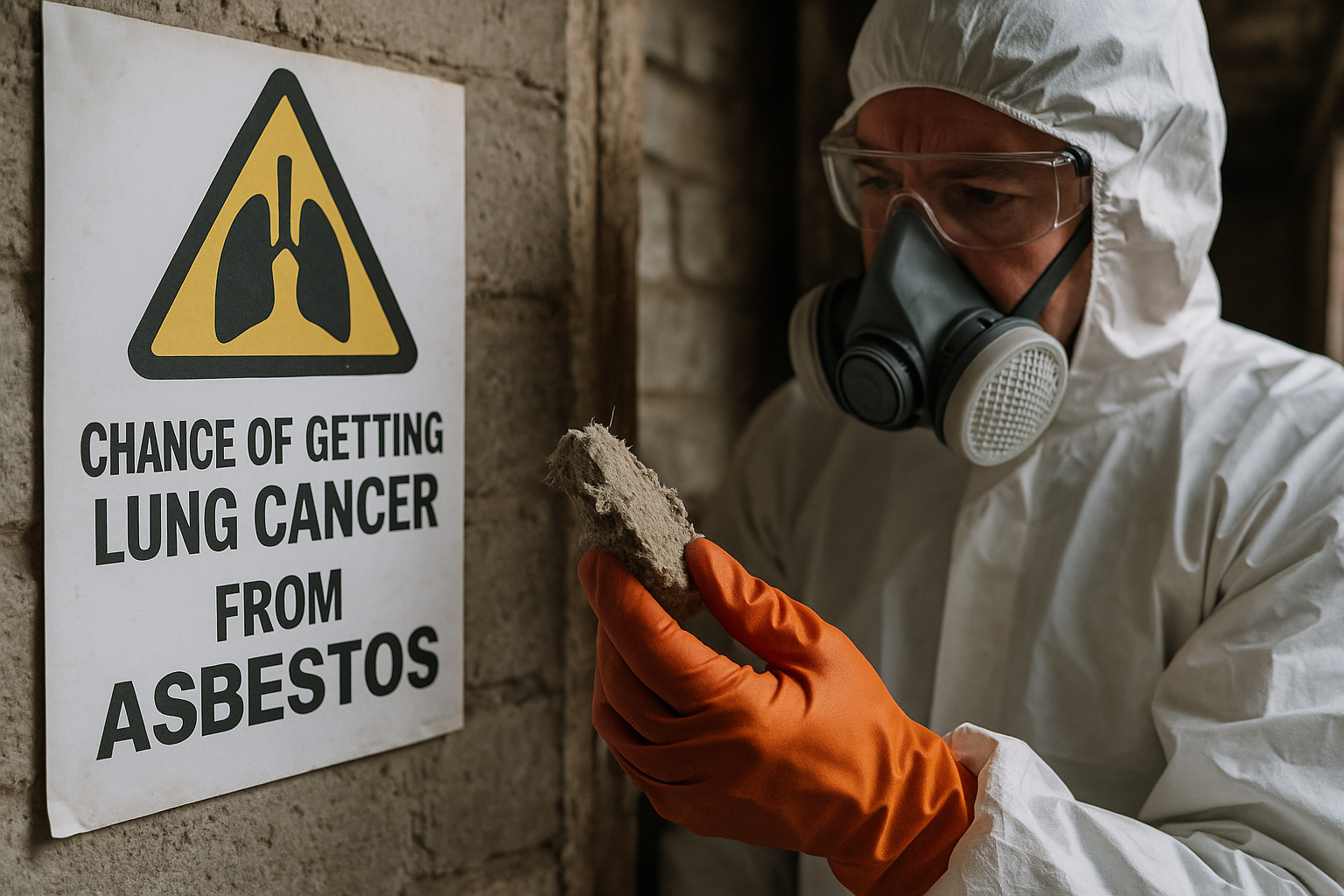
This is one of the most important points for anyone trying to understand the chances of getting lung cancer from asbestos. A smoker with asbestos exposure generally faces a much higher risk than a non-smoker with a similar exposure history.
Why the combination is so harmful
Smoking already damages the lungs and affects how the airways clear harmful particles. Add asbestos fibres to that environment and the potential for long-term damage rises sharply.
If someone knows they have been exposed to asbestos and they smoke, stopping smoking is one of the most practical steps they can take to reduce future lung cancer risk. It does not remove past exposure, but it can reduce one major additional risk factor.
Can non-smokers still get lung cancer from asbestos?
Yes. Asbestos can cause lung cancer in non-smokers as well. Smoking increases the risk, but it is not required for asbestos-related lung cancer to occur.
That distinction matters because some people wrongly assume they are safe if they have never smoked. Unfortunately, asbestos exposure on its own can still be serious.
Occupational exposure and environmental exposure
Not all asbestos exposure happens at work, but occupational exposure has historically been the most significant. Tradespeople, engineers, maintenance teams, plant workers and demolition workers have often faced the highest fibre levels because they disturbed asbestos-containing materials directly.
Environmental exposure can also happen, usually at lower levels, through deteriorating materials in buildings or contaminated dust in occupied spaces.
Higher-risk occupational settings
Settings historically associated with higher asbestos exposure include:
- Construction and refurbishment
- Shipbuilding and ship repair
- Boiler and plant maintenance
- Industrial manufacturing sites
- Demolition work
- Older schools, hospitals and public buildings
If you manage an older property portfolio, the right approach is not to guess where asbestos may be. It is to identify it before maintenance or refurbishment begins. A professional survey is the starting point.
For routine occupation and normal maintenance, a management survey helps locate asbestos-containing materials that could be disturbed during everyday use. Before major structural work, a more intrusive demolition survey is needed to identify hidden asbestos before the building fabric is disturbed.
Environmental and secondary exposure
Environmental exposure may occur where damaged materials release fibres into work areas, communal spaces or service zones. Secondary exposure also happened historically when contaminated work clothing was taken home.
These situations are often lower level than heavy industrial exposure, but they still deserve proper attention. The right response is to identify the material, assess its condition and control the risk before anyone disturbs it again.
Why asbestos in buildings is a management issue as well as a health issue
For dutyholders, asbestos is not only about medical risk. It is also about legal compliance, contractor safety, project planning and business continuity. If asbestos is missed, work can stop immediately, areas may need to be isolated, and costs can rise very quickly.
The Control of Asbestos Regulations require dutyholders to manage asbestos in non-domestic premises. HSG264 sets out how asbestos surveys should be carried out, and HSE guidance explains how asbestos-containing materials should be identified, assessed and managed.
Your practical duties as a dutyholder
If you are responsible for a non-domestic building, you should:
- Find out whether asbestos is present or likely to be present
- Keep an up-to-date asbestos register
- Assess the risk from known or presumed asbestos-containing materials
- Share information with anyone liable to disturb those materials
- Review and update the management plan regularly
- Arrange the correct survey before refurbishment or demolition
Missing any of these steps increases the chance of accidental disturbance. That is when discussion about the chances of getting lung cancer from asbestos stops being theoretical and becomes a real incident with real consequences.
When should you arrange an asbestos survey?
If a building was constructed or refurbished before asbestos use was fully banned in the UK, asbestos may still be present. That should be assumed unless suitable evidence shows otherwise.
Surveys are especially important before maintenance, refurbishment, strip-out, plant replacement or demolition. Leaving it until contractors uncover suspect materials is the most expensive and disruptive way to deal with asbestos.
If your site is in the capital, arranging an asbestos survey London service before work starts can prevent delays and reduce the chance of accidental exposure. The same applies regionally. A planned asbestos survey Manchester booking or an early asbestos survey Birmingham inspection is far safer than discovering asbestos halfway through a project.
What to do if asbestos is found
Finding asbestos does not automatically mean panic or immediate removal. In many cases, asbestos-containing materials can remain in place if they are in good condition, properly assessed and unlikely to be disturbed.
The correct action depends on the type of material, its condition, its location and the likelihood of future disturbance.
Typical next steps
- Confirm the material through survey findings or sampling
- Review the material assessment and priority assessment
- Update the asbestos register
- Decide whether the material should be managed, repaired, encapsulated or removed
- Inform anyone who may work on or near it
If removal is necessary, it must be handled correctly and, where required, by a licensed contractor. Where damaged or high-risk materials cannot safely remain in place, professional asbestos removal may be the right next step.
Can the risk reduce after exposure stops?
Stopping exposure is always better than allowing it to continue. If asbestos exposure ends, the ongoing addition of fibres stops as well. That may reduce future risk compared with continued contact.
What it does not do is erase past exposure. Asbestos-related diseases can develop after a long latency period, which is why preventing further exposure remains so important even after an incident has already happened.
For anyone with known or suspected significant exposure, sensible practical steps include:
- Keeping a record of where and when exposure may have occurred
- Informing occupational health or an employer where relevant
- Speaking to a GP if symptoms develop or exposure was substantial
- Avoiding further disturbance of suspect materials
- Stopping smoking if applicable
From a building management point of view, the lesson is straightforward: identify asbestos early and stop repeat exposure before it becomes a pattern.
Practical advice for property managers, landlords and employers
The best way to reduce the chances of getting lung cancer from asbestos in any managed building is to prevent exposure in the first place. That means having clear information before anyone drills, cuts, strips out or demolishes part of the property.
If you are responsible for older premises, focus on actions that genuinely reduce risk:
- Check whether an asbestos survey already exists
Do not assume old paperwork is still valid. Review whether it matches the current building layout and use. - Keep the asbestos register accessible
Contractors, maintenance staff and facilities teams should be able to see relevant information before work begins. - Train staff to recognise the warning signs
They do not need to identify every asbestos product, but they should know when to stop and ask. - Plan intrusive works properly
Routine maintenance and major refurbishment need different levels of survey input. Use the right survey for the job. - Do not rely on visual guesswork
Many asbestos-containing materials look similar to non-asbestos alternatives. Sampling and competent inspection matter. - Act quickly after accidental disturbance
Stopping work, isolating the area and getting professional advice straight away can prevent a minor incident becoming a major one.
These steps are not just about compliance. They are the practical controls that stop people inhaling fibres in the first place.
Frequently Asked Questions
Is one exposure to asbestos likely to cause lung cancer?
A single exposure is generally less concerning than repeated or long-term exposure, but it should not be ignored. The level of risk depends on what material was disturbed, how much dust was created, whether fibres were airborne and how long the exposure lasted.
Does every person exposed to asbestos get lung cancer?
No. Not everyone exposed to asbestos will develop lung cancer. Risk varies according to cumulative exposure, material type, duration, intensity, smoking status and other individual factors. The aim should always be to prevent exposure rather than try to estimate personal odds after the event.
Is asbestos more dangerous if you smoke?
Yes. Smoking and asbestos together create a much higher lung cancer risk than either factor alone. If someone has a history of asbestos exposure, stopping smoking is one of the most useful actions they can take to reduce future risk.
Should asbestos always be removed from a building?
No. Asbestos does not always need to be removed. If asbestos-containing materials are in good condition and unlikely to be disturbed, they can often be managed in place. Removal is usually considered where materials are damaged, deteriorating or likely to be disturbed by planned works.
When do I need an asbestos survey?
You should arrange an asbestos survey when managing an older non-domestic building, before maintenance that may disturb materials, and before any refurbishment or demolition work. The correct survey type depends on what is planned and how intrusive the work will be.
If you need clear advice on asbestos risk, compliant surveying or the right next step for your building, speak to Supernova Asbestos Surveys. We provide nationwide asbestos inspections, sampling, management support and pre-works surveys for landlords, dutyholders and commercial property managers. Call 020 4586 0680 or visit asbestos-surveys.org.uk to book a survey or discuss your site.