A dusty ceiling void, a drilled panel, a rushed maintenance job in an older building — that is often how asbestos incidents begin. Unprotected exposure to asbestos can lead to serious disease years after the event, which is why landlords, dutyholders, facilities teams and contractors cannot afford to make assumptions in pre-2000 premises.
The danger is rarely obvious in the moment. More often, asbestos-containing materials are disturbed during routine work, fibres become airborne, and nobody realises the significance until much later. Under the Control of Asbestos Regulations, supported by HSG264 and wider HSE guidance, the practical message is clear: identify asbestos before work starts, assess the risk properly, and prevent exposure.
Why unprotected exposure to asbestos can lead to serious illness
Unprotected exposure to asbestos can lead to illness because asbestos fibres are microscopic, durable and easily inhaled when disturbed. Once those fibres enter the lungs, the body may struggle to break them down or remove them.
Over time, retained fibres can contribute to inflammation, scarring and cellular damage. That is why asbestos-related disease can appear long after the original incident, even where the exposure happened during what seemed like a minor job.
The level of risk depends on several factors, including:
- How much fibre was released
- How long the person was exposed
- Whether similar exposure happened repeatedly
- The type of asbestos involved
- Whether the material was friable or tightly bound
- How enclosed or ventilated the area was
- Whether suitable respiratory protection was used
- Whether the exposed person smokes, which increases lung cancer risk
There is no reliable way to look at a single incident and predict a health outcome. That uncertainty is exactly why every suspected disturbance should be taken seriously, recorded properly and reviewed by a competent asbestos professional.
What asbestos is and where it is commonly found
Asbestos is the name given to a group of naturally occurring fibrous minerals once used widely in UK construction. It was favoured for heat resistance, durability and insulating properties, which is why it still appears in many older buildings.
Any building built before 2000 should be treated with caution unless there is clear evidence to the contrary. Asbestos may be present in obvious places, but it is also hidden behind finishes, above ceilings, inside risers and around services.
Common asbestos-containing materials include:
- Pipe lagging and thermal insulation
- Asbestos insulating board
- Cement sheets, soffits and roof panels
- Textured coatings
- Floor tiles and bitumen adhesives
- Sprayed coatings
- Gaskets, ropes and seals
- Ceiling tiles
- Boiler and plant room insulation
- Panels in service risers and ducts
Asbestos in good condition is often lower risk if it remains undisturbed and is managed correctly. Problems usually begin when materials are drilled, cut, sanded, broken, removed or otherwise damaged during maintenance, repair, refurbishment or demolition.
How people are exposed to asbestos
Many people still associate asbestos exposure with heavy industry. In practice, exposure can happen in offices, schools, warehouses, shops, hospitals, communal areas, plant rooms and homes.
Occupational exposure
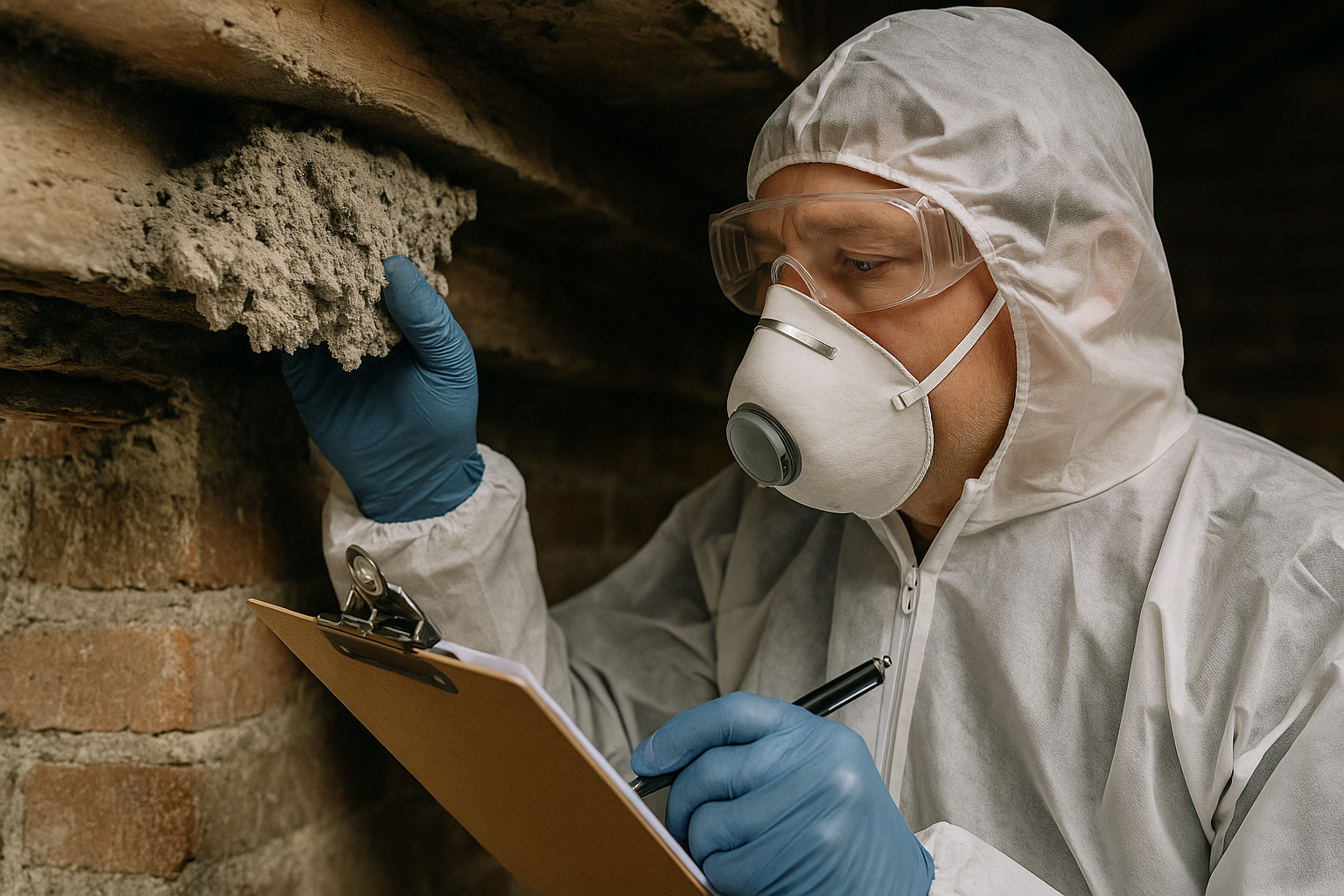
Historically, the greatest risks were seen in shipbuilding, insulation work, demolition and manufacturing. Today, many incidents involve tradespeople carrying out ordinary work in older premises without accurate asbestos information.
Those at risk can include:
- Electricians
- Plumbers
- Heating and ventilation engineers
- Decorators
- Telecoms engineers
- General maintenance staff
- Refurbishment contractors
- Caretakers and site teams
A worker may be exposed simply by lifting old floor finishes, opening a ceiling void, chasing into wall linings or accessing a service duct without checking the asbestos register first.
Domestic or secondhand exposure
Secondhand exposure is a recognised issue. Fibres can be carried on clothing, footwear, hair, tools and vehicles, exposing family members who never worked directly with asbestos themselves.
That is one reason controlled work methods, segregation of contaminated areas and decontamination procedures matter so much. If asbestos is disturbed on site, the risk does not always remain on site.
Environmental exposure
Some people have also been exposed through damaged buildings, contaminated land or former industrial sites. This route is less common than workplace exposure, but it is still recognised where contamination is suspected.
DIY and refurbishment exposure
Modern incidents often happen during alterations to older buildings. Removing partitions, replacing ceilings, drilling into wall panels, stripping out kitchens or opening service routes can all release fibres if asbestos is present.
Before any intrusive work begins, the survey type must match the planned job. If the project involves opening up the fabric of the building, a refurbishment survey should be arranged before anyone starts cutting, breaking or removing materials.
What diseases unprotected exposure to asbestos can lead to
Unprotected exposure to asbestos can lead to several serious health conditions. Some are cancerous, some are non-cancerous, and all deserve proper attention.
One of the hardest aspects of asbestos-related disease is the long latency period. Symptoms often do not appear until many years after exposure, which is why old incidents should never be dismissed simply because no immediate illness followed.
Mesothelioma
Mesothelioma is strongly associated with asbestos exposure. It affects the lining of the lungs and, less commonly, the lining of the abdomen.
It can follow occupational, domestic or environmental exposure. Even where the exposure happened decades earlier, the link with inhaled asbestos fibres is well established.
Lung cancer
Asbestos exposure is a recognised cause of lung cancer. The risk is significantly higher in people who also smoke, because smoking and asbestos act together to increase the harm.
If someone has a history of asbestos exposure, stopping smoking is one of the most practical steps available to reduce future lung cancer risk.
Asbestosis
Asbestosis is a chronic lung disease caused by inhaling asbestos fibres over time. It is not cancer, but it can seriously affect breathing and quality of life.
The disease develops when fibres reach deep into the lungs and trigger scarring. As that scarring progresses, the lungs become less flexible and less effective at transferring oxygen.
Asbestosis is more commonly linked with heavier or repeated exposure rather than a brief one-off event. That said, any uncontrolled exposure still needs investigation and prevention.
Pleural plaques, pleural thickening and pleural effusions
Asbestos can also affect the pleura, the thin lining around the lungs. This may lead to:
- Pleural plaques — localised thickening that usually indicates past exposure
- Pleural thickening — more extensive thickening that may affect breathing
- Pleural effusions — fluid around the lungs in some cases
These conditions vary in severity. Some are found incidentally during imaging, while others contribute to breathlessness and reduced lung function.
Other cancers linked to asbestos
There is accepted evidence linking asbestos exposure with cancers of the larynx and ovary. Research has examined links with other cancers as well, but the strongest established associations remain mesothelioma, lung cancer, laryngeal cancer and ovarian cancer.
Symptoms to watch for after asbestos exposure
Symptoms of asbestos-related disease do not usually appear straight away. In many cases, they develop slowly over a long period.
Common symptoms that should be assessed by a medical professional include:
- Shortness of breath
- A persistent cough
- Chest tightness or chest pain
- Wheezing
- Unexplained tiredness
- Finger clubbing in more advanced cases
These symptoms are not unique to asbestos-related conditions. That is why a clear exposure history matters if you speak to your GP or another clinician.
If you know you were exposed and later develop respiratory symptoms, mention the exposure clearly. Accurate records can make a real difference when medical assessment is needed.
How serious is one-off or short-term exposure?
This is one of the most common questions after an accidental disturbance. The honest answer is that short-term exposure is generally lower risk than heavy or repeated occupational exposure, but it is not the same as no risk.
A brief low-level event is very different from hours of uncontrolled work on friable asbestos insulation in an enclosed area. Dose matters, duration matters and repeated exposure matters.
What makes one-off incidents difficult is that people often do not know:
- Whether the material actually contained asbestos
- What type of asbestos was present
- How much fibre became airborne
- How long the exposure lasted
- Whether contamination spread to clothing or nearby areas
That is why the right response is practical rather than speculative. Confirm what the material is, isolate the area, stop further disturbance and get competent advice.
Unprotected exposure to asbestos can lead to understandable concern, but panic does not help. A calm, documented response does.
What to do immediately after suspected asbestos exposure
If you think asbestos has been disturbed, act quickly and sensibly. The priority is to stop further fibre release and prevent more people being exposed.
- Stop work immediately. Do not continue drilling, cutting, sanding or removing material.
- Leave the area if dust is present. Keep others out and restrict access.
- Do not disturb the material further. Avoid sweeping, dry brushing or using a standard vacuum cleaner.
- Wash exposed skin gently. If clothing may be contaminated, remove it carefully to avoid spreading fibres.
- Bag contaminated clothing if required. Do not shake dusty items indoors.
- Report the incident. If it happened at work, inform the manager, dutyholder or responsible person straight away.
- Arrange professional assessment. The area may need sampling, air testing, encapsulation or removal depending on the circumstances.
- Make a written record. Note the date, location, task, material disturbed and who was present.
If you are a landlord, facilities manager or managing agent, review the asbestos register and management plan after the incident. If the existing information did not prevent the disturbance, there is a process gap that needs fixing.
What dutyholders and property managers should do to stay compliant
If you manage non-domestic premises, asbestos is not just a maintenance issue. It is a legal compliance issue.
Under the Control of Asbestos Regulations, dutyholders must take reasonable steps to find out whether asbestos is present, assess the risk and manage that risk. HSG264 and related HSE guidance explain how asbestos surveys should be planned and carried out.
In practical terms, that means you should:
- Identify whether the building is likely to contain asbestos
- Arrange the correct survey for the premises and planned work
- Keep an up-to-date asbestos register
- Prepare and maintain an asbestos management plan where required
- Share asbestos information with contractors before work starts
- Review records after incidents, alterations or removals
- Use competent surveyors and licensed contractors where necessary
One of the most common failures is assuming an old survey covers every future task. It does not. The survey type must match the work being planned.
Management survey or refurbishment survey?
A management survey helps dutyholders manage asbestos during normal occupation and routine maintenance. It is designed to locate, as far as reasonably practicable, asbestos-containing materials that could be damaged or disturbed during everyday use of the building.
A refurbishment survey is different. It is required before intrusive refurbishment or upgrade work and is more disruptive because it is intended to locate asbestos in the specific areas affected by the planned works.
If walls, ceilings, floor voids, risers or service routes are being opened up, a management survey is not enough. That is when a refurbishment survey becomes essential.
Practical steps to prevent asbestos exposure on site
The best asbestos incident is the one that never happens. Prevention depends on planning, communication and using the right information before work starts.
For property teams, contractors and managing agents, these steps make a real difference:
- Check whether the building age and construction suggest asbestos may be present
- Review the asbestos register before maintenance begins
- Make sure contractors have access to asbestos information before arriving on site
- Stop work if the register is unclear, missing or out of date
- Use permit-to-work controls for intrusive tasks in higher-risk areas
- Train staff to recognise suspect materials and escalation procedures
- Update records after removals, damage or changes to the building
- Never assume a material is safe because it looks ordinary
Simple habits prevent costly mistakes. If a contractor is about to drill, cut, strip out, access a riser or remove finishes in an older building, the first question should be: what does the asbestos information say?
When to pause work
Stop and seek advice if:
- The planned task is intrusive and no suitable survey is available
- The asbestos register does not cover the work area clearly
- Materials on site do not match the records
- Damage, dust or debris suggests previous disturbance
- Contractors cannot confirm they have seen the asbestos information
Pausing work for proper checks is far better than dealing with contamination, delays and potential enforcement action later.
Why survey quality matters
Good asbestos management starts with reliable information. If the survey is poor, out of date or unsuitable for the planned work, the risk of accidental disturbance rises sharply.
That is why survey scope matters just as much as survey presence. A document sitting in a file is not enough if it does not reflect the actual task, access limitations or current condition of the building.
For occupied premises, a suitable survey supports day-to-day control. For intrusive projects, it protects everyone involved in the work. If your site portfolio includes multiple locations, consistency matters too.
Whether you need an asbestos survey London, an asbestos survey Manchester or an asbestos survey Birmingham, the principle is the same: the survey must be suitable, clear and usable by the people making decisions on site.
Common mistakes that lead to asbestos incidents
Most asbestos incidents are not caused by unusual events. They usually happen because ordinary controls fail.
Common mistakes include:
- Starting work before checking asbestos information
- Relying on a management survey for intrusive refurbishment work
- Assuming a modern-looking fit-out means asbestos is absent
- Failing to share the asbestos register with contractors
- Using untrained staff to assess suspect materials
- Disturbing debris without confirming what it is
- Not updating records after alterations or removals
- Allowing urgent reactive maintenance to bypass normal checks
If you manage a busy property, reactive jobs are often where standards slip. Build asbestos checks into emergency call-out procedures so urgent work does not become uncontrolled work.
What to record after an asbestos incident
Good record-keeping is essential after any suspected disturbance. It helps with risk assessment, remediation, internal review and any later health concerns.
Your incident record should include:
- Date and time of the incident
- Exact location
- What work was being carried out
- Description of the material disturbed
- Names of people present
- Immediate actions taken
- Whether the area was isolated
- Whether sampling or air testing was arranged
- What the asbestos register showed at the time
- What corrective actions were taken afterwards
This information should feed back into your asbestos management plan. If the event exposed a gap in surveying, contractor control or communication, fix that gap before the next job starts.
Frequently Asked Questions
Can a single exposure to asbestos cause illness?
A single exposure is generally lower risk than repeated or heavy exposure, but it is not automatically risk-free. The level of risk depends on the material, how much fibre was released, how long the exposure lasted and whether contamination spread.
What should I do if I accidentally drilled into a material that might contain asbestos?
Stop work immediately, leave the area if dust is present, keep others out and avoid further disturbance. Report the incident, arrange professional assessment and make a written record of what happened.
Is secondhand asbestos exposure a real risk?
Yes. Fibres can be carried on clothing, footwear, hair and tools, which is why domestic or secondhand exposure is recognised. Proper decontamination and controlled work methods are essential where asbestos is disturbed.
Do I need a management survey or a refurbishment survey?
A management survey is for normal occupation and routine maintenance. A refurbishment survey is needed before intrusive work that opens up the building fabric, such as removing ceilings, opening risers or stripping out walls and floors.
Who is responsible for managing asbestos in non-domestic premises?
Under the Control of Asbestos Regulations, the dutyholder is responsible for taking reasonable steps to identify asbestos, assess the risk and manage it properly. In practice, that often includes landlords, managing agents, employers and those with maintenance responsibilities.
If you need clear asbestos advice, a reliable survey, or support managing risk across your property portfolio, Supernova Asbestos Surveys can help. We carry out management and refurbishment surveys nationwide with practical reporting that supports compliance and safer decision-making. Call 020 4586 0680 or visit asbestos-surveys.org.uk to arrange your survey.