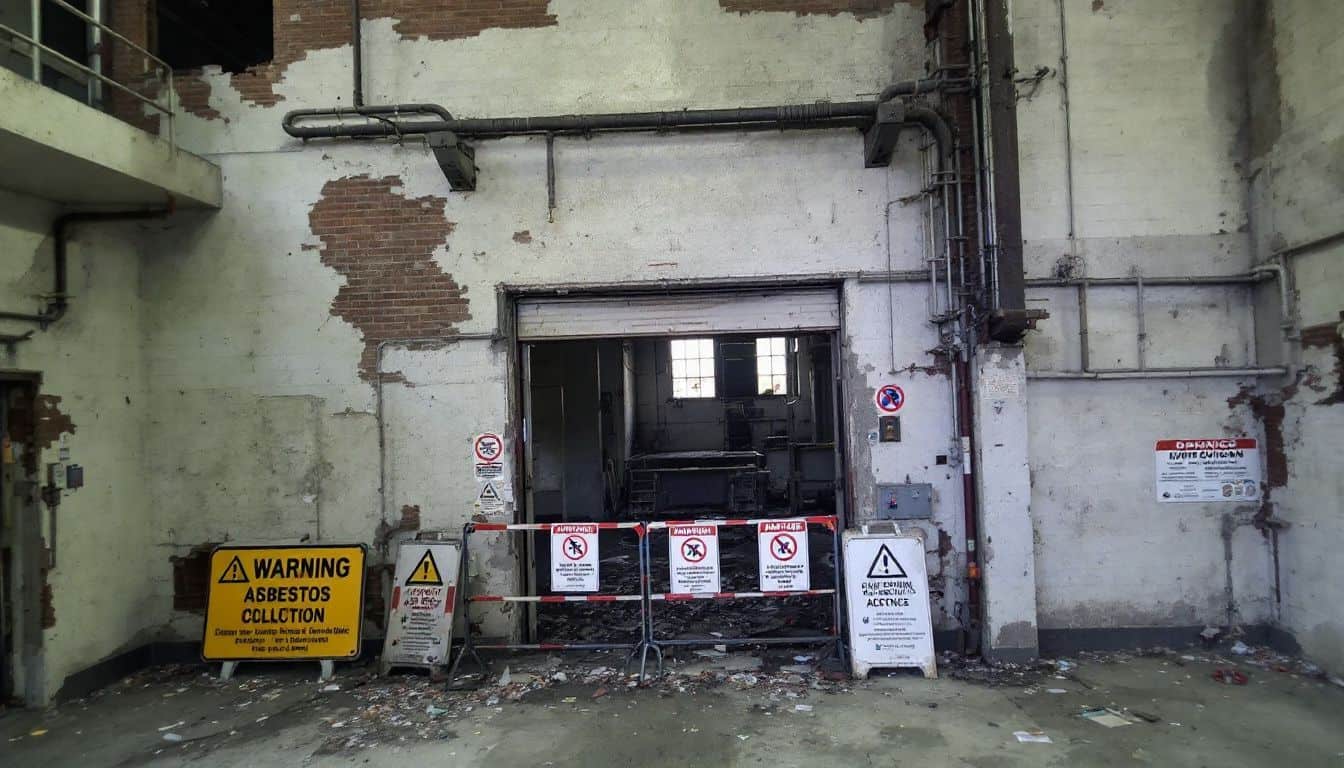
Asbestos in the UK: The Health Risks, Legal Duties, and What You Must Do
Asbestos kills more people in the UK each year than road accidents. That stark reality is the enduring legacy of a material once celebrated as a wonder of modern engineering — and it is a legacy that has not finished claiming lives. If you own, manage, or work in any building constructed before 2000, asbestos is not a historical curiosity. It is a present-day risk that carries serious legal obligations and, if ignored, devastating health consequences.
Why Asbestos Was Used So Widely Across the UK
For most of the twentieth century, asbestos was considered an extraordinary material. It is naturally fire-resistant, highly durable, and an excellent insulator — properties that made it attractive across construction, manufacturing, shipbuilding, and domestic products alike.
In UK buildings, it was incorporated into roof sheeting, floor tiles, pipe lagging, ceiling tiles, and textured decorative coatings such as Artex. It appeared in electrical equipment, automotive brake pads, and even household appliances. The scale of use was enormous — millions of tonnes were imported and installed throughout the twentieth century.
It was only after mounting evidence of catastrophic health consequences that the UK moved to restrict and ultimately ban its use. The final ban on chrysotile (white asbestos) came into force in 1999. That ban came too late for many, and the buildings constructed during the peak decades of use are still standing — fibres and all.
How Asbestos Enters the Body
The primary route of exposure is inhalation. When asbestos-containing materials are disturbed — through drilling, cutting, sanding, or simple deterioration — microscopic fibres are released into the air. These fibres are invisible to the naked eye and can remain airborne for extended periods.
Once inhaled, the fibres lodge deep in the lung tissue. The body cannot break them down or expel them effectively. Over time, this causes scarring, inflammation, and cellular damage that can progress to serious disease — sometimes decades after the original exposure.
Secondary exposure is also a well-documented risk. Fibres carried home on work clothing have exposed the families of construction workers, shipbuilders, and factory workers who never set foot on a worksite themselves. Children playing near industrial sites, or in homes where contaminated clothing was laundered, have also been affected.
Ingestion and skin contact are less common routes but are not negligible, particularly where asbestos has contaminated water supplies or soil near former industrial sites.
The Serious Health Conditions Caused by Asbestos Exposure
Asbestos-related diseases are serious, progressive, and largely irreversible. The latency period — the time between first exposure and the onset of disease — is typically between 20 and 40 years. People being diagnosed today may have been exposed in the 1980s or earlier.
Mesothelioma
Mesothelioma is a cancer of the mesothelium — the thin membrane lining the lungs, chest cavity, abdomen, and other organs. It is almost exclusively caused by asbestos exposure, and it remains incurable in the vast majority of cases.
The UK has one of the highest rates of mesothelioma in the world, a direct consequence of the country’s heavy industrial use of asbestos throughout the twentieth century. Thousands of people are diagnosed each year, and the disease typically carries a poor prognosis. Symptoms — including chest pain, breathlessness, and persistent cough — often do not appear until the cancer is advanced.
Amphibole forms of asbestos, particularly crocidolite (blue asbestos) and amosite (brown asbestos), are considered the most potent causes of mesothelioma. However, chrysotile also carries risk, particularly at high or prolonged exposure levels.
Lung Cancer
Asbestos is a recognised cause of lung cancer, and the risk is significantly elevated in individuals who also smoke. The combination of asbestos exposure and cigarette smoking multiplies risk substantially compared to either factor alone.
Asbestos-related lung cancer is clinically indistinguishable from lung cancer caused by other factors, which makes attribution difficult. This means the true number of lung cancer deaths attributable to asbestos is likely higher than official figures suggest.
Asbestosis
Asbestosis is a chronic, progressive fibrosis of the lung tissue caused by prolonged asbestos exposure. The fibres trigger an inflammatory response that leads to scarring, reducing the lungs’ ability to expand and transfer oxygen into the bloodstream.
Symptoms include increasing breathlessness, a persistent dry cough, and fatigue. There is no cure. Management focuses on slowing progression and improving quality of life, and asbestosis also increases the risk of developing lung cancer.
Pleural Diseases
Asbestos exposure can cause a range of pleural conditions that do not involve cancer but still significantly impair quality of life:
- Pleural plaques — areas of thickened, calcified tissue on the pleural lining; the most common asbestos-related condition, often detected incidentally on chest X-rays
- Diffuse pleural thickening — more extensive scarring of the pleural lining that can cause significant breathlessness
- Pleural effusion — fluid accumulation around the lungs, another documented consequence of asbestos exposure
Who Is Most at Risk from Asbestos Exposure
Certain groups face significantly elevated risk due to the nature of their work or their environment. Understanding where the greatest dangers lie helps duty holders and individuals take proportionate, targeted action.
Construction and Trades Workers
Electricians, plumbers, carpenters, plasterers, and demolition workers are among the occupations with the highest ongoing risk of asbestos exposure. These trades frequently involve working in older buildings where asbestos-containing materials are present, often without adequate identification or risk management in place.
Employers operating in the construction sector are legally required to assess the risk of asbestos exposure before any work begins, provide appropriate training and protective equipment, and ensure that workers are not exposed unnecessarily.
Families of Exposed Workers
Secondary exposure through contaminated clothing remains a significant pathway. Spouses who laundered workwear and children who had contact with workers returning from asbestos-heavy environments have developed mesothelioma and other asbestos-related diseases without any direct occupational exposure themselves.
Children in Schools and Public Buildings
Many UK schools were built during the peak decades of asbestos use. Children’s developing respiratory systems are particularly vulnerable to asbestos fibres, and their higher breathing rates relative to body size mean they may inhale proportionally more fibres in a contaminated environment.
Duty holders — including local authorities and academy trusts — have clear legal obligations to survey, record, and manage asbestos in school buildings. This is not a matter of best practice; it is a regulatory requirement.
The Legal Framework: What UK Law Requires
The Control of Asbestos Regulations is the primary legislation governing the management of asbestos in non-domestic premises across the UK. It places a duty to manage asbestos on anyone responsible for the maintenance or repair of non-domestic premises.
The regulations require duty holders to take reasonable steps to find asbestos-containing materials, assess their condition and the risk they present, and produce a written plan for managing that risk. The asbestos register must be kept up to date and made available to anyone who may disturb the materials — including contractors and maintenance workers.
The HSE’s guidance document HSG264 provides detailed technical guidance on how asbestos surveys should be planned and conducted. It defines the main survey types and sets out the standards that surveyors and duty holders must meet.
Employer Duties Under the Regulations
- Identify and locate asbestos-containing materials through appropriate surveys
- Assess the condition and risk level of identified materials
- Maintain an up-to-date asbestos register
- Produce and implement an asbestos management plan
- Provide information, instruction, and training to employees who may be exposed
- Supply appropriate personal protective equipment where risk cannot be eliminated
- Arrange regular health surveillance for workers at risk
Employee Duties Under the Regulations
- Follow all safety protocols when working with or near asbestos-containing materials
- Use protective equipment correctly and consistently
- Report any suspected asbestos hazards to the employer immediately
- Attend training and health screening as required
Non-compliance with the Control of Asbestos Regulations can result in substantial fines and, in serious cases, prosecution and imprisonment. The HSE enforces these regulations actively and has the power to issue improvement notices, prohibition notices, and to pursue criminal proceedings.
Asbestos Surveys: The Foundation of Safe Management
Before any asbestos can be managed, it must be found. This requires a professional asbestos survey carried out by a qualified and accredited surveyor. Under HSG264, there are two main survey types, each suited to different circumstances.
Management Survey
A management survey is the standard survey required for occupied buildings. It locates asbestos-containing materials that could be disturbed during normal occupation, routine maintenance, and minor works. The surveyor will take samples of suspected materials for laboratory analysis and produce a detailed report and register.
This type of survey is appropriate for offices, schools, residential blocks, retail premises, and most non-domestic buildings where major refurbishment or demolition is not planned. If you manage a commercial property built before 2000 and do not have a current asbestos register, a management survey is your immediate next step.
Refurbishment and Demolition Survey
A demolition survey is required before any major refurbishment or demolition work takes place. It is more intrusive than a management survey — the surveyor will access all areas, including those that are are normally sealed or inaccessible. The aim is to locate all asbestos-containing materials before they are disturbed by planned works.
Attempting refurbishment or demolition without this survey in place is a serious breach of the regulations and exposes workers to uncontrolled asbestos risk. It is also a criminal offence.
Asbestos Removal: When Management Is Not Enough
Not all asbestos needs to be removed immediately. In good condition and undisturbed, asbestos-containing materials can often be safely managed in place. However, when materials are damaged, deteriorating, or in an area where they will inevitably be disturbed by planned works, asbestos removal becomes necessary.
Licensed asbestos removal must be carried out by contractors holding a licence issued by the HSE. This applies to the most hazardous asbestos work, including the removal of sprayed coatings, lagging, and asbestos insulating board.
The licensed contractor is responsible for:
- Notifying the HSE before work begins
- Setting up a controlled work area with appropriate enclosures
- Using suitable respiratory protective equipment throughout
- Disposing of asbestos waste at a licensed facility
- Providing a clearance certificate on completion
Professional removal carried out by a licensed contractor is the only safe and legal way to eliminate asbestos risk in buildings where the material can no longer be safely managed in place.
Health Monitoring and Support for Those Affected
For workers who have been exposed to asbestos, regular health surveillance is a key part of the regulatory framework. This typically includes lung function tests, chest X-rays, and in some cases CT scanning. Early detection of asbestos-related conditions can improve outcomes and quality of life, even where cure is not possible.
Anyone who believes they may have been exposed to asbestos — whether through work, a contaminated environment, or secondary exposure — should inform their GP and request appropriate monitoring. Specialist respiratory physicians and occupational health services can provide further assessment and support.
Compensation claims for asbestos-related disease are well-established in UK law. Individuals diagnosed with mesothelioma, asbestosis, or other asbestos-related conditions may be entitled to civil compensation from former employers or their insurers, as well as government benefit schemes. Specialist solicitors with experience in industrial disease claims can advise on the options available.
Asbestos Across the UK: A Nationwide Challenge
The asbestos legacy is not confined to any single region. Every major UK city and town contains buildings constructed during the decades of peak use, and the duty to manage asbestos applies equally whether a property is in the capital or the north of England.
For property owners and managers in the capital, professional asbestos survey London services are available to help meet your legal obligations quickly and efficiently. In the north-west, those responsible for commercial and public buildings can access specialist asbestos survey Manchester services covering the full range of survey and testing requirements. In the West Midlands, dedicated asbestos survey Birmingham teams provide the same level of accredited, professional service.
Wherever your property is located, the legal obligations are identical and the health risks are equally real. Proximity to a major city should not determine whether a building is managed safely — every duty holder has the same responsibilities under the law.
Practical Steps Every Duty Holder Should Take Now
If you are responsible for a non-domestic building constructed before 2000, the following actions are not optional. They are legal requirements that protect the people who use your building every day.
- Commission a professional asbestos survey if you do not have a current, valid one in place. This is the starting point for everything else.
- Review your asbestos register if one exists. Check when it was last updated and whether any new works or changes to the building have been recorded.
- Produce or update your asbestos management plan based on the survey findings. This plan must be a live document — not a report filed and forgotten.
- Communicate the register to contractors before any maintenance or building work begins. Failure to do so puts workers at risk and exposes you to serious legal liability.
- Arrange licensed removal for any materials identified as damaged, deteriorating, or at risk of disturbance during planned works.
- Provide asbestos awareness training to all employees and contractors who may encounter asbestos-containing materials in the course of their work.
- Keep records of all survey reports, management plans, contractor notifications, and removal certificates. These documents are your evidence of compliance.
Frequently Asked Questions
Is asbestos still present in UK buildings?
Yes. The use of asbestos was not banned in the UK until 1999, and millions of buildings constructed before that date still contain asbestos-containing materials. These include commercial properties, schools, hospitals, industrial premises, and residential blocks. The presence of asbestos does not automatically mean a building is unsafe — materials in good condition and left undisturbed present a lower risk — but all duty holders have a legal obligation to survey, record, and manage any asbestos present.
What are the main health risks associated with asbestos exposure?
The principal asbestos-related diseases are mesothelioma (a cancer of the lining of the lungs and other organs), lung cancer, asbestosis (progressive scarring of the lung tissue), and a range of pleural conditions including pleural plaques and diffuse pleural thickening. All of these conditions have a long latency period — symptoms may not appear until 20 to 40 years after the original exposure. There is no safe level of asbestos exposure, and all known fibre types carry health risk.
Who is legally responsible for managing asbestos in a building?
Under the Control of Asbestos Regulations, the duty to manage asbestos falls on the person or organisation responsible for the maintenance and repair of non-domestic premises. This is typically the building owner, employer, or managing agent. The duty holder must take reasonable steps to identify asbestos-containing materials, assess the risk they present, and produce a written management plan. Failure to comply is a criminal offence.
Do I need a survey even if I think my building does not contain asbestos?
If your building was constructed before 2000, you should assume asbestos may be present unless a professional survey has confirmed otherwise. Asbestos was used in a very wide range of materials and was not always labelled or documented. Visual inspection alone is not sufficient — only laboratory analysis of samples taken by a qualified surveyor can confirm the presence or absence of asbestos-containing materials.
What should I do if I discover or suspect asbestos in my building?
Do not disturb the material. If you discover something you suspect may contain asbestos — particularly if it is damaged or deteriorating — stop any work in the area immediately and seek professional advice. A qualified asbestos surveyor can assess the material, take samples for analysis, and advise on the appropriate course of action, whether that is managed monitoring, encapsulation, or licensed removal.
Get Expert Asbestos Support from Supernova
Supernova Asbestos Surveys has completed over 50,000 surveys across the UK, working with property managers, local authorities, schools, commercial landlords, and contractors to meet their legal obligations and protect the people in their buildings.
Whether you need a management survey for an occupied premises, a demolition survey ahead of major works, or licensed removal of hazardous materials, our accredited team is ready to help. We operate nationwide, with specialist teams covering London, Manchester, Birmingham, and every region in between.
Call us today on 020 4586 0680 or visit asbestos-surveys.org.uk to book your survey or request a quote. Do not wait for a problem to become a crisis — get the right advice now.