One damaged panel, one rushed repair, one contractor drilling into the wrong surface — that is often enough to cause real concern in an older building. Unprotected exposure to asbestos can lead to serious health risks, but a single incident does not automatically mean someone will become ill. What matters is what was disturbed, how much fibre may have been released, how long the exposure lasted, and whether asbestos was actually present.
For property managers, dutyholders and maintenance teams, the right response is calm and practical. Stop the work, isolate the area, check the asbestos information you already hold, and bring in competent advice before anyone makes the situation worse.
Why unprotected exposure to asbestos can lead to concern
Asbestos was used widely across UK buildings because it resisted heat, improved insulation and added durability to many products. Although it is banned from use, it remains in a huge number of existing premises, especially those built or refurbished before 2000.
That means asbestos still turns up in offices, schools, warehouses, retail units, factories, communal areas and older housing stock. If those materials stay in good condition and are left alone, the risk may be low. Once they are drilled, cut, broken, sanded or allowed to deteriorate, the risk changes quickly.
Unprotected exposure to asbestos can lead to harm because the fibres are microscopic and can be inhaled without anyone noticing. Some fibres can lodge deep in the lungs or in the pleura, and the body does not easily remove them.
That is why asbestos-related disease often develops slowly over many years. The lack of immediate symptoms is exactly what makes incidents so unsettling for people who have been exposed.
What asbestos is and where it is commonly found
Asbestos is the name for a group of naturally occurring fibrous minerals. In buildings, it was mixed into many materials for fire resistance, insulation and strength.
Common asbestos-containing materials include:
- Asbestos insulating board
- Pipe lagging
- Sprayed coatings
- Textured coatings
- Floor tiles and adhesives
- Bitumen products
- Cement sheets and roof panels
- Fire doors and older fire protection products
- Gaskets, ropes and plant insulation
Not all asbestos-containing materials present the same level of risk. Friable materials, such as lagging and sprayed coatings, can release fibres more easily than bonded materials like asbestos cement. Even so, lower-risk products still become hazardous if they are mishandled.
How people are exposed in buildings
Most exposure today happens during routine maintenance, repair, installation or minor refurbishment rather than obvious demolition work. That is why asbestos information has to be current, accessible and linked to day-to-day building operations.
Typical exposure scenarios include:
- Drilling into walls, ceilings, risers or soffits
- Removing old floor coverings
- Breaking boxing around pipes
- Accessing plant rooms and service voids
- Repairing heating, plumbing or electrical systems
- Cleaning up after accidental damage
- Starting strip-out works without the right survey
If you are responsible for an occupied building, a current management survey is often the first practical step. It helps you understand what is present, what condition it is in, and what needs to be communicated to anyone likely to disturb it.
Can a single exposure have long-term effects?
Yes, it is possible. But possibility is not the same as probability.
Unprotected exposure to asbestos can lead to serious disease, yet the risk from one brief incident is generally much lower than the risk linked to repeated, heavy occupational exposure over a long period. That distinction matters, because people often assume one short event means certain illness, and that is not how asbestos risk is assessed.
Even so, no exposure should be brushed aside. Mesothelioma has been associated with relatively low or indirect exposure in some cases, which is why the HSE takes a precautionary approach and why dutyholders should do the same.
What affects the level of risk?
A proper assessment looks at several factors together, not one in isolation.
- Type of material: friable materials release fibres more easily
- Condition: damaged or deteriorating materials are more likely to shed fibres
- Task: drilling, sawing, sanding and breaking increase fibre release
- Duration: longer exposure usually means a greater dose
- Ventilation: enclosed spaces can increase airborne fibre concentration
- Controls: poor containment, poor cleaning and lack of supervision increase risk
So a brief disturbance of an asbestos cement sheet outdoors is not the same as cutting into insulating board in a confined plant room. Both need a proper response, but they are not equal in likely fibre release.
Diseases linked to asbestos exposure
When people hear that unprotected exposure to asbestos can lead to illness, they often think only of cancer. The reality is wider than that. Asbestos is associated with several serious conditions, including malignant and non-malignant disease.
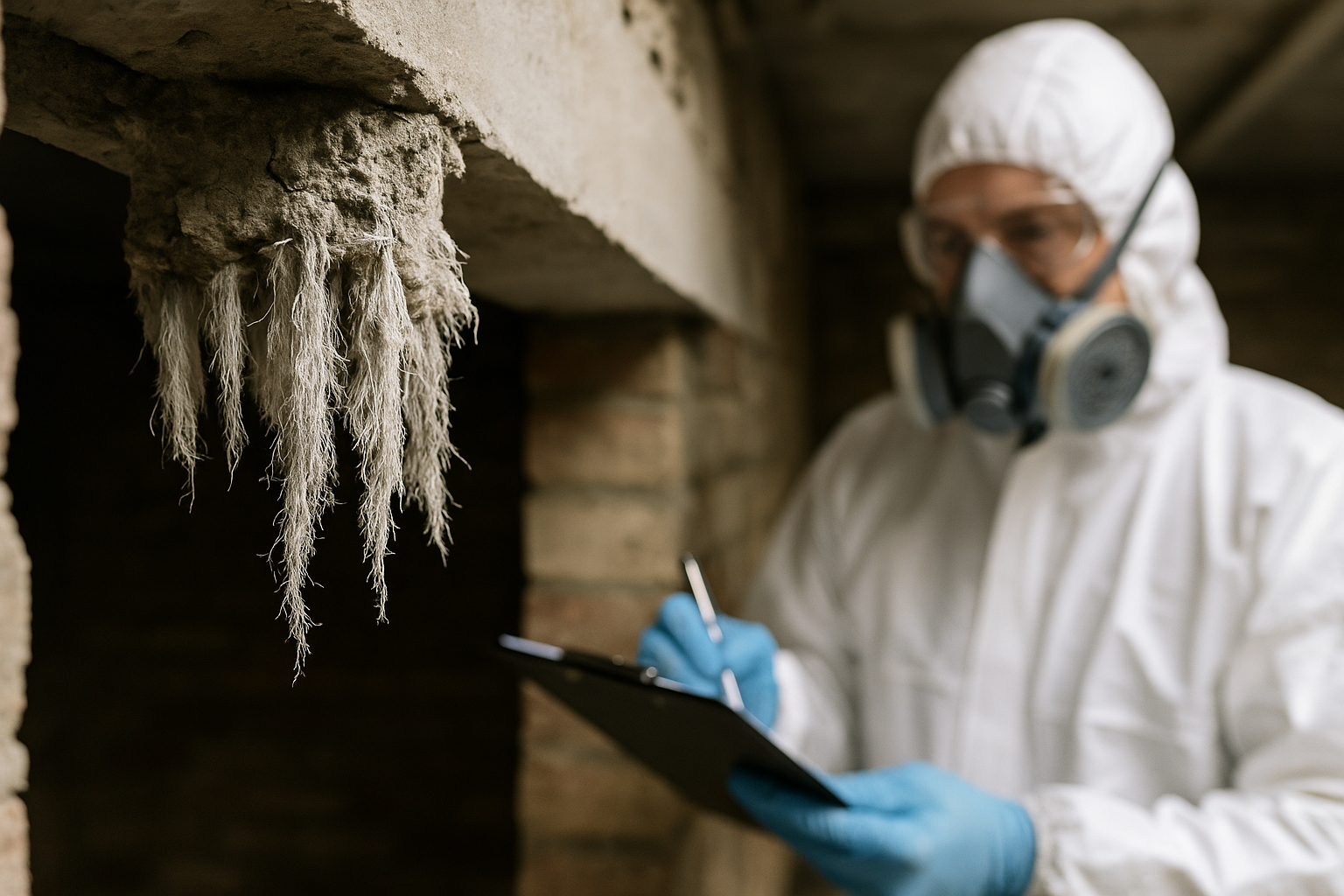
Mesothelioma
Mesothelioma is a cancer affecting the lining of the lungs or, less commonly, the lining of the abdomen. It is strongly associated with asbestos exposure and has a long latency period.
This is one reason asbestos incidents are taken seriously even when the exposure appears limited. A person may feel completely well for many years after the original event.
Lung cancer
Asbestos exposure increases the risk of lung cancer. The risk is significantly higher in people who also smoke, so smoking cessation is one of the most practical health steps for anyone with known exposure history.
Asbestosis
Asbestosis is a chronic scarring of the lungs caused by inhaling asbestos fibres. It is usually linked to heavier or prolonged exposure rather than a single short incident.
Symptoms may include:
- Shortness of breath
- Persistent cough
- Chest tightness
- Fatigue
- In some cases, fingertip clubbing
These symptoms are not unique to asbestos disease, so proper medical assessment is essential.
Pleural plaques and diffuse pleural thickening
Pleural plaques are areas of thickening on the lining of the lungs and are recognised markers of past exposure. They do not usually become cancerous, but they may show that asbestos fibres were inhaled at some point.
Diffuse pleural thickening can affect lung expansion and may cause discomfort or breathlessness. Again, asbestos harm is not limited to one diagnosis.
What to do immediately after suspected exposure
The first response matters. The aim is to stop further disturbance and prevent fibres spreading to other areas.
- Stop work immediately. Do not carry on drilling, cutting or dismantling.
- Keep people out. Restrict access and close doors if possible.
- Do not clean up with a brush or standard vacuum. That can spread fibres further.
- Leave debris where it is. Do not bag or move it unless instructed by a competent professional.
- Report the incident at once. Tell the dutyholder, site manager or responsible person.
- Check the asbestos register and survey records. Confirm whether the material was already identified.
- Arrange professional assessment. A competent surveyor or analyst can advise on sampling, isolation and next steps.
Do not rely on visual judgement alone. Many asbestos-containing materials look similar to non-asbestos products, and assumptions are where costly mistakes happen.
If you manage property in the capital, arranging an asbestos survey London service before maintenance or occupation changes can help prevent these incidents from happening in the first place.
Should someone see a doctor after brief exposure?
If there are no symptoms, there is usually no urgent medical test that can confirm harm immediately after a one-off incident. Asbestos-related conditions generally take years to develop, so chest imaging straight after exposure is not usually the first step unless there is another medical reason.
What often helps most at the time is accurate documentation. Record the date, location, work activity, suspected material, names of those present, and what immediate controls were put in place.
You should seek medical advice if:
- You develop persistent cough, breathlessness or chest pain
- You believe the exposure was heavy
- You have had repeated exposures over time
- You have a history of asbestos work
- You want the incident noted in your medical record
Medical advice is particularly sensible where a single event may be part of a wider pattern of exposure. One incident on its own may not tell the full story.
What the law requires from dutyholders and property managers
Under the Control of Asbestos Regulations, those responsible for non-domestic premises must manage asbestos risk. That duty is active. It is not met by filing away an old report and hoping no one disturbs anything.
The expectation is that asbestos risks are identified, assessed and controlled. Information must be available to anyone liable to disturb asbestos during their work.
In practice, dutyholders should:
- Know whether asbestos is present or likely to be present
- Keep an up-to-date asbestos register
- Assess the condition of asbestos-containing materials
- Prepare and maintain an asbestos management plan
- Share relevant information with staff, contractors and maintenance teams
- Review records when the building changes, materials deteriorate or works are planned
HSG264 sets out the standard approach to asbestos surveying, including planning, inspection, sampling and reporting. HSE guidance also makes clear that asbestos should be identified and managed before work starts, not after dust has already been created.
For property managers, that is the operational point that matters most. A dusty incident is not just a health issue. It may also reveal failures in contractor control, building information management and legal compliance.
If you oversee sites in the North West, a local asbestos survey Manchester service can help you respond quickly when suspect materials are identified.
What not to do after suspected asbestos exposure
Bad decisions after an incident often make the situation worse. Most of the common mistakes are completely avoidable.
- Do not carry on working to finish the task
- Do not sweep up dust or debris
- Do not use a standard vacuum cleaner
- Do not assume a solid-looking material is safe
- Do not send untrained staff in to clean up
- Do not rely on memory instead of checking records
- Do not assume an old asbestos register is still accurate
Where there is uncertainty, pause the work. Delays are inconvenient, but uncontrolled exposure is far more disruptive and expensive.
Practical steps to reduce asbestos risk across a property portfolio
The best way to deal with exposure is to stop it happening. That means asbestos management has to be built into routine property operations, not treated as a one-off paperwork exercise.
Keep surveys current and suitable for the task
A survey must match the work being planned. A management survey helps with normal occupation and routine maintenance, but refurbishment or demolition work requires a different level of inspection.
If the scope of works changes, review whether the existing survey still fits the job. Do not let contractors start based on assumptions.
Make the asbestos register easy to access
Survey information is only useful if people can find it before they start work. Site teams, contractors and facilities managers should know where the register is held and how to use it.
Good practice includes:
- Storing records centrally and on site
- Linking survey findings to permit-to-work systems
- Highlighting known asbestos locations before maintenance begins
- Reviewing the register after damage, removal or reinspection
Control contractors properly
Many asbestos incidents happen because contractors are not given the right information at the right time. Pre-start checks should include asbestos review, not just health and safety signatures.
Ask practical questions:
- Has the contractor seen the asbestos register?
- Does the planned work affect hidden voids, risers or ceiling spaces?
- Is further surveying needed before intrusive work starts?
- Who will stop the job if suspect materials are found?
Train staff to spot risk and stop work
Anyone who may disturb the fabric of a building should understand basic asbestos awareness. They do not need to identify every material on sight, but they do need to recognise when to stop and ask.
That includes maintenance staff, caretakers, engineers, decorators and some cleaning teams. A fast stop-work decision can prevent a minor issue becoming a reportable incident.
Inspect known asbestos-containing materials
Asbestos management is not static. Materials can be damaged by leaks, vibration, impact, unauthorised works or general wear.
Routine reinspections help you track condition and update priorities. If a known asbestos-containing material starts to deteriorate, the management plan may need to change.
If you are responsible for sites in the Midlands, arranging an asbestos survey Birmingham service before planned works can help you stay compliant and reduce the chance of avoidable exposure.
How to judge whether an incident is likely to be low or high risk
People naturally want a simple answer after exposure, but risk depends on context. A competent assessment will look at the material, the task, the environment and the likely level of disturbance.
Incidents that may present a higher risk often involve:
- Asbestos insulating board
- Pipe lagging
- Sprayed coatings
- Confined spaces with poor ventilation
- Power tools used without controls
- Visible dust from friable materials
Incidents that may be lower risk can include limited disturbance of bonded materials such as asbestos cement, particularly outdoors. Even then, lower risk does not mean no risk, and it does not remove the need for proper follow-up.
The safest approach is always the same: stop work, isolate the area, verify what was disturbed, and seek competent advice.
Why panic is unhelpful but complacency is dangerous
Asbestos incidents tend to push people towards one of two bad reactions. Some panic and assume the worst immediately. Others downplay the issue because the exposure was brief or because no one feels unwell.
Neither response helps. The sensible middle ground is evidence-based action.
Unprotected exposure to asbestos can lead to long-term health consequences, but risk must be assessed properly. A measured response protects people, preserves evidence, supports compliance and reduces the chance of making the contamination worse.
When to arrange a survey before work starts
If a building was constructed or refurbished before 2000, asbestos should be part of your planning from the start. Do not wait until a contractor uncovers suspect material halfway through a job.
You should consider surveying before:
- Routine maintenance in older premises
- Installing cabling, lighting or ventilation
- Replacing floors, ceilings or partitions
- Accessing plant rooms, risers or service ducts
- Refurbishment, strip-out or demolition
- Taking on management of an older property with poor records
Good asbestos management is practical. It saves delays, avoids emergency call-outs and gives contractors the information they need to work safely.
Frequently Asked Questions
Can one short exposure to asbestos cause illness?
It can, but the risk from one short exposure is generally much lower than from repeated or heavy exposure over time. The level of risk depends on the type of material, the amount disturbed, the dust released and the duration of exposure.
What should I do first if I think asbestos has been disturbed?
Stop work immediately, keep people out of the area, avoid sweeping or vacuuming, and check the asbestos register or survey records. Then seek advice from a competent asbestos professional before anyone re-enters or cleans up.
Should I get a medical test straight after asbestos exposure?
Usually there is no immediate test that can confirm harm after a single recent exposure, because asbestos-related disease takes years to develop. If you are worried, document the incident and speak to your GP, especially if the exposure was heavy or part of repeated exposure.
Does asbestos only become dangerous when it is damaged?
Materials in good condition and left undisturbed may present a low risk, but asbestos becomes much more dangerous when fibres are released through drilling, cutting, breaking, sanding or deterioration. That is why condition and planned work both matter.
Who is responsible for managing asbestos in a non-domestic building?
Under the Control of Asbestos Regulations, the dutyholder is responsible for managing asbestos risk in non-domestic premises. That usually means identifying asbestos, maintaining an asbestos register, assessing condition, sharing information and making sure risks are controlled before work begins.
If you need clear advice, fast turnaround and reliable asbestos surveys anywhere in the UK, speak to Supernova Asbestos Surveys. We help property managers, dutyholders and contractors identify risk before work starts and respond properly when suspect materials are found. Call 020 4586 0680 or visit asbestos-surveys.org.uk to book a survey or discuss your site.