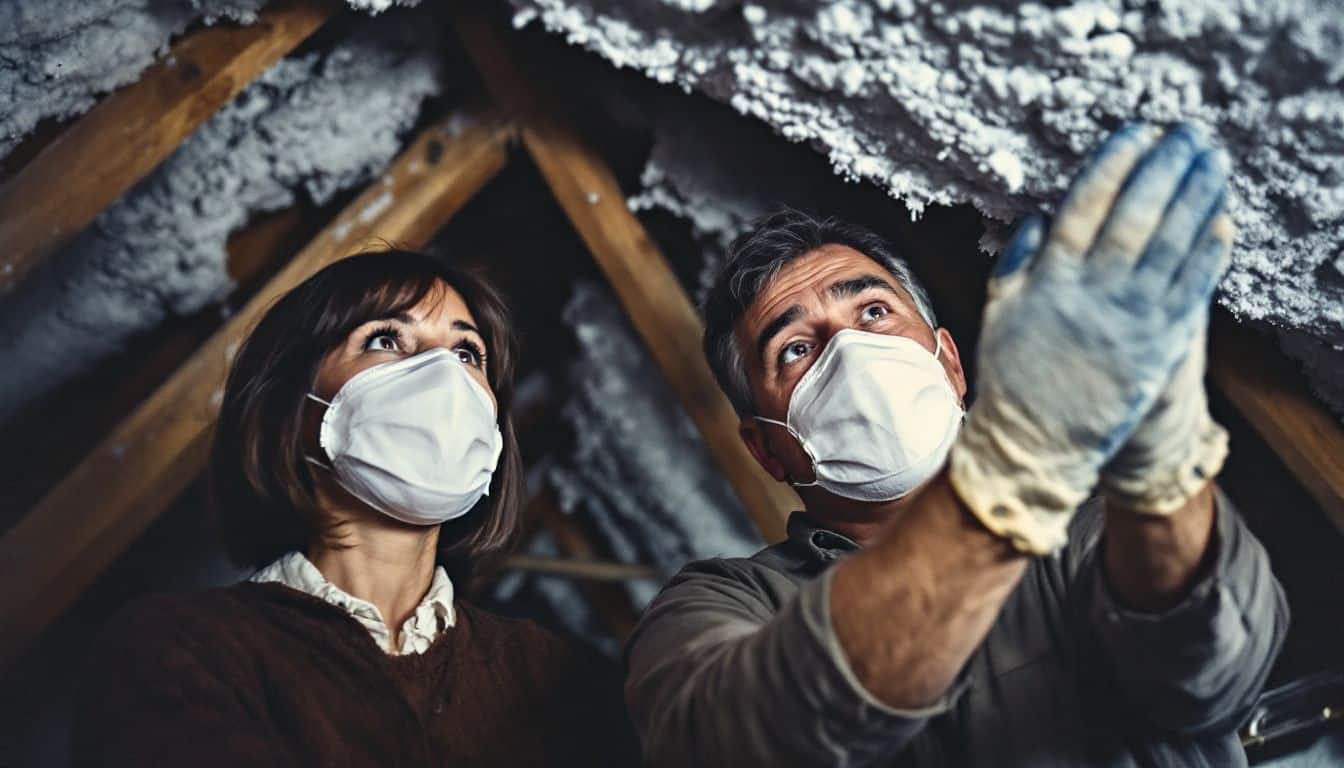
Picking up a drill or a sledgehammer in an older property without knowing what’s inside the walls is one of the most dangerous things a homeowner can do. Knowing how to avoid asbestos exposure during renovations could genuinely save your life — and the lives of everyone who lives or works in your building. Asbestos-related diseases, including mesothelioma and asbestosis, develop silently over decades. Prevention is not optional; it is the only viable strategy.
Why Asbestos Remains a Very Real Danger in UK Properties
Asbestos was used extensively in UK construction right up until it was fully banned in 1999. Any property built or significantly refurbished before that date could contain asbestos-containing materials (ACMs). The older the building, the greater the likelihood — but even properties from the late 1980s and 1990s can harbour residual ACMs from earlier phases of construction or repair work.
The fibres are invisible to the naked eye. When a material containing asbestos is disturbed — drilled, sanded, scraped, or broken — those fibres become airborne and can be inhaled deep into the lungs. The Control of Asbestos Regulations exists precisely because there is no recognised safe level of exposure.
Asbestos remains the single largest cause of work-related deaths in the UK. Tradespeople, builders, and homeowners who disturb ACMs without knowing it are putting themselves in serious danger — often without realising it until decades later.
Where Asbestos Hides in Older Buildings
Before you touch a single wall or lift a single floorboard, you need to understand where asbestos is most likely to be found. It was incorporated into dozens of building products throughout the twentieth century, and it does not announce itself with a label.
Common locations to check before any renovation work
- Artex and textured wall and ceiling coatings — extremely common in properties decorated between the 1960s and 1980s
- Vinyl floor tiles and the adhesive beneath them — disturbing old flooring is one of the most frequent sources of accidental exposure
- Pipe lagging and boiler insulation — asbestos was an outstanding insulator and was used extensively around heating systems
- Ceiling tiles — suspended ceiling systems in older homes and commercial spaces frequently contain ACMs
- Roof sheets and soffit boards — particularly in garages, outbuildings, and extensions built before the ban
- Bath panels and toilet cisterns — less obvious but well-documented locations in pre-1980s bathrooms
- Partition walls and fire doors — asbestos was valued for its fire-resistant properties and used widely in internal construction
- Guttering and downpipes — older cement-based guttering can contain chrysotile asbestos
- Insulating board around fireplaces and hearths — commonly installed to meet the fire safety requirements of the era
- Rope seals and gaskets in older boilers and stoves — often overlooked during heating system upgrades
The critical point here is that you cannot identify asbestos by looking at it. Colour, texture, and apparent age are not reliable indicators. The only way to know for certain is through professional asbestos testing carried out by a qualified analyst working to accredited standards.
How to Avoid Asbestos: A Step-by-Step Approach
Avoiding asbestos exposure during home improvements is entirely achievable — but it requires a structured approach, not guesswork. Follow these steps before any work begins.
Step 1: Commission a professional survey before work starts
This is the single most important action you can take. A management survey will identify the location, extent, and condition of any ACMs present in your property under normal occupancy conditions. If you are planning structural or refurbishment work, you will need a demolition survey, which is intrusive and specifically designed to locate ACMs that may be disturbed during construction activity.
HSG264 — the HSE’s guidance on asbestos surveys — sets out the standards that qualified surveyors must follow. Any surveyor you engage should be working to this standard, ideally holding UKAS accreditation or working for a company that does.
Do not rely on a general building survey or homebuyer’s report to flag asbestos. They are not designed to do so, and most surveyors will explicitly exclude asbestos assessment from their scope.
Step 2: Treat suspect materials as ACMs until proven otherwise
If you are working in a property built before 1999 and have not yet received your survey results, treat any suspect material as though it contains asbestos. That means no drilling, sanding, scraping, cutting, or breaking — full stop.
Asbestos in good condition that is left completely undisturbed poses a significantly lower risk than asbestos that has been damaged. The danger comes from releasing fibres into the air. If in doubt, stop work and seek professional advice before continuing.
Step 3: Know your legal position as a homeowner
Under the Control of Asbestos Regulations, the formal duty to manage asbestos applies primarily to non-domestic premises. However, homeowners still carry a clear responsibility not to carry out work that puts themselves, their family, or any contractors at risk.
If you are hiring tradespeople, they have a legal right to be informed about any known or suspected ACMs on site before they begin work. Failing to disclose this information could expose you to significant liability if someone is subsequently harmed. This is a genuine legal risk that homeowners frequently underestimate.
Step 4: Only use licensed contractors for high-risk work
Not all asbestos work legally requires a licensed contractor, but the highest-risk activities — including removing asbestos insulation board, pipe lagging, and sprayed coatings — must by law be carried out by an HSE-licensed contractor. Using an unlicensed operative for this category of work is a criminal offence.
For lower-risk materials such as intact asbestos cement sheets, a licence is not legally required — but professional involvement is still strongly advisable. Always verify that any contractor you use is properly trained, insured, and experienced in asbestos work before allowing them on site.
Personal Protective Equipment: What Is Actually Needed
If you find yourself in a situation where limited, low-risk contact with an ACM is genuinely unavoidable, the correct PPE is non-negotiable. A standard dust mask provides no meaningful protection against asbestos fibres — the particles are far too small.
At minimum, you need:
- An FFP3 disposable respirator, or a half-face mask fitted with a P3 filter
- Disposable coveralls (Type 5/6 classification minimum)
- Nitrile gloves and disposable boot covers
All PPE must be treated as asbestos waste after use. Do not carry it back into your living areas. Shower and change before leaving the work zone.
PPE is a last resort — not a substitute for professional management. If the work involves anything beyond the most minor, incidental contact with an ACM, stop and get expert advice before proceeding.
How Professionals Control Fibre Spread During Asbestos Work
When licensed contractors carry out asbestos removal in your home, they should establish a controlled work area before any disturbance takes place. Understanding this process helps you know what to expect — and what to insist upon.
A properly set-up controlled work area typically involves:
- Sealing the work zone with heavy-duty polythene sheeting, taped securely at all joints
- Removing or covering any items that cannot be decontaminated after the work
- Switching off any air handling or ventilation systems that could distribute fibres to other parts of the building
- Using negative pressure units with HEPA filtration to prevent fibres escaping the enclosure
- Establishing a decontamination unit (DCU) where workers remove and bag contaminated PPE before leaving the work area
As the homeowner, your role during this phase is straightforward: stay out. Keep children and pets well away from the work area and do not re-enter until the contractor has completed a visual inspection and, where required, air clearance testing has confirmed the area is safe.
Safe Disposal of Asbestos-Containing Materials
Asbestos waste is classified as hazardous waste under UK law. It cannot go in your general waste bin, into a standard skip, or to a household recycling centre unless that facility specifically accepts asbestos waste — and most do not.
Licensed contractors handle disposal as part of their service. ACMs are double-bagged or wrapped in polythene, correctly labelled as hazardous waste, and transported to a licensed disposal facility. The entire process must be documented through a waste transfer note, which you should retain for your property records.
If you are arranging disposal yourself for small quantities of non-licensable asbestos waste, contact your local council for guidance on approved facilities in your area. Never attempt to break up or crush ACMs to make them easier to transport — this releases fibres and creates a far more serious hazard.
What Happens After Asbestos Removal Is Complete
Once removal work has been carried out, a post-removal inspection and air clearance test must be completed before the area is reoccupied. For licensed work, the HSE requires a four-stage clearance procedure.
This process includes a thorough visual inspection by an independent analyst, followed by air sampling to confirm that fibre concentrations are below the required clearance indicator. Do not allow anyone back into the area until the analyst has issued a written clearance certificate.
Keep this certificate with your property records — it is your evidence that the work was completed safely and to the required standard. It may also be requested by future buyers, insurers, or tenants.
After clearance, clean all surfaces in the affected area using damp cloths or a vacuum fitted with a HEPA filter. Never use a standard domestic vacuum cleaner on surfaces that may have been exposed to asbestos fibres — it will simply redistribute them into the air.
What to Do If You Accidentally Disturb Asbestos
If you suspect you have accidentally disturbed an ACM during renovation work, stop immediately. Do not continue working, and do not attempt to clean up the area with a brush or standard vacuum.
- Leave the area immediately and close off access to it
- Remove any clothing that may have been contaminated and seal it in a plastic bag
- Shower as soon as possible — do not dry-brush contaminated skin or hair
- Contact a professional asbestos surveyor or analyst to assess the area before anyone re-enters
- Inform anyone else who was present at the time
Specialist asbestos testing can confirm whether a disturbed material actually contained asbestos, and air monitoring can assess whether fibre levels in the area have returned to safe levels. Do not guess — get confirmation from a qualified professional.
Renovation Planning: Practical Tips to Avoid Asbestos Risks Before You Start
Beyond commissioning a survey, there are practical steps you can build into your renovation planning that significantly reduce the risk of accidental exposure.
- Research your property’s age and history. Planning records, deeds, and building control documents can tell you when extensions, loft conversions, or refurbishments were carried out — all of which affect where ACMs might be present.
- Brief your builders before they quote. A reputable contractor will want to know about any asbestos survey results before they price the job. If a tradesperson is not asking about asbestos, that itself is a warning sign.
- Phase your work carefully. If your survey identifies ACMs in areas you are not immediately touching, plan your renovation sequence so those areas are surveyed and managed before work reaches them.
- Never assume previous owners dealt with it. Asbestos management records are not always passed on during property sales. Even if a previous survey was carried out, it may be out of date or incomplete for the scope of work you are planning.
- Get a fresh survey for significant changes of use. If you are converting a garage, loft, or outbuilding, a new survey is essential — these spaces often contain ACMs that were not relevant under the original use of the building.
Getting an Asbestos Survey Anywhere in the UK
Supernova Asbestos Surveys operates nationwide, with experienced teams covering every region of the country. Whether you need an asbestos survey in London, an asbestos survey in Manchester, or an asbestos survey in Birmingham, our qualified surveyors can attend your property promptly and provide a detailed, actionable written report.
Where removal is required, our licensed contractors can carry out the work safely and in full compliance with HSE requirements. Every property is different, and the smartest thing you can do before starting any renovation work on a pre-2000 building is speak to an expert who can tell you exactly what you are dealing with.
Call us on 020 4586 0680 or visit asbestos-surveys.org.uk for a no-obligation quote.
Frequently Asked Questions
How do I know if my home contains asbestos?
You cannot tell by looking. Asbestos fibres are invisible to the naked eye, and the materials that contain them look no different from those that do not. The only reliable way to find out is to commission a professional asbestos survey carried out by a qualified surveyor working to HSG264 standards. Sampling and laboratory analysis will then confirm whether any suspect materials contain asbestos.
Is asbestos dangerous if I leave it alone?
Asbestos-containing materials in good condition that are left completely undisturbed pose a much lower risk than those that are damaged or deteriorating. The danger arises when fibres are released into the air — typically through drilling, cutting, sanding, or breaking. If an ACM is in good condition and not at risk of being disturbed, a managed-in-place approach under a formal asbestos management plan may be appropriate. A professional surveyor can advise on the condition and risk level of any materials found.
Do I need a licensed contractor to remove asbestos?
It depends on the type of material and the nature of the work. The highest-risk activities — including removing asbestos insulation, asbestos insulation board, and sprayed coatings — must legally be carried out by an HSE-licensed contractor. Other lower-risk work may be carried out by trained, non-licensed operatives following the correct procedures. If you are unsure which category your situation falls into, seek professional advice before any work begins.
Can I arrange an asbestos survey before buying a property?
Yes, and it is strongly advisable for any pre-2000 property. A standard homebuyer’s survey does not assess for asbestos, so commissioning a dedicated asbestos survey gives you accurate information about what ACMs are present before you commit to a purchase. This can affect your renovation budget, your insurance position, and your legal obligations as the incoming owner.
What should I do if I think I have already disturbed asbestos?
Stop work immediately and leave the area. Seal off access, remove and bag any potentially contaminated clothing, and shower as soon as possible. Contact a professional asbestos analyst to assess the area and carry out air monitoring before anyone re-enters. Do not attempt to clean up the area yourself using a standard vacuum or brush — this will make the situation significantly worse.