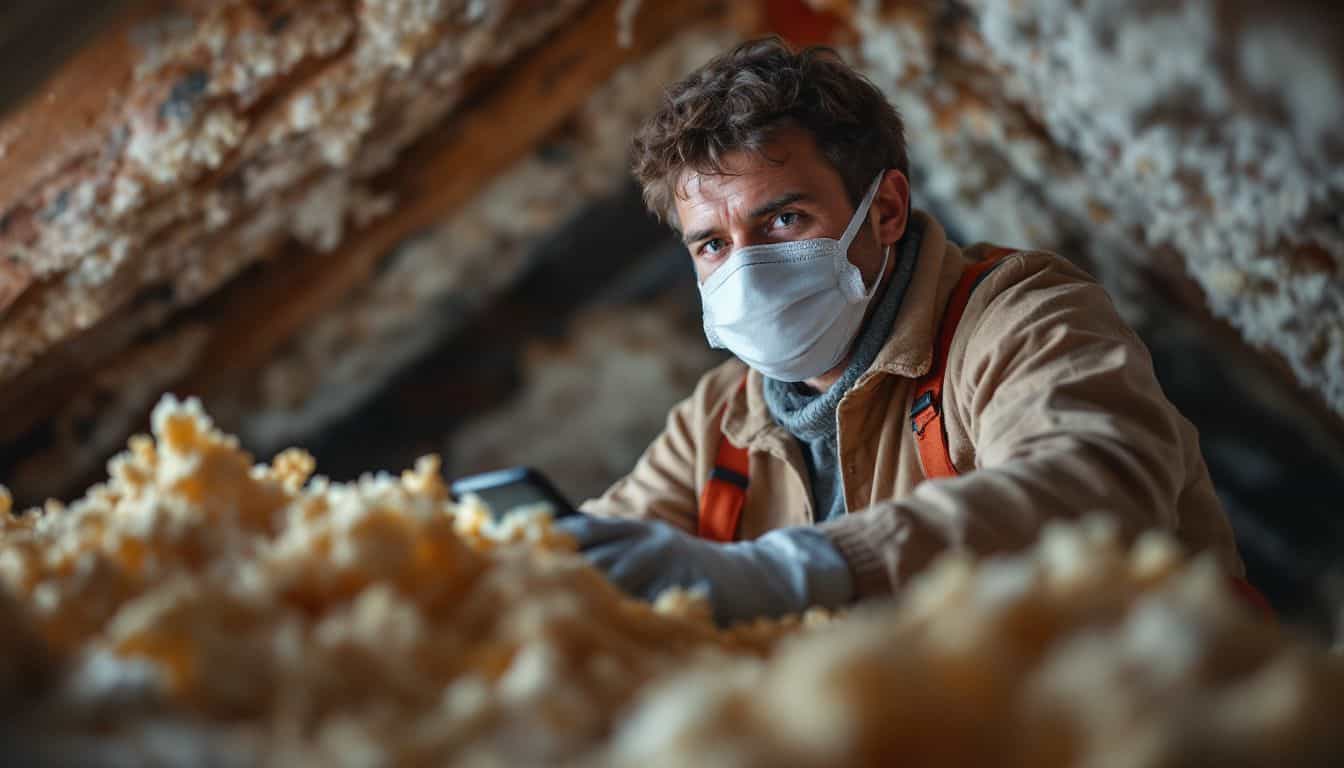
Asbestos Precautions Every Homeowner Needs to Know
Finding potential asbestos in your home is unsettling — but panic is far more dangerous than the material itself. Taking the right asbestos precautions, in the right order, is what keeps you and your family safe.
Disturb asbestos incorrectly and you risk releasing microscopic fibres linked to mesothelioma, lung cancer, and asbestosis. If your home was built before 2000, there is a realistic chance asbestos-containing materials (ACMs) are present somewhere. That does not mean you are in immediate danger — it means you need to know what you are dealing with and how to act responsibly.
Where Asbestos Hides in Older Homes
Asbestos was used extensively in UK construction because it was cheap, fire-resistant, and durable. The problem is that it ended up almost everywhere in properties built before the turn of the millennium.
Common locations include:
- Pipe and boiler insulation
- Textured ceiling coatings (Artex and similar products)
- Floor tiles and the adhesive beneath them
- Roof tiles, soffit boards, and guttering
- Insulating boards around fireplaces and in airing cupboards
- Garage and outbuilding roofing sheets (corrugated asbestos cement)
- Joint compounds and plaster
- Old electrical panels and fuse boxes
Many of these materials look entirely ordinary. There is no reliable way to identify asbestos by sight alone — a standard ceiling tile and an asbestos-containing ceiling tile can look identical.
That is why professional asbestos testing is always the definitive answer when you suspect a material may contain asbestos fibres. Visual inspection alone simply is not enough.
The Golden Rule: Do Not Disturb It
The single most important asbestos precaution is deceptively simple: leave it alone until you know what it is. Asbestos in good condition, left undisturbed, poses a very low risk.
The danger comes when fibres become airborne — during drilling, sanding, cutting, or demolition. A well-meaning DIY renovation can turn a manageable situation into a serious health hazard within minutes.
Avoid the following actions on any material you suspect may contain asbestos:
- Drilling or screwing into it
- Sanding or grinding the surface
- Sweeping debris with a standard broom
- Using a regular vacuum cleaner (which spreads fibres rather than capturing them)
- Breaking or cutting boards, tiles, or sheeting
- High-pressure water washing
If you are planning any renovation work — even something as routine as fitting a new kitchen or replacing a bathroom — check for ACMs before any tools come out.
Getting a Professional Asbestos Survey: Your First Practical Step
Before any intrusive work in a pre-2000 property, commissioning a professional asbestos survey is not just sensible — in many commercial and rental contexts, it is a legal requirement under the Control of Asbestos Regulations.
For homeowners, there are two main survey types to understand.
Management Survey
A management survey identifies ACMs in the areas of a property that are normally occupied or accessed. It is designed for ongoing management rather than major works.
The surveyor will note the location, condition, and risk level of any materials found. This gives you a clear picture of what is present and what action, if any, is needed.
Refurbishment and Demolition Survey
If you are planning significant building work, a demolition survey is required. It involves accessing areas that will be disturbed during the project — including behind walls, under floors, and within roof spaces.
This must be completed before work begins, without exception. Both survey types must be carried out by a competent surveyor following the HSE’s HSG264 guidance.
At Supernova, our surveyors are fully qualified and operate across the UK — including asbestos survey London, asbestos survey Manchester, and asbestos survey Birmingham areas.
Asbestos Precautions During Testing and Sampling
If you want confirmation before commissioning a full survey, bulk sampling and laboratory analysis is an option. However, even taking a small sample carries risk if done incorrectly.
Professional asbestos testing involves a qualified operative taking a carefully controlled sample, sealing it immediately, and sending it to an accredited laboratory for analysis under polarised light microscopy. Results confirm the type of asbestos present — whether that is chrysotile (white), amosite (brown), or crocidolite (blue), the last two being the most hazardous.
If you are tempted to take a sample yourself, these precautions are essential:
- Wet the material thoroughly with water and a little washing-up liquid before touching it — this suppresses fibre release
- Wear a correctly fitted FFP3 disposable respirator (not a dust mask)
- Wear disposable nitrile gloves and a disposable coverall
- Use a sharp implement to take the smallest possible sample
- Seal the sample in a zip-lock bag immediately, then place that inside a second bag
- Dispose of all PPE into a sealed bag before leaving the area
- Wipe the area with a damp cloth and seal that cloth in a bag too
That said, professional sampling is always preferable. The cost is modest and the margin for error is eliminated entirely.
Personal Protective Equipment: What You Actually Need
If any work around suspected ACMs is unavoidable — or if you are managing a situation where disturbance has already occurred — the right PPE is non-negotiable.
Respiratory Protection
A standard dust mask offers no meaningful protection against asbestos fibres. You need a minimum of an FFP3 disposable respirator for low-risk, short-duration tasks.
For anything more significant, a half-face or full-face air-purifying respirator fitted with P3 filters is required. Fit matters as much as specification — a respirator worn loosely or over a beard provides negligible protection.
Protective Clothing
- Disposable coveralls (Type 5 minimum, such as Tyvek) — worn once and disposed of as asbestos waste
- Disposable boot covers or rubber boots that can be thoroughly decontaminated
- Nitrile gloves — asbestos fibres can transfer from hands to face
- Safety goggles or a full-face shield if there is any risk of eye exposure
All disposable PPE must be treated as asbestos-contaminated waste after use. It should be bagged, sealed, and labelled before disposal — not left loose or placed in general waste.
Safe Handling and Containment Procedures
Where ACMs must be managed in place — rather than removed — a structured approach keeps risk low and protects everyone in the property.
Encapsulation
Intact ACMs in good condition can often be encapsulated with a specialist sealant. This binds the surface fibres and prevents release without requiring removal. It is a common approach for textured coatings and insulating boards that are not deteriorating.
Encapsulation should only be carried out by a competent person and must be recorded in your asbestos management plan.
Ongoing Monitoring
If ACMs are present but undisturbed, regular visual inspection is essential. Check the condition of materials at least annually and after any event — a flood, structural movement, or accidental impact — that could have caused damage.
Keep a written record of every inspection. This paper trail matters both for your own safety and for any future property transactions.
Securing the Work Area
If any work is taking place near ACMs, the area must be clearly defined. Use physical barriers and warning signage, and restrict access to those who need to be there.
This is not bureaucratic box-ticking — it is how you prevent accidental exposure to people who do not even know the risk exists.
When to Call in Licensed Asbestos Removers
Some asbestos work can be carried out by a competent, non-licensed contractor. However, the highest-risk materials — including sprayed asbestos coatings, lagging on pipes and boilers, and asbestos insulating board (AIB) — must only be handled by a contractor licensed by the HSE.
Licensed contractors are required to notify the HSE at least 14 days before starting licensable work. They operate under strict controls: negative pressure enclosures, four-stage clearance procedures, air monitoring throughout, and independent clearance air testing before the area is reoccupied.
Professional asbestos removal carried out by a licensed contractor is the only safe and legally compliant route for high-risk materials. Attempting it yourself is not only dangerous — it is a criminal offence under the Control of Asbestos Regulations.
Asbestos Waste Disposal: Getting It Right
Asbestos waste is classified as hazardous waste in the UK. It cannot go in your general bin, your skip, or your local household waste recycling centre unless that centre has a specific, designated facility for asbestos — and many do not.
The correct procedure:
- Double-bag all asbestos waste in heavy-duty polythene bags (minimum 1000 gauge)
- Seal each bag securely — tape the neck rather than simply tying it
- Label each bag clearly with the words “Asbestos Waste — Hazardous” and your contact details
- Store the bagged waste in a secure location away from foot traffic until it is collected
- Use only a registered hazardous waste carrier for transport
- Ensure waste goes to a licensed disposal facility
- Obtain and retain a waste transfer note — this is a legal requirement
Fly-tipping asbestos waste is a serious criminal offence with significant penalties. If you are unsure about disposal routes in your area, your local council’s environmental health team can advise.
Your Legal Responsibilities as a Homeowner
The legal picture for homeowners is slightly different from that for employers and duty holders in commercial premises. However, there are still important obligations that should not be overlooked.
When selling a property, you are expected to disclose known asbestos materials to prospective buyers. Failing to do so can expose you to legal liability after completion — many solicitors now include asbestos-related questions in standard property information forms.
If you employ tradespeople to work in your home, you have a responsibility under HSE guidance to inform them of any known or suspected ACMs before work begins. A tradesperson who drills into asbestos insulating board without being warned has grounds for a serious complaint — and you could be held partly responsible.
Keeping an up-to-date asbestos management plan — even an informal one for a domestic property — is good practice and provides a paper trail that protects you legally.
Emergency Response: If Asbestos Is Accidentally Disturbed
If you suspect asbestos has been disturbed unexpectedly — during renovation work or following damage to the property — act quickly and calmly.
- Stop work immediately and evacuate everyone from the area
- Close off the space — shut doors and windows to limit fibre spread to other parts of the property
- Do not sweep, vacuum, or disturb the debris further
- Remove and bag any contaminated clothing before leaving the immediate area
- Shower thoroughly — wash hair and skin with soap and water
- Contact a licensed asbestos contractor to assess the situation and carry out decontamination
- Seek medical advice if you believe you have been significantly exposed — a GP can initiate monitoring and refer you to occupational health services if needed
A single, brief exposure does not automatically mean you will develop an asbestos-related disease. Risk is cumulative and dose-dependent. But the exposure should be documented, and professional advice sought without delay.
Building an Asbestos Management Plan for Your Home
A management plan does not need to be a complex document. For a domestic property, it is essentially a record of what is present and what is being done about it.
A basic home asbestos management plan should include:
- Where ACMs are located and what type they are
- Their current condition (intact, damaged, or encapsulated)
- What action has been taken or is planned
- Dates of inspections and any changes noted
- Contact details for your surveyor and any contractors used
Keep this document somewhere accessible — and make sure any tradespeople or future owners are aware it exists. Update it every time something changes.
Asbestos Precautions: A Quick-Reference Summary
To bring it all together, here are the core asbestos precautions every homeowner in a pre-2000 property should follow:
- Do not disturb suspected materials — leave them alone until tested
- Commission a professional survey before any renovation or refurbishment work
- Use accredited testing — do not rely on visual identification
- Wear the correct PPE if any work near ACMs is unavoidable
- Encapsulate or monitor intact materials rather than disturbing them unnecessarily
- Use licensed contractors for high-risk removal work
- Dispose of waste correctly through a registered hazardous waste carrier
- Disclose known ACMs when selling or letting tradespeople into your home
- Keep records of surveys, inspections, and any work carried out
- Act immediately if accidental disturbance occurs — do not try to clean it up yourself
Following these steps consistently is what separates a well-managed property from one that puts its occupants at unnecessary risk.
How Supernova Can Help
At Supernova Asbestos Surveys, we have completed over 50,000 surveys across the UK. Our fully qualified surveyors work with homeowners, landlords, and property managers to identify ACMs, assess risk, and provide clear, actionable reports.
Whether you need a management survey ahead of routine maintenance, a refurbishment and demolition survey before a building project, or straightforward laboratory testing to confirm whether a material contains asbestos, we can help — quickly, professionally, and at a fair price.
Call us on 020 4586 0680 or visit asbestos-surveys.org.uk to book your survey or request a quote. Do not start work on a pre-2000 property without knowing what you are dealing with.
Frequently Asked Questions
How do I know if my home contains asbestos?
You cannot tell by looking. The only reliable way to confirm whether a material contains asbestos is through professional testing by an accredited laboratory. If your property was built before 2000, assume ACMs may be present until a survey confirms otherwise.
Is asbestos in my home dangerous if I leave it alone?
Asbestos in good condition that is left undisturbed poses a very low risk. The danger arises when fibres are released into the air — typically through drilling, cutting, sanding, or demolition. Intact ACMs can often be safely managed in place rather than removed.
Do I legally have to tell tradespeople about asbestos in my home?
While the Control of Asbestos Regulations places the strongest duties on employers and duty holders in commercial settings, HSE guidance makes clear that homeowners should inform any tradespeople of known or suspected ACMs before work begins. Failing to do so could expose you to legal liability if a worker is harmed.
Can I remove asbestos myself?
Some lower-risk, non-licensed work may be carried out by a competent person following strict precautions. However, high-risk materials — including asbestos insulating board, sprayed coatings, and pipe lagging — must only be removed by an HSE-licensed contractor. Attempting to remove licensable materials yourself is a criminal offence under the Control of Asbestos Regulations.
What should I do if asbestos is accidentally disturbed during renovation work?
Stop work immediately and evacuate the area. Seal off the space, do not attempt to clean up the debris, and contact a licensed asbestos contractor to assess and decontaminate the area. Remove and bag any contaminated clothing, shower thoroughly, and seek medical advice if you believe you have been significantly exposed.