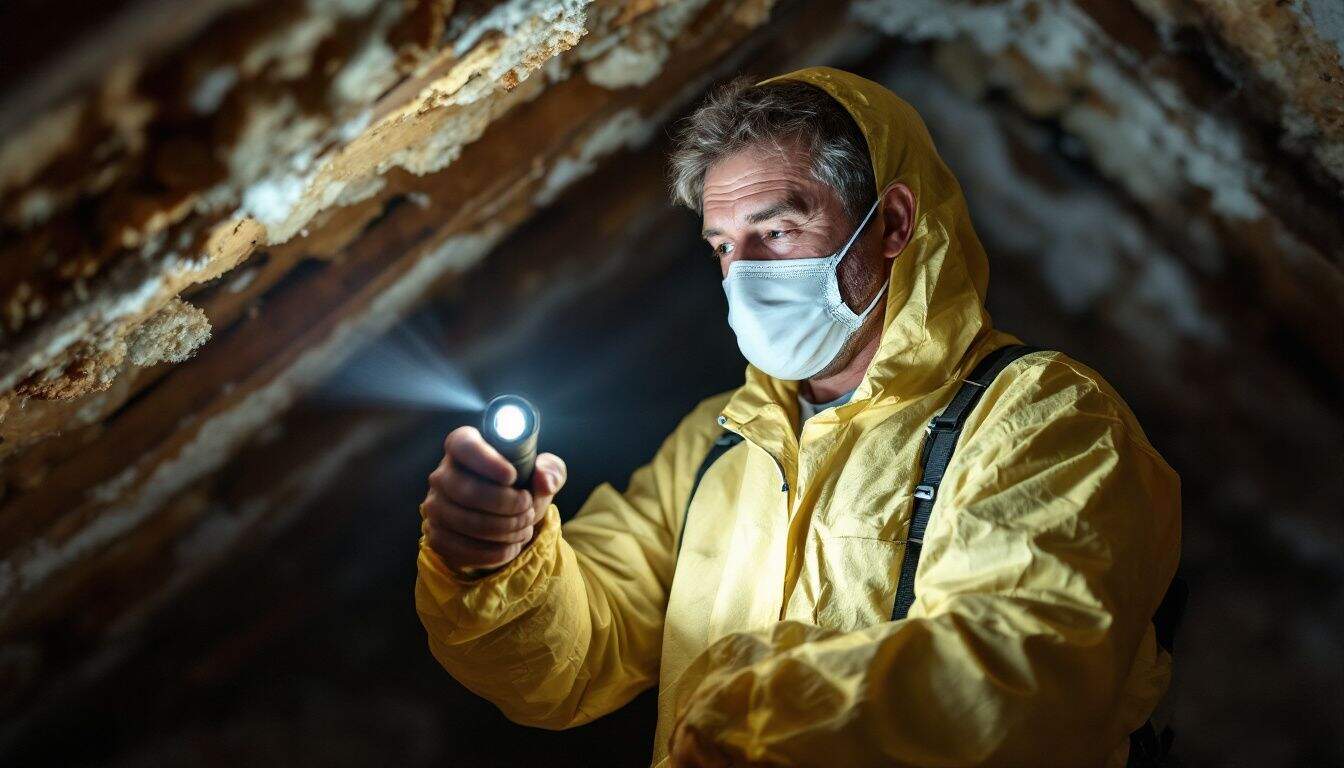
Home Asbestos Removal: What UK Homeowners Actually Need to Know
Finding what looks like asbestos in your home is unsettling — and the urge to deal with it immediately is completely understandable. But home asbestos removal is one of those situations where acting quickly without the right knowledge can cause far more harm than doing nothing at all.
Asbestos fibres, once disturbed and airborne, are invisible to the naked eye and can lodge permanently in lung tissue, triggering diseases that may not surface for decades. This post gives you a straight answer on what UK law actually says, what the real health risks are, and when calling a professional isn’t just the sensible option — it’s legally required.
What Is Asbestos and Where Is It Found in Homes?
Asbestos is a naturally occurring fibrous mineral that was used extensively in UK construction until it was fully banned in 1999. If your home was built or significantly renovated before 2000, there’s a real possibility that asbestos-containing materials (ACMs) are present somewhere in the fabric of the building.
Common locations include:
- Artex and textured ceiling coatings
- Floor tiles and the adhesive beneath them
- Roof tiles and cement panels
- Pipe lagging and boiler insulation
- Soffit boards and fascias
- Garage roofs and outbuildings
- Partition walls and ceiling tiles
The presence of asbestos doesn’t automatically mean danger. ACMs that are in good condition and left undisturbed are generally considered low risk. The danger arises when materials are drilled, cut, sanded, broken, or otherwise disturbed — releasing microscopic fibres into the air you breathe.
UK Law on Home Asbestos Removal: What You’re Actually Allowed to Do
The Control of Asbestos Regulations is the primary legislation governing how asbestos must be managed, handled, and removed across the UK. These regulations apply to workplaces and, in specific circumstances, to domestic properties as well.
Can Homeowners Legally Remove Asbestos Themselves?
Technically, a homeowner working on their own private domestic property is not subject to the same duty holder obligations as an employer or commercial building owner. But this does not mean anything goes.
UK law categorises asbestos work into three tiers based on risk:
- Licensed work — High-risk materials such as sprayed asbestos coatings, pipe lagging, and insulation board in poor condition. Only HSE-licensed contractors can carry out this work, and a 14-day notification to the HSE is required before work begins. A homeowner cannot legally do this themselves.
- Notifiable non-licensed work (NNLW) — Lower-risk work that still requires notification to the relevant enforcing authority and medical surveillance for any workers involved.
- Non-licensed work — The lowest-risk category, such as carefully removing intact asbestos cement sheets, subject to strict precautions. This is the only category where a homeowner acting on their own property might technically proceed — but doing so safely requires knowledge and equipment most people simply don’t have.
Even where DIY removal isn’t strictly prohibited for a homeowner, it remains highly inadvisable. The practical risks far outweigh any cost saving.
Asbestos Disposal: A Legal Obligation That Catches Many Out
Asbestos waste is classified as hazardous waste under UK law. You cannot bag it up and put it in a skip, leave it out for the council, or take it to a standard household recycling centre.
It must be:
- Double-bagged in clearly labelled asbestos waste sacks
- Transported in a sealed vehicle
- Taken to a licensed hazardous waste disposal facility
Improper disposal of asbestos waste can result in significant fines. This alone is a compelling reason to use a professional asbestos removal service that handles disposal as part of the job.
The Real Health Risks of DIY Home Asbestos Removal
Understanding why home asbestos removal carries such serious health consequences requires knowing how asbestos fibres actually behave. When ACMs are disturbed, they release bundles of microscopic fibres that can remain suspended in the air for hours. Once inhaled, these fibres become trapped in the lining of the lungs and other organs — and the body cannot expel them.
Diseases Caused by Asbestos Exposure
Asbestos-related diseases are among the most serious health conditions in the UK. The main ones include:
- Mesothelioma — A cancer of the lining of the lungs, abdomen, or heart. It is almost exclusively caused by asbestos exposure and is invariably fatal.
- Asbestosis — Scarring of the lung tissue caused by accumulated asbestos fibres, leading to progressive and irreversible breathlessness.
- Lung cancer — Asbestos exposure significantly increases the risk of lung cancer, particularly in those who also smoke.
- Pleural thickening — Thickening of the membrane surrounding the lungs, which can restrict breathing and reduce quality of life.
What makes asbestos exposure particularly dangerous is the latency period. Symptoms may not appear for 15 to 40 years after exposure. By the time a diagnosis is made, the disease is often at an advanced stage with limited treatment options.
Smoking and Asbestos: A Compounded Risk
For anyone who smokes, the risks of asbestos exposure are significantly amplified. Research consistently shows that smokers who have been exposed to asbestos face a dramatically higher risk of developing lung cancer than either non-smokers exposed to asbestos or smokers who have not been exposed.
If you smoke and are considering any DIY asbestos work, this is an additional and very serious reason to step back and call a professional.
The Risk to Everyone Else in Your Home
DIY removal doesn’t just put you at risk. Fibres released during amateur removal can settle on surfaces throughout your home, contaminating soft furnishings, clothing, and ventilation systems. Family members — including children — can then be exposed without ever going near the original material.
Secondary exposure of this kind has been documented in cases of mesothelioma among people who lived with asbestos workers. The risk to your household is real and must not be underestimated.
Why Professional Home Asbestos Removal Is the Right Choice
A qualified asbestos contractor brings far more to the job than physical labour. They bring the knowledge, specialist equipment, and legal accountability to ensure the work is done correctly from start to finish.
Identification and Testing Before Any Removal Takes Place
Before any removal work begins, you need to know exactly what you’re dealing with. Proper asbestos testing by an accredited laboratory is the only reliable way to confirm whether a material contains asbestos and which type is present.
The three main types — chrysotile (white), amosite (brown), and crocidolite (blue) — carry different risk profiles and require different handling approaches. Skipping this step and assuming a material is or isn’t asbestos is a gamble that simply isn’t worth taking.
Safe Removal Practices Used by Professionals
Professional asbestos removal contractors follow a strict methodology designed to contain fibres and prevent contamination. This typically includes:
- Sealing off the work area with polythene sheeting
- Using negative pressure enclosures where required
- Wearing full personal protective equipment (PPE), including disposable coveralls and respiratory protective equipment (RPE) to the appropriate standard
- Wetting materials before removal to suppress fibre release
- Using HEPA-filtered vacuum equipment to clean up residual fibres
- Air monitoring during and after removal to confirm the area is safe before reoccupation
None of this equipment or methodology is realistically replicable by a homeowner working alone. The gap between what a professional does and what a DIY approach achieves is enormous.
Professional Certification and Accreditation
Reputable asbestos contractors hold relevant training qualifications, typically from bodies such as UKATA (UK Asbestos Training Association) or IATP (Independent Asbestos Training Providers). For licensed work, the contractor must hold a current HSE licence, which is subject to regular renewal and inspection.
Always ask to see evidence of a contractor’s licence and insurance before any work begins. A legitimate professional will have no hesitation in providing this documentation.
The Step-by-Step Process for Safe Home Asbestos Removal
If you suspect asbestos in your home, here is the practical sequence of steps you should follow:
- Do not disturb the material. If you think something might contain asbestos, leave it alone until it has been assessed by a professional.
- Commission an asbestos survey. A management or refurbishment survey will identify ACMs, assess their condition, and advise on the appropriate course of action. If you’re planning building work, a refurbishment survey is essential before any contractor sets foot on site.
- Get laboratory confirmation. If the surveyor takes samples, these are sent for asbestos testing at an accredited laboratory to confirm the presence and type of asbestos. This is the only reliable method — you cannot identify asbestos by sight.
- Follow the surveyor’s recommendations. Not all ACMs need to be removed. In many cases, encapsulation or managed monitoring in place is the safer option. Removal is only recommended when materials are damaged, deteriorating, or when planned work would disturb them.
- Appoint a licensed contractor for removal. Use the survey report to brief the contractor. Ensure they hold the appropriate licence for the type of work required and that their insurance is current.
- Obtain a clearance certificate. After removal, an independent air test should be carried out and a clearance certificate issued before the area is reoccupied. Do not skip this step.
Supernova Asbestos Surveys operates nationally. Whether you need an asbestos survey London specialists can carry out at your property, you’re based in the North West and need an asbestos survey Manchester teams can complete, or you’re in the Midlands and want an asbestos survey Birmingham residents trust, we cover the full country with accredited, thorough assessments.
What Does Professional Home Asbestos Removal Actually Cost?
Cost is often the reason homeowners consider attempting removal themselves. It’s worth being clear-eyed about what professional removal actually costs versus the risks of getting it wrong.
Costs vary depending on the type and quantity of asbestos, the accessibility of the material, and whether licensed or non-licensed work is required. A smaller removal job — such as a single asbestos cement garage roof — may cost a few hundred pounds. Larger or more complex jobs involving licensed materials will cost considerably more.
Set against the potential consequences of mishandled removal — contaminating your home, facing legal penalties for improper disposal, or the long-term health impact on your family — professional removal is almost always the better financial decision as well as the safer one. There is no version of this calculation where amateur removal comes out ahead.
When Removal Isn’t the Answer
Not every ACM in your home needs to come out. The HSE’s own guidance is clear that asbestos in good condition, properly managed and left undisturbed, poses minimal risk. Removal itself introduces risk at the point of disturbance.
If a material is stable and is not going to be affected by planned work, a professional surveyor may recommend managing it in place with regular monitoring rather than removing it. This is often the right call — and it’s a call that only a qualified surveyor is positioned to make reliably.
If you’re planning a renovation or extension, however, a refurbishment survey is non-negotiable. Any contractor working on a pre-2000 property needs to know what’s present before work begins — both for their own protection and to comply with their legal obligations under the Control of Asbestos Regulations.
Choosing the Right Asbestos Contractor
Not all asbestos contractors are equal. When selecting a professional for home asbestos removal, look for the following:
- HSE licence — Essential for licensed work. You can verify a contractor’s licence status directly with the HSE.
- UKATA or IATP accredited training — Confirms operatives have received appropriate, up-to-date training.
- UKAS-accredited laboratory — Any samples taken should be analysed by a laboratory accredited by the United Kingdom Accreditation Service.
- Public liability insurance — Check the level of cover and that it is current before work begins.
- Written method statement and risk assessment — A professional contractor will always provide these before starting work.
- Clearance air testing — Confirm they will arrange an independent clearance test on completion, not simply sign off their own work.
Avoid any contractor who offers to remove asbestos without first surveying or testing the material, quotes unusually low prices without explanation, or is reluctant to provide documentation. These are significant warning signs.
Frequently Asked Questions
Can I legally remove asbestos from my own home in the UK?
For the lowest-risk category of asbestos work — such as carefully handling intact asbestos cement sheets — a homeowner working on their own domestic property is not strictly prohibited from proceeding. However, high-risk materials classed as licensed work can only legally be removed by an HSE-licensed contractor. Regardless of legality, DIY home asbestos removal carries serious health risks and is strongly advised against by the HSE.
How do I know if I have asbestos in my home?
You cannot identify asbestos by sight alone. The only reliable way to confirm whether a material contains asbestos is to have a sample analysed by a UKAS-accredited laboratory. A professional asbestos surveyor will take samples safely and send them for testing. Never attempt to take samples yourself from a material you suspect contains asbestos.
What happens if I disturb asbestos accidentally during DIY work?
Stop work immediately and leave the area. Do not attempt to clean up dust or debris with a standard vacuum cleaner, as this will spread fibres further. Ventilate the room if possible, then contact a professional asbestos contractor to assess the situation and carry out any necessary decontamination. Keep others away from the affected area until it has been assessed.
Does all asbestos in my home need to be removed?
No. HSE guidance is clear that asbestos in good condition, left undisturbed, poses minimal risk. Removal is typically recommended only when materials are damaged, deteriorating, or when planned renovation work would disturb them. A qualified asbestos surveyor will assess the condition of any ACMs and recommend the most appropriate course of action — which may be encapsulation or managed monitoring rather than removal.
How much does home asbestos removal cost in the UK?
Costs vary significantly depending on the type of material, the volume to be removed, accessibility, and whether licensed or non-licensed work is required. Smaller jobs such as a garage roof panel may cost a few hundred pounds, while larger or more complex licensed removal projects will cost more. Always obtain at least two or three written quotes from accredited contractors and be cautious of prices that seem unusually low without explanation.
Get Expert Help With Home Asbestos Removal
Supernova Asbestos Surveys has completed over 50,000 surveys across the UK and provides the full range of services homeowners need — from initial surveys and laboratory testing through to managed removal by accredited contractors.
If you suspect asbestos in your home, the right first step is always a professional assessment. Don’t disturb the material, don’t guess, and don’t take risks that could affect your family’s health for decades to come.
Call us today on 020 4586 0680 or visit asbestos-surveys.org.uk to book a survey or speak to one of our specialists about your property.