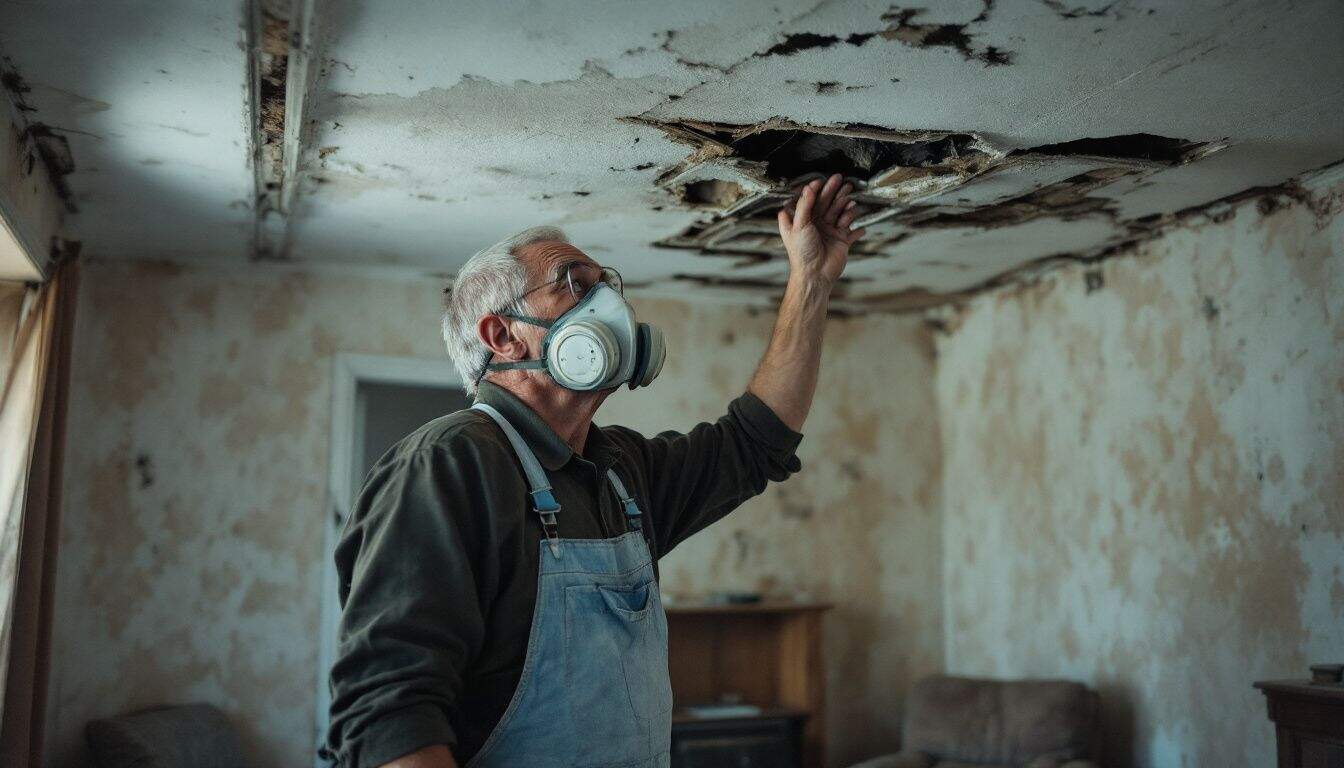
The Risks of Asbestos in the UK: What Every Property Owner Must Understand
Asbestos kills more people in the UK each year than road accidents. That single fact should stop anyone in their tracks — yet millions of buildings across the country still contain this material, often undisturbed and unidentified. The risks of asbestos are not just a legal concern for property owners and employers; they represent a genuine, ongoing public health crisis that touches every corner of the built environment.
Whether you manage a commercial premises, own a pre-2000 home, or work in construction, this is a risk you cannot afford to ignore.
Why Asbestos Is So Dangerous
Asbestos is a naturally occurring fibrous mineral used extensively in UK construction throughout the 20th century. Its fire-resistant and insulating properties made it enormously popular — until the medical evidence became impossible to ignore.
When asbestos-containing materials are disturbed, microscopic fibres are released into the air. These fibres are invisible to the naked eye, have no smell, and can remain airborne for hours. Once inhaled, they become lodged deep in lung tissue, where they cause progressive, irreversible damage over many years.
There is no safe level of asbestos exposure. Even brief, low-level contact carries a risk — and the effects may not appear for decades. That combination of invisibility and delayed harm is precisely what makes asbestos so uniquely dangerous compared to almost any other workplace hazard.
The Diseases Caused by Asbestos Exposure
The risks of asbestos manifest as several serious and often fatal diseases. These conditions share one grim characteristic: by the time symptoms appear, the disease is usually well advanced and treatment options are limited.
Mesothelioma
Mesothelioma is a cancer of the lining of the lungs (pleural mesothelioma) or abdomen (peritoneal mesothelioma). It is almost exclusively caused by asbestos exposure and has no cure. The latency period — the time between exposure and diagnosis — is typically between 20 and 50 years, which means people diagnosed today were often exposed decades ago.
Symptoms include persistent chest pain, breathlessness, and fluid around the lungs. Prognosis remains poor, with most patients surviving less than two years after diagnosis. The International Agency for Research on Cancer classifies all forms of asbestos as definite human carcinogens.
Asbestosis
Asbestosis is a chronic, progressive scarring of the lung tissue caused by prolonged inhalation of asbestos fibres. The scarring reduces the lungs’ ability to expand and transfer oxygen into the bloodstream, leading to increasing breathlessness, a persistent dry cough, and fatigue.
There is no cure. Treatment focuses on managing symptoms and slowing progression. In advanced cases, asbestosis is severely debilitating and can be fatal.
Lung Cancer
Asbestos exposure significantly increases the risk of lung cancer, particularly in people who also smoke. The combination of asbestos and smoking is not simply additive — it multiplies the risk dramatically. Cancer can develop anywhere from 10 to 40 years after exposure, making it extremely difficult to trace back to a specific incident.
The Health and Safety Executive (HSE) acknowledges asbestos as a leading cause of occupational cancer deaths in the UK. This is not a historical problem — new cases are diagnosed every year.
Pleural Plaques and Pleural Thickening
Not all asbestos-related conditions are immediately life-threatening, but pleural plaques and pleural thickening are important markers of past exposure. Pleural plaques are areas of hardened tissue on the lining of the lungs and do not usually cause symptoms on their own.
Pleural thickening, however, can restrict breathing and cause significant discomfort. Both conditions indicate that asbestos fibres have reached the lung lining, and their presence increases the risk of more serious disease developing later.
How Asbestos Exposure Happens
Understanding the risks of asbestos requires knowing how exposure actually occurs. It is rarely dramatic — most people are exposed gradually, often without realising it until the damage is already done.
Occupational Exposure
Workers in construction, demolition, plumbing, electrical installation, and building maintenance are at the highest risk. Trades that regularly disturb building fabric — drilling, cutting, sanding, or removing old insulation — are particularly vulnerable.
Asbestos was used in ceiling tiles, floor tiles, pipe lagging, roof sheets, textured coatings such as Artex, boiler insulation, and fire doors. Any trade working in buildings constructed before 2000 may encounter it without warning. Secondary exposure — where workers bring fibres home on their clothing — has also caused disease in family members who never set foot on a worksite.
Domestic and DIY Exposure
Homeowners carrying out DIY work in older properties are increasingly at risk. Drilling into an Artex ceiling, ripping out old floor tiles, or disturbing pipe lagging during a renovation can all release fibres without any visible warning signs.
Asbestos-containing materials that are in good condition and left undisturbed are generally considered low risk. The danger arises when materials deteriorate naturally over time or are physically disturbed. Storms, flooding, and structural damage can also dislodge asbestos materials and release fibres into the surrounding environment.
Who Is Most at Risk?
Certain groups face a disproportionately higher risk from asbestos exposure. Knowing whether you or your workers fall into one of these categories is the first step towards taking appropriate precautions.
- Construction and demolition workers — particularly those working in older buildings without proper asbestos surveys in place
- Plumbers, electricians, and heating engineers — trades that regularly work around pipe lagging, boilers, and older building services
- Residents of pre-2000 homes — especially those undertaking DIY renovation or maintenance work
- Teachers and school staff — many UK schools built between the 1950s and 1980s contain asbestos in ceiling tiles and other building materials
- Facilities managers and building owners — responsible for managing asbestos in non-domestic premises under the Control of Asbestos Regulations
- Family members of workers — secondary exposure through contaminated clothing remains a documented risk
Children are considered particularly vulnerable because a longer life expectancy means a greater window of time for asbestos-related disease to develop following exposure. Schools and educational buildings built before 2000 deserve particular scrutiny.
The UK Legal Framework Around Asbestos
The UK has some of the most robust asbestos legislation in the world, though the ongoing death toll demonstrates that the problem is far from resolved.
The UK Asbestos Ban
The UK banned the import and use of blue (crocidolite) and brown (amosite) asbestos in 1985. White asbestos (chrysotile) — the most widely used form — was banned in 1999. Despite these bans, asbestos installed before those dates remains in place across millions of buildings and is entirely legal to leave undisturbed, provided it is properly managed.
The Control of Asbestos Regulations
The Control of Asbestos Regulations place clear legal duties on those who own, manage, or have responsibility for non-domestic premises. The key obligations include:
- Identifying whether asbestos is present and assessing its condition
- Maintaining an up-to-date asbestos register for the building
- Producing and implementing an asbestos management plan
- Ensuring anyone who might disturb asbestos is informed of its location
- Monitoring the condition of asbestos-containing materials regularly
Failure to comply can result in prosecution, significant fines, and — most critically — preventable deaths. The HSE’s guidance document HSG264 sets out the standards for asbestos surveys and is the industry benchmark for surveyors across the UK.
The Duty to Manage
The duty to manage asbestos applies to all non-domestic premises and to the common areas of residential buildings such as blocks of flats. Dutyholders — typically building owners, landlords, or managing agents — are legally required to take reasonable steps to find asbestos, assess its condition, and manage it safely.
This is not optional. Ignorance of asbestos in a building you manage is not a defence under the regulations. If you are unsure whether your building contains asbestos, you are already behind where the law expects you to be.
Asbestos Surveys: The First Line of Defence Against Risk
The most effective way to manage the risks of asbestos is to know exactly where it is and what condition it is in. That means commissioning a professional asbestos survey carried out by a qualified, UKAS-accredited surveyor working to the standards set out in HSG264.
There are two main types of survey, and choosing the right one matters:
A management survey is the standard survey for occupied buildings. It locates asbestos-containing materials that could be disturbed during normal occupation and maintenance, and forms the basis of your asbestos register and management plan. This is the survey most building owners and facilities managers will need first.
A demolition survey is required before any major renovation or demolition work. It is far more intrusive and aims to locate all asbestos before the building fabric is disturbed. This type of survey is a legal requirement before any significant structural work begins.
Never commission a survey from an unaccredited provider. The quality of the survey directly affects how well you can manage risk going forward — a poor survey can give you false confidence and leave dangerous materials unidentified.
If you are based in the capital and need to assess a commercial or residential property, an asbestos survey London from a qualified team will provide a full assessment and a legally compliant asbestos register. Property owners in the North West can arrange an asbestos survey Manchester to ensure their building meets its obligations under the Control of Asbestos Regulations. For those in the Midlands, an asbestos survey Birmingham provides the same thorough, professional assessment.
Safe Removal and Management of Asbestos
Not all asbestos needs to be removed. In many cases, managing it in place — monitoring its condition and ensuring it is not disturbed — is the safest and most appropriate course of action. However, when removal is necessary, it must be carried out correctly.
When Is Removal Required?
Removal is typically necessary when:
- Asbestos-containing materials are in poor condition and at risk of releasing fibres
- Building work is planned that would disturb the material
- The material is in a high-traffic area where accidental damage is likely
- A refurbishment or demolition survey has identified it as a priority for action
Licensed vs. Non-Licensed Work
Under the Control of Asbestos Regulations, some asbestos work requires a licence from the HSE. Licensed work includes the removal of sprayed coatings, lagging, and asbestos insulating board (AIB). Other lower-risk work may be carried out without a licence but still requires notification to the relevant enforcing authority and strict adherence to control measures.
Professional asbestos removal by a licensed contractor ensures the work is carried out safely, with appropriate containment, respiratory protective equipment, decontamination procedures, and legally compliant waste disposal. Never attempt to remove asbestos yourself — the risks are severe and the legal consequences of unlicensed removal can be significant.
What Safe Removal Looks Like
Licensed contractors follow a strict protocol during removal work:
- Sealing and enclosing the work area to prevent fibre migration
- Using wet methods to suppress fibre release during removal
- Wearing appropriate respiratory protective equipment and disposable protective clothing
- Conducting thorough decontamination on exit from the work area
- Bagging, labelling, and disposing of asbestos waste via licensed carriers to authorised disposal sites
- Carrying out air monitoring before, during, and after the work
What to Do If You Suspect Asbestos in Your Property
If you suspect asbestos-containing materials in your property, the single most important rule is: do not disturb them. Do not drill, sand, scrape, or break any material you suspect might contain asbestos.
Instead, follow these steps:
- Leave the material alone — if it is in good condition and not being disturbed, the immediate risk is low
- Commission a professional survey — a qualified surveyor will sample and test suspect materials in an accredited laboratory
- Get a written risk assessment — this will tell you whether materials need to be managed in place, encapsulated, or removed
- Inform anyone working in the building — contractors, maintenance staff, and tradespeople must be told where asbestos is located before they start work
- Keep your asbestos register up to date — conditions change over time and records must reflect the current state of the building
If you are a dutyholder under the Control of Asbestos Regulations and do not yet have an asbestos management plan in place, seek professional advice immediately. The legal and human cost of getting this wrong is too high to delay.
The Ongoing Legacy of Asbestos in UK Buildings
The risks of asbestos will remain a live issue in the UK for decades to come. The long latency period of asbestos-related diseases means that deaths linked to past exposure will continue to occur well into the future. At the same time, the sheer volume of buildings still containing asbestos means that new exposures — and new cases of disease — are still occurring today.
The most effective thing any property owner, employer, or facilities manager can do is take the issue seriously, commission the right surveys, maintain accurate records, and ensure that anyone working in or around their building is properly informed. These are not bureaucratic box-ticking exercises — they are the practical steps that prevent people from being harmed.
Asbestos does not announce itself. It requires active management, professional expertise, and a genuine commitment to the safety of everyone who uses your building.
Frequently Asked Questions
What are the main risks of asbestos exposure?
The main risks of asbestos exposure are serious and often fatal diseases, including mesothelioma, asbestosis, lung cancer, and pleural thickening. These conditions typically develop 20 to 50 years after exposure, meaning symptoms may not appear until long after the initial contact with asbestos fibres. There is no safe level of exposure.
Is asbestos still present in UK buildings?
Yes. Although the use of asbestos was banned in the UK by 1999, it remains in place in millions of buildings constructed before that date. Offices, schools, hospitals, factories, and residential properties built before 2000 may all contain asbestos-containing materials. These materials are not automatically dangerous if they are in good condition and left undisturbed, but they must be properly managed.
Do I legally need an asbestos survey?
If you own, manage, or have responsibility for a non-domestic building, the Control of Asbestos Regulations require you to identify whether asbestos is present, assess its condition, and manage it appropriately. A professional asbestos survey is the recognised method for meeting this legal duty. Failure to comply can result in prosecution and significant fines.
Can I remove asbestos myself?
No. The removal of most asbestos-containing materials — particularly high-risk materials such as sprayed coatings, lagging, and asbestos insulating board — must be carried out by a contractor licensed by the HSE. Attempting to remove asbestos yourself is illegal for licensed work and extremely dangerous regardless of the type of material involved. Always use a qualified, licensed contractor.
How do I know if a material in my building contains asbestos?
You cannot tell by looking at a material whether it contains asbestos. The only reliable way to confirm the presence of asbestos is through laboratory analysis of a sample taken by a qualified surveyor. If your building was constructed before 2000 and you have not had a professional survey carried out, you should assume asbestos may be present until proven otherwise.
Speak to Supernova Asbestos Surveys
Supernova Asbestos Surveys has completed over 50,000 surveys across the UK, helping property owners, landlords, facilities managers, and employers understand and manage the risks of asbestos in their buildings. Our UKAS-accredited surveyors work to the standards set out in HSG264 and provide clear, actionable reports that give you everything you need to meet your legal obligations.
Whether you need a management survey for an occupied building, a demolition survey ahead of refurbishment work, or professional advice on asbestos removal, our team is ready to help.
Call us on 020 4586 0680 or visit asbestos-surveys.org.uk to book a survey or speak to one of our specialists.