
What is asbestos? For many property owners and managers, it is the hidden risk sitting above ceilings, behind panels, inside risers and under old floor finishes. It was used so widely in UK buildings that if your property was built or refurbished before 2000, asbestos should be considered before any work starts.
The trouble with asbestos is not just that it exists. The real danger comes when asbestos-containing materials are damaged, drilled, cut, sanded or removed without proper controls, releasing fibres into the air. That is why understanding what asbestos is, where it may be found and when to call in a professional matters for homes, commercial premises and shared residential buildings alike.
What is asbestos in simple terms?
Asbestos is the name given to a group of naturally occurring minerals made up of tiny fibres. Those fibres are strong, resistant to heat and chemicals, and poor conductors of electricity, which made asbestos attractive to builders and manufacturers for decades.
When people ask what is asbestos, they are often expecting a single material. In reality, asbestos is a family of minerals. In UK properties, the types most commonly encountered are:
- Chrysotile – often called white asbestos
- Amosite – often called brown asbestos
- Crocidolite – often called blue asbestos
All asbestos types are hazardous and must be managed correctly. The legal framework in the UK comes from the Control of Asbestos Regulations, with survey work informed by HSG264 and wider HSE guidance.
The key point is straightforward. Asbestos is dangerous when fibres are released and inhaled. A material left undisturbed and in good condition may present a much lower immediate risk than one being broken up during maintenance or refurbishment, but neither should be guessed at.
Why asbestos was used so widely
To understand what is asbestos, it helps to understand why it became such a common part of British construction. For years, it was seen as a practical, low-cost material that solved several problems at once.
Builders and manufacturers valued asbestos because it offered:
- Fire resistance
- Heat resistance
- Chemical resistance
- Strength and durability
- Insulating performance
- Low cost in mass production
That combination made it useful in everything from insulation and fire protection to cement products and floor finishes. It was not confined to specialist industrial sites. It found its way into homes, offices, schools, hospitals, shops, warehouses and factories across the UK.
This is why asbestos still turns up so often today. The issue is not new installation. The issue is managing asbestos that remains in existing buildings.
A brief history of asbestos in UK property
Asbestos has been known about for centuries, but its widespread use expanded during industrial growth. Steam systems, boilers, ships, factories and power generation all needed materials that could cope with heat, friction and fire.
As manufacturing methods improved, asbestos was woven into textiles, mixed into cement, pressed into boards and added to coatings. By the time large-scale post-war building and refurbishment programmes took off, asbestos had become part of ordinary building practice.
Medical evidence later linked asbestos exposure with serious disease. That led to tighter regulation, stronger controls and the eventual prohibition of asbestos use in the UK. Even so, many buildings still contain asbestos-containing materials, which is why the duty to identify and manage it remains so important.
Where asbestos came from and how it entered buildings
Asbestos is mined from naturally occurring rock deposits. Once extracted, it is processed so the fibres can be used in manufactured products.
The UK was not a major producer of raw asbestos, but it imported large quantities for use in construction, engineering, transport, shipbuilding and manufacturing. Those fibres were then built into products used throughout domestic and commercial supply chains.
In practical terms, that means asbestos can appear in a huge range of materials that once seemed completely ordinary. A property manager might find it in a garage roof, a service duct lining, a fire door, a ceiling tile or an old pipe insulation system.
Common places asbestos is found in homes
One of the clearest ways to answer what is asbestos is to look at where it was used. In domestic settings, asbestos often catches people out during DIY work, kitchen replacements, bathroom upgrades, loft conversions and garage alterations.

Common examples in homes and residential blocks include:
- Garage and shed roofs made from asbestos cement sheets
- Soffits, gutters and downpipes
- Textured coatings on walls and ceilings
- Vinyl or thermoplastic floor tiles
- Bitumen adhesives and mastics
- Bath panels and airing cupboard linings
- Boxing around services
- Flue pipes and flue-related products
- Fuse backing boards and service cupboard panels
- Water tanks or cisterns in some older properties
In blocks of flats, the common parts may also contain asbestos in risers, ceiling voids, service cupboards and plant areas. That matters because maintenance in shared areas can affect residents, contractors and visitors.
Common places asbestos is found in commercial buildings
Commercial and public buildings can contain asbestos on a larger scale, especially where the premises have been altered several times over the years. Hidden materials are often the ones that cause disruption when contractors start opening up the fabric of the building.
Common locations in non-domestic premises include:
- Ceiling tiles and suspended ceiling components
- Asbestos insulating board in partitions and fire breaks
- Pipe lagging and boiler insulation
- Sprayed coatings used for insulation or fire protection
- Riser cupboards and service ducts
- Plant rooms and heating systems
- Floor finishes and adhesives
- Roof sheets, wall cladding and panels
- Fire doors and door linings
If you are managing older premises in the capital, arranging an asbestos survey London service before intrusive work begins can prevent dangerous surprises and expensive delays.
Higher-risk and lower-risk asbestos materials
Not every asbestos-containing material presents the same level of risk. The amount of fibre that may be released depends on the type of product, how firmly the fibres are bound, its condition and whether it is likely to be disturbed.
Higher-risk asbestos materials
These materials are generally more friable, which means they can release fibres more easily if damaged.
- Pipe lagging on heating systems and service pipework
- Sprayed coatings
- Asbestos insulating board in partitions, panels and ducts
- Loose fill insulation
These materials should never be disturbed by general maintenance staff or contractors without proper assessment, planning and controls.
Lower-friability asbestos materials
Some products are more tightly bound, which can reduce fibre release while they remain in good condition. That does not make them safe to cut, drill or remove casually.
- Asbestos cement sheets, flues, gutters and downpipes
- Floor tiles and some backing materials
- Textured coatings
- Bitumen products such as mastics and roofing materials
A garage roof made from asbestos cement is not the same immediate risk as damaged lagging in a boiler room, but both still need competent assessment before work takes place.
How asbestos exposure happens
When people ask what is asbestos, the real concern is usually exposure. Asbestos fibres are microscopic. You cannot rely on sight or smell to tell whether a task is safe.
Exposure happens when fibres become airborne and are inhaled. That usually occurs because asbestos-containing materials have been disturbed, damaged or allowed to deteriorate badly.
Common ways fibres are released include:
- Drilling walls, ceilings or soffits without checking first
- Removing old floor tiles or scraping adhesive
- Cutting into partitions, ducts or risers
- Breaking cement sheets during strip-out
- Damaging lagging around pipes or boilers
- Sanding or scraping textured coatings
- Cleaning up debris left by previous uncontrolled work
- Starting refurbishment without the right survey
This is why maintenance and refurbishment are high-risk stages. A material that has sat undisturbed for years can become hazardous very quickly once tools are used on it.
Health risks linked to asbestos
Asbestos exposure is associated with serious diseases, including asbestosis, lung cancer and mesothelioma. These illnesses are linked to the inhalation of asbestos fibres, often after occupational or repeated exposure.
The level of risk depends on several factors, including the type of asbestos, the amount of fibre released, the duration of exposure and how often exposure occurs. From a property management point of view, the practical message is prevention.
If there is any doubt about a suspect material:
- Stop work immediately.
- Keep people away from the area.
- Do not sweep, vacuum or break up debris.
- Arrange professional assessment and, where needed, sampling.
Do not rely on appearance alone. Many asbestos-containing materials look similar to modern non-asbestos products.
How asbestos is identified properly
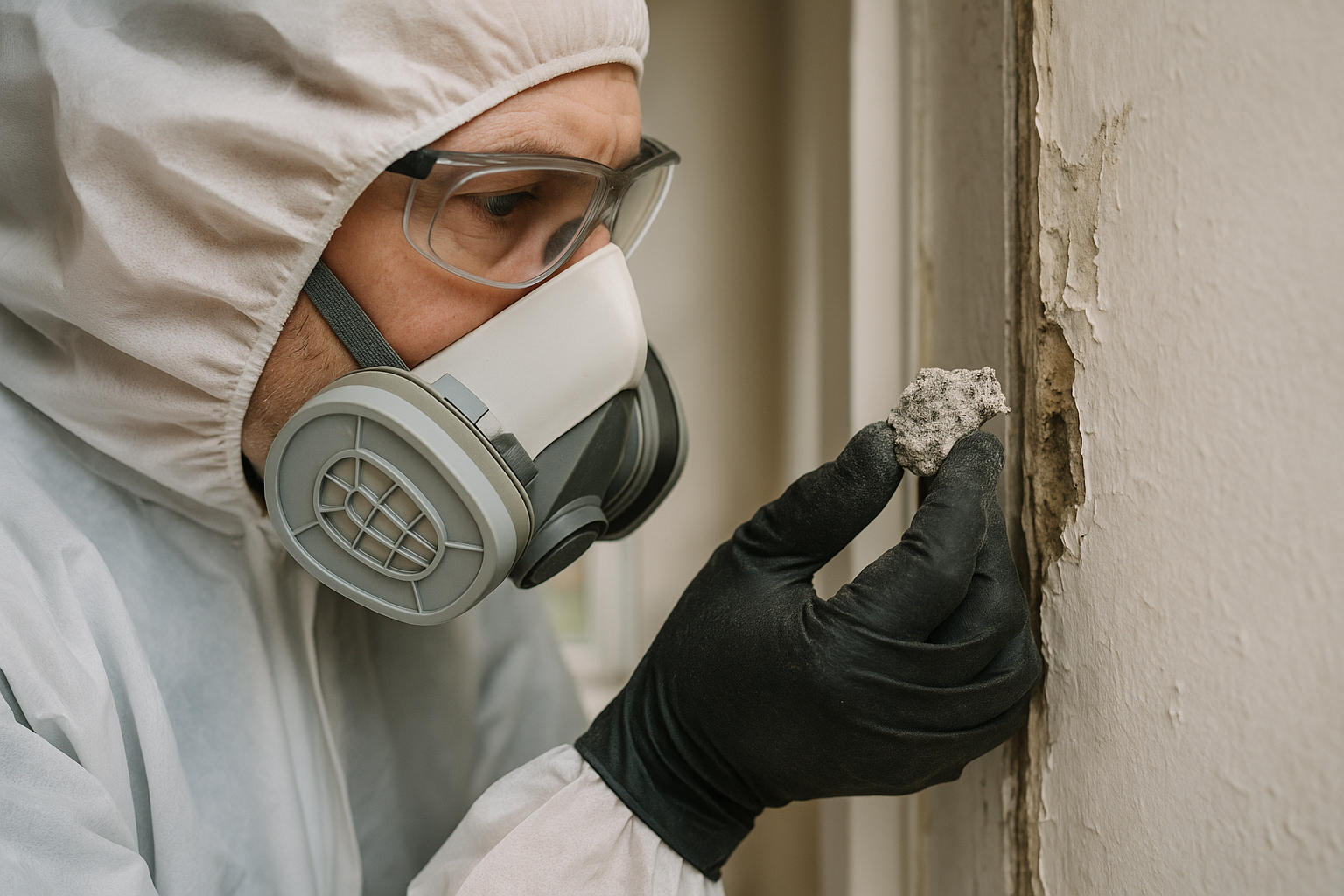
You cannot confirm asbestos reliably by eye. A competent surveyor inspects the building, assesses suspect materials and, where appropriate, takes samples for analysis by a suitable laboratory.
This matters because guesswork causes two problems. It can create unnecessary alarm where asbestos is not present, or far worse, it can lead to unsafe work because someone assumed a material was harmless.
What a surveyor will assess
- The age and type of building
- The location and use of suspect materials
- The condition of those materials
- The likelihood of disturbance
- Whether sampling and analysis are needed
If you are responsible for premises in the north-west, booking an asbestos survey Manchester inspection before maintenance or refurbishment can save time and reduce compliance risk.
When you need an asbestos survey
Knowing what is asbestos is useful, but acting on that knowledge is what protects people and projects. If a building was constructed or refurbished before 2000, asbestos should be considered before any work that could disturb the fabric.
Management surveys
A management survey is used to locate, as far as reasonably practicable, the presence and extent of asbestos-containing materials that could be damaged or disturbed during normal occupation, including routine maintenance.
It helps dutyholders maintain an asbestos register and manage materials safely in place. This is usually the right survey for occupied non-domestic premises and the common parts of some residential buildings.
Refurbishment and demolition surveys
More intrusive work needs a different approach. Before structural changes, strip-out or major alterations, a survey designed for those works is required. If the building, or part of it, is coming down, a demolition survey is needed to identify asbestos in the areas affected, including hidden materials.
Without the correct survey, contractors can uncover asbestos mid-project, causing delays, contamination and potentially enforcement action.
Practical triggers for a survey
- You are planning refurbishment, fit-out or demolition
- Contractors need access to ceilings, risers, ducts or voids
- There is no reliable asbestos register for an older building
- Existing information is incomplete or out of date
- Suspect materials have been damaged
For properties in the Midlands, arranging an asbestos survey Birmingham visit before works begin is a sensible step.
What dutyholders and property managers should do
If you manage non-domestic premises, or the common parts of certain residential buildings, the duty to manage asbestos may apply to you under the Control of Asbestos Regulations. That duty is practical, not theoretical.
You need to know whether asbestos is present, where it is, what condition it is in and how it will be managed so people are not put at risk.
Good asbestos management in practice
- Arrange the right survey for the building and planned works
- Keep an up-to-date asbestos register
- Assess the condition of known materials regularly
- Share relevant asbestos information with contractors before they start
- Make sure planned maintenance is checked against asbestos records
- Review the register after any changes, removals or new findings
One of the most common failures is poor communication. A register sitting in a file does not protect anyone if contractors never see it.
What to do if you suspect asbestos
If you come across a material you think may contain asbestos, avoid disturbing it. Do not drill, snap, scrape, sand or remove it to “see what is underneath”.
Take these steps instead:
- Stop work straight away.
- Keep others out of the area.
- Avoid creating dust or moving debris.
- Do not attempt to bag or dispose of the material yourself.
- Contact a competent asbestos surveyor for inspection and advice.
If damage has already occurred, isolate the area as far as possible and get professional help quickly. The right response early on can prevent a small incident turning into a much bigger contamination problem.
Does asbestos always need to be removed?
No. One of the biggest misunderstandings around what is asbestos is the idea that every asbestos-containing material must be removed immediately. That is not how asbestos management works.
If asbestos is in good condition, properly recorded and unlikely to be disturbed, it can often be managed in place. Removal may be necessary where materials are damaged, deteriorating, likely to be disturbed by planned works or unsuitable to leave in situ.
The right decision depends on:
- The type of asbestos-containing material
- Its condition
- Its location
- The likelihood of disturbance
- The nature of planned maintenance, refurbishment or demolition
This is another reason surveys matter. They help you make decisions based on evidence rather than assumptions.
Asbestos and the home: what owners should know
Homeowners are often concerned that finding asbestos means immediate danger. In many cases, the immediate issue is not occupation but disturbance. Problems usually arise during DIY, repairs or upgrades.
If you own an older home, be cautious before carrying out work on:
- Garage roofs and outbuildings
- Old ceiling coatings
- Boxing around pipes
- Floor tiles and adhesives
- Service cupboards and fuse boards
- Flues and panels near heating systems
If you are unsure, get the material checked before work starts. That is faster and cheaper than dealing with contamination after the event.
Why professional advice saves time and money
Trying to cut corners with asbestos rarely saves anything. A missed asbestos material can stop a project, expose workers, contaminate an area and lead to costly clean-up and programme disruption.
Professional surveying gives you clear information before work starts. That allows you to plan properly, brief contractors, avoid unsafe disturbance and keep records that support compliance.
For property managers, that means fewer surprises. For homeowners, it means safer decisions before DIY or refurbishment begins.
Frequently Asked Questions
What is asbestos and why was it used in homes?
Asbestos is a group of naturally occurring fibrous minerals. It was used in homes because it was strong, heat-resistant, durable and inexpensive, so it was added to many building materials.
Is asbestos dangerous if it is left alone?
Asbestos is usually most dangerous when it is damaged or disturbed, releasing fibres into the air. Materials in good condition may sometimes be managed in place, but they still need proper assessment and recording.
Can you identify asbestos just by looking at it?
No. Many asbestos-containing materials look like non-asbestos alternatives. Reliable identification usually requires a competent surveyor and, where needed, laboratory analysis.
When should I get an asbestos survey?
You should consider an asbestos survey before maintenance, refurbishment or demolition in buildings constructed or refurbished before 2000. The right survey depends on how the building is used and what work is planned.
What should I do if I think I have found asbestos?
Stop work, keep people away and do not disturb the material further. Then arrange professional inspection and advice so the material can be assessed safely.
If you need clear advice on what is asbestos, or you need a survey before maintenance, refurbishment or demolition, Supernova Asbestos Surveys can help. We provide expert asbestos surveying services across the UK, with practical support for homeowners, landlords, managing agents and commercial dutyholders. Call 020 4586 0680 or visit asbestos-surveys.org.uk to book your survey.