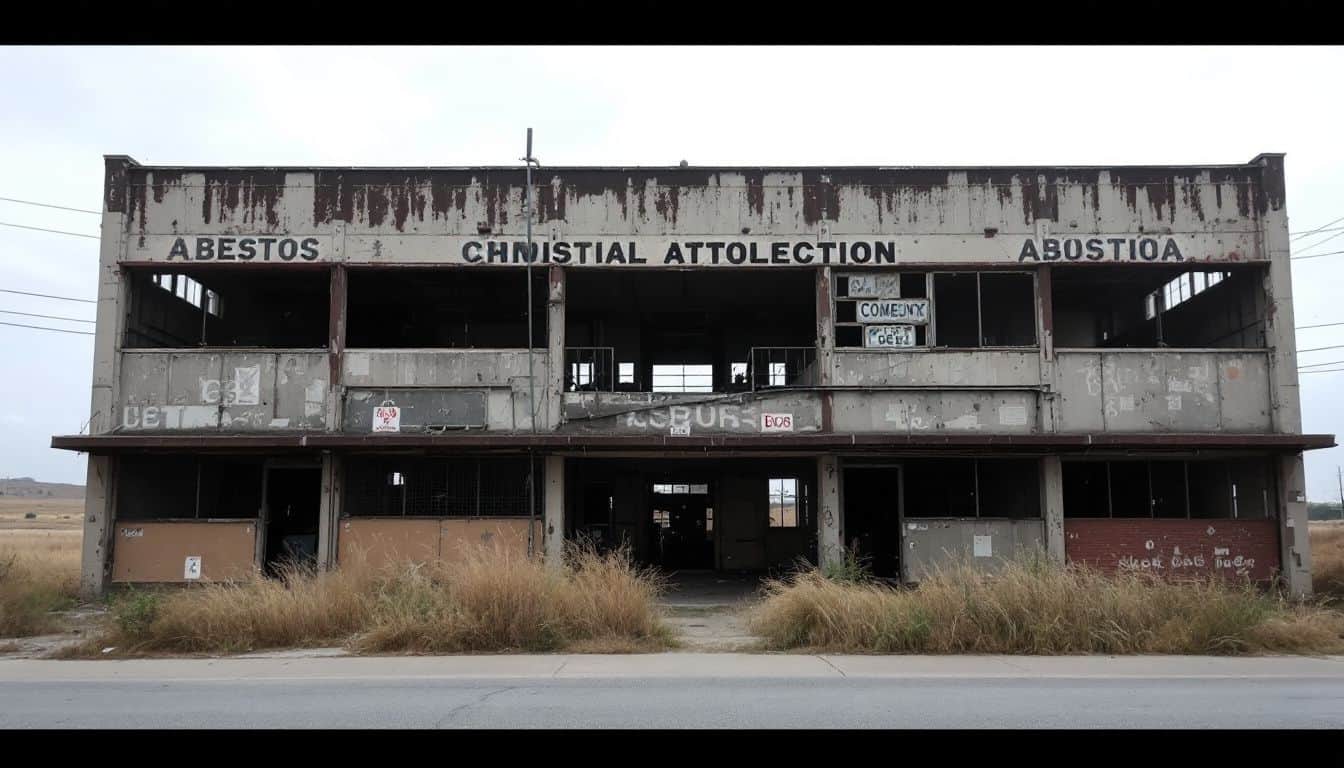
Why Asbestos Can Make or Break an Industrial Property Sale
If you’re preparing to sell or acquire an industrial building, asbestos will land on the negotiating table early — and how you handle it will shape the entire transaction. An industrial building asbestos survey isn’t simply a legal box to tick. It’s a commercial decision that directly affects what your property is worth, how quickly it sells, and whether a buyer can even secure finance or insurance on it.
Industrial properties carry some of the highest asbestos risks of any building type. Factories, warehouses, power plants, and laboratories built before 2000 were routinely constructed using asbestos-containing materials (ACMs) in roofing, insulation, pipe lagging, floor tiles, and fire protection systems. Understanding what you’re dealing with — and how to manage it — is essential before any transaction moves forward.
How Asbestos Affects the Market Value of Industrial Properties
Asbestos doesn’t just create a health risk — it creates a financial one. The presence of ACMs in an industrial building can reduce market value, complicate negotiations, and deter buyers who aren’t prepared to take on the associated liability.
The Price Impact of Asbestos Detection
When asbestos is identified during a building survey, buyers typically seek a reduction in the asking price to offset the cost and risk of management or removal. The extent of that reduction depends on the type, condition, and location of the ACMs found.
Asbestos in non-critical areas — such as floor tiles in good condition — tends to have a smaller impact than asbestos found in structural components, HVAC systems, or areas requiring significant disturbance during renovation. The more disruptive and costly the remediation, the greater the downward pressure on price.
Chartered surveyors and valuers routinely factor asbestos management obligations into their assessments. A property with a clear, well-maintained asbestos register and a current asbestos management survey is in a significantly stronger negotiating position than one where the asbestos status is unknown or undocumented.
Buyer Perceptions and Negotiation Dynamics
Buyers and their solicitors are well aware of the obligations that come with asbestos in a commercial property. When ACMs are present, buyers will typically request either a price reduction, a commitment to remediation before completion, or both.
The uncertainty around unknown asbestos is often more damaging to negotiations than the asbestos itself. A buyer who doesn’t know what they’re inheriting will factor in a worst-case scenario when making their offer — a seller who can present a thorough, up-to-date survey report removes that uncertainty and retains far more control over the sale price.
Tenants and landlords in industrial leases face similar dynamics. Asbestos obligations — including who is responsible for management, inspections, and any required works — must be clearly established in lease agreements. Failure to address this creates ongoing liability and can complicate future disposals.
Legal Obligations: What Sellers Must Disclose
The legal framework around asbestos in non-domestic properties is unambiguous. Under the Control of Asbestos Regulations, the duty to manage asbestos applies to anyone who has responsibility for the maintenance or repair of non-domestic premises. When a property changes hands, those obligations transfer — and sellers are expected to provide full disclosure of any known asbestos.
What Documentation Must Be Provided
When selling an industrial property, you will typically be required to provide the following:
- An Asbestos Survey Report (management or refurbishment/demolition survey, as appropriate)
- An Asbestos Management Plan
- The Asbestos Register, detailing the location, type, and condition of any ACMs
- Historical records of any asbestos works carried out on the site
- The Health and Safety File, where applicable
These documents must be accurate and current. An outdated survey — or one that doesn’t cover the full extent of the building — may not satisfy buyers’ solicitors or lenders, and could create legal exposure for the seller.
The Consequences of Non-Disclosure
Failing to disclose known asbestos in a property transaction is not simply a regulatory oversight — it can constitute fraud or misrepresentation. Sellers who conceal asbestos face the prospect of legal action, breach of contract claims, and significant financial penalties.
Regulatory enforcement for asbestos breaches can result in unlimited fines and, in serious cases, custodial sentences. Beyond the legal consequences, non-disclosure destroys trust and can unravel transactions entirely.
Full, proactive disclosure — backed by a professionally conducted survey — is always the more defensible and commercially sensible position. There is no short-term advantage in withholding information that will almost certainly surface during due diligence.
Industrial Building Asbestos Survey: What’s Involved
An industrial building asbestos survey is not a one-size-fits-all exercise. The type of survey required depends on the current use of the building and what activities are planned.
Management Surveys
A management survey is the standard survey for buildings that are in normal use. It identifies the location and condition of ACMs that could be disturbed during routine maintenance and occupation, and it underpins the Asbestos Management Plan that must be kept up to date throughout the life of the building.
For industrial properties being sold while still in active use, a current management survey is typically the minimum requirement for disclosure purposes. If your existing survey is more than a year old, or if significant changes have been made to the building since it was conducted, it should be reviewed and updated before the property goes to market.
Refurbishment and Demolition Surveys
If the property is being sold for redevelopment, or if significant refurbishment is planned, a demolition survey is required. This is a more intrusive investigation that aims to locate all ACMs — including those concealed within the fabric of the building — before any structural work begins.
This type of survey is particularly relevant for older industrial sites where asbestos may be hidden within wall cavities, ceiling voids, or beneath floor coverings. Buyers planning to repurpose or demolish an industrial building will need this survey completed before works can legally commence, and many will make it a condition of purchase.
What Surveyors Look For in Industrial Buildings
Industrial buildings present a wide range of potential ACM locations. A qualified surveyor will assess all of the following:
- Roof sheeting and roof insulation (corrugated asbestos cement was widely used in industrial construction)
- Pipe and boiler lagging
- Sprayed asbestos coatings on structural steelwork
- Insulating board in partitions, ceiling tiles, and fire doors
- Floor tiles and adhesives
- Gaskets and seals in plant and machinery areas
- Electrical switchgear and cable insulation
Samples are taken where ACMs are suspected and sent to an accredited laboratory for analysis. The results inform the survey report, which categorises materials by risk and recommends appropriate management actions in line with HSE guidance and HSG264.
Remediation Options and Their Effect on Value
Once asbestos has been identified, the question becomes what to do about it — and how that decision affects the property’s commercial position.
Professional Removal
Full asbestos removal eliminates the material from the building entirely. Where it is practical and proportionate, removal removes the ongoing management obligation and can make the property considerably more attractive to buyers and lenders.
Removal must be carried out by a licensed contractor for higher-risk materials such as sprayed coatings or pipe lagging, and all waste must be disposed of in accordance with hazardous waste regulations. The cost varies depending on the type and volume of material, the accessibility of affected areas, and the level of containment required during the works.
Encapsulation and Management in Place
Where asbestos is in good condition and is not likely to be disturbed, encapsulation — sealing the material to prevent fibre release — is a recognised and legally compliant management approach. It is less disruptive and less expensive than removal, and it can be the right choice for materials that are stable and well-located.
However, encapsulation is not a permanent solution. It requires ongoing monitoring and inspection, and the material remains in the building. Buyers and lenders will factor this into their assessment of the property, and the ongoing management obligation must be clearly documented and transferred at the point of sale.
Choosing the Right Approach
The decision between removal and encapsulation should be based on the condition and type of the ACMs, the planned use of the building, the timescale of the sale, and the expectations of prospective buyers.
A qualified asbestos consultant can advise on the most appropriate and cost-effective strategy for your specific circumstances. Getting this decision right early — before the property goes to market — gives you the best chance of controlling the narrative and protecting your asking price.
The Impact on Insurance and Finance
Asbestos doesn’t just affect the sale price — it affects the financial infrastructure around the transaction. Both insurance and lending can be significantly complicated by the presence of ACMs in an industrial building.
Insurance Implications
Insurers treat asbestos as a material risk. They will typically require evidence of a current asbestos survey before offering buildings insurance on commercial or industrial properties. Where asbestos is present and not properly managed, insurers may apply exclusions, increase premiums, or decline to offer cover altogether.
Non-disclosure of known asbestos to an insurer can invalidate a policy. If a claim arises and the insurer discovers that asbestos was present but not declared, the financial and legal consequences can be severe.
Lender Requirements
Banks and commercial lenders routinely require an asbestos survey as part of their due diligence on industrial property transactions. Where significant ACMs are identified and no management plan is in place, lenders may impose conditions on the loan, increase interest rates, or decline to finance the purchase altogether.
A property with a clear, well-managed asbestos record is a more straightforward lending proposition. Sellers who invest in proper survey documentation and management planning are, in effect, making the property easier to finance — which widens the pool of potential buyers and reduces the risk of a deal falling through at the eleventh hour.
Common Types of Industrial Buildings Affected
Asbestos was used extensively across the industrial sector throughout the twentieth century. If your building was constructed or significantly refurbished before 2000, the assumption should be that ACMs may be present until a survey confirms otherwise.
The following building types are among the most commonly affected:
- Factories and manufacturing plants: Asbestos was used in insulation, fire protection, and roofing across virtually every type of production facility built before the 1980s.
- Warehouses: Asbestos cement roofing sheets and wall cladding are extremely common in older warehouse stock and remain one of the most frequently encountered ACMs in the UK.
- Power generation facilities: Asbestos was used extensively in boilers, turbines, and pipework insulation throughout the energy sector.
- Laboratories and research facilities: Asbestos board was frequently used in work surfaces and fire-resistant partitions.
- Workshops and garages: Asbestos insulating board and cement products are regularly found in older workshop buildings, often in areas that see frequent maintenance activity.
- Dockside and port facilities: Heavy industrial use and the need for fire-resistant construction meant asbestos was widely specified in these environments.
Age alone is not a guarantee of asbestos presence — but it is the single most reliable indicator. Any pre-2000 industrial building should be treated as potentially containing ACMs until a qualified surveyor has assessed it.
Regional Coverage: Industrial Asbestos Surveys Across the UK
Industrial property is distributed across the UK, and so is the need for professional asbestos surveying. Whether you’re managing a transaction in the capital or dealing with a large warehouse in the Midlands or North West, qualified surveyors are available nationwide.
If you need an asbestos survey London for a commercial or industrial property, Supernova’s London-based team covers the full range of survey types across the capital and surrounding areas. For properties in the North West, our team providing an asbestos survey Manchester service covers Greater Manchester and the wider region. And for industrial sites across the Midlands, an asbestos survey Birmingham can be arranged quickly, with turnaround times to suit your transaction timeline.
Supernova Asbestos Surveys operates nationwide, with surveyors experienced in the specific challenges that industrial buildings present — from large-footprint warehouses to complex multi-storey manufacturing facilities.
Preparing Your Industrial Property for Sale: A Practical Checklist
If you’re planning to bring an industrial property to market, working through the following steps before you instruct agents will put you in the strongest possible position:
- Commission a current asbestos survey. If your existing survey is out of date or doesn’t cover the full building, arrange an updated assessment before marketing begins.
- Review your Asbestos Management Plan. Ensure it reflects the current condition of ACMs and that all required monitoring and inspections are up to date.
- Assess remediation options. For high-risk or deteriorating materials, get specialist advice on whether removal or encapsulation is the right approach — and factor the cost into your pricing strategy.
- Compile your documentation pack. Gather survey reports, the asbestos register, records of any remediation works, and any relevant Health and Safety File documentation.
- Brief your solicitors. Ensure your legal team is fully aware of the asbestos position so that disclosure obligations are met correctly from the outset.
- Notify your insurer. Confirm that your buildings insurance reflects the current asbestos status of the property and that there are no undisclosed risks that could affect cover.
Taking these steps proactively — rather than reactively during a sale — means you control the process. It also signals to buyers that the property has been properly managed, which builds confidence and reduces the scope for aggressive price renegotiation.
Frequently Asked Questions
Does asbestos automatically reduce the value of an industrial property?
Not automatically, but it often does. The impact on value depends on the type, condition, and location of the asbestos-containing materials. Well-managed, stable ACMs that are properly documented tend to have a smaller effect on price than poorly managed or deteriorating materials. A current, professionally conducted industrial building asbestos survey gives buyers and valuers the information they need to make an informed assessment rather than assuming the worst.
What type of asbestos survey is needed when selling an industrial building?
For a building in active use being sold as a going concern, a management survey is typically the minimum requirement. If the buyer intends to refurbish or demolish the building, a refurbishment and demolition survey will be required before those works can begin. In some cases, sellers commission a demolition survey proactively to give buyers full confidence in the property’s asbestos status from the outset.
Can a lender refuse to finance a purchase because of asbestos?
Yes. Commercial lenders carry out their own due diligence on industrial property transactions, and the presence of unmanaged or undocumented asbestos can lead to conditions being placed on a loan, higher interest rates, or outright refusal to lend. Having a current asbestos survey and a documented management plan in place makes the property a more straightforward proposition for lenders and reduces the risk of financing falling through.
Who is responsible for asbestos management after an industrial property is sold?
Once ownership transfers, the duty to manage asbestos passes to the new owner or whoever takes on responsibility for the maintenance and repair of the building. The seller must provide all relevant asbestos documentation — including the survey report, asbestos register, and management plan — to ensure the buyer can fulfil those obligations from day one. Failure to transfer this information correctly can expose the seller to ongoing liability.
How long does an industrial building asbestos survey take?
The duration depends on the size, complexity, and accessibility of the building. A straightforward warehouse or single-storey industrial unit may be surveyed in a day, while a large multi-building site or complex facility could take several days. Laboratory analysis of samples typically adds a few working days before the final report is issued. Supernova Asbestos Surveys provides clear timescales at the point of instruction so you can plan your transaction accordingly.
Get Your Industrial Building Asbestos Survey Booked Today
Supernova Asbestos Surveys has completed over 50,000 surveys across the UK, with extensive experience in industrial properties of every type and size. Our surveyors are fully qualified, our reports are clear and actionable, and we work to timescales that fit your transaction — not the other way around.
Whether you need a management survey to support a sale, a demolition survey ahead of redevelopment, or specialist advice on asbestos remediation, we’re here to help. Call us on 020 4586 0680 or visit asbestos-surveys.org.uk to request a quote or find out more about our industrial surveying services.