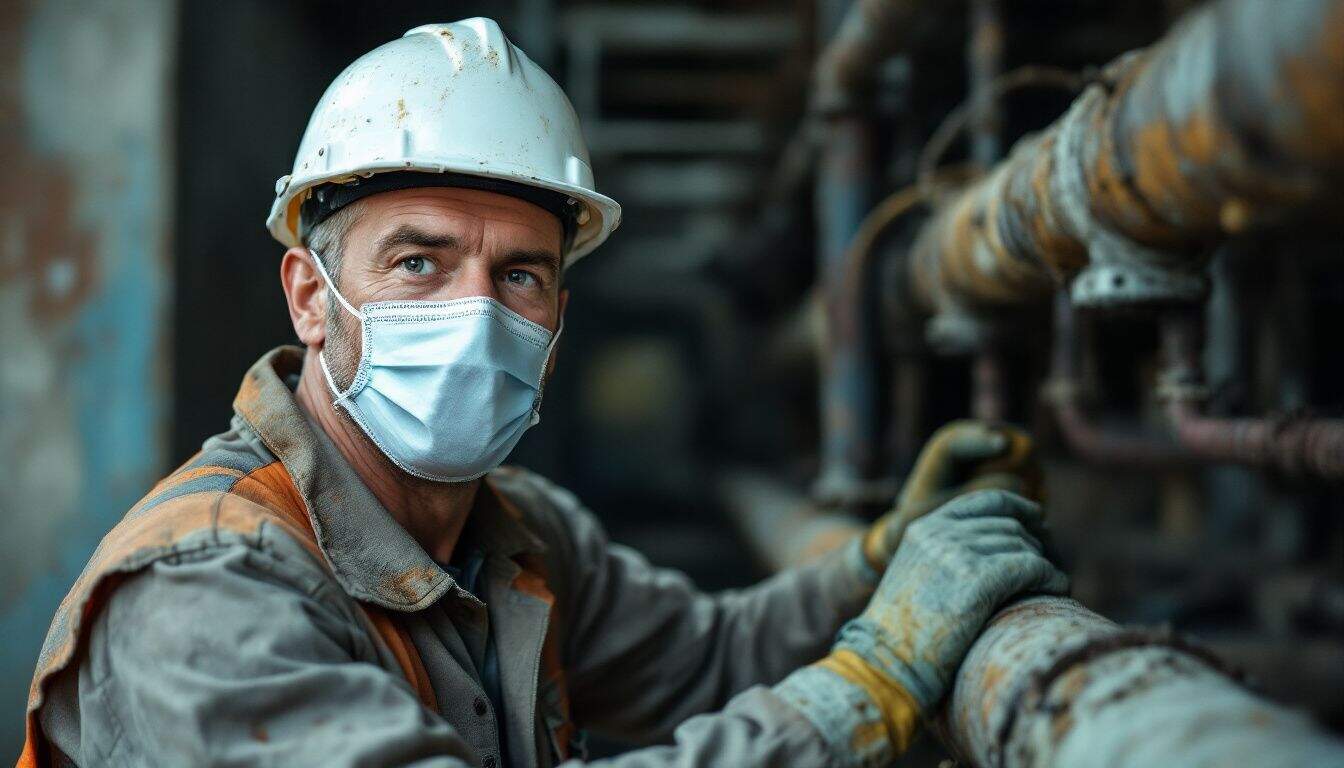
The Hazards of Asbestos in Industrial Settings: What Every Employer and Worker Needs to Know
Asbestos was once considered a wonder material — fireproof, durable, and cheap to produce. That reputation came at an enormous cost. The hazards of asbestos are now well established, and in industrial settings the risks are particularly severe. Despite a UK ban on its use in 1999, asbestos remains present in thousands of commercial and industrial buildings, putting workers at risk every single day.
Understanding where asbestos lurks, how exposure happens, and what diseases it causes is not just useful knowledge — it is a legal and moral obligation for anyone responsible for a workplace.
Which Industries Face the Highest Risk from Asbestos?
Some sectors have historically used asbestos-containing materials (ACMs) more heavily than others. Workers in these industries carry a disproportionately high burden of asbestos-related disease.
Construction
Construction remains the industry most severely affected by the hazards of asbestos in the UK. Asbestos was embedded into a vast range of building materials — insulation boards, ceiling tiles, pipe lagging, roofing felt, floor tiles, and textured coatings like Artex. Many of these materials are still in place in buildings constructed before 2000.
Demolition, refurbishment, and routine maintenance work frequently disturbs these materials, releasing fibres into the air. Construction workers account for a significant proportion of all asbestos-related deaths recorded in the UK each year, making it the leading occupational cancer risk in the sector.
Industrial Manufacturing
Chemical plants, factories, and manufacturing facilities relied on asbestos for insulation, fire protection, and corrosion resistance. Machinery, boilers, gaskets, and thermal insulation all commonly contained ACMs.
Workers in these environments were exposed during both production processes and routine maintenance. Disturbing old insulation or replacing legacy equipment can release fibres that have been dormant for decades.
Shipbuilding
Shipbuilding has one of the longest histories of heavy asbestos use of any sector. Asbestos was used extensively throughout ships — in engine rooms, boiler rooms, pipe insulation, and fireproofing throughout the vessel. Workers who built, repaired, or decommissioned ships were exposed to high concentrations of airborne fibres in confined spaces, significantly increasing their risk of developing mesothelioma and lung cancer.
The latency period for asbestos-related diseases means that former shipyard workers are still receiving diagnoses today, decades after their original exposure.
Power Generation
Power stations used asbestos extensively to insulate boilers, turbines, pipework, and electrical components. Both chrysotile (white asbestos) and amphibole varieties such as amosite (brown asbestos) and crocidolite (blue asbestos) were used in these environments.
Maintenance and repair work in ageing power plants continues to pose a risk where ACMs have not been properly managed or removed.
Other At-Risk Sectors
Beyond these core industries, asbestos exposure has also affected workers in:
- Railway engineering and locomotive maintenance
- Automotive repair, particularly brake and clutch work
- Plumbing and heating engineering
- Electrical installation and maintenance
- Firefighting, where structural fires can disturb ACMs
How Do Workers Get Exposed to Asbestos?
Asbestos does not pose a risk simply by existing. The danger arises when fibres become airborne and are inhaled. There are several routes through which this happens in industrial settings.
Inhalation During Work Activities
The primary route of exposure is inhalation. When ACMs are cut, drilled, sanded, broken, or otherwise disturbed, microscopic fibres are released into the air. Because the fibres are invisible to the naked eye and have no smell, workers may have no idea they are breathing them in.
Chrysotile, amosite, and crocidolite fibres all behave differently in the body, but all are capable of causing serious disease. Amphibole fibres — particularly crocidolite and amosite — are considered the most hazardous because they are more resistant to the body’s natural clearance mechanisms and remain lodged in lung tissue for years.
Secondary Exposure Through Contaminated Clothing
Asbestos fibres cling to clothing, hair, and skin. Workers who return home without changing or showering can inadvertently expose family members — a phenomenon known as secondary or para-occupational exposure. This is how spouses and children of industrial workers have developed asbestos-related diseases without ever setting foot in a factory or shipyard.
The Control of Asbestos Regulations requires employers to provide adequate washing and changing facilities, and to ensure that contaminated work clothing is not taken home.
Maintenance and Repair Work
Maintenance activities are among the highest-risk tasks in any industrial setting. Replacing pipe lagging, drilling through insulation boards, or working near deteriorating ACMs can generate significant fibre release.
The HSE’s guidance document HSG264 makes clear that a thorough asbestos survey must be completed before any work begins that could disturb suspected ACMs. Without knowing what is in a building or structure, workers cannot take appropriate precautions — and employers cannot fulfil their legal duty of care.
The Hazards of Asbestos: Diseases Caused by Exposure
The health consequences of asbestos exposure are severe, often fatal, and almost always develop long after the original exposure. The latency period — the gap between first exposure and the onset of disease — can range from 15 to 60 years. This delayed onset is one of the reasons asbestos-related diseases continue to claim lives in the UK despite the ban.
Mesothelioma
Mesothelioma is a cancer of the mesothelium — the thin lining that surrounds the lungs (pleural mesothelioma), abdomen (peritoneal mesothelioma), or heart. It is almost exclusively caused by asbestos exposure. There is no cure, and median survival following diagnosis is typically measured in months rather than years.
The UK has one of the highest rates of mesothelioma in the world, a direct legacy of the country’s industrial history. The HSE publishes annual mesothelioma statistics, and the numbers remain deeply troubling — thousands of people are still diagnosed each year.
Asbestosis
Asbestosis is a chronic lung disease caused by the scarring of lung tissue following prolonged asbestos fibre inhalation. As scar tissue accumulates, the lungs become progressively stiffer and less efficient. Symptoms include persistent breathlessness, a chronic cough, chest tightness, and fatigue.
There is no treatment that reverses the scarring — management focuses on slowing progression and improving quality of life. Workers who spent years in heavily contaminated environments are at greatest risk, though any significant exposure can contribute to its development.
Lung Cancer
Asbestos exposure is a well-established cause of lung cancer, independent of smoking. The risk is substantially higher in workers who smoke and have been exposed to asbestos — the two risk factors have a multiplicative effect.
Asbestos-related lung cancer is clinically indistinguishable from lung cancer caused by other factors, which means it is likely under-attributed to asbestos in mortality statistics.
Pleural Disease
Non-malignant pleural conditions are also associated with asbestos exposure. These include:
- Pleural plaques — areas of thickened, calcified tissue on the pleural lining. They are a marker of past asbestos exposure and, while not directly harmful themselves, indicate that more serious disease may develop.
- Diffuse pleural thickening — a more extensive thickening of the pleura that can restrict lung expansion and cause breathlessness.
- Benign pleural effusion — a build-up of fluid around the lungs.
These conditions can significantly affect quality of life and lung function, even where they do not progress to cancer.
UK Regulations Governing the Hazards of Asbestos in the Workplace
The UK has a robust regulatory framework designed to manage the hazards of asbestos. Employers and duty holders must understand their obligations — ignorance is not a defence.
The Control of Asbestos Regulations
The Control of Asbestos Regulations is the primary piece of legislation governing asbestos in the UK. It places a duty to manage asbestos on those responsible for non-domestic premises, including industrial buildings.
Key requirements include:
- Identifying the location, condition, and type of any ACMs in the premises
- Assessing the risk of exposure from those materials
- Producing and implementing a written asbestos management plan
- Ensuring that anyone who might work on or disturb ACMs is informed of their location and condition
- Monitoring the condition of ACMs and reviewing the management plan regularly
The regulations also set out specific requirements for licensed and notifiable non-licensed asbestos work, including the use of appropriate controls, air monitoring, and medical surveillance for workers regularly engaged in asbestos work.
HSG264: The Surveying Standard
HSG264 is the HSE’s guidance document on asbestos surveying. It defines two main types of survey:
- A management survey — used to locate and assess ACMs in a building during normal occupation and use
- A demolition survey — a more intrusive survey required before any refurbishment or demolition work that could disturb ACMs
Both types of survey must be carried out by a competent surveyor. At Supernova Asbestos Surveys, all surveyors are BOHS P402 qualified and follow HSG264 to the letter. Whether you need an asbestos survey London, an asbestos survey Manchester, or an asbestos survey Birmingham, our teams cover the entire country.
Asbestos Handling Protocols
Where ACMs are identified, employers must put in place appropriate controls. These include:
- Providing suitable respiratory protective equipment (RPE) — typically a minimum of FFP3 disposable masks for low-risk work, with full-face respirators for higher-risk activities
- Supplying disposable protective clothing to prevent fibre contamination
- Establishing clean and dirty zones on site to prevent cross-contamination
- Ensuring proper disposal of asbestos waste in accordance with hazardous waste regulations
- Providing worker training on asbestos awareness and safe working practices
Preventive Measures: Protecting Workers from the Hazards of Asbestos
Prevention is far preferable to managing the consequences of exposure. There are several practical steps that employers and duty holders should take.
Commission a Professional Asbestos Survey
The single most important step is knowing what is in your building. A professional asbestos management survey will identify the location, extent, and condition of all suspected ACMs, and provide a risk assessment to inform your management plan.
Do not assume that because a building looks modern it is asbestos-free. Many buildings constructed or refurbished in the 1980s and 1990s still contain ACMs, and some materials — such as floor tiles and textured coatings — can be difficult to identify without sampling and laboratory analysis.
Maintain an Up-to-Date Asbestos Register
Your asbestos register is a live document. It should record every identified or assumed ACM in the building, along with its location, condition, type (where known), and risk rating.
It must be accessible to anyone who might carry out work on the premises — including contractors — and it must be reviewed and updated whenever the condition of materials changes or new work is carried out.
Train Your Workforce
Asbestos awareness training is a legal requirement for workers who might encounter ACMs as part of their normal duties. This includes not just tradespeople but also facilities managers, site supervisors, and anyone who might commission or oversee maintenance work.
Training should cover:
- What asbestos is and where it is commonly found
- Why it is dangerous and what diseases it causes
- How to recognise potential ACMs
- What to do if ACMs are discovered or suspected
- The importance of the asbestos register and management plan
Never Disturb ACMs Without a Survey
This cannot be overstated. Before any maintenance, refurbishment, or demolition work begins, the presence of ACMs must be established. If there is any doubt, work must stop and a survey must be commissioned.
Proceeding without this information is not only dangerous — it is a criminal offence under the Control of Asbestos Regulations. Enforcement action by the HSE can result in prohibition notices, improvement notices, and prosecution.
Use Licensed Contractors for High-Risk Work
Not all asbestos work can be carried out by any contractor. Work involving the most hazardous ACMs — such as sprayed coatings, lagging, and insulating board — must be carried out by a licensed asbestos contractor holding a licence issued by the HSE.
Always verify that any contractor you engage holds the appropriate licence and has relevant experience. Ask to see their licence documentation and method statements before work begins.
Asbestos in Industrial Buildings: What Duty Holders Must Do Right Now
If you manage or own an industrial building constructed before 2000, the following actions are not optional — they are legal obligations.
- Establish whether an asbestos survey has been carried out. If no survey exists, commission one immediately from a competent, qualified surveyor.
- Check that your asbestos register is current. If it has not been reviewed recently, or if works have been carried out since the last review, it needs updating.
- Ensure your asbestos management plan is in place and being followed. A plan that sits in a drawer is worthless. It must be actively implemented and communicated to all relevant staff and contractors.
- Confirm that all contractors working on your premises have been briefed on the location of ACMs. This is a legal requirement under the Control of Asbestos Regulations, not a courtesy.
- Review your training records. All workers likely to encounter ACMs must have received appropriate asbestos awareness training, and this training must be refreshed regularly.
Taking these steps does not just protect your workers — it protects your organisation from significant legal and financial liability.
How Supernova Asbestos Surveys Can Help
Supernova Asbestos Surveys has completed over 50,000 surveys across the UK, working with industrial operators, facilities managers, housing associations, local authorities, and private clients. Our BOHS P402 qualified surveyors operate nationwide, delivering accurate, actionable survey reports that give you the information you need to manage the hazards of asbestos safely and legally.
We offer management surveys, refurbishment and demolition surveys, asbestos sampling and testing, and re-inspection services. Every report we produce is clear, detailed, and fully compliant with HSG264.
If you are unsure about the asbestos status of your industrial premises, or if you need a survey carried out quickly and professionally, get in touch with our team today.
Call us on 020 4586 0680 or visit asbestos-surveys.org.uk to book your survey.
Frequently Asked Questions
What are the main hazards of asbestos in industrial settings?
The primary hazard is inhalation of microscopic asbestos fibres, which can cause serious and potentially fatal diseases including mesothelioma, asbestosis, lung cancer, and pleural disease. Industrial settings are particularly high risk because ACMs are often disturbed during maintenance, repair, and refurbishment work. The danger is compounded by the long latency period of asbestos-related diseases — symptoms may not appear for decades after exposure.
Is asbestos still present in UK industrial buildings?
Yes. Although the use of asbestos was banned in the UK in 1999, a large number of industrial buildings constructed before that date still contain ACMs. These include insulation on pipework and boilers, insulating boards, ceiling tiles, floor tiles, roofing materials, and textured coatings. Any building of that age should be treated as potentially containing asbestos until a survey confirms otherwise.
What type of asbestos survey do I need for an industrial building?
For a building in normal use, a management survey is the appropriate starting point. This identifies and assesses the condition of ACMs to inform your asbestos management plan. If you are planning refurbishment or demolition work, a more intrusive refurbishment and demolition survey is required before work begins. Both must be carried out by a competent, qualified surveyor in line with HSG264.
Who is legally responsible for managing asbestos in an industrial workplace?
Under the Control of Asbestos Regulations, the duty to manage asbestos falls on the person or organisation responsible for maintaining or repairing non-domestic premises — typically the owner, employer, or managing agent. This duty holder must identify ACMs, assess the risk they pose, produce a written management plan, and ensure that anyone likely to disturb those materials is informed of their location and condition.
What should I do if asbestos is discovered during industrial work?
Work must stop immediately. The area should be cordoned off and no further disturbance should take place until a competent asbestos surveyor has assessed the material. If fibres may have been released, the area should be treated as contaminated and appropriate decontamination procedures followed. A licensed asbestos contractor should be engaged if removal is required. Never attempt to remove or encapsulate suspected ACMs without the appropriate expertise, training, and equipment.