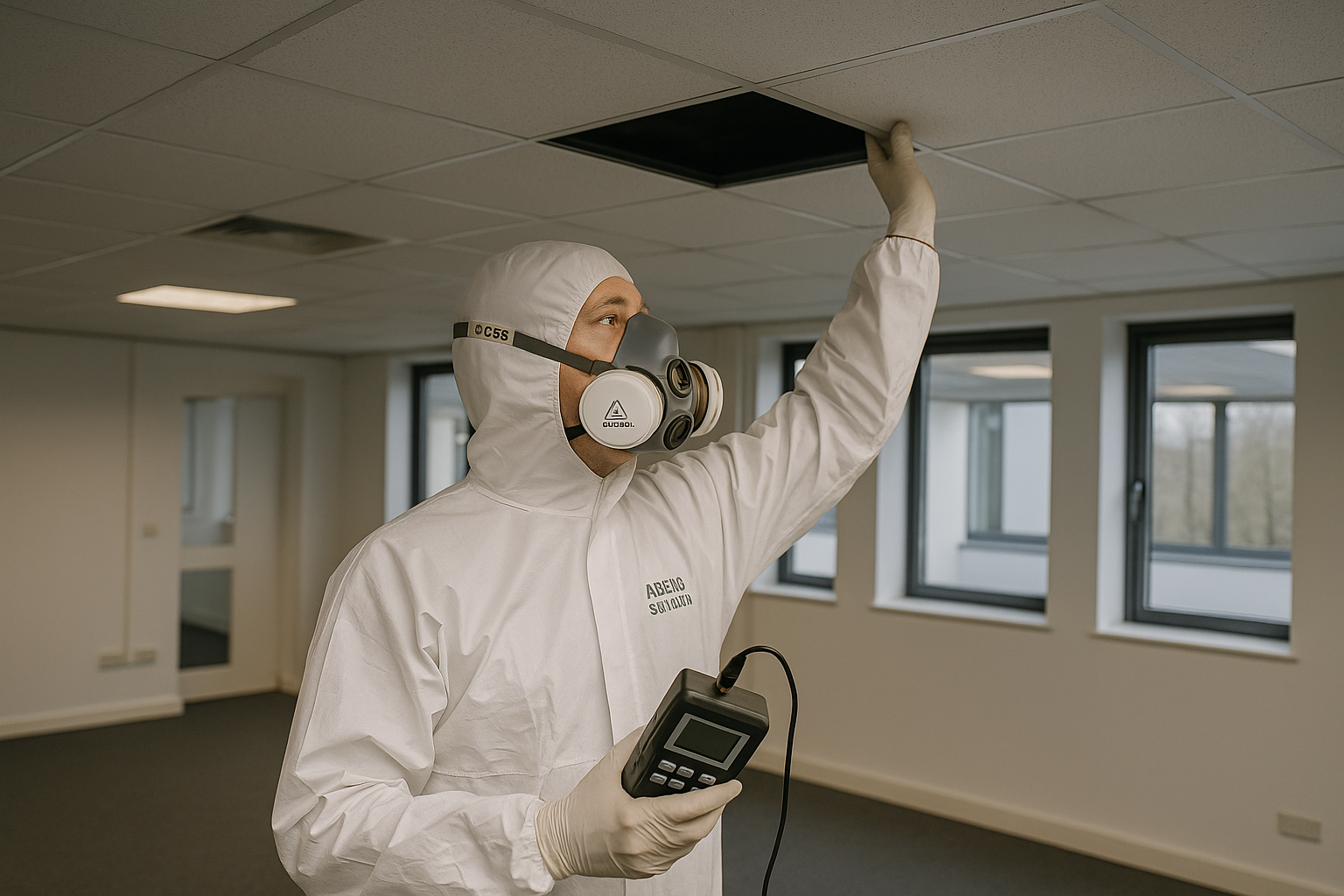
One damaged panel in a plant room or one overlooked stretch of pipe lagging can turn routine maintenance into a serious asbestos incident. In an industrial building, an asbestos inspection is the process that helps you find those risks before they are disturbed, keeping workers safe and helping dutyholders meet their legal responsibilities.
Factories, warehouses, workshops, depots and mixed-use industrial sites often contain a complicated mix of old materials, later alterations and hidden service routes. That makes an asbestos inspection far more than a quick walk-through. It needs planning, competent surveying, controlled sampling where required, and clear reporting that people on site can actually use.
What an asbestos inspection means in an industrial setting
An asbestos inspection is a structured assessment of a building to identify suspected asbestos-containing materials, assess their condition and support decisions about management or removal. In industrial premises, the inspection must reflect how the building is really used, not just what is shown on a plan.
Older industrial properties can contain asbestos in insulation, boards, coatings, floor finishes, cement products, gaskets and plant-related materials. The aim is to identify what is present, where it is, whether it is damaged, and how likely it is to be disturbed during occupation, maintenance, refurbishment or demolition.
A surveyor will usually consider:
- Building age, layout and phases of construction
- Previous survey reports and asbestos records
- Plant rooms, service risers, trenches and ceiling voids
- Insulation to pipes, boilers, valves and calorifiers
- Asbestos insulating board in partitions, soffits and fire breaks
- Floor tiles, bitumen adhesive and textured coatings
- Cement roofing, wall cladding, gutters, flues and soffits
- Seals, gaskets, rope products and millboard around machinery
Industrial premises often mix offices, stores and operational areas in one building. A proper asbestos inspection has to account for all of that, especially where maintenance teams and contractors move between spaces with very different risks.
The legal framework behind an asbestos inspection
If you manage non-domestic premises, you are likely to have duties under the Control of Asbestos Regulations. The duty to manage applies to those responsible for maintenance and repair, which can include landlords, employers, facilities managers, managing agents and other dutyholders.
In practical terms, that means taking reasonable steps to find out whether asbestos is present, keeping information up to date, assessing the risk of fibre release and making sure anyone who may disturb asbestos has the right information before work starts.
An asbestos inspection is often the first step in doing that properly. It provides the evidence needed for an asbestos register, a management plan and safe systems of work.
What dutyholders need to do
Dutyholders should make sure they can:
- Identify whether asbestos-containing materials may be present
- Record the location and condition of those materials
- Assess the risk of disturbance and fibre release
- Prepare and implement an asbestos management plan
- Share relevant asbestos information with staff and contractors
- Review records regularly and update them when conditions change
Survey work should align with HSG264, which sets out how asbestos surveys should be carried out. Management decisions should also reflect current HSE guidance on asbestos risk assessment, sampling, management and work categories.
The point that matters on site is simple. If someone is going to open a riser, drill into a wall, replace plant, enter a ceiling void or strip out finishes, they need reliable asbestos information first.
Planning an asbestos inspection before anyone arrives on site
The quality of an asbestos inspection is often decided before the surveyor even signs in. Good planning makes the inspection safer, more efficient and more useful.
Industrial sites can have permit systems, restricted access, shutdown periods, live machinery, fragile roofs and confined spaces. If those constraints are not discussed in advance, the survey may miss key areas or create avoidable delays.
Records and information to review
Before the inspection starts, the surveyor should review whatever information is available, including:
- Existing asbestos registers
- Previous survey reports
- Building plans and layout drawings
- Access restrictions and permit requirements
- Known hazards in operational areas
- Planned maintenance, strip-out or structural works
- Areas that are occupied, vacant or out of use
This stage is also where the right survey type is confirmed. If the building is in normal use and the priority is day-to-day management, a management survey is usually appropriate.
Why scope matters in industrial buildings
Industrial buildings are rarely straightforward. A single site may include original construction, later extensions, temporary partitions, redundant plant, roof voids and underground services. If the scope of the asbestos inspection is too narrow, materials that will be disturbed later may be missed.
That usually leads to one of two problems: unsafe work or expensive delays. Neither is acceptable when a bit of early planning can avoid both.
Before the survey begins, confirm:
- Which areas are included and excluded
- Whether ladders, towers or other access equipment are needed
- Whether production shutdowns or isolation are required
- Whether sampling is authorised in all relevant areas
- Whether any future refurbishment or demolition is planned
Step-by-step procedures followed during an asbestos inspection
Most industrial asbestos inspection work follows a clear sequence. The exact detail depends on the site, but the process should always be systematic, recorded and proportionate to the building and the planned activity.
1. Site briefing and safety checks
The surveyor will sign in, attend any site induction and review local hazards. On an industrial site, this may include permit-to-work systems, escort arrangements, machinery isolation, hot surfaces, confined spaces or working at height controls.
If an area cannot be accessed safely, that should be recorded. A good asbestos inspection report is clear about what was inspected, what was not inspected and why.
2. Systematic visual inspection
The physical asbestos inspection starts with a methodical visual assessment of suspect materials. The surveyor will move through the agreed areas and inspect building fabric, finishes, service routes and plant-related materials that may contain asbestos.
Common suspect materials in industrial premises include:
- Thermal insulation on pipes, boilers and calorifiers
- Asbestos insulating board in partitions, ceiling tiles and service enclosures
- Sprayed coatings and textured coatings
- Vinyl floor tiles and bitumen adhesive
- Cement sheets, roof panels, wall cladding and rainwater goods
- Rope seals, gaskets and insulation associated with plant
The surveyor is not just looking for likely asbestos products. They are also assessing condition, extent, accessibility, surface treatment and the likelihood of disturbance.
3. Sampling and laboratory analysis
Where necessary, samples are taken from suspect materials and sent to a UKAS-accredited laboratory for analysis. Sampling is a controlled part of the asbestos inspection process and should be carried out in a way that minimises fibre release.
Typical sampling precautions include:
- Using suitable personal protective equipment
- Taking small, representative samples
- Using controlled techniques and suitable tools
- Sealing or making good sample points where needed
- Placing samples in labelled containers
- Recording exact sample locations
Not every material can be sampled immediately. Access restrictions, operational constraints or safety issues may mean some materials are presumed to contain asbestos until further intrusive work is authorised.
4. Material assessment and recording
Each identified or presumed asbestos-containing material should be logged clearly. That usually includes its location, product type, extent, condition, accessibility and surface treatment, along with photographs and annotated plans where helpful.
This is where an asbestos inspection becomes genuinely useful for a facilities team. If the records are vague, the survey will not support safe maintenance or contractor control.
5. Reporting and recommendations
Once inspection and analysis are complete, the findings are compiled into a report. The report should do more than list materials. It should help the dutyholder decide what needs to happen next.
Recommendations may include:
- Leave the material in place and monitor it
- Label or protect the area
- Repair minor damage
- Restrict access to vulnerable materials
- Arrange a more intrusive survey before planned work
- Plan removal where disturbance is likely or condition is poor
Choosing the right survey type after an asbestos inspection
People often use the term asbestos inspection as a catch-all phrase, but the correct survey type depends on what is happening in the building. This is one of the most common areas of confusion for property managers and maintenance teams.
Management surveys
A management survey is designed to locate, as far as reasonably practicable, the presence and extent of asbestos-containing materials that could be disturbed during normal occupation, routine maintenance or foreseeable installation work. For an occupied industrial property, this is usually the baseline survey needed to support the duty to manage.
If you need a survey for day-to-day compliance, routine access and planned maintenance, a management survey is normally the right starting point.
Refurbishment surveys
If works will disturb the building fabric, a routine management-level asbestos inspection is not enough. Before upgrades, strip-out, plant replacement or internal alterations, you may need a refurbishment survey.
This survey is more intrusive and targets the specific area affected by the planned works. Typical examples include:
- Replacing heating or process pipework
- Opening up wall cavities or ceiling voids
- Installing a new production line
- Upgrading electrical services
- Removing partitions, linings or floor finishes
Demolition surveys
Where a structure is due to be demolished, the inspection must identify all asbestos-containing materials so they can be dealt with before demolition starts. That requires a demolition survey.
This level of survey is fully intrusive and may involve destructive access. On industrial sites, that can include roof structures, service ducts, trenches, risers and hidden voids that would not be opened during normal occupation.
Creating and maintaining the asbestos register
A thorough asbestos inspection should feed directly into an asbestos register. If the register is unclear, out of date or difficult for contractors to follow, it will not help you manage risk properly.
The register should record:
- The location of each asbestos-containing or presumed material
- The product type
- The asbestos type, where known from analysis
- The extent or quantity
- The condition at the time of inspection
- Any material or risk assessment information used for management
- Actions taken or recommended
For industrial premises, the register needs to be practical. Maintenance engineers, project managers, visiting contractors and permit issuers should all be able to understand it quickly.
How often should the register be reviewed?
There is no fixed interval that suits every site. What matters is that the information remains current and reflects the real condition of the materials.
Review the register regularly and update it after any incident, damage, removal work or change in use. If a board has been struck by equipment, insulation has deteriorated in a hot plant room or previously inaccessible space is opened up, the records should be updated straight away.
When asbestos removal may be needed
An asbestos inspection does not automatically mean asbestos has to be removed. Many asbestos-containing materials can remain in place if they are in good condition, properly recorded and unlikely to be disturbed.
Removal may be appropriate where:
- The material is damaged or deteriorating
- It is likely to be disturbed during normal operations
- Refurbishment or demolition work is planned
- Repair or encapsulation is not suitable
- The material presents a higher risk because it is friable or poorly protected
Where remedial work is needed, the work must be assessed correctly to determine whether it is licensed work, notifiable non-licensed work or non-licensed work. That classification matters because the controls, competence requirements and notification duties vary depending on the material and task.
The practical rule for site managers is straightforward: do not allow contractors to disturb suspect materials until the correct survey has been completed and the work category has been confirmed. If removal is required, arrange professional asbestos removal with a competent contractor whose scope matches the survey findings.
Licensed work and notifiable non-licensed work
Some asbestos work can only be carried out by a licensed contractor. Other tasks may fall under notifiable non-licensed work or non-licensed work, depending on the material, condition and method. The distinction should never be guessed on site.
If you are dealing with pipe insulation, sprayed coatings, asbestos insulating board in poor condition or any material likely to release fibres easily, get specialist advice before work starts. That is far safer than relying on assumptions made under time pressure.
Practical advice for property managers and facilities teams
The best asbestos inspection is the one that supports real decisions on site. For industrial buildings, that means linking survey information to maintenance planning, contractor control and permit systems.
If you manage a property portfolio or a large operational site, these steps will reduce risk and avoid disruption:
- Check your records before authorising work. Do not assume an old survey covers a new project.
- Match the survey to the task. Routine occupation, refurbishment and demolition all require different levels of inspection.
- Control access to asbestos information. Contractors should see the relevant survey and register before they start.
- Update records after changes. Removal work, accidental damage and newly accessed areas all affect the accuracy of your register.
- Stop work if suspect materials are found. Isolate the area and seek competent advice rather than carrying on.
It also helps to think ahead. If you know a roof replacement, plant upgrade or strip-out is coming, arrange the right survey early. Waiting until contractors are on site usually costs more and creates unnecessary pressure.
Common problems that make an asbestos inspection less effective
Most problems are avoidable. They usually come from poor scope, poor communication or relying on outdated information.
Watch out for these common issues:
- Using a management survey for intrusive refurbishment work
- Assuming previous reports cover extensions or altered areas
- Failing to provide access to locked or restricted spaces
- Not sharing asbestos information with contractors
- Leaving excluded areas unresolved
- Ignoring minor damage because the material was previously stable
An asbestos inspection should reduce uncertainty, not create it. If your report leaves major questions unanswered, it may need review, further access or a different survey type.
Local support for industrial sites across major UK cities
Industrial asbestos issues are rarely limited to one type of property. Supernova supports clients across warehouses, factories, depots, offices and mixed commercial estates nationwide, including major urban and industrial areas.
If your site is in the capital, you can arrange an asbestos survey London service for occupied buildings, maintenance planning and project support. For sites in the North West, our asbestos survey Manchester service helps dutyholders manage asbestos across industrial and commercial premises. If you are operating in the Midlands, our asbestos survey Birmingham service can support survey, reporting and follow-on action.
Why a proper asbestos inspection saves time as well as reducing risk
Property managers often think about asbestos only when a contractor raises a concern. By then, the job is already under pressure. A planned asbestos inspection gives you reliable information before work starts, which means fewer surprises, fewer stoppages and better control of costs.
It also helps you defend your decisions. If an HSE inspector, client or contractor asks how asbestos risk was assessed, you need more than verbal assurances. You need a survey, a register and a management approach that stands up to scrutiny.
For industrial properties, that matters every day. Maintenance is constant, services are complex and building fabric is often disturbed more than people realise. The right asbestos inspection helps you stay ahead of those risks instead of reacting to them.
Frequently Asked Questions
What is the difference between an asbestos inspection and an asbestos survey?
People often use the terms interchangeably. In practice, an asbestos inspection usually refers to the process of examining a building for suspected asbestos materials, while an asbestos survey is the formal, structured output carried out in line with HSG264. The right survey type depends on whether the building is being occupied, refurbished or demolished.
Does an asbestos inspection always involve sampling?
No. Sampling is often part of an asbestos inspection, but not every suspect material can be sampled immediately. In some cases, materials are presumed to contain asbestos until access improves or intrusive work is authorised. Where samples are taken, they should be analysed by a UKAS-accredited laboratory.
How long does an asbestos inspection take in an industrial building?
It depends on the size, complexity and accessibility of the site. A small industrial unit may be inspected relatively quickly, while a large factory with plant rooms, roof voids, service trenches and restricted areas will take longer. Planning access in advance usually speeds the process up.
Can asbestos be left in place after an asbestos inspection?
Yes, if the material is in good condition, properly recorded and unlikely to be disturbed. The inspection should identify whether the right action is to monitor, protect, repair or remove the material. Removal is not automatic, but management must be robust.
What should I do if contractors find a suspect material during work?
Stop work immediately, keep people out of the area and prevent further disturbance. Then arrange competent advice and, if needed, the correct survey or sampling. Do not let work restart until the material has been identified and the risk has been assessed properly.
If you need a reliable asbestos inspection for an industrial, commercial or mixed-use property, Supernova Asbestos Surveys can help. We provide clear survey advice, fast reporting and practical support for management, refurbishment and demolition projects nationwide. Call 020 4586 0680 or visit asbestos-surveys.org.uk to book your survey.