When Did Asbestos Stop Being Used in the UK — And Why It Still Matters Today
If you own, manage, or work in a building constructed before the year 2000, asbestos is almost certainly part of the conversation. Understanding when did asbestos stop being used in the UK is not just a history lesson — it directly affects your legal duties, your safety obligations, and the decisions you make about your property right now.
The short answer is that the UK’s full ban came into force in 1999. But the longer answer is far more nuanced, and getting to grips with it could save you from serious legal and health consequences.
A Brief History: When Was Asbestos Used Most Heavily in the UK?
Asbestos was used extensively in British construction and industry throughout the twentieth century. Its peak use ran roughly from the 1950s through to the mid-1980s, driven by its remarkable fire-resistant, insulating, and binding properties.
During this period, asbestos found its way into an extraordinary range of building materials and products:
- Ceiling tiles and floor tiles
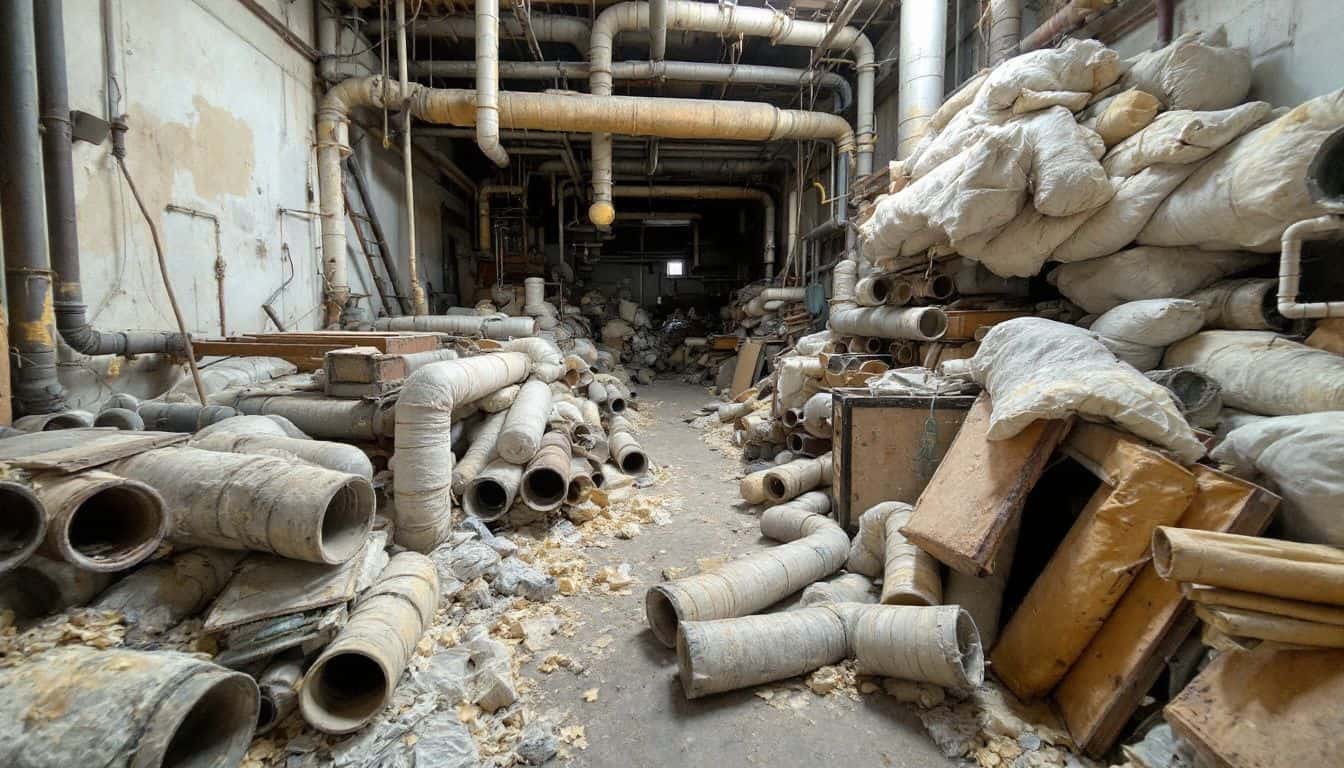
- Pipe lagging and boiler insulation
- Roof sheets and guttering
- Textured coatings such as Artex
- Insulating board used in partition walls and fire doors
- Sprayed coatings on structural steelwork
- Gaskets, rope seals, and friction materials
Schools, hospitals, offices, factories, and homes built during this era are all likely to contain asbestos-containing materials (ACMs) to some degree. If your building dates from before 2000, treat asbestos as a real possibility until a professional survey confirms otherwise.
When Did Asbestos Stop Being Used: The UK Ban Timeline
The UK did not introduce a single blanket ban overnight. Instead, restrictions were phased in over several decades as the evidence linking asbestos to fatal diseases — including mesothelioma, asbestosis, and lung cancer — became impossible to ignore.
1931: The First Regulations
Britain introduced its first asbestos-specific workplace regulations in 1931, focused on controlling dust in asbestos textile factories. These were limited in scope but marked the earliest official acknowledgement that asbestos posed a health risk to workers.
1969: Exposure Limits Introduced
Regulations introduced in 1969 set the first airborne fibre exposure limits for workers. This was a significant step, though the limits set at the time would be considered dangerously high by today’s standards.
1983: Licensing for the Most Dangerous Types
Regulations introduced in 1983 required licences for work involving the most hazardous asbestos types — specifically amosite (brown asbestos) and crocidolite (blue asbestos). These two forms were recognised as particularly carcinogenic.
1985: Blue and Brown Asbestos Banned
The import and use of crocidolite and amosite were banned in 1985. This was a landmark moment — the first outright prohibition of specific asbestos types in the UK.
1987: Stricter Controls on All Asbestos Work
Tightened safety protocols were introduced across all asbestos-related activities in 1987, extending protections beyond just the most dangerous fibre types to cover all asbestos work in the workplace.
1999: The Full Ban — When Asbestos Stopped Being Used in the UK
The definitive answer to when did asbestos stop being used in the UK is 1999. The Asbestos (Prohibitions) (Amendment) Regulations of that year banned the import, supply, and use of all forms of asbestos, including chrysotile (white asbestos), which had continued to be used commercially long after blue and brown were prohibited.
This brought the UK in line with the broader European push to eliminate asbestos use entirely. From 1999 onwards, no new asbestos could legally be incorporated into any product or building in the UK.
2006: Regulations Consolidated
The various strands of asbestos legislation were brought together into a single framework, simplifying the compliance landscape for employers and contractors. The Control of Asbestos Regulations remains the primary piece of legislation governing asbestos management in the UK today.
Why the Ban Date Matters for Property Owners and Managers
The 1999 ban means that any building constructed or significantly refurbished before that date could contain asbestos. In practice, surveyors treat 2000 as a working cut-off, though materials installed just before the ban may still be present in buildings that appear more modern.
The HSE estimates that around 5,000 people in the UK die each year from asbestos-related diseases — a figure that reflects exposures which occurred decades ago, given the long latency period of conditions like mesothelioma. This is not a historical problem that has gone away; it is an ongoing public health crisis rooted in the widespread use of asbestos before the ban.
For anyone responsible for a non-domestic building, the duty to manage asbestos is a legal requirement under the Control of Asbestos Regulations. This means identifying whether ACMs are present, assessing their condition, and putting a management plan in place. Ignorance of a building’s asbestos status is not a legal defence.
What Types of Asbestos Were Used — and Where
There are three main types of asbestos that were used commercially in the UK, each with distinct properties and typical applications.
Chrysotile (White Asbestos)
The most widely used form, chrysotile was present in everything from cement sheets and roofing products to floor tiles and brake linings. It remained in use until the 1999 ban. Despite being described as the least hazardous of the three, it is still classified as a Group 1 carcinogen and carries serious health risks.
Amosite (Brown Asbestos)
Amosite was commonly used in insulating board, ceiling tiles, and pipe insulation, particularly in commercial and industrial buildings. It was banned in 1985 and is considered significantly more dangerous than chrysotile.
Crocidolite (Blue Asbestos)
Regarded as the most hazardous form, crocidolite was used in spray coatings, pipe insulation, and some cement products. Also banned in 1985, its thin, needle-like fibres penetrate deep into lung tissue and are strongly associated with mesothelioma.
Beyond these three, other forms including anthophyllite, tremolite, and actinolite were used in smaller quantities and are similarly regulated under UK law.
Asbestos in Buildings Today: What You Need to Know
The ban on asbestos use does not mean asbestos has disappeared from the built environment. Millions of tonnes of asbestos remain in UK buildings — in schools, offices, factories, hospitals, and homes — simply because it was never removed when buildings were originally constructed.
Asbestos that is in good condition and left undisturbed does not necessarily pose an immediate risk. The danger arises when ACMs are damaged, deteriorating, or disturbed during maintenance, refurbishment, or demolition work. Broken or friable asbestos releases microscopic fibres into the air, and it is these fibres that cause disease when inhaled.
This is why the regulatory focus since the ban has shifted from preventing new use to managing existing asbestos in place. The duty to manage, established under the Control of Asbestos Regulations, requires dutyholders to:
- Identify the location and condition of ACMs in their premises
- Assess the risk of fibre release from those materials
- Prepare and implement a written asbestos management plan
- Ensure anyone who might disturb ACMs is informed of their location
- Monitor the condition of ACMs and review the management plan regularly
If you are planning any building work — even minor maintenance — you must establish whether asbestos is present before work begins. Disturbing ACMs without proper precautions puts workers and building occupants at serious risk and carries significant legal penalties.
How UK Asbestos Regulations Have Continued to Evolve Since the Ban
The 1999 ban marked the end of asbestos use, but it was far from the end of asbestos regulation. The regulatory framework has continued to develop to address the ongoing challenge of managing asbestos already in the built environment.
Key developments since the ban include:
- The duty to manage — placing a legal obligation on dutyholders to actively manage asbestos in non-domestic premises rather than simply avoiding it
- The licensing regime — requiring that the most hazardous asbestos work is carried out only by HSE-licensed contractors
- Notifiable Non-Licensed Work (NNLW) — a category of asbestos work that does not require a licence but must be notified to the HSE before it begins, with medical surveillance required for workers
- Mandatory training requirements — ensuring that anyone who might come into contact with asbestos during their work receives appropriate information, instruction, and training
The HSE reviews and updates its guidance regularly, working with industry, public health bodies, and other stakeholders to ensure the regulatory framework keeps pace with current evidence and best practice. The HSG264 guidance document sets out the standards that professional asbestos surveys must meet, and it remains the benchmark for surveyors across the UK.
The Role of Asbestos Surveys in Managing the Legacy of the Ban
The only reliable way to establish whether asbestos is present in a building — and in what condition — is through a professional asbestos survey carried out in accordance with HSG264. Knowing when asbestos stopped being used tells you which buildings are at risk; a survey tells you exactly what you are dealing with.
Management Survey
A management survey is the standard survey required to manage asbestos in a building that is in normal occupation. It identifies ACMs that could be disturbed during everyday activities and assesses their condition, forming the foundation of any asbestos management plan.
For non-domestic premises, commissioning a management survey is not optional — it is a legal requirement if you have not already established the asbestos status of your building.
Refurbishment and Demolition Survey
A demolition survey is required before any major works that will disturb the building fabric. It is more intrusive than a management survey and aims to locate all ACMs that could be disturbed during the planned work.
This type of survey must be completed before any asbestos removal work is commissioned. Attempting to proceed with refurbishment or demolition without this survey in place is not only dangerous — it is a criminal offence.
Practical Steps for Dutyholders
If you are responsible for a building that may contain asbestos, work through the following steps without delay:
- Establish the age of your building. If it was built or refurbished before 2000, assume asbestos may be present until a survey says otherwise.
- Commission a management survey if one has not already been carried out. This is a legal requirement for non-domestic premises.
- Review your asbestos management plan. If you have one, make sure it is current and that all relevant staff and contractors are aware of it.
- Never allow building work to proceed without checking for asbestos first. A refurbishment and demolition survey is required before any intrusive work.
- Use licensed contractors for high-risk asbestos work. Check the HSE’s public register of licensed asbestos contractors before appointing anyone.
- Keep records. Document all surveys, risk assessments, training, and any work involving ACMs.
These steps are not optional extras — they are the foundation of lawful asbestos management and the most effective way to protect the people who use your building.
Supernova Asbestos Surveys: Nationwide Coverage, Expert Standards
Supernova Asbestos Surveys has completed over 50,000 surveys across the UK, working to HSG264 standards and delivering clear, actionable reports that give dutyholders the information they need to manage their obligations confidently.
Whether you need an asbestos survey London property owners and managers can rely on, an asbestos survey Manchester businesses trust, or an asbestos survey Birmingham dutyholders depend on, our nationwide team is ready to help.
Call us today on 020 4586 0680 or visit asbestos-surveys.org.uk to book your survey or speak to one of our specialists about your specific situation.
Frequently Asked Questions
When did asbestos stop being used in the UK?
Asbestos use in the UK was fully banned in 1999, when the Asbestos (Prohibitions) (Amendment) Regulations prohibited the import, supply, and use of all remaining asbestos types, including chrysotile (white asbestos). Blue and brown asbestos had already been banned in 1985. Any building constructed or significantly refurbished before 2000 should be treated as potentially containing asbestos until a professional survey confirms otherwise.
Is asbestos still dangerous in buildings today, even though it’s been banned?
Yes. The ban stopped new asbestos being used, but it did not remove the asbestos already installed in millions of UK buildings. Asbestos that is in good condition and undisturbed poses a lower immediate risk, but any damage, deterioration, or disturbance during building work can release dangerous fibres into the air. The HSE estimates around 5,000 people in the UK die each year from asbestos-related diseases, reflecting past exposures.
Do I legally need an asbestos survey for my building?
If you are the dutyholder for a non-domestic building that was built or refurbished before 2000, you have a legal obligation under the Control of Asbestos Regulations to manage asbestos in your premises. This means establishing whether ACMs are present — which requires a professional management survey if the asbestos status of the building is not already known. Failing to comply can result in prosecution and significant penalties.
What is the difference between a management survey and a demolition survey?
A management survey is carried out in buildings that are in normal occupation and identifies ACMs that could be disturbed during everyday use or routine maintenance. A demolition or refurbishment survey is required before any major works that will disturb the building fabric — it is more intrusive and designed to locate all ACMs in the areas affected by the planned work. Both types must be carried out by a competent surveyor working to HSG264 standards.
Can I remove asbestos myself if I find it in my building?
In most cases, no. The most hazardous asbestos work — including removal of sprayed coatings, insulating board, and pipe lagging — must be carried out by an HSE-licensed contractor. Some lower-risk work falls into the category of Notifiable Non-Licensed Work (NNLW), which still requires notification to the HSE and medical surveillance for workers. Attempting to remove asbestos without the appropriate licence and precautions is illegal and extremely dangerous.