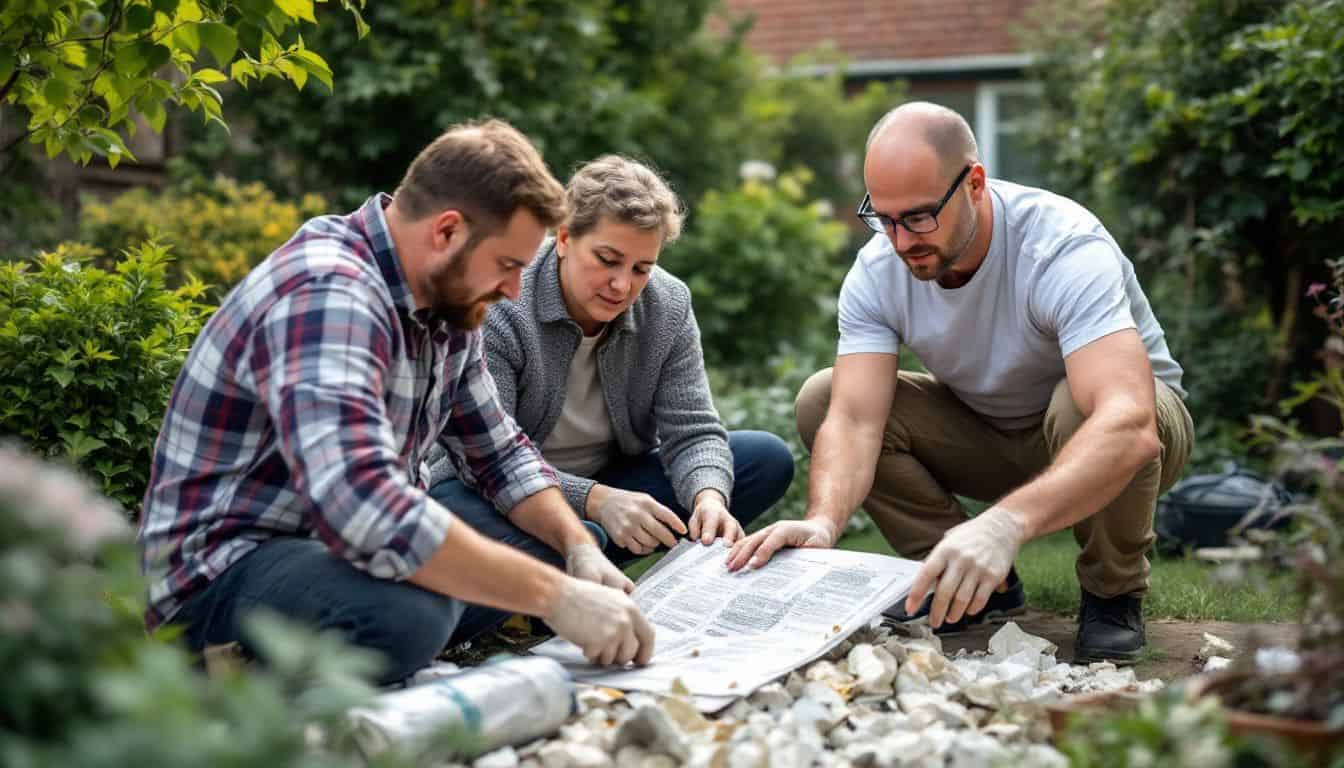
Asbestos Disposal Regulations in the UK: What Private Individuals and Businesses Must Know
Asbestos doesn’t simply go in the bin. Whether you’ve uncovered old insulation during a home renovation or you’re managing a commercial demolition, asbestos disposal regulations in the UK are strict, enforceable, and carry serious consequences if ignored. Getting it wrong isn’t just a legal risk — it’s a public health one.
The diseases caused by asbestos fibre inhalation — mesothelioma, asbestosis, lung cancer — can take decades to develop. That latency is precisely why the UK treats asbestos waste as a category of hazardous material requiring specialist handling at every stage, from removal to final disposal.
Why Asbestos Disposal Is So Tightly Regulated
Asbestos fibres are microscopic. Once airborne, they can be inhaled without any immediate sensation, and there is no safe level of exposure. This is why the regulatory framework surrounding asbestos is among the most stringent in UK health and safety law.
The Control of Asbestos Regulations set the legal framework for working with and disposing of asbestos-containing materials (ACMs). These regulations are enforced by the Health and Safety Executive (HSE), while the Environment Agency oversees the environmental side of waste disposal. Both bodies have real enforcement powers and use them.
The result is a layered system of rules covering packaging, transportation, documentation, site licensing, and notification. These rules apply whether you’re a homeowner with a cracked asbestos cement roof panel or a large construction firm stripping an entire commercial building.
Where Can Asbestos Legally Be Disposed Of?
Only licensed landfill sites holding the appropriate environmental permit can legally accept asbestos waste. Standard household waste tips, general skips, and ordinary refuse collections are not acceptable disposal routes — regardless of the quantity involved.
Licensed disposal sites are required to:
- Hold a specific environmental permit from the Environment Agency (or SEPA in Scotland, or NRW in Wales)
- Maintain secure storage and specialist containment equipment
- Keep records of all asbestos waste received for a minimum of 40 years
- Ensure proper segregation from other waste streams
Standard waste incinerators cannot safely process asbestos fibres. The material requires dedicated containment, not combustion.
Always confirm with a site that they are licensed to accept asbestos before transporting any waste to them. Your local authority can often direct you to licensed facilities in your area. Alternatively, a licensed asbestos removal contractor will handle disposal as part of their service, removing the burden from you entirely.
Asbestos Disposal Regulations for Private Individuals
There’s a common misconception that asbestos disposal regulations only apply to businesses. They don’t. Private homeowners are also subject to the law, though the specific obligations differ slightly from those placed on commercial operators.
What Homeowners Are Permitted to Do
Private individuals can, in limited circumstances, remove and dispose of small quantities of non-licensed asbestos-containing materials themselves — for example, a small number of intact asbestos cement roof sheets or floor tiles. This is only permissible where the material is in good condition, is not friable (crumbling), and can be handled without causing fibre release.
Even then, the waste must still be taken to a licensed disposal site. It cannot be buried in the garden, placed in a skip without prior arrangement, or left out with general household rubbish.
Packaging Requirements for Private Disposal
If you are disposing of asbestos waste yourself as a private individual, the packaging requirements are non-negotiable:
- Double-bag the waste in heavy-duty polythene sacks (minimum 1000-gauge)
- Seal each bag securely — tape should be used to prevent any opening
- Attach hazard warning labels clearly identifying the contents as asbestos waste
- Where possible, wrap fragile materials such as sheeting before bagging to prevent breakage during handling
You will also need to complete a waste transfer note. This document records the type and quantity of asbestos, where it came from, and where it is going. Keep a copy for your own records.
Penalties for Private Individuals Who Dispose Illegally
Fly-tipping asbestos is treated extremely seriously. Under the Environmental Protection Act, illegal dumping of asbestos waste can result in fines of up to £20,000 in a magistrates’ court. In the Crown Court, fines are unlimited, and custodial sentences of up to two years are possible for the most serious offences.
These aren’t hypothetical penalties. Local authorities and the Environment Agency actively investigate illegal asbestos dumping, and prosecutions do happen. Don’t assume a small quantity won’t attract attention.
Business Obligations Under UK Asbestos Disposal Regulations
For businesses, the obligations are considerably more extensive. Whether you’re a landlord, a contractor, a facilities manager, or a demolition firm, the law places specific duties on you that go well beyond simply bagging and labelling.
Using Licensed Removal Contractors
Any work involving licensed asbestos — including most friable asbestos and all work with asbestos insulation, asbestos insulating board, and asbestos coatings — must be carried out by a contractor licensed by the HSE. Attempting to remove and dispose of this category of material without a licence is a criminal offence.
Even for notifiable non-licensed work (NNLW), which covers certain lower-risk tasks, businesses must notify the relevant enforcing authority before work begins. That notification must be submitted at least 14 days in advance.
Asbestos Management Plans
Businesses that own or manage non-domestic premises have a legal duty to manage asbestos under the Control of Asbestos Regulations. This includes maintaining an up-to-date asbestos register, conducting risk assessments, and putting an asbestos management plan in place.
When asbestos is eventually removed or disturbed, the management plan informs the disposal process — ensuring the right contractors are engaged and the correct procedures are followed from the outset.
Hazardous Waste Consignment Notes
Unlike private individuals who complete a waste transfer note, businesses disposing of asbestos must use a hazardous waste consignment note. This is a more detailed document that must accompany the waste from the point of collection to its final destination.
The consignment note must record:
- The type of asbestos and its physical form
- The quantity being disposed of
- The name and address of the producer (your business)
- The licensed carrier transporting the waste
- The receiving disposal site
Copies must be retained by all parties involved, and businesses are required to keep these records for a minimum of three years.
Employee Training and Protective Equipment
Employers have a legal duty to ensure that any employees involved in asbestos-related work — including the handling and packaging of asbestos waste — have received appropriate training and are equipped with suitable personal protective equipment (PPE). This includes respiratory protective equipment (RPE) rated for asbestos work, disposable coveralls, and gloves.
Training requirements are set out in HSE guidance and must be role-appropriate — not generic health and safety awareness.
Disposal Guidelines for Specific Types of Asbestos-Containing Materials
Different ACMs require slightly different handling approaches. Here’s a practical overview of the most commonly encountered types and what the asbestos disposal regulations require for each.
Asbestos Cement Products (Sheets, Pipes, Guttering)
- Handle carefully to avoid cracking or breaking — intact cement products release fewer fibres
- Double-wrap in 1000-gauge polythene, securing with tape
- Label clearly with asbestos hazard warnings
- Transport in a covered vehicle or sealed skip to a licensed site
Asbestos Insulation Board and Ceiling Tiles
- These materials are more friable and require greater care during removal
- Wear appropriate RPE and disposable coveralls throughout
- Double-bag immediately after removal — do not leave unwrapped
- This category often falls under licensed or notifiable work — seek professional advice before proceeding
Asbestos Textiles and Loose Insulation
- These are among the highest-risk materials due to their friable nature
- Removal should only ever be carried out by a licensed contractor
- Use sealed, airtight containers rather than bags alone
- Disposal must be at a licensed hazardous waste facility
Contaminated Soil
- Soil contamination from buried ACMs requires testing before any work begins
- Use HEPA-filtered vacuum equipment to collect loose surface fibres
- Seal contaminated material in airtight containers
- Transport to a licensed hazardous waste disposal facility — not a standard landfill
Transportation of Asbestos Waste
Moving asbestos waste from one location to a disposal site is itself a regulated activity. Carriers transporting asbestos waste must be registered waste carriers. If you are a business, you must use a registered carrier — you cannot simply load a van and drive to a landfill site.
Private individuals transporting their own household asbestos waste to a licensed site are generally exempt from the carrier registration requirement, provided they are transporting their own waste. However, the packaging and documentation requirements still apply in full.
Vehicles carrying asbestos waste should be covered and secure. Any spillage during transit is a serious regulatory breach and must be reported immediately to the relevant authority.
Prohibited Disposal Methods and Locations
To be absolutely clear, asbestos waste must never be disposed of in the following ways or locations:
- Watercourses, rivers, or coastal areas
- Public open spaces or parks
- Domestic waste bins or recycling collections
- General skips without prior arrangement with a licensed waste carrier
- Buried on private land
- Burned — asbestos cannot be safely incinerated in standard facilities
Disposal in any of these ways constitutes an offence under the Environmental Protection Act and can trigger both civil and criminal proceedings. There are no grey areas here.
How to Find a Licensed Asbestos Disposal Site
The Environment Agency maintains a public register of licensed waste management facilities. You can search this register to locate sites near you that are permitted to accept asbestos waste.
Always confirm with the site directly before transporting any material — permits can change, and not every licensed facility accepts all types of asbestos waste.
If you’re based in a major urban area and need professional support from survey through to disposal, Supernova Asbestos Surveys operates nationally. We carry out asbestos survey London projects, asbestos survey Manchester commissions, and asbestos survey Birmingham work, as well as covering locations across the rest of the UK.
When to Call a Professional
If there is any doubt about the type of asbestos you’re dealing with, its condition, or the correct disposal route, the safest and most legally sound approach is to bring in a professional. A licensed surveyor can identify the material, assess the risk, and advise on the correct removal and disposal pathway.
Attempting to handle unknown or friable materials without expert guidance is not only dangerous — it may also constitute a criminal offence if the work required a licensed contractor.
The cost of getting professional help is always lower than the cost of getting it wrong. Supernova Asbestos Surveys has completed over 50,000 surveys nationwide and can support you from initial identification through to compliant disposal. Call us on 020 4586 0680 or visit asbestos-surveys.org.uk to discuss your requirements.
Frequently Asked Questions
Can a private individual dispose of asbestos themselves in the UK?
Yes, in limited circumstances. Private individuals can remove and dispose of small quantities of non-licensed, non-friable asbestos-containing materials — such as intact asbestos cement sheets — provided the material is in good condition and can be handled without releasing fibres. The waste must still be taken to a licensed disposal site, properly double-bagged in 1000-gauge polythene, labelled with hazard warnings, and accompanied by a waste transfer note. Friable or high-risk materials must always be handled by a licensed contractor.
What documents are required when disposing of asbestos waste?
Private individuals must complete a waste transfer note, which records the type and quantity of asbestos, its origin, and the receiving disposal site. Businesses have more extensive requirements and must use a hazardous waste consignment note, which must accompany the waste throughout its journey and be retained by all parties for a minimum of three years.
What are the penalties for illegal asbestos disposal?
Under the Environmental Protection Act, illegal dumping of asbestos waste can result in fines of up to £20,000 in a magistrates’ court. In the Crown Court, fines are unlimited and custodial sentences of up to two years are possible for the most serious offences. Both local authorities and the Environment Agency actively investigate and prosecute illegal asbestos disposal.
Can asbestos waste be put in a skip?
Not without prior arrangement. You cannot place asbestos waste in a standard general skip. If a skip is to be used, it must be arranged specifically with a licensed waste carrier who is permitted to transport asbestos waste, and the skip must be covered and sealed during transit. The receiving facility must also be licensed to accept asbestos. Always confirm these details before proceeding.
Does asbestos disposal regulation apply to all types of asbestos-containing materials?
Yes. All asbestos-containing materials, regardless of type or condition, are subject to asbestos disposal regulations. The specific requirements vary depending on the type of material — for example, highly friable materials such as loose insulation require more stringent containment than intact asbestos cement sheets — but no ACM can be disposed of through ordinary waste streams. All asbestos waste must go to a licensed facility via a registered carrier.