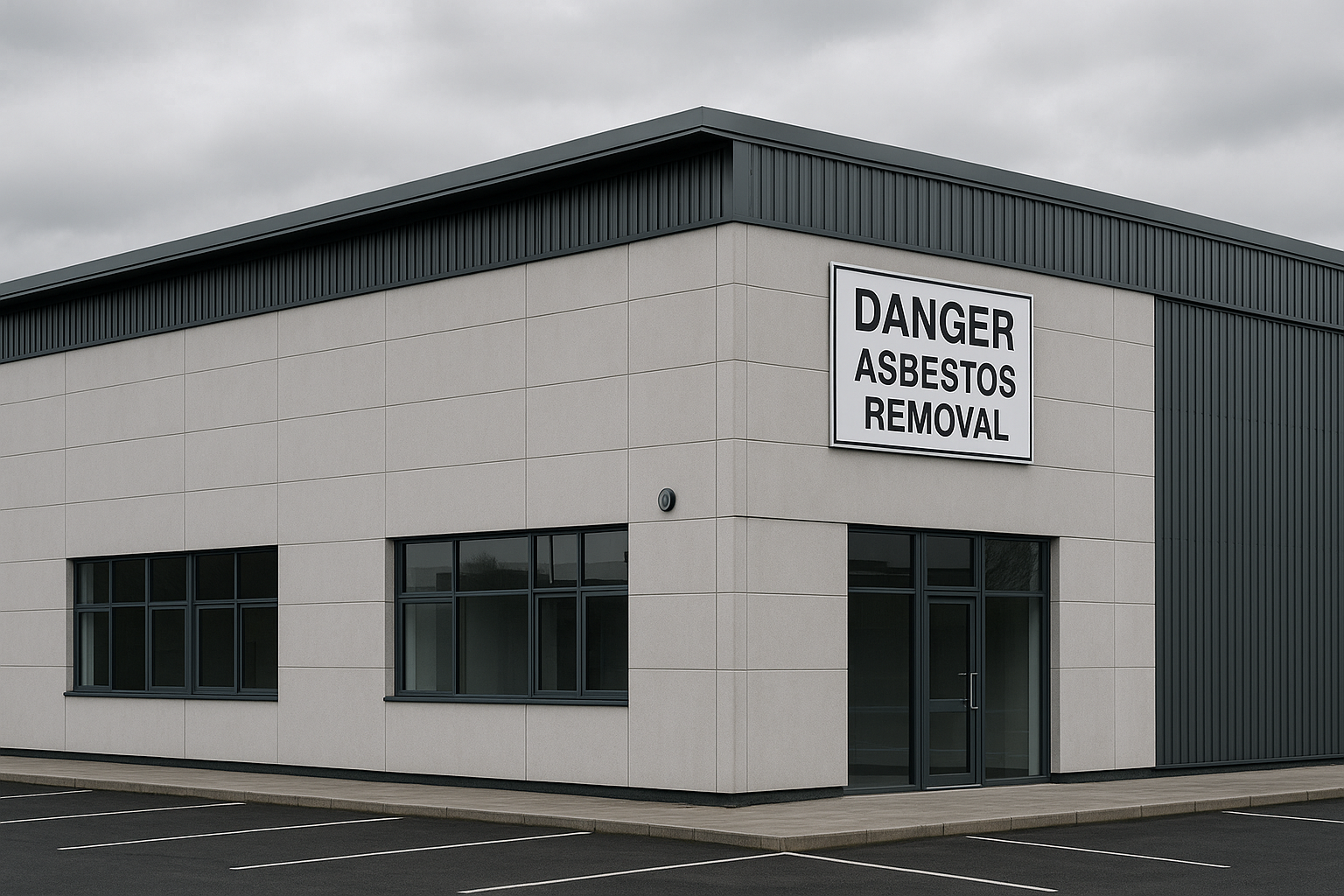
The Real Cost of Improper Asbestos Removal: Penalties, Risks and How to Stay Compliant
Cut corners on improper asbestos removal and the fallout can be immediate and severe. A rushed strip-out, the wrong contractor, poor dust control or hazardous waste dumped in the wrong skip can trigger HSE enforcement, expensive remedial work, significant project delays and, in serious cases, criminal prosecution.
For property managers, landlords, contractors and duty holders, the issue goes far beyond disposal. Improper asbestos removal can begin long before any waste leaves site — often with poor planning, the wrong survey, missing sampling, weak supervision or work starting before asbestos risks are properly understood.
Why Improper Asbestos Removal Is Treated So Seriously
Asbestos becomes dangerous when fibres are released into the air and breathed in. Many asbestos-containing materials look completely harmless when left undisturbed, but drilling, breaking, sanding, stripping or demolition can release fibres that are invisible to the naked eye.
That is why improper asbestos removal is not treated as a minor technical breach. It can expose workers, occupants, neighbours, maintenance teams and anyone else who enters the affected area — often without any of them realising it at the time.
The Health Risks Behind the Law
Exposure to asbestos is linked to serious diseases including mesothelioma, asbestos-related lung cancer and asbestosis. These illnesses often develop after a long latency period, which is one reason the law takes such a strict approach.
If asbestos is mishandled today, the harm may only become clear years or even decades later. By that point, the exposure event cannot be undone — which is precisely why regulators do not wait for illness to occur before taking action.
What Counts as Improper Asbestos Removal
Many people assume the problem starts only when asbestos waste is fly-tipped. In practice, improper asbestos removal can happen at several stages of a project:
- Starting work without checking whether asbestos is present
- Relying on an unsuitable, outdated or incomplete survey
- Using unlicensed labour for work that requires a licensed contractor
- Failing to control dust, debris and fibre spread
- Removing materials without suitable methods, equipment or supervision
- Allowing contamination to spread into occupied areas
- Transporting waste without correct packaging or consignment paperwork
- Disposing of asbestos at an unauthorised facility
- Keeping poor records or no records at all
If any of these failures occur, regulators may look beyond the immediate incident. They will often examine the wider asbestos management arrangements, contractor control and decision-making that sat behind the work.
The Legal Framework for Asbestos Compliance in the UK
The main duties sit under the Control of Asbestos Regulations. These regulations place responsibilities on those who manage premises, commission work, supervise contractors and carry out asbestos-related activities. Surveying work should align with HSG264, and practical compliance should reflect wider HSE guidance.
Depending on what has gone wrong, enforcement may involve the HSE, local authorities and environmental regulators — sometimes all three simultaneously.
The Duty to Manage Asbestos
If you control non-domestic premises, you are likely to have a duty to manage asbestos. That means finding out whether asbestos-containing materials are present, assessing their condition, recording the information and making sure anyone who may disturb them has access to it.
This duty does not disappear because a contractor has been appointed. If work starts without the right asbestos information in place, the duty holder may still face enforcement action regardless of who physically carried out the work.
Why Survey Standards Matter
A suitable survey is the foundation of safe planning. For occupied premises, an asbestos management survey helps identify asbestos-containing materials that could be disturbed during normal occupation, maintenance or installation work.
If the planned works are more intrusive, that survey alone is not enough. The survey must match the scope of the job, the level of access required and the realistic risk of hidden asbestos being encountered.
Refurbishment and Demolition Work
Before major alterations, strip-out or structural works, you need the correct survey for the project. If a building is being taken back to shell or demolished entirely, a demolition survey is essential to identify asbestos hidden behind finishes, in risers, within voids or under flooring.
One of the most common causes of improper asbestos removal is starting intrusive work on the basis of assumptions. If asbestos has not been properly identified first, the risk of uncontrolled disturbance rises quickly and dramatically.
Penalties for Improper Asbestos Removal in the UK
The penalties for improper asbestos removal can be severe because courts and regulators look at the risk created, not only whether someone was immediately harmed. If your actions exposed people to asbestos fibres, ignored warnings or bypassed legal controls, the consequences can be wide-ranging.
Fines
Companies can face substantial fines for serious asbestos breaches. The level will depend on the seriousness of the offence, the degree of risk created, the size of the organisation, whether the breach was deliberate and whether there is evidence of poor compliance more broadly.
Smaller businesses and sole traders should not assume the sums will be modest. Even where the original job value was small, prosecution costs, remedial works, project delays and reputational damage can quickly outweigh it many times over.
Imprisonment
Individuals can be prosecuted personally where there is evidence of consent, connivance or neglect by directors or senior managers. In the most serious cases, custodial sentences are possible.
This risk is higher where people knowingly ignored asbestos warnings, used unlicensed labour for licensable work or allowed dangerous conditions to continue after concerns had already been raised.
Improvement and Prohibition Notices
Not every case starts in court. The HSE may issue improvement notices where standards need to be raised, or prohibition notices where work must stop immediately. A prohibition notice can halt a project on the spot.
For property managers, that can mean delayed programmes, tenant complaints, contractor disputes and urgent remedial costs — all before any prosecution is even concluded.
Environmental Offences
Asbestos waste is classified as hazardous waste. If it is stored, transported or disposed of incorrectly, separate environmental offences may arise entirely independently of HSE action. Using a general skip, mixing asbestos with other waste streams or relying on a carrier without the correct arrangements can create an entirely separate line of enforcement.
When people ask about penalties for improper asbestos removal, the answer is broader than a single fine — it can involve multiple regulators and multiple legal routes simultaneously.
What Usually Goes Wrong on Site
Most cases of improper asbestos removal follow a familiar pattern. Someone assumes a material is harmless, a contractor starts too soon, the survey is never shared, or cost is prioritised over competence.
No Survey Before Work Starts
If the building was constructed before asbestos use was fully prohibited, asbestos must be considered before works begin. Guesswork is not a control measure. For occupied premises, a management survey helps you understand what is present and where routine activities could disturb it.
If the planned works are more intrusive, the survey strategy must change accordingly before anything starts on site.
Sampling Is Skipped or Done Badly
Many materials cannot be identified reliably by eye alone. Textured coatings, insulation board, floor tiles, cement products, bitumen residues and debris can all require sampling to confirm whether asbestos is present.
Professional asbestos testing is often the quickest way to remove doubt before decisions are made. If you are dealing with a single suspect material and need an initial check, a testing kit can be a practical first step, provided sampling is approached carefully and you understand its limitations. For a dedicated laboratory analysis service, asbestos testing through a specialist route gives you clear, documented results.
The Wrong Contractor Is Appointed
Not all asbestos work is licensable, but higher-risk materials and activities require a licensed contractor. If the work is licensable and you appoint someone without the proper licence, responsibility does not sit only with them — the client and duty holder can also face scrutiny.
Where removal is genuinely required, use a specialist provider for asbestos removal and ask for clear documentation covering the scope, control measures, waste handling and any necessary clearance arrangements.
Waste Paperwork Is Missing
Every movement of asbestos waste should be traceable. If waste disappears into a mixed skip or the carrier cannot provide the correct documentation, you have a significant compliance problem on your hands.
Keep records organised and easy to retrieve. If regulators investigate months after the event, missing paperwork can turn a manageable situation into a far more serious one.
How to Avoid Improper Asbestos Removal
Good asbestos compliance is usually straightforward when the job is planned properly from the outset. Problems arise when asbestos is treated as an afterthought instead of being built into the project from day one.
- Identify the building risk early. If the premises may contain asbestos, factor that into planning before contractors are booked.
- Commission the right survey. Make sure it is suitable, current and available to everyone who needs it.
- Test suspect materials where needed. Do not rely on visual assumptions when sampling is required.
- Decide whether removal is actually necessary. Some materials are safer managed in place.
- Use competent contractors. Check training, licence status where relevant, insurance, method statements and waste arrangements.
- Control the work area. Restrict access, prevent spread of debris and keep occupied areas protected.
- Track waste properly. Packaging, transport and disposal should all be documented.
- Update records afterwards. Registers, plans and management information should reflect what has changed on site.
Practical Checks Before Work Begins
- Ask to see the survey before approving the job
- Check whether the planned work is intrusive
- Confirm whether additional sampling is still needed
- Make sure contractors have actually read the asbestos information
- Review method statements for clear dust and waste controls
- Confirm who is responsible for isolating the work area
- Check how unexpected finds will be handled mid-project
When Asbestos Should Be Left in Place
Removal is not always the safest option. If an asbestos-containing material is in good condition, sealed, protected from damage and unlikely to be disturbed, managing it in place may be the better and safer route. That decision should be based on evidence, not convenience.
Unnecessary removal can create exposure risk if it is poorly planned, while a stable material can often remain safely in place under a proper management plan supported by regular monitoring.
Why Re-Inspection Matters
Where asbestos remains in a building, its condition should be checked periodically. A re-inspection survey helps confirm whether materials are still in good condition, whether labels and records remain accurate and whether any deterioration has changed the level of risk.
This is especially important in busy properties where maintenance work, tenant fit-outs, leaks, vibration or accidental damage can affect known materials over time without anyone immediately noticing.
What to Do If Unexpected Asbestos Is Found Mid-Project
Do not carry on and hope for the best. If suspect material is uncovered during works, stop the activity in that area immediately. Secure the zone, prevent access and seek specialist advice before any further work takes place.
Unexpected finds are not uncommon, particularly in older buildings where previous surveys may not have accessed every void, riser or concealed area. Having a clear protocol in place before work starts means the team knows exactly what to do if it happens — rather than making a decision under pressure that could make the situation significantly worse.
Asbestos Compliance Across the UK
The same legal framework applies across England, Scotland and Wales. Whether you are managing a commercial property in the capital or overseeing a refurbishment programme in the north of England, the obligations are consistent and the enforcement approach is equally rigorous.
If you need an asbestos survey in London or an asbestos survey in Manchester, the same principles apply: commission the right survey for the scope of work, use competent contractors and keep your records in order.
Frequently Asked Questions
What are the penalties for improper asbestos removal in the UK?
Penalties can include substantial fines, prohibition notices that stop work immediately, improvement notices requiring changes to practice, and in serious cases, criminal prosecution with the possibility of custodial sentences for individuals. Environmental regulators can also pursue separate action if asbestos waste is handled or disposed of incorrectly, meaning a single incident can trigger enforcement from more than one authority.
Who is responsible if a contractor carries out improper asbestos removal?
Responsibility does not rest solely with the contractor. The duty holder, client or property manager who commissioned the work can also face scrutiny — particularly if they failed to provide a suitable survey, appointed an unlicensed contractor for licensable work or did not take reasonable steps to oversee the activity. The Control of Asbestos Regulations place duties on multiple parties across a project.
Do I need a survey before any building work in an older property?
Yes, if the building was constructed during a period when asbestos-containing materials were in common use, you should establish whether asbestos is present before intrusive work begins. The type of survey required depends on the nature of the works. Routine maintenance in an occupied building calls for a management survey, while more intrusive refurbishment or demolition work requires a more thorough survey approach before any work starts.
Can asbestos waste go into a standard skip?
No. Asbestos waste is classified as hazardous waste and must be handled, packaged, transported and disposed of according to specific legal requirements. Placing asbestos in a general skip, mixing it with other waste streams or using a carrier without the correct authorisation are all potential offences that can attract enforcement action from environmental regulators independently of any HSE investigation.
Is it ever safer to leave asbestos in place rather than remove it?
Yes. If an asbestos-containing material is in good condition, unlikely to be disturbed and properly recorded in an asbestos register, managing it in place is often the lower-risk option. Unnecessary removal carried out poorly can release more fibres than a stable material left undisturbed. The decision should be based on a professional assessment of the material’s condition and the likelihood of disturbance, not on assumptions or convenience.
Speak to Supernova Asbestos Surveys
Supernova Asbestos Surveys has completed over 50,000 surveys across the UK. Whether you need a survey before planned works, testing on a suspect material, specialist removal advice or guidance on your ongoing management obligations, our team can help you stay compliant and avoid the serious consequences of improper asbestos removal.
Call us on 020 4586 0680 or visit asbestos-surveys.org.uk to find out how we can support your project from the outset.