
One missing document can turn a routine maintenance job into a compliance problem overnight. An asbestos management plan is the working document that tells your staff, contractors, and anyone responsible for the building where asbestos is, what condition it is in, and exactly what must happen next.
For duty holders managing older non-domestic premises, the hard part is rarely just identifying asbestos-containing materials. The real challenge is controlling risk day to day, keeping records accurate, and making sure the right people see the right information before work starts. Under the Control of Asbestos Regulations, supported by HSE guidance and HSG264, that duty is ongoing.
A survey identifies or presumes asbestos-containing materials. The asbestos management plan explains how those materials will be managed in practice. If your records are old, incomplete, or based on assumptions, start with a current management survey so your register and plan are built on reliable evidence.
What is an asbestos management plan?
An asbestos management plan is a site-specific document setting out how asbestos risks will be controlled in a non-domestic property. It should be based on the asbestos register, risk assessments, and the way the building is actually used.
It is not the same as the survey report. The survey records what was found or presumed. The plan turns that information into action, with clear responsibilities, control measures, communication steps, and review arrangements.
In practical terms, your asbestos management plan should answer a few simple questions:
- What asbestos is present or presumed to be present?
- Where is it located?
- What condition is it in?
- Who could disturb it?
- What controls are in place?
- Who is responsible for monitoring and review?
If those questions are not answered clearly, the plan is unlikely to help when maintenance is planned, contractors arrive on site, or an auditor asks how asbestos is being managed.
Who needs an asbestos management plan?
The duty to manage asbestos usually falls on the person or organisation responsible for maintenance or repair of non-domestic premises. That may be a landlord, managing agent, employer, facilities manager, freeholder, tenant, or another party depending on lease terms and maintenance obligations.
The duty also applies to common parts of certain residential buildings, including corridors, stairwells, risers, plant rooms, lift areas, and service cupboards. Shared responsibility should always be defined in writing, because unclear boundaries are where asbestos risk is often missed.
Industries and property types where plans are essential
Every sector with responsibility for older premises needs a workable asbestos management plan, not a template left in a folder. The exact format may vary, but the duty to manage remains the same.
- Commercial offices and business parks
- Schools, academies, colleges, and universities
- Healthcare premises and care settings
- Retail units, shopping centres, and hospitality sites
- Industrial sites, warehouses, and factories
- Local authority buildings and civic premises
- Transport buildings and depots
- Blocks with shared residential common parts
If you manage several sites, each one needs its own asbestos management plan. A corporate template can help with structure, but it will never replace a building-specific document.
Search HSE.GOV.UK: what the official guidance expects
When duty holders search HSE.GOV.UK for asbestos advice, the message is consistent. You must find out whether asbestos is present, presume materials contain asbestos unless there is strong evidence otherwise, keep an up-to-date record, assess the risk of exposure, and prepare a plan for managing that risk.
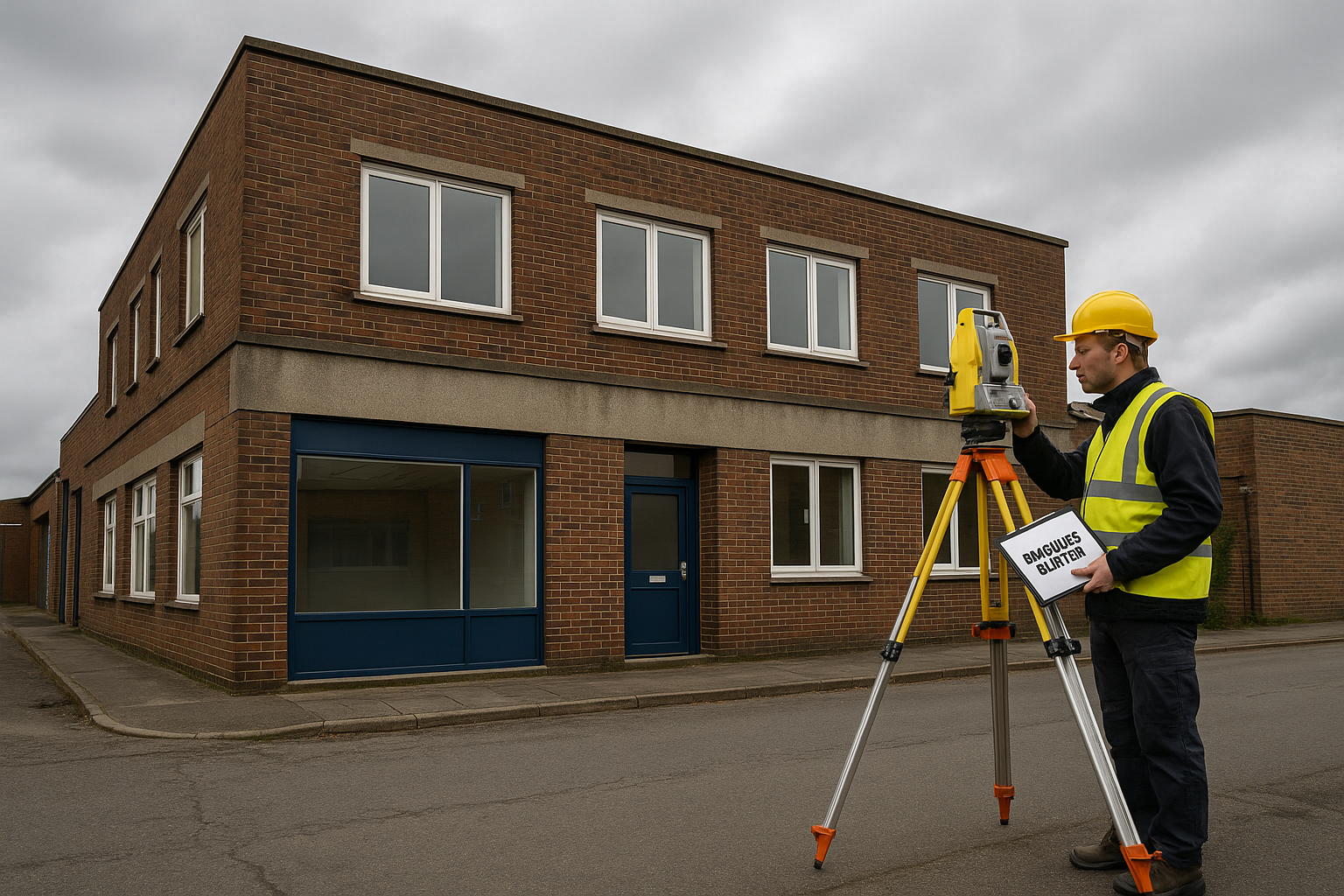
That matters because many organisations stop at the survey stage. HSE guidance does not stop there. The expectation is active management, not passive record keeping.
Your asbestos management plan should therefore:
- Record known or presumed asbestos-containing materials
- Assess the risk posed by each item
- Set out the action required for each area or material
- Explain how information will be shared
- State how monitoring and review will be carried out
HSG264 supports this by setting out what a management survey is designed to achieve and how asbestos information should be gathered and used. The plan then takes those findings and applies them to real building management.
Related content and topics duty holders should pay attention to
When reviewing HSE guidance and your own internal procedures, look beyond the survey report. Related content usually includes the duty to manage, asbestos registers, training, refurbishment work, emergency arrangements, and contractor control.
These topics are connected. If one is weak, the whole asbestos management plan becomes less effective.
6. Write your asbestos management plan and monitor it
This is the stage where the register becomes a live control document rather than a technical report sitting unread in a folder. Writing the asbestos management plan means linking survey findings to decisions, responsibilities, and a timetable for action.
The best plans are practical. They tell a contractor what they need to know before drilling a wall. They tell site staff what to do if debris falls from a ceiling void. They tell senior management what can stay in place and what needs budget, repair, enclosure, or removal.
What writing the plan really involves
To write a usable asbestos management plan, you need more than a list of asbestos locations. You need to connect each material to a clear management decision.
- Will the material be left in place and monitored?
- Does it need sealing or encapsulation?
- Should access be restricted?
- Does it need labelling?
- Is repair required?
- Should it be removed as part of planned works?
- Who signs off each action?
- How often will it be re-inspected?
Without those decisions, an asbestos management plan is only a summary of a problem, not a method of controlling it.
Why monitoring matters
Asbestos risk changes over time. A material in good condition today may deteriorate because of vibration, water ingress, repeated access, poor housekeeping, accidental knocks, or minor maintenance works.
That is why the asbestos management plan must include monitoring arrangements. If no one checks the materials, no one knows whether the original decision is still safe.
What your plan should contain
A strong asbestos management plan should be clear, site-specific, and easy for non-specialists to use. It must reflect the actual building, not a copied template that ignores how the premises are occupied and maintained.

At minimum, the plan should contain the following elements.
1. Details of the premises
- Building name and full address
- Use of the premises
- Areas covered by the plan
- Name of the duty holder
- Names of responsible persons and deputies
2. The asbestos register
The register is the backbone of the asbestos management plan. It should record the location, extent, product type, condition, accessibility, and any relevant notes for each known or presumed asbestos-containing material.
Descriptions must be precise. “Asbestos in boiler room” is too vague. A contractor needs enough detail to identify the material before any work starts.
3. Risk assessments
Your plan should include or reference material risk and priority risk. Material risk considers product type, damage, surface treatment, and asbestos type where known. Priority risk considers occupancy, maintenance activity, accessibility, and likelihood of disturbance.
4. Control measures
For each asbestos-containing material, the asbestos management plan should state the control approach clearly. Typical options include:
- Leave in place and monitor
- Encapsulate or seal
- Restrict access
- Label the area or item
- Repair minor damage under suitable controls
- Arrange planned asbestos removal where the risk cannot be managed safely in place
5. Re-inspection schedule
The plan should state how often known or presumed asbestos-containing materials will be checked. The interval should reflect risk. Materials in vulnerable or busy areas may need more frequent review than sealed materials in controlled spaces.
6. Communication procedures
The asbestos management plan should explain how information is shared with:
- In-house maintenance staff
- External contractors
- Cleaning teams
- Project managers
- Occupiers where relevant
Contractors should see relevant asbestos information before arriving with tools, not after opening up an area.
7. Training records
If staff may encounter asbestos during their work, the plan should record what awareness training has been given and when refresher training is due.
8. Emergency arrangements
Your plan should include clear steps for accidental disturbance. That usually means stopping work, isolating the area, preventing spread, reporting internally, and obtaining specialist advice before anyone re-enters.
9. Review arrangements
Every asbestos management plan needs a review date and clear triggers for earlier revision. If the building changes, the document must change with it.
Prioritising your actions
Not every asbestos-containing material needs the same response. The point of an asbestos management plan is to help you prioritise action based on risk, not on guesswork or anxiety.
A stable asbestos cement sheet in a locked service yard is very different from damaged asbestos insulating board near a busy corridor, plant room access route, or maintenance zone. The plan should make those differences obvious.
Factors to consider when prioritising
- Condition: intact, slightly damaged, or significantly deteriorated
- Material type: higher-risk friable products generally need tighter controls
- Surface treatment: sealed materials are often lower risk than unsealed ones
- Accessibility: can staff, contractors, or occupants easily reach it?
- Likelihood of disturbance: is drilling, vibration, access, or maintenance likely?
- Occupancy: how often is the area used, and by whom?
- Future works: is refurbishment, installation, or intrusive maintenance planned nearby?
A practical way to rank actions
Many duty holders find it useful to divide actions into categories:
- Immediate action – damaged or highly vulnerable materials needing urgent control
- Short-term planned action – items needing repair, encapsulation, labelling, or restricted access
- Long-term management – low-risk materials to remain in place with periodic inspection
This makes the asbestos management plan easier to use during budgeting, contractor procurement, and maintenance planning.
Monitor, repair, encapsulate, or remove?
One of the most common mistakes is assuming asbestos must always be removed. In many cases, the safest option is to leave it in place and manage it properly. Removal creates disturbance, so it should be considered carefully and planned properly.
When monitoring may be appropriate
Monitoring is often suitable where the material is in good condition, sealed, unlikely to be disturbed, and located in a controlled area. The asbestos management plan should record the inspection frequency and who is responsible.
When repair or encapsulation may be appropriate
If a material has minor damage but can be made safe without full removal, sealing or encapsulation may be suitable. That decision should be made by a competent person and recorded clearly so future works do not disturb the area unknowingly.
When removal may be necessary
Removal may be the best option where the material is damaged, friable, difficult to protect, or likely to be disturbed during planned works. It may also make sense where repeated monitoring and access restrictions are no longer practical.
Keep your asbestos management plan up to date
An asbestos management plan loses value the moment it stops reflecting the building. Properties change constantly. Contractors open up hidden areas, tenants alter layouts, plant is replaced, leaks occur, and materials deteriorate.
Keeping the plan current is one of the clearest expectations in HSE guidance. If the register or action list is out of date, the controls based on it may be wrong.
When the plan should be updated
- After removal, encapsulation, repair, or enclosure of asbestos-containing materials
- After a new survey, sampling exercise, or re-inspection
- After refurbishment or intrusive maintenance
- After discovering previously hidden or presumed asbestos-containing materials
- After accidental damage or an asbestos incident
- When the duty holder or responsible person changes
- When the use of the building changes
How to keep it current in practice
- Use a live register rather than relying on old printed copies
- Make one person responsible for document control and version control
- Require contractors to report any relevant findings from intrusive access works
- Review the plan after re-inspections, not just at annual audit time
- Withdraw outdated copies so the wrong information is not used on site
- Check that emergency contacts, named persons, and escalation routes are still correct
If your estate spans multiple locations, consistency matters. Whether you need an asbestos survey London service for a city office, an asbestos survey Manchester team for a regional portfolio, or support with an asbestos survey Birmingham instruction, the principle is the same: each site needs accurate records and a current asbestos management plan.
Practical steps for building a workable asbestos management plan
If your current arrangements feel patchy, do not start by rewriting policy language. Start with the building and the people who actually work in it.
- Check whether your survey information is current. If not, arrange an updated inspection.
- Review the asbestos register against real site conditions. Confirm rooms, access routes, and plant areas still match.
- Score material and priority risk properly. Focus on likelihood of disturbance, not just product type.
- Assign named responsibilities. Avoid vague wording such as “site team” or “management”.
- Set action deadlines. If an item needs repair or labelling, give it a date.
- Control contractor access. Make asbestos information part of permit-to-work and pre-start checks.
- Schedule re-inspections. Put dates in diaries and maintenance systems.
- Review after change. Any works, damage, or layout change should trigger a check of the asbestos management plan.
This approach keeps the plan usable. A short, accurate document that people follow is far better than a long file nobody reads.
Common mistakes that weaken an asbestos management plan
Most compliance failures are not caused by the absence of paperwork. They happen because the paperwork does not match what is happening on site.
- Using a generic template with no building-specific detail
- Failing to update the register after works or re-inspection
- Not sharing asbestos information with contractors before work starts
- Leaving responsibility unclear between landlord, tenant, and managing agent
- Missing common parts, risers, roof voids, or service areas
- Confusing the survey report with the asbestos management plan itself
- Not recording emergency procedures for accidental disturbance
- Allowing outdated printed registers to remain in circulation
If any of these sound familiar, fix them quickly. Small gaps in management arrangements are often what lead to accidental disturbance.
Products, topics, and related content: what should sit around the plan?
The asbestos management plan should not exist in isolation. It works best when it links to the wider products, topics, and related content your team relies on to manage compliance properly.
Useful supporting documents
- Asbestos survey reports
- Asbestos register
- Material and priority risk assessments
- Re-inspection records
- Contractor induction and permit-to-work documents
- Training records
- Incident reporting procedures
- Refurbishment planning information
- Removal or remediation certificates where relevant
Think of these as the supporting documents behind the plan. The plan tells people what to do. The related content proves why that decision was made and how it should be followed.
Footer links and document access
Many organisations overlook simple access issues. If the asbestos management plan is buried in a shared drive or hidden in an old compliance folder, people will not use it when they need it.
Make sure your internal systems include clear document access, whether that is through a compliance portal, intranet, facilities software, or controlled footer links in your document library. The key is that authorised people can find the current version quickly, while old versions are clearly withdrawn.
What good asbestos management looks like in practice
A good asbestos management plan is easy to understand under pressure. It helps a caretaker checking a leak, a contractor opening a ceiling, and a property manager planning next quarter’s maintenance budget.
In practice, that means:
- The register is current and specific
- Actions are prioritised by risk
- Named people are responsible for each task
- Contractors get information before starting work
- Re-inspections happen when they should
- Changes to the building trigger updates
- Emergency arrangements are clear and tested
If those basics are in place, your asbestos management plan becomes a practical control measure rather than a paper exercise.
Frequently Asked Questions
What is the purpose of an asbestos management plan?
The purpose of an asbestos management plan is to set out how known or presumed asbestos-containing materials will be managed safely. It turns survey findings and the asbestos register into practical actions, responsibilities, communication procedures, and review arrangements.
Who is responsible for the asbestos management plan?
Responsibility usually sits with the duty holder, meaning the person or organisation responsible for maintenance or repair of the premises. Depending on lease terms and management arrangements, that could be a landlord, managing agent, employer, tenant, or facilities manager.
How often should an asbestos management plan be reviewed?
The asbestos management plan should be reviewed regularly and whenever circumstances change. That includes after re-inspection, repair, removal, refurbishment, accidental damage, a change in building use, or a change in the responsible person.
Does every asbestos-containing material need to be removed?
No. If the material is in good condition, sealed, and unlikely to be disturbed, it may be safer to leave it in place and manage it through monitoring. Removal is usually considered where the material is damaged, higher risk, or likely to be disturbed by planned works.
What is the difference between an asbestos survey and an asbestos management plan?
An asbestos survey identifies or presumes asbestos-containing materials and records their location and condition. An asbestos management plan explains how those materials will be controlled in practice, including actions, responsibilities, communication, monitoring, and review.
Need help with your asbestos management plan?
If your records are outdated, your responsibilities are unclear, or you need a current survey to support a reliable asbestos management plan, Supernova Asbestos Surveys can help. We provide asbestos surveys, re-inspections, sampling support, and guidance for duty holders managing property portfolios across the UK.
Call 020 4586 0680 or visit asbestos-surveys.org.uk to arrange expert support from Supernova.