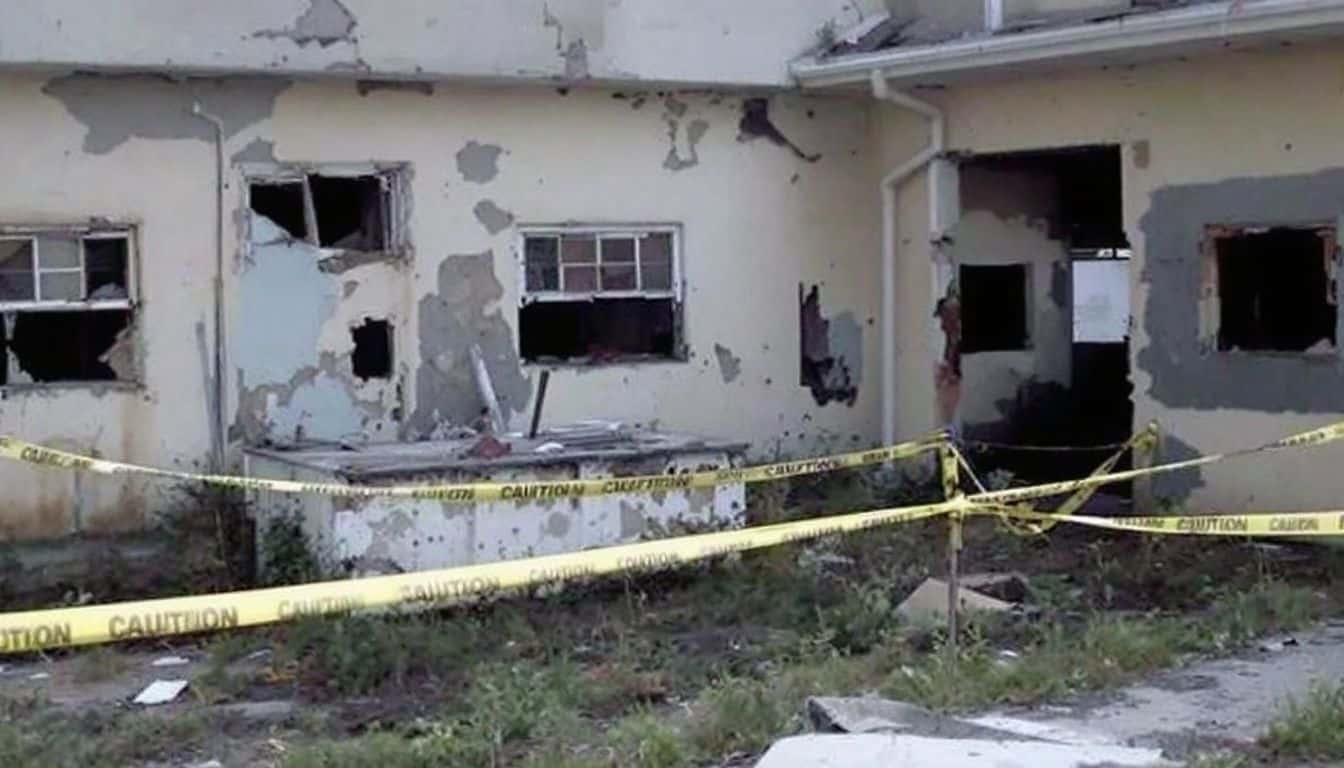
Asbestos is still present in hundreds of thousands of buildings across the UK. If your property was built before 2000, there is a realistic chance it contains asbestos-containing materials (ACMs) — and if you have no plan in place to manage asbestos, you are already on the wrong side of the law.
The consequences are not abstract. We are talking about criminal prosecution, unlimited fines, civil compensation claims, and — most seriously — preventable deaths. Here is exactly what is at stake when duty holders fail to act.
Who Has a Legal Duty to Manage Asbestos?
Under the Control of Asbestos Regulations, the duty to manage asbestos falls on the person or organisation responsible for maintaining non-domestic premises. This is typically the building owner, employer, or managing agent — often referred to as the “duty holder.”
If you are responsible for a commercial property, school, hospital, housing association block, or any other non-domestic building, this duty applies to you. Ignorance of the regulations is not a defence recognised by the Health and Safety Executive (HSE).
Your Core Legal Obligations
- Identifying whether ACMs are present through a suitable asbestos management survey
- Maintaining an up-to-date asbestos register for the premises
- Producing and implementing an asbestos management plan
- Sharing information with anyone who may disturb ACMs — contractors, maintenance staff, and others
- Reviewing and monitoring the condition of ACMs on a regular basis
Failing to meet any of these obligations puts you in breach of the regulations and opens the door to serious legal and financial consequences.
Legal Consequences: Prosecution and Imprisonment
The HSE takes asbestos non-compliance seriously. Enforcement action is not reserved for large corporations — small businesses, sole traders, and individual landlords have all faced prosecution.
Financial Penalties
Minor breaches of the Control of Asbestos Regulations can attract fines of up to £20,000 when heard in a Magistrates’ Court. When cases are referred to the Crown Court, fines are unlimited.
These are not edge cases. They are the result of routine HSE inspections and investigations following incidents. A single enforcement action can cost a business far more than a proper survey and management plan would ever have done.
Custodial Sentences
Criminal liability does not stop at financial penalties. Individuals found guilty of breaching asbestos regulations can face custodial sentences. Summary convictions can result in up to 12 months in prison, while more serious offences tried on indictment can lead to sentences of up to two years.
Directors, managers, and senior employees can be held personally liable — not just the business entity. If a duty holder is found to have shown wilful disregard for the safety of others, prosecution of individuals is a very real possibility.
The Financial Impact Goes Well Beyond the Initial Fine
Many duty holders underestimate the full financial exposure of non-compliance. The fine itself is often only the beginning.
Legal Costs
Defending an HSE prosecution is expensive. Legal costs in asbestos-related cases can run to tens of thousands of pounds before any fine or compensation is factored in. If the prosecution succeeds, the defendant may also be ordered to pay the HSE’s costs on top of their own.
Civil Compensation Claims
Workers or occupants who develop asbestos-related diseases as a result of exposure on your premises can bring civil compensation claims against you. These claims are not small.
Compensation payouts for serious asbestos-related conditions can be substantial. For mesothelioma — a cancer caused almost exclusively by asbestos exposure — civil compensation claims have historically reached into the hundreds of thousands of pounds per case. Even for milder asbestos-related conditions, significant payouts are not uncommon.
When you add legal costs to compensation payments, a single claim can cost a business a very significant sum — far more than the cost of a proper survey and management plan would ever be.
Reputational Damage
HSE enforcement notices and prosecution outcomes are published publicly. For businesses that rely on client trust — schools, care homes, commercial landlords, contractors — the reputational damage from an asbestos prosecution can be lasting and severe.
No amount of crisis management undoes the damage of a public prosecution. Prevention is always the better course.
Health Risks: Why Managing Asbestos Saves Lives
Behind every statistic is a person. Asbestos-related diseases kill more people in the UK each year than any other single work-related cause. The latency period for conditions like mesothelioma is typically 20 to 50 years, meaning people are dying today from exposures that happened decades ago — often because someone failed to manage asbestos properly.
What Happens When ACMs Are Left Unmanaged
Asbestos-containing materials that are in good condition and left undisturbed generally pose a low risk. The danger arises when materials are damaged, deteriorating, or disturbed — for example, during maintenance, renovation, or demolition work.
Without an asbestos management plan in place, contractors and maintenance workers may not know where ACMs are located. They disturb them unknowingly. Fibres become airborne. People inhale them. The damage is done — and it may not become apparent for decades.
Who Is Most at Risk
The people most at risk are those who work in and around buildings: plumbers, electricians, joiners, painters, and general maintenance workers. They are the individuals most likely to encounter undocumented ACMs when no management plan exists.
Mesothelioma and asbestos-related lung cancer together account for thousands of deaths in the UK every year. These are preventable deaths — and the failure to manage asbestos properly is a direct contributing factor.
Your Duty of Care to Others
As a duty holder, you have a legal and moral obligation to protect everyone who enters or works in your building. This includes employees, independent contractors, visitors, and tenants.
An asbestos management plan is not a bureaucratic exercise — it is the mechanism by which you fulfil that duty of care in practice. Without one, you are leaving people exposed to a risk they may not even know exists.
What a Proper Asbestos Management Plan Looks Like
An asbestos management plan is not a one-off document you file and forget. It is a living record that needs to be maintained, reviewed, and acted upon. Commissioning a management survey from a qualified, UKAS-accredited surveyor is the essential first step.
Here is what a compliant plan should contain:
- The location and condition of all known or presumed ACMs — drawn from a management survey carried out by a qualified surveyor
- A risk assessment for each ACM — taking into account its condition, accessibility, and likelihood of disturbance
- Actions required — whether to monitor, repair, encapsulate, or arrange for asbestos removal
- Responsibilities — who is accountable for each action and for reviewing the plan
- Communication procedures — how information about ACMs will be shared with contractors and others
- Review dates — the plan must be revisited regularly and updated after any work that affects ACMs
The HSE’s guidance document HSG264 sets out the standards surveyors must follow when producing the survey that underpins your plan. Always ensure your survey is carried out by a UKAS-accredited surveying organisation.
When a Refurbishment or Demolition Survey Is Required
A management survey covers the accessible areas of a building in normal use. If you are planning significant works, a management survey alone is not sufficient.
For renovation projects, you will need a refurbishment survey before any intrusive work begins. This type of survey is designed to locate ACMs in the areas affected by planned works — including materials that may be hidden within the structure.
If the building is being torn down entirely, a demolition survey is required. This is the most thorough type of survey and ensures that licensed contractors can remove all asbestos safely before any disturbance takes place.
Failing to commission the right type of survey before refurbishment or demolition is one of the most common — and costly — mistakes duty holders make.
The Role of Asbestos Testing
In some cases, a surveyor will identify materials that are suspected to contain asbestos but cannot be confirmed visually. In these situations, asbestos testing is required — a sample of the material is taken and analysed in an accredited laboratory to confirm whether asbestos fibres are present and, if so, which type.
Testing is also used to verify that air quality following removal or disturbance work meets the required clearance levels before an area is reoccupied. This is known as air monitoring and is a critical safeguard for occupant safety.
Do not assume a material is safe simply because it looks intact. Many ACMs are indistinguishable from non-asbestos materials without laboratory analysis of asbestos samples.
Common Mistakes Duty Holders Make When They Manage Asbestos
Even duty holders who are aware of their obligations sometimes fall short. These are the most common failings we encounter:
- Relying on an outdated survey — if your building has been altered since the last survey, or if the survey is more than a few years old, it may no longer be accurate
- Failing to share the register with contractors — the asbestos register is only useful if the people who need it can access it before starting work
- Assuming a building is asbestos-free — unless a full survey has been carried out and confirmed the absence of ACMs, you cannot assume they are not present
- Not reviewing the plan after works — any maintenance, refurbishment, or disturbance of the fabric of the building should trigger a review
- Treating the plan as a tick-box exercise — a plan that exists on paper but is never implemented or communicated offers no real protection
Each of these failings can expose you to the full range of legal, financial, and reputational consequences described above. The fix for all of them is straightforward: treat your asbestos management obligations as an ongoing operational priority, not a one-time task.
Acting Now Is Always Cheaper Than Acting Later
The cost of a professional asbestos management survey is modest compared to the potential consequences of not having one. A survey gives you the information you need to manage asbestos safely, meet your legal obligations, and protect the people in your building.
If you have never had a survey carried out, or if your existing survey is out of date, the right course of action is clear: commission a new survey from a qualified, accredited surveying company.
Once you have the survey results, you can build a compliant management plan, brief your contractors, and demonstrate to the HSE — if they ever come calling — that you have taken your duty seriously. Waiting until something goes wrong is not a strategy. By the time fibres are airborne and people are exposed, the damage is already done.
Asbestos Surveys Across the UK
Supernova Asbestos Surveys operates nationwide. If your building is in the capital, our team can carry out an asbestos survey London property owners and managers trust — identifying ACMs and helping you build a compliant management plan from the ground up.
We also cover major cities across England. If you need an asbestos survey Manchester based businesses rely on, or an asbestos survey Birmingham property managers book with confidence, our accredited surveyors are ready to help.
With over 50,000 surveys completed, we have the experience and accreditation to support duty holders at every stage — from initial identification through to ongoing compliance.
Call us on 020 4586 0680 or visit asbestos-surveys.org.uk to book your survey or speak to one of our qualified surveyors today.
Frequently Asked Questions
What happens if I don’t have an asbestos management plan?
Without an asbestos management plan, you are in breach of the Control of Asbestos Regulations. This can result in HSE enforcement action, fines of up to £20,000 in a Magistrates’ Court or unlimited fines at Crown Court, and — in serious cases — custodial sentences. Civil compensation claims from anyone who suffers harm as a result of exposure on your premises are also a real risk.
Who is responsible for managing asbestos in a building?
The duty to manage asbestos sits with the person or organisation responsible for maintaining the non-domestic premises. This is typically the building owner, employer, or managing agent. In some cases, this responsibility may be shared or formally assigned through a lease or contract — but the duty cannot simply be ignored.
How often should an asbestos management plan be reviewed?
Your asbestos management plan should be reviewed regularly — at least annually — and must be updated whenever work is carried out that affects the fabric of the building or the condition of any ACMs. If your building has been altered, extended, or refurbished since the last survey, you should also consider commissioning a new or updated survey.
Do I need a different type of survey if I’m planning building works?
Yes. A standard management survey covers accessible areas of a building in normal use. If you are planning refurbishment work, you will need a refurbishment survey before any intrusive work begins. If the building is to be demolished, a demolition survey is required. Using the wrong type of survey — or no survey at all — before significant works is a common and serious mistake.
Can I assume my building is asbestos-free if it looks modern?
Not without a formal survey. Any building constructed before 2000 may contain ACMs, and many asbestos-containing materials are visually indistinguishable from non-asbestos equivalents. The only reliable way to confirm whether asbestos is present — or absent — is through a survey carried out by a qualified, UKAS-accredited surveyor, supported by laboratory testing where required.